You've just received a customer complaint: the beautiful navy blue leather belt they purchased has stained their expensive white shirt. This single issue can destroy brand trust, lead to costly returns, and damage your reputation. Color transfer isn't just a minor defect; it's a critical failure in quality control that can be avoided with proper verification during production.
Verifying leather belt colorfastness requires a systematic approach throughout the production process, from material selection to final inspection. It involves testing the dye's resistance to rubbing, perspiration, and light to ensure the color remains stable and does not transfer during normal use. A professional manufacturer implements strict protocols at multiple checkpoints to guarantee the color stays on the belt, not on your customer's clothing.
This comprehensive guide will walk you through the essential steps to verify colorfastness. We'll explore the preliminary material checks, the specific rub and friction tests, how to evaluate resistance to environmental factors, and the final quality control measures that ensure only colorfast belts reach your customers.
What Preliminary Checks Ensure Dye Quality Before Production?
The foundation of colorfastness begins long before the belt is fully assembled. Using poor-quality dyes or improperly prepared leather guarantees future color transfer problems. Catching these issues at the material stage prevents wasted production time and resources on defective batches.
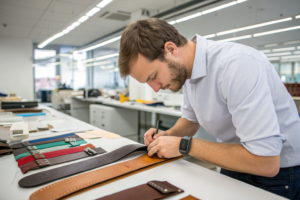
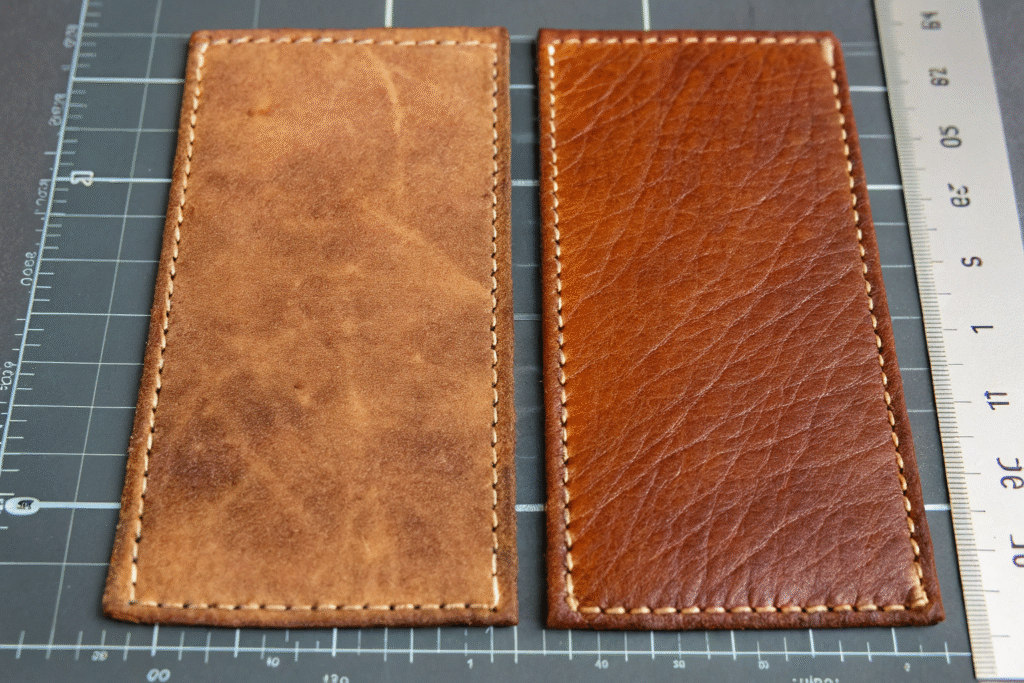
Initial verification starts with supplier qualification and raw material inspection. A reputable manufacturer will source leather from certified tanneries that provide test reports for their dyed hides. The first visual inspection should look for uniform color penetration and the absence of surface dye residue that could easily rub off.
How Do You Assess Leather and Dye at the Source?
The most effective method is to request and verify material certifications from your tannery. These documents should specify the type of dyes used (e.g., aniline, semi-aniline, pigments) and their fastness properties. Pigment-dyed leather generally offers superior colorfastness compared to some penetrating dyes.
Conduct a simple spot test upon receiving the leather. Apply a small amount of water or rubbing alcohol to a white cloth and press firmly against an inconspicuous area of the leather for 10 seconds. Any color transfer indicates a potential problem. This quick check helps validate the tannery's claims before committing to large-scale leather belt production.
What Questions Should You Ask Your Supplier?
Before production begins, clarify these key points with your manufacturer:
- What type of dye system is used?
- Can they provide previous colorfastness test results?
- What is their protocol for fixing dyes (e.g., through proper drying and finishing)?
Establishing that your supplier has a robust quality control system for incoming materials is the first and most crucial step in ensuring final product colorfastness.
How Are Rub and Friction Tests Conducted?
Even with well-dyed leather, the finishing process can affect colorfastness. The only way to reliably predict whether a belt will stain clothing is through standardized friction testing that simulates real-world wear.
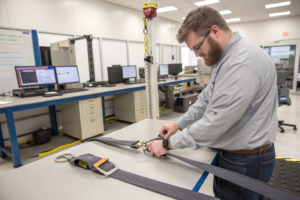
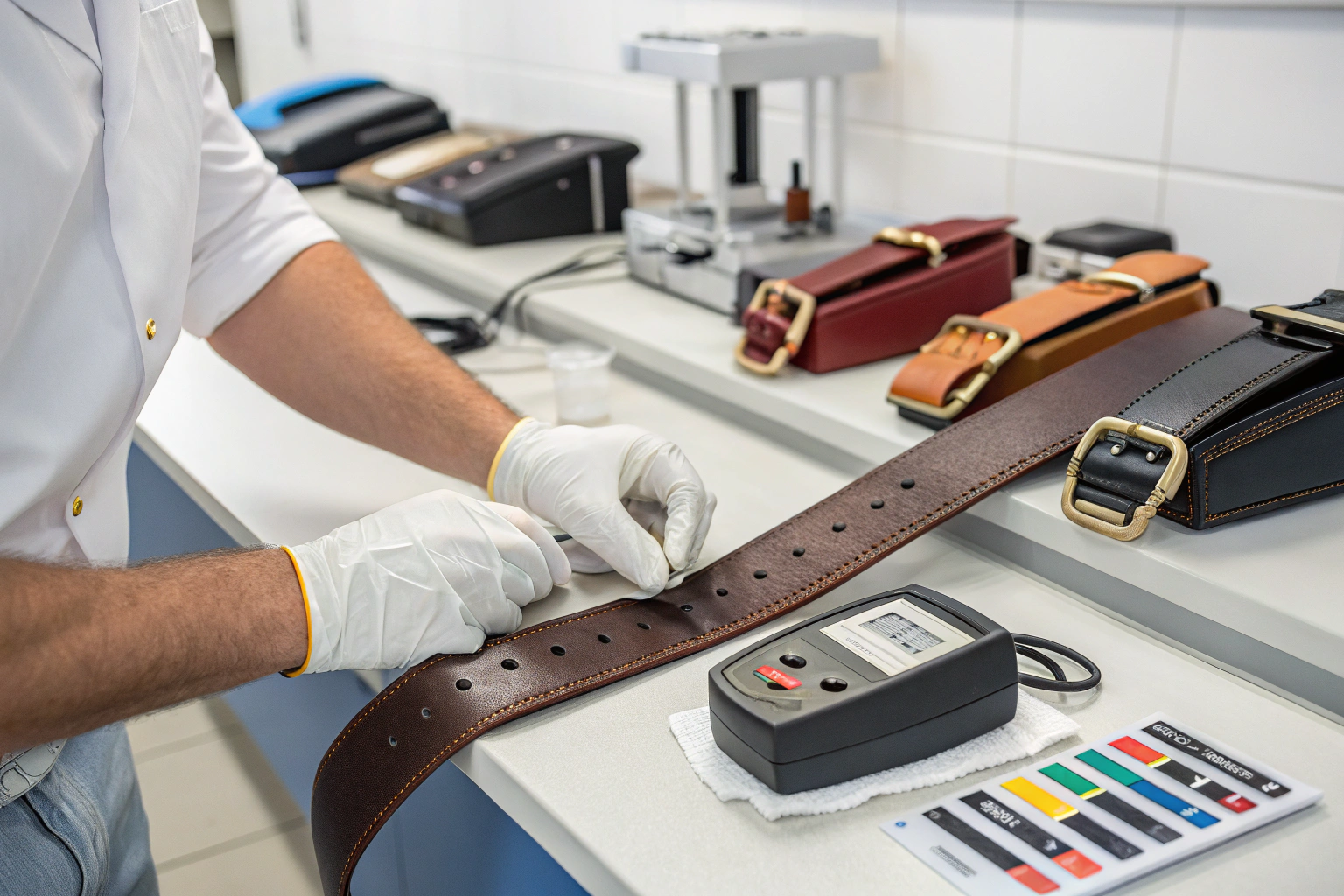
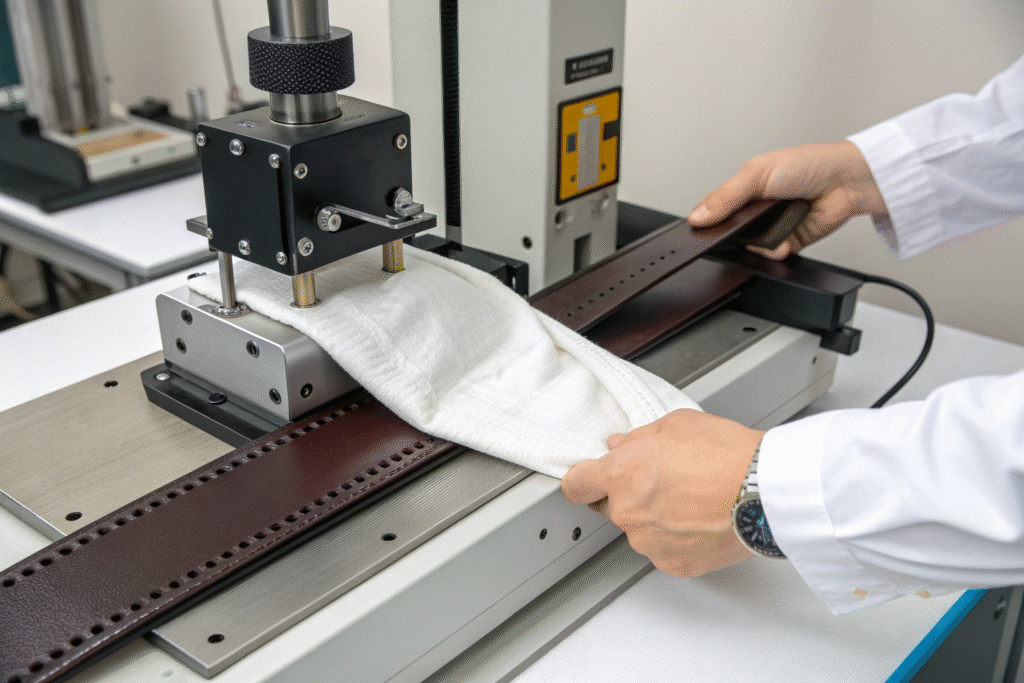
Formal rub testing is performed using a calibrated crockmeter, which provides consistent pressure and motion. The test involves mounting the belt sample and a white test cloth onto the machine, which then rubs the two surfaces together for a set number of cycles. The amount of color transferred to the cloth is then assessed using a standardized grey scale.
What is the Standard Dry and Wet Crocking Test?
The two essential tests are dry and wet crocking, following standards like AATCC 8 or ISO 105-X12.
- Dry Crocking Test: This assesses color transfer under dry conditions. A white cotton test cloth is rubbed against the belt surface for 10 cycles under controlled pressure. The cloth is then inspected for any color transfer.
- Wet Crocking Test: This is more rigorous, as moisture can loosen unfixed dye. The test cloth is dampened with water before rubbing. This is especially important for belts that may be exposed to rain or perspiration.
A pass rating (typically a Grade 4 or higher on a 5-point scale) indicates good colorfastness. Any result below this should trigger a review of the dyeing and finishing processes before mass production proceeds.
Can You Perform a Simple On-Site Friction Check?
Without a crockmeter, a practical field test can provide a good indication. Vigorously rub a white cotton cloth or a white eraser on an inconspicuous area of the belt for 10-15 seconds. Inspect the cloth for any color transfer.
While not as precise as instrumental testing, this method is valuable for spot-checking samples during production audits. It immediately flags belts that have severe colorfastness issues, preventing the shipment of obviously defective products like fashion belts that could damage clothing.
How to Evaluate Resistance to Perspiration and Light?
Colorfastness isn't just about rubbing; belts face environmental challenges like body sweat and sunlight exposure. A belt might pass rub tests but still fade in the sun or stain when the wearer perspires.
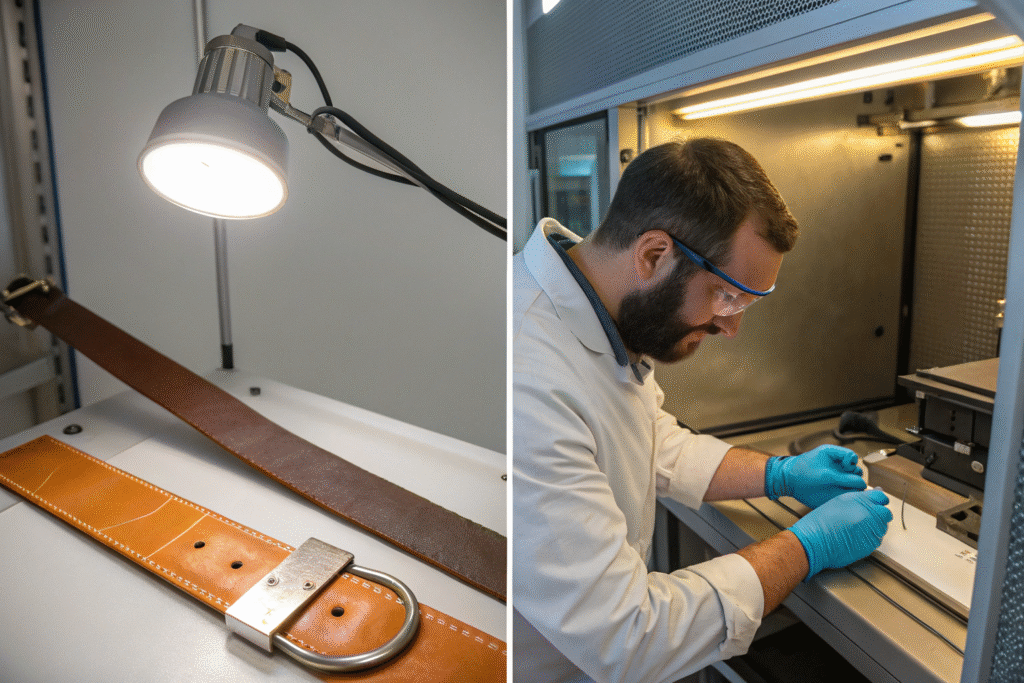
Testing for perspiration and light fastness involves specialized equipment that simulates these conditions over an accelerated timeframe. These tests are crucial for ensuring the belt's color remains stable throughout its lifespan, maintaining the product's aesthetic appeal and integrity.
Why Test for Perspiration Fastness?
Perspiration, being slightly acidic or alkaline, can cause certain dyes to break down and migrate. The test involves saturating a multi-fiber test fabric with an artificial perspiration solution, placing it in contact with the leather, and applying pressure under controlled conditions for several hours.
After testing, the multi-fiber fabric is checked for staining, and the leather is assessed for color change. This is particularly important for men's dress belts and any belt that will be worn against the skin, as it ensures the color won't run with body moisture.
How is Lightfastness Assessed?
Lightfastness determines how resistant a dye is to fading when exposed to sunlight. A sample of the belt material is exposed to a powerful xenon-arc lamp that simulates sunlight for an extended period. The exposed portion is then compared to a protected portion of the same sample.
The level of fading is rated on a blue wool scale. A higher rating indicates better resistance to fading. This ensures that the vibrant color of a casual belt won't deteriorate prematurely, maintaining the product's visual appeal over time.
What Final Quality Control Measures Prevent Color Transfer?
Even with successful preliminary testing, final verification is essential before belts are packaged and shipped. This last line of defense catches any outliers and provides documented evidence of colorfastness for your records.
A comprehensive final QC protocol includes both visual inspection and batch testing. Each belt should be examined for consistency, and random samples from each production lot should undergo verification tests to ensure the entire batch meets the required colorfastness standards.

What Should Be Included in the Final Inspection Checklist?
The final inspection should include:
- Visual check for color consistency across the entire batch
- Spot check for surface dye residue using a clean white cloth
- Verification that finishing coatings (if used) are evenly applied
- Audit of test records from earlier production stages
This systematic approach ensures that every finished belt leaving the facility has passed multiple checks for colorfastness, significantly reducing the risk of customer complaints.
How Should Test Results Be Documented?
Proper documentation is crucial for traceability and accountability. For each production lot, maintain a record that includes:
- Date of production and lot number
- Results of dry and wet crocking tests
- Perspiration and lightfastness test data (if performed)
- Inspector's signature and approval
This documentation not only helps in quality assurance but also provides evidence of due diligence to your clients, building their confidence in your manufacturing standards and commitment to quality.
Conclusion
Verifying leather belt colorfastness is not a single test but a comprehensive process integrated throughout production. It begins with careful material selection, continues with standardized rub and friction testing, extends to evaluating resistance to perspiration and light, and concludes with rigorous final inspections. By implementing this multi-stage verification system, manufacturers can confidently deliver belts that maintain their color integrity and protect customers' clothing, thereby safeguarding brand reputation and reducing returns.
If you are looking for a manufacturing partner that prioritizes rigorous quality control and colorfastness verification for leather belts, we have the systems and expertise to ensure your products meet the highest standards. Contact our Business Director, Elaine, at elaine@fumaoclothing.com to discuss how we can produce durable, colorfast belts for your brand.