You've designed the perfect belt. The leather is premium, the stitching is impeccable, but within months, the buckle is a mess—tarnished, scratched, or worse, flaking to reveal a cheap base metal underneath. A failing buckle finish doesn't just look bad; it signals poor quality and destroys the perceived value of the entire product. For brands, this leads to returns, negative reviews, and a damaged reputation.
The most durable finishes for metal belt buckles are those that create a hard, protective layer bonded to the base metal, resisting corrosion, abrasion, and daily wear. While aesthetics like polished chrome or antique brass are important, longevity is determined by the finishing process itself. The top-tier options for durability include Physical Vapor Deposition (PVD), powder coating, and high-quality electroplating with a robust top coat.
This guide will break down the science and application of the most durable buckle finishes. We will explore the superior hardness of PVD coatings, the rugged protection of powder coating, the reliable standards of quality electroplating, and how to choose the right finish based on your brand's style and functional requirements.
Why is PVD Coating the Gold Standard for Durability?
When a customer complains about a buckle losing its color or scratching easily, the problem is often a weak surface coating. Standard electroplating can be thin and susceptible to wear. PVD (Physical Vapor Deposition) solves this by building a finish that is fundamentally harder and more integrated with the base metal.
PVD coating is a vacuum chamber process where titanium or other metals are vaporized and bonded at a molecular level to the buckle's surface. This isn't a layer that sits on top; it becomes part of the material. The result is an exceptionally hard, corrosion-resistant finish that is highly resistant to scratching, tarnishing, and fading from UV exposure or chemicals like sweat.

What Makes PVD So Resistant to Wear and Corrosion?
The durability of PVD comes from its physical properties. The coating is typically harder than the steel of the buckle itself. This extreme hardness, measured on the Vickers scale, makes it nearly impossible for keys, coins, or other everyday objects to scratch it.
Furthermore, PVD finishes are highly inert. They do not react with oxygen, salt, or the acids in human perspiration, which are the primary causes of tarnishing and corrosion in lesser finishes. This makes PVD an ideal choice for men's dress belts that are worn daily and for fashion belts where color consistency is critical.
What Aesthetic Options Does PVD Offer?
Despite its technical nature, PVD offers a wide and fashionable color palette. The most common and durable is PVD Black (or Gunmetal), but the process can also create stunning rose gold, bronze, and even blue finishes. The color is consistent and deep, with a premium, satin-like feel that is difficult to achieve with other methods. This allows for custom buckle designs that are both stylish and built to last.
How Does Powder Coating Provide Rugged Protection?
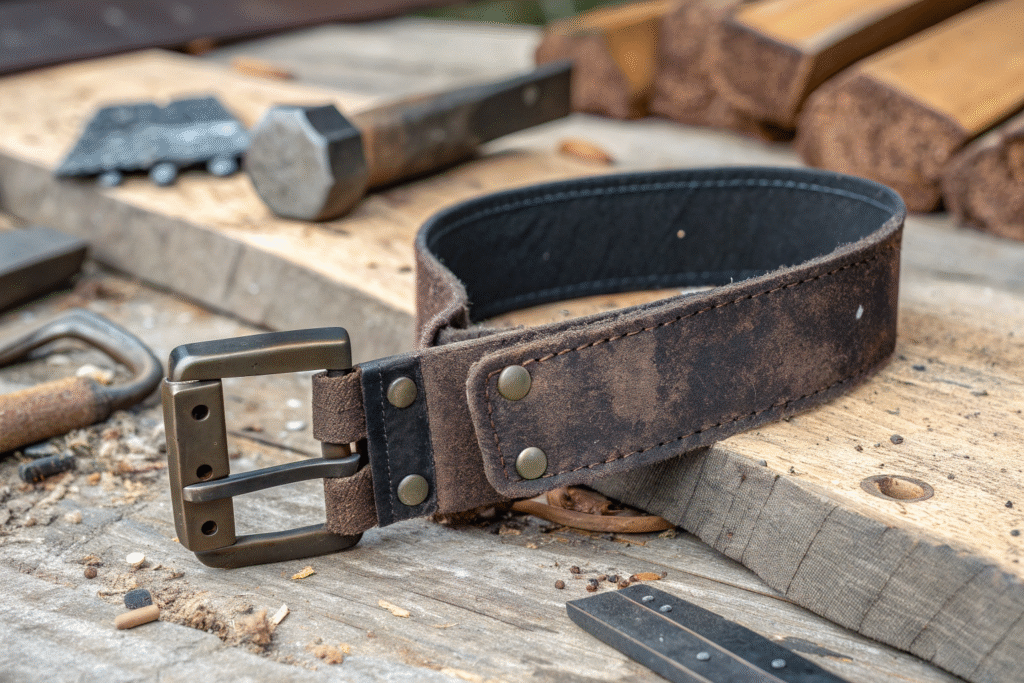
For buckles on workwear, outdoor gear, or western-style belts, the aesthetic is often a thick, textured, or matte finish. Standard plating is too thin and glossy for this look and would chip easily under rough use. Powder coating provides a thick, protective shell that is both decorative and extremely tough.
Powder coating is an electrostatic process where a dry, free-flowing polymer powder is applied to the metal and then cured under heat. This creates a thick, continuous plastic-like layer that is highly resistant to impact, chipping, and chemicals. It is the same finish used on automotive parts, outdoor furniture, and appliances.
Where is Powder Coating the Best Choice?
The primary advantage of powder coating is its film thickness, which can be 5-10 times thicker than a liquid paint or electroplated layer. This makes it ideal for applications where the buckle will be subjected to abrasion, impacts, and exposure to the elements.
This finish is perfectly suited for:
- Western & Cowboy Belts: Where a thick, durable finish is needed to withstand rugged use.
- Outdoor & Tactical Gear: For nylon belts and canvas belts used in demanding environments.
- Heavy Work Belts: In industrial or construction settings where tools and materials can scratch a lesser finish.
What are the Limitations of Powder Coating?
The main trade-off is a lack of metallic luster. While metallic powders exist, they cannot replicate the deep, reflective shine of a polished and plated metal. The finish is also typically a polymer, so it can be susceptible to UV fading over many years if not properly formulated, and it is not as hard as a PVD coating.
What Constitutes a High-Quality Electroplated Finish?
For brands seeking a classic, high-shine look—like polished brass, nickel, or chrome—electroplating is the traditional method. However, not all electroplating is created equal. The durability gap between cheap and high-quality electroplating is vast, and it comes down to thickness and post-treatment.
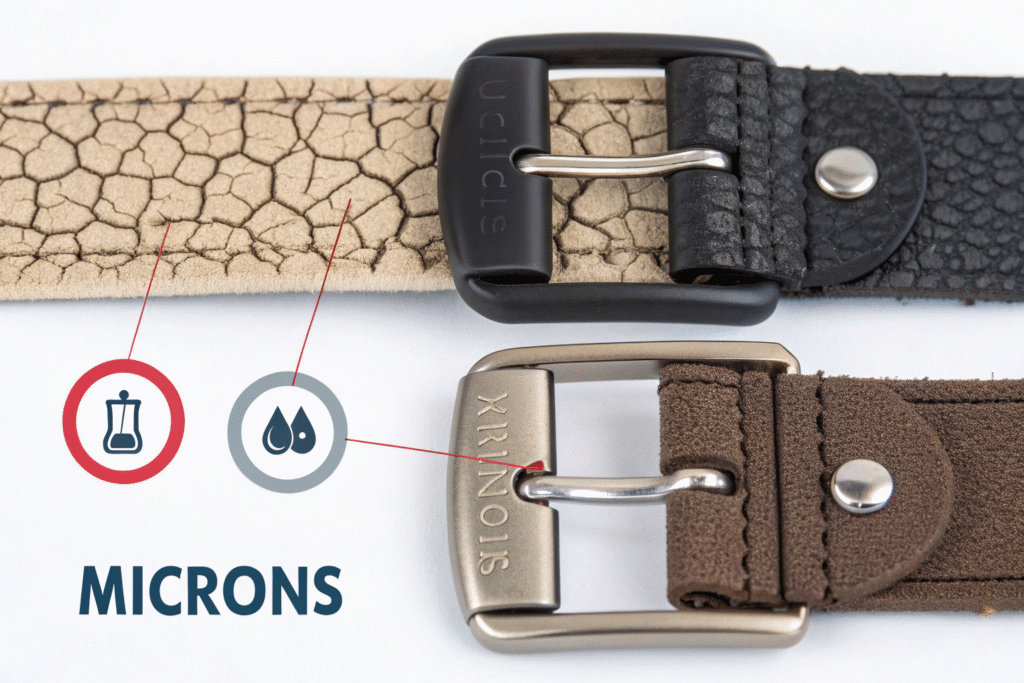
Quality electroplating involves depositing a sufficiently thick layer of the desired metal (e.g., nickel, brass) onto a base metal (often zinc alloy). This is followed by a clear protective topcoat to seal the finish. The thickness of the plating, measured in microns, and the quality of the topcoat are the defining factors for its lifespan.
Why is Plating Thickness Non-Negotiable?
A thin plating will wear through quickly, revealing the base metal underneath and leading to corrosion. A high-quality plating for a belt buckle should have a minimum thickness. For example, a nickel undercoat should be at least 8-10 microns thick, with the final topcoat adding another 3-5 microns of protection.
This is a critical point to discuss with your manufacturer. A supplier focused on quality control will be able to specify and verify their plating thickness, ensuring a product that will last. This is essential for building a reputation for reliable leather accessories.
What is the Role of a Protective Topcoat?
The final, often invisible, step is what locks in the shine and provides resistance. A high-quality electroplated buckle will be sealed with a clear, hard-wearing topcoat. This is often a lacquer or a more advanced UV-cured polymer.
This topcoat acts as a barrier against oxygen, moisture, and skin acids, preventing tarnishing and corrosion. It also provides a level of scratch resistance. Without it, even a thick plating will eventually tarnish, especially with finishes like polished brass.
How to Choose the Right Finish for Your Brand?
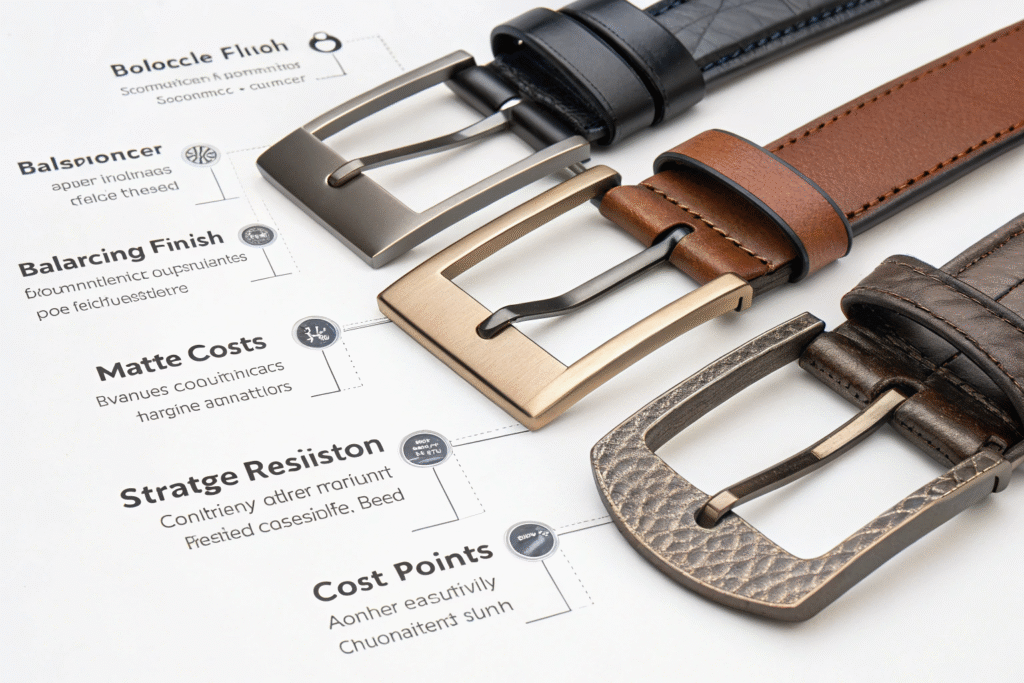
Selecting a buckle finish is a balance between aesthetics, durability, and cost. Making the wrong choice can lead to a product that doesn't resonate with your audience or, worse, fails in the field. A strategic approach aligns the finish with the belt's intended use, target customer, and brand positioning.
The decision matrix should consider the buckle's exposure to wear, the desired visual effect, and the price point you need to hit. There is a durable solution for every segment of the market, from luxury to value-oriented.
What Finish Matches the Belt's Use Case?
The buckle's environment dictates the necessary durability.
- Everyday Dress Belts: Require high resistance to fine scratches and tarnishing. PVD or High-Quality Electroplating are the best choices.
- Outdoor & Work Belts: Need impact and chip resistance. Powder Coating is the ideal solution.
- Fashion & Seasonal Belts: Where cost is a major factor and extreme durability may be less critical, a standard electroplating with a protective coat may be sufficient.
How Do You Balance Cost and Longevity?
There is a direct correlation between cost and durability. PVD is typically the most expensive due to the complex equipment and process involved. Powder coating is generally mid-range, and electroplating can range from low to high cost depending on the thickness and quality of the topcoat.
For a brand, the calculation should factor in the cost of returns and the long-term value of a happy customer. Investing in a more durable finish like PVD for a core product can be cheaper in the long run by virtually eliminating finish-related complaints. This strategic sourcing decision protects your brand equity and ensures customer satisfaction.
Conclusion
The most durable belt buckle finishes—PVD coating, powder coating, and high-quality electroplating—all share a common principle: they create a robust, integrated barrier that protects the base metal from the rigors of daily life. PVD leads with unparalleled hardness and corrosion resistance, powder coating excels in impact and chip resistance for rugged applications, and a thick, well-sealed electroplated finish delivers classic beauty with proven longevity. The key is to match the finish technology to your product's specific use case and quality expectations.
If you are looking for a manufacturing partner that understands the technical nuances of durable buckle finishes and can guide you to the right choice for your collection, we have the expertise and quality control processes in place. Contact our Business Director, Elaine, at elaine@fumaoclothing.com to discuss producing belts with buckles that are as durable as they are beautiful.