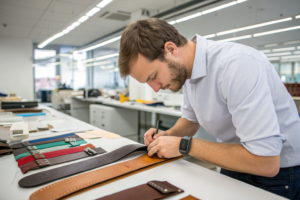
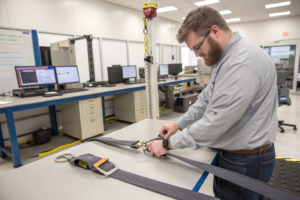
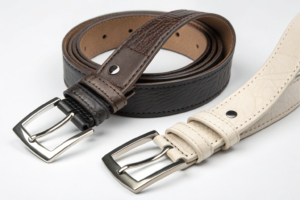
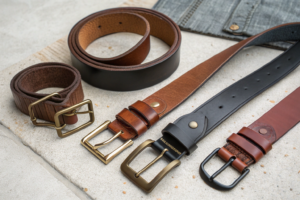
You walk through your factory and see piles of cut leather waiting for the next station. Finished belts are stacked high in a corner, waiting for inspection. Workers are constantly moving to fetch tools or materials. These are not just minor inefficiencies; they are symptoms of a process filled with waste—waste that directly eats into your profit margin and slows your response to customer orders. In the competitive world of fashion accessories, this traditional batch-and-queue production model is no longer sustainable.
Implementing Lean Manufacturing in belt production is a systematic approach to identifying and eliminating waste (known as "Muda") to create more value for customers with fewer resources. It's not about working faster; it's about working smarter by streamlining the flow of materials and information. The core goal is to build a responsive, efficient, and quality-focused production system that can adapt quickly to changing market demands.
This guide will walk you through the practical steps to implement Lean principles in a belt factory. We will explore how to map your value stream to identify waste, create a smooth continuous flow, establish a pull-based production system, and embed a culture of continuous improvement that involves every employee.
How to Identify Waste Through Value Stream Mapping?
The first step in going Lean is to see the waste. In a traditional factory, waste is often hidden by inventory and chaotic movement. Without a clear picture of your entire process, from raw material to shipped product, you can only guess where the biggest problems lie.
Value Stream Mapping (VSM) is the essential tool for making waste visible. It is a simple diagram that illustrates every step in your belt production process, both value-added and non-value-added. By mapping the current state, you can pinpoint exactly where time, materials, and effort are being wasted, providing a factual basis for improvement.

What Are the 8 Wastes in Belt Manufacturing?
Lean philosophy identifies eight types of waste. Understanding these in the context of your factory is crucial:
- Transportation: Unnecessary movement of materials (e.g., moving cut leather from a central cutting department to a distant stitching line).
- Inventory: Excess raw materials, Work-In-Progress (WIP), or finished goods tying up capital and space.
- Motion: Wasted movement of workers searching for tools, supplies, or information.
- Waiting: Belts sitting idle, waiting for the next processing step or a machine repair.
- Overproduction: Making belts faster than customer demand or before they are needed, the most fundamental waste.
- Over-processing: Doing more work than is valued by the customer (e.g., excessive polishing on a non-visible part).
- Defects: Producing faulty belts that require rework or scrap, costing time and materials.
- Skills: Underutilizing the knowledge and creative potential of your workforce.
A VSM will visually expose where these wastes, particularly waiting and inventory, are creating bottlenecks in your leather belt production line.
How to Create a Current State Map?
Grab a pen and paper and walk the process. Track a single belt or a small batch from receipt of raw leather to the shipping dock. For each step, note the cycle time, the wait time, the amount of inventory, and the number of people involved. This map is your baseline reality, and it often reveals shocking amounts of non-value-added time.
How to Create a Continuous Flow of Production?
Once waste is visible, the goal is to eliminate it by creating a smooth, continuous flow where belts move one piece at a time to the next process without stopping. Batch processing creates delays and hides problems; continuous flow exposes issues immediately so they can be solved.
Transitioning from batch production to continuous flow involves reorganizing your factory layout and equipment. Instead of grouping all similar machines together (a process layout), you create dedicated production cells (a product layout) where all operations required for a belt are performed in close sequence.

What is a Belt Production Cell?
A production cell is a U-shaped or linear arrangement of all the equipment and operators needed to complete a major portion of a belt's assembly. For example, a cell for a basic pin buckle belt might include a skiving machine, a hole-punching press, a stitching machine, and a finishing station, all within a few steps of each other.
How Does One-Piece Flow Reduce Lead Time?
In a batch system, a hundred belts might be cut, then all hundred are moved to skiving, then all hundred to stitching. Each belt has a long wait time at each step. In one-piece flow, one belt is cut, then immediately skived, then immediately stitched.
This dramatically reduces the total production lead time—the time from when an order is released to when it is shipped. A belt that used to take weeks to flow through the factory can now be completed in hours or days. This agility is a massive competitive advantage, allowing for faster response to customer orders and reducing the need to forecast far in advance.
How to Establish a Pull-Based Production System?
A push system, where production is based on forecasts, inevitably leads to overproduction—the worst form of waste. You make what you think you will sell, often resulting in excess stock of some belt styles and stockouts of others.
A pull system is the Lean alternative. In a pull system, nothing is made until there is a signal from a downstream customer process. In a factory, the "customer" can be the final packaging station or even the actual end-customer. This ensures you only produce what is needed, when it is needed, and in the quantity needed.
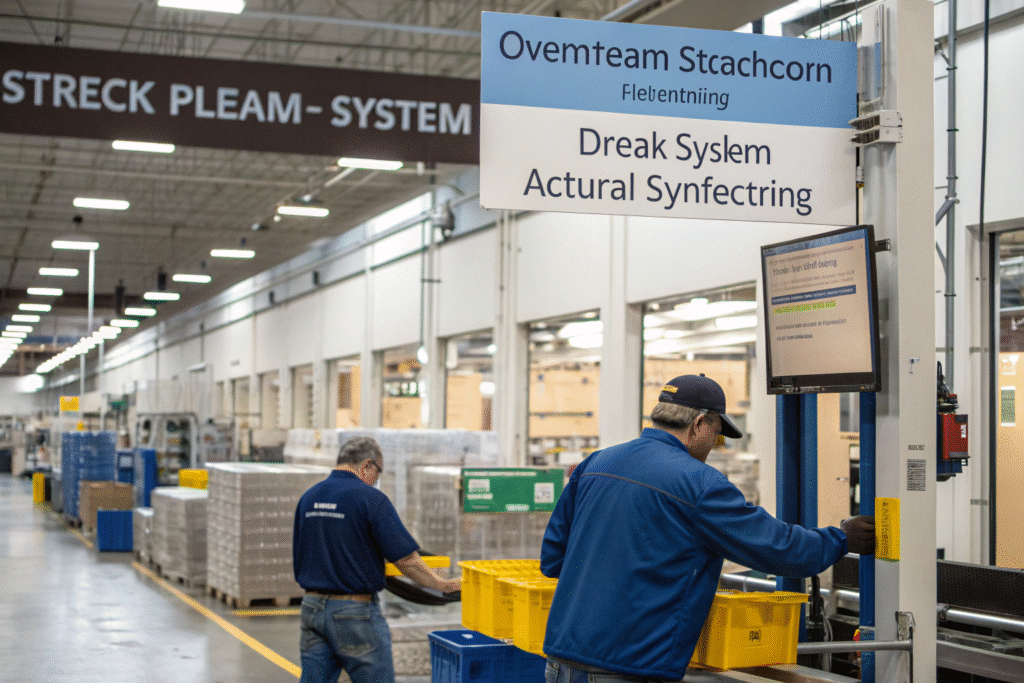
What is the Kanban Method?
Kanban is a simple visual system that signals the need to produce more. It can be a card, an empty bin, or a digital signal.
How it works in belt production:
- A finished belt is taken from a small, standardized bin for packaging.
- This creates an empty space.
- The empty bin (or a Kanban card attached to it) is sent back to the assembly cell as a signal to produce one more belt to refill it.
- Production only happens to replace what has been consumed.
This system self-regulates inventory. The number of Kanban cards in circulation directly controls the maximum amount of Work-In-Progress, preventing overproduction.
How Does Pull Respond to Real Demand?
By linking production directly to consumption, a pull system makes your factory incredibly responsive. If a specific women's belt suddenly sells out online, the signal from that sale will quickly pull a new one through the production system. This is far more effective than trying to predict sales with a complex forecast and then pushing production through a slow, batch-oriented system.
How to Embed a Culture of Continuous Improvement?
Lean is not a one-time project; it is a continuous journey. Tools and systems will fail if the people using them are not engaged in the process of improvement. The most powerful resource in any factory is the knowledge and experience of its frontline employees.
A Lean culture is built on respect for people and the philosophy of Kaizen, which means "change for the better." It involves empowering every employee to identify problems and suggest small, incremental improvements every day.

What is the Role of 5S in Sustaining Lean?
5S is a foundational methodology for creating and maintaining an organized workplace. It is a prerequisite for flow and visual management. The 5 steps are:
- Sort: Remove all unnecessary items from the work area.
- Set in Order: Organize and label everything for easy use (e.g., shadow boards for tools).
- Shine: Clean the workplace and equipment daily.
- Standardize: Create rules for maintaining the first three S's.
- Sustain: Make 5S a habit and a part of the company culture.
A clean, organized factory makes problems like tool misplacement, material shortages, and oil leaks immediately visible.
How to Empower Employees with Kaizen?
Management's role is to create a system where employees feel safe to point out problems and are recognized for their ideas. This can be done through:
- Kaizen Boards: Physical boards where employees can post problems and improvement ideas.
- Daily Stand-up Meetings: Short meetings at the start of each shift to review safety, quality, and production targets.
- Rapid Improvement Events: Focused, week-long projects to tackle a specific bottleneck.
When a worker on the stitching line suggests a simple jig that makes their job easier and reduces defects, that is Kaizen in action. Harnessing this collective intelligence is what makes a Lean transformation sustainable and powerful.
Conclusion
Implementing Lean Manufacturing in belt production is a strategic journey from a wasteful, push-based system to an efficient, pull-based one. It begins with using Value Stream Mapping to see and understand waste, continues by reorganizing into continuous flow cells to eliminate that waste, and is sustained by establishing a pull system like Kanban to prevent overproduction. Ultimately, its success hinges on fostering a culture of Continuous Improvement (Kaizen) where every employee is empowered to contribute to a more efficient, quality-driven, and responsive factory.
If you are looking for a manufacturing partner that has embraced Lean principles to deliver high-quality belts with shorter lead times and greater efficiency, our factory is built on this philosophy. Contact our Business Director, Elaine, at elaine@fumaoclothing.com to discuss how a Lean supply chain can benefit your brand.