Your belt production is complete. The order is packed and ready. But now, a critical decision awaits: how do you get it to your customer in the US or Europe, fast? A delayed shipment can mean missed sales seasons, angry retail partners, and tarnished brand reputation. In the world of fast fashion and tight deadlines, the wrong freight choice is a direct threat to your business.
Comparing freight options for time-sensitive belt orders requires a strategic analysis of the trade-offs between speed, cost, and reliability. It's not about finding the cheapest option, but the most efficient one for your deadline. The core decision lies in choosing between the premium speed of air freight, the balanced approach of expedited sea-air service, and the reliability of a well-managed express courier, all while navigating the hidden complexities of customs and final-mile delivery.
This guide will provide a clear framework for making this critical decision. We will break down the three primary freight modes, create a direct comparison tool for your specific needs, and outline the essential steps to ensure your time-sensitive shipment clears customs and arrives on your customer's doorstep without delay.
What Are the Core Time-Sensitive Freight Options?
When your belts need to cross an ocean quickly, you are typically faced with three main choices, each with a distinct speed and cost profile. Understanding the fundamental mechanics of each is the first step to making an informed comparison.
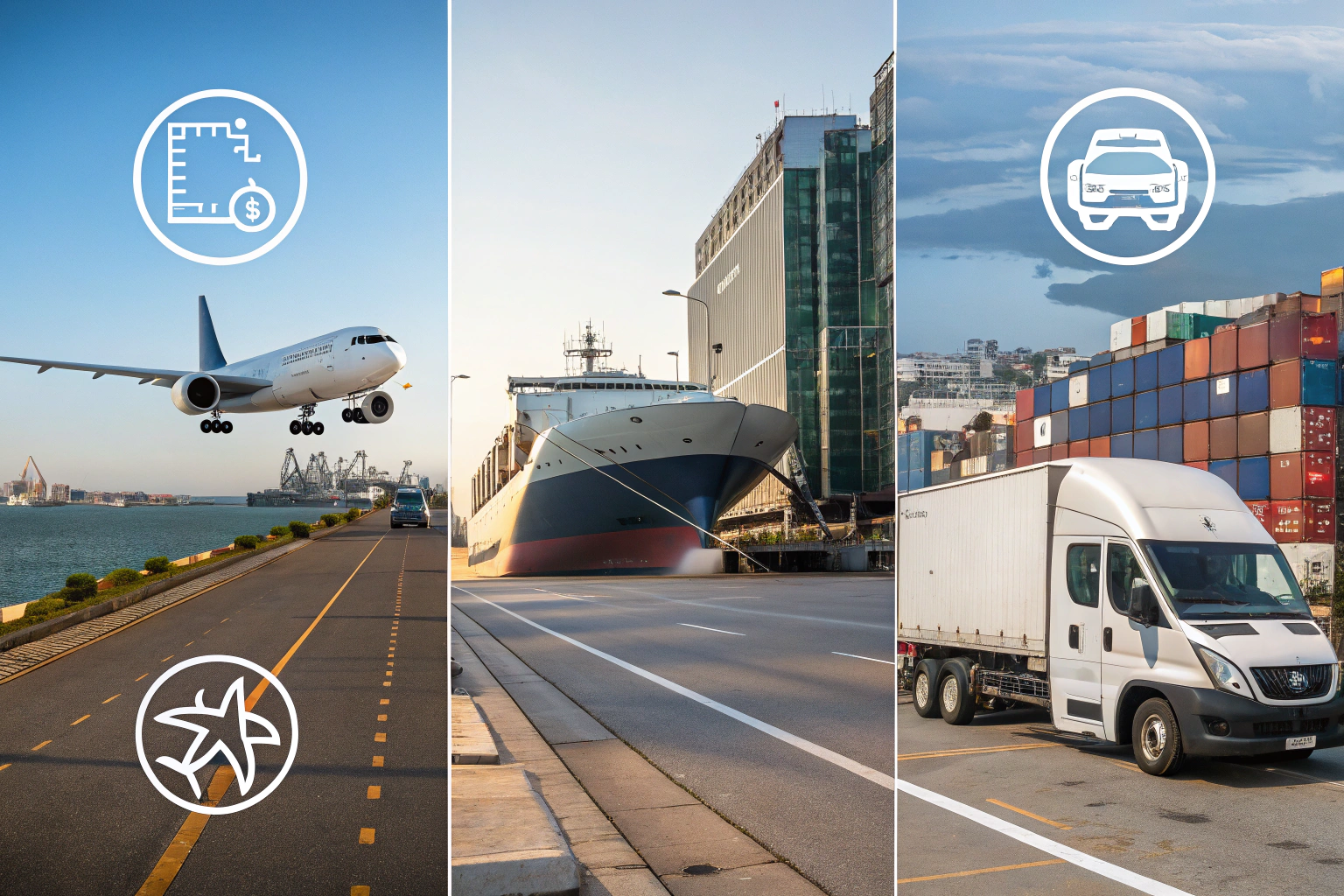
The three core options are Air Freight, Sea-Air Freight, and International Express. Air freight offers the fastest transit time but at the highest cost. International express is door-to-door simple but becomes prohibitively expensive for larger volumes. Sea-air freight strikes a middle ground, combining a short sea leg with a long air leg for better cost efficiency than pure air.
When is Air Freight the Undisputed Best Choice?
Air freight is the equivalent of a sprint. If your shipment is critical and missing the deadline has a cost greater than the freight premium, then air is your only real option.
Choose Air Freight when:
- The transit time of 5-10 days is non-negotiable.
- You are shipping a sample line or a small, high-value initial order to catch a trend.
- The cost of air freight can be absorbed into the product's margin without making it unprofitable.
This mode is ideal for getting new fashion belts to market at the peak of their trend cycle.
How Does the Sea-Air Hybrid Model Work?
Sea-Air is a strategic compromise. Shipments are first transported by sea from China to a transit hub like Dubai, Seoul, or Los Angeles. There, they are transferred to an airplane for the final long-haul flight.
This model is effective when:
- You need a transit time of 15-25 days—faster than pure sea but cheaper than pure air.
- Your shipment volume is too large for express couriers but the full cost of air freight is too high.
- You have a reliable buffer in your timeline but not enough to wait for a full sea voyage. This balance is often perfect for bulk orders of seasonal belts.
Is International Express a Viable Option?
For very small, urgent orders (e.g., under 50 kg), carriers like DHL, FedEx, and UPS are incredibly efficient. They handle everything from pick-up to customs clearance and final delivery.
Use Express for:
- Urgent samples and replacement parts.
- Very low-volume orders where the simplicity and speed (3-5 days) justify the high per-kilo cost.
- Situations where you lack the resources to manage customs yourself. However, for full production runs of belts, the cost escalates dramatically.
How to Create a Direct Comparison for Your Shipment?
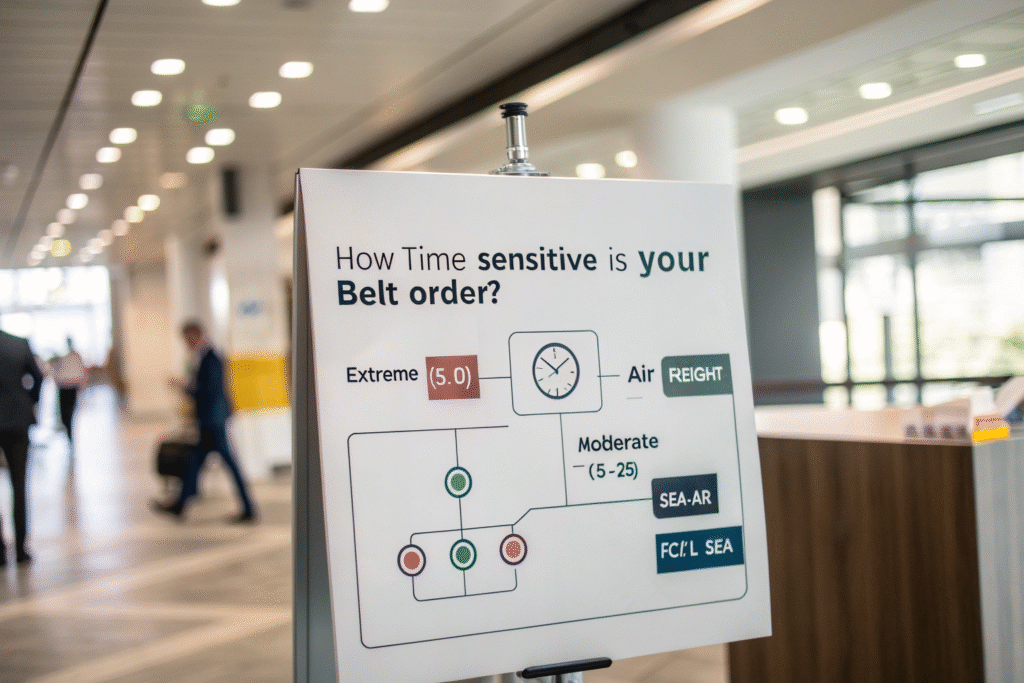
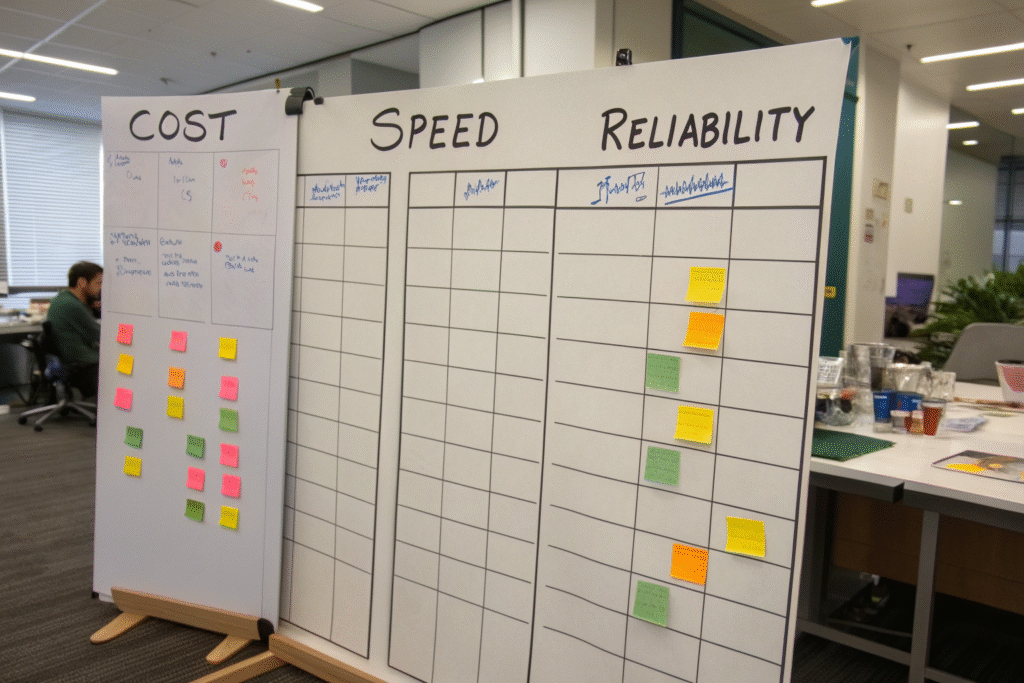
Abstract concepts are not enough; you need a concrete way to compare options for your specific order. Creating a simple comparison matrix forces you to quantify the trade-offs and make a data-driven decision.
The most effective method is to gather quotes for all three modes based on your shipment's exact weight and volume (CBM). Then, plot them on a simple grid based on Cost, Speed, and Reliability to visualize the best value for your urgent needs.
What Data Should You Collect for an Accurate Quote?
To get comparable quotes, you must provide freight forwarders with precise information:
- Origin and Destination: e.g., Ningbo Port to Chicago O'HARE.
- Gross Weight & Dimensions: Of your cartons to calculate chargeable weight (air) or CBM (sea).
- HS Code: The harmonized system code for "belts" (e.g., 4203.30) for customs.
- Ready Date: When will the finished belts be palletized and ready for pick-up?
| Freight Mode | Estimated Transit Time | Estimated Cost (for X CBM) | Key Advantage | Key Risk |
|---|---|---|---|---|
| Air Freight | 5-10 days | $$$$ | Speed | Cost, Capacity issues |
| Sea-Air | 15-25 days | $$ | Cost-Speed Balance | Complex transfer, potential delays at hub |
| Express (Sub-50kg) | 3-5 days | $$$$$ | Door-to-Door Simplicity | Extreme cost for volume |
| FCL Sea (Baseline) | 30-40 days | $ | Lowest Cost | Slowest, port congestion |
How to Factor In "Hidden" Costs and Time?
The quoted freight cost is only part of the picture. For a true comparison, you must add:
- Origin Charges: Terminal handling, documentation fees in China.
- Destination Charges: Customs clearance, trucking from arrival port/airport to final warehouse (drayage).
- Customs Duty: Your US tariff cost for belts, which is the same regardless of freight mode.
Air and express shipments have higher freight costs but lower incidental costs. Sea freight has low freight costs but higher destination handling and storage fees. This total "Landed Cost" calculation is essential.
What Steps Ensure Smooth Customs and Final Delivery?
Your belts can fly across the ocean in days, only to be stuck in customs for weeks due to incorrect paperwork. For time-sensitive orders, the freight journey doesn't end at the destination port; it ends when your customer has the goods in their warehouse.
Proactive management of documentation and the final leg of delivery is what separates a successful shipment from a delayed one. This requires preparation and a clear understanding of the process.

How Can You Prevent Costly Customs Delays?
Customs clearance is the most common bottleneck. You can mitigate this by working with your freight forwarder to ensure all documents are perfectly prepared:
- Commercial Invoice: Must accurately state the value, description, and HS code of the belts.
- Packing List: Must match the invoice and the physical cartons.
- Certificate of Origin: May be required for tariff considerations.
Using an experienced forwarder who understands accessories import regulations is crucial. They can often pre-file documents so clearance begins as soon as the shipment lands.
What is the Role of the Final Mile?
The "final mile" is the transportation from the arrival airport or port to your customer's door. For air freight, this is usually a separate trucking service you must arrange.
To ensure a smooth final mile:
- Confirm Receiving Details: Verify your customer's warehouse address, hours, and receiving procedures before the shipment arrives.
- Book Drayage in Advance: Don't wait until the plane lands to find a truck. A good forwarder will coordinate this.
- Provide Tracking: Keep your customer updated with the ETA for the final delivery truck. This transparency manages expectations and ensures someone is available to receive the time-sensitive order.
Conclusion
Comparing freight options for time-sensitive belt orders is a strategic calculation that balances the cost of speed against the cost of delay. Air freight is the premium tool for critical deadlines, sea-air offers a smart compromise for moderate urgency, and international express provides unmatched simplicity for small parcels. The most effective approach is to gather detailed quotes, calculate the total landed cost, and proactively manage the customs and final delivery process with a reliable partner. By making this process systematic, you can transform logistics from a source of stress into a competitive advantage.
If you need a manufacturing partner that understands time-sensitive production and can help coordinate efficient freight solutions for your belt orders, our experienced project managers are here to assist. Contact our Business Director, Elaine, at elaine@fumaoclothing.com to ensure your next shipment is both fast and reliable.