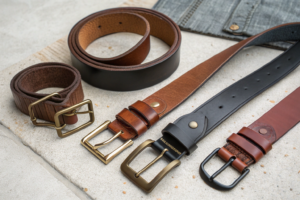
You find the perfect belt, but when you put it on, it gaps at the back, rides up, or creates an unflattering bulge. For individuals with curvy body types—typically defined by a significant difference between the waist and hip measurements—standard belt designs often fail to flatter. The issue isn't the body; it's that the belt isn't designed to work with its proportions. A poorly chosen belt can disrupt a smooth silhouette, while the right one can beautifully define the waist and enhance the natural shape.
The best belt styles for curvy body types are those that accommodate the waist-hip ratio while providing definition and a smooth line. Key features include flexible materials, strategic width, adjustable or non-traditional fastenings, and placement that emphasizes the smallest part of the waist. The goal is to complement curves, not fight against them.
This guide will detail the specific belt styles and design features that are most flattering for curvy figures. We will explore how flexibility and material choice prevent gapping, why width and placement are critical for proportion, how innovative closures offer a perfect fit, and the power of using a belt as a strategic styling tool.
How Do Flexibility and Material Prevent Gapping and Discomfort?
A rigid leather belt must be sized to fit over your hips, which often means it is too large for your waist, causing it to stand away from the body at the back. This "gapping" is a common frustration and instantly ruins the streamlined look an outfit.
The solution lies in choosing belts made from materials with inherent flexibility or stretch. These materials can contour to the body's shape, moving with you from waist to hip without pulling, gapping, or creating uncomfortable pressure points. They accommodate the curvy silhouette rather than resisting it.

What are the Top Flexible Material Choices?
Certain materials are naturally better suited for curvy body types due to their ability to flex and give.
- Elasticated Belts: These are the ultimate choice for comfort and fit. Whether a full elastic belt or a leather belt with an elasticated back panel, they provide constant, gentle tension that moves with the body.
- Woven or Braided Belts: The inherent structure of braided belts allows for more flexibility than a solid strip of leather. They can conform to the body's shape more easily.
- Soft, Supple Leathers: Look for belts made from pliable leathers like lambskin, deerskin, or soft calfskin. These will mold to your shape better than stiff, heavyweight leathers.
These materials ensure the belt is comfortable to wear all day and maintains a clean line against the body.
Why is a "Give-and-Take" Mechanism Important?
Beyond material, the closure system can introduce flexibility. Belts with a slide buckle or a magnetic clasp allow for micro-adjustments throughout the day. This is particularly useful as our bodies can naturally bloat or change shape slightly, ensuring the belt always feels comfortable and fits perfectly without being restricted to a single hole.
Why are Width and Placement Critical for Flattering Proportions?
A belt that is too wide can shorten the torso and overwhelm the frame, while a belt that is too thin might get lost and fail to provide meaningful definition. Placement is equally crucial; belting at the natural waist (the smallest part) creates an entirely different—and often more flattering—effect than belting at the hips.
Choosing the right width and strategically placing the belt on the body are the most powerful tools for creating a balanced and proportionate silhouette. It's about using the belt as an optical instrument to highlight your best assets.
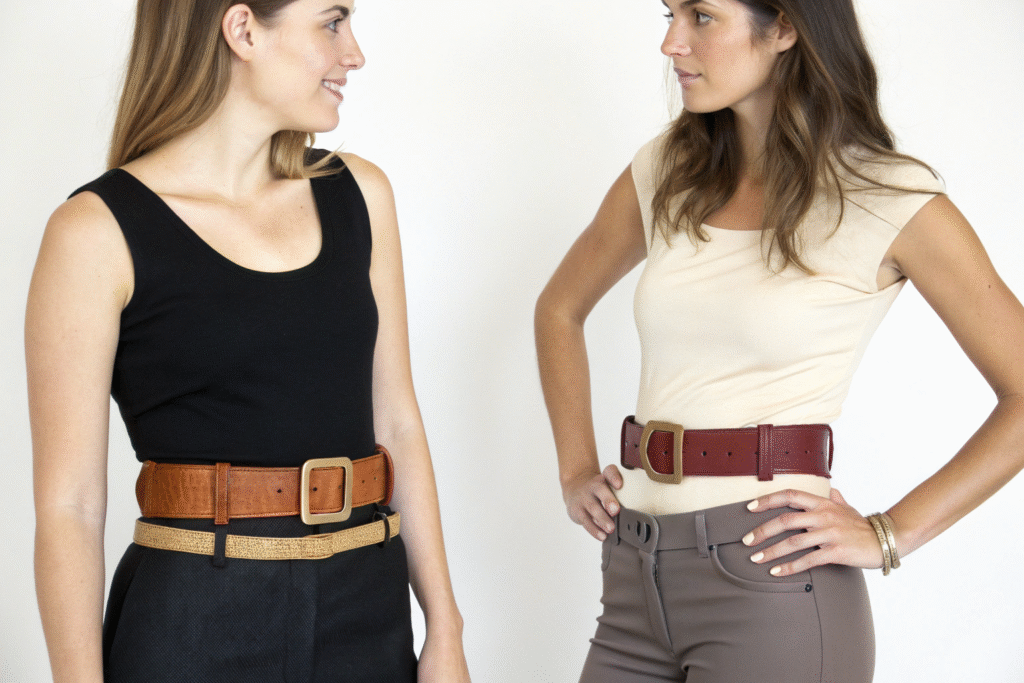
What is the "Goldilocks" Width for Curvy Figures?
For most curvy body types, a medium-width belt (approximately 1 to 1.5 inches) is the most versatile and flattering. This width is substantial enough to define the waist without being overwhelming.
- Avoid Very Wide Belts (>2 inches): These can be boxy and may roll or buckle if there's a significant difference between the waist and hip.
- Use Thin Belts Strategically: A very thin belt (under 0.75 inches) can be used to define the waist over dresses or blazers, but it may not be sturdy enough to hold up trousers through the hips.
How Does Placement Define the Silhouette?
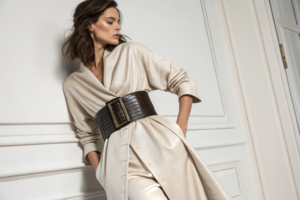
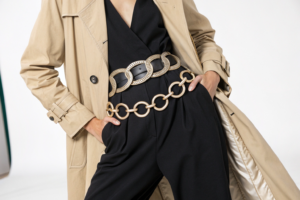
The most flattering point to wear a belt is almost always at your natural waist. This spot creates an hourglass shape by emphasizing the narrowest part of your torso.
- With Dresses and Tops: Cinching a dress, tunic, or blazer at your natural waist instantly creates shape and definition.
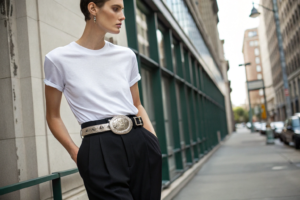
- With High-Waisted Trousers: This is a perfect combination for curvy figures. The trousers smooth the hips, and the belt sits perfectly at the waist, creating a long, clean line. This makes high-waisted outfits a ideal canvas for belting.
How Do Innovative Closures Offer a Perfect, Custom Fit?
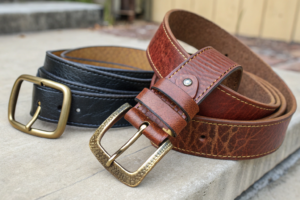
Traditional pin buckles with pre-punched holes offer limited sizing and can often leave you stuck between a hole that's too tight and one that's too loose. This is a major pain point for curvy bodies where a half-inch can make a significant difference in comfort and appearance.
Modern closure technologies solve the fit problem by offering infinite adjustability or a more forgiving fastening mechanism. These innovations ensure you get a truly custom fit that celebrates your shape rather than constricting it.

What are the Best Closure Types for Adjustability?
The following closures are excellent for achieving a precise fit:
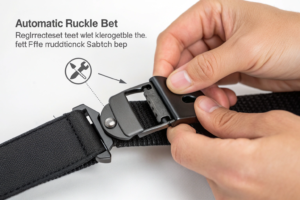
- No-Hole/Slide Buckle Belts: These use a patented mechanism that allows you to adjust the fit in tiny increments. You are not limited to pre-set holes, so you can find the exact perfect tightness. This is arguably the best fit technology for curvy body types.
- D-Ring Belts: The double-ring system allows for easy adjustment and provides a secure, non-slip hold. It's also a very fluid and minimalist look.
- Magnetic Clasps: While offering less fine-tuning, magnetic clasps are incredibly easy to fasten and provide a smooth, gap-free front. They are ideal for fashion belts meant for waist definition over clothing.
Why Avoid Standard Pin Buckles?
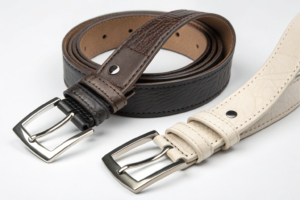
While not unusable, standard pin buckles are the least flexible option. If you choose one, ensure it is a flexible belt and that the "perfect" hole sits comfortably at your natural waist without you having to suck in your stomach. The goal is comfort and confidence, not restriction.
How to Use Belts as a Strategic Styling Tool?
A belt is more than a functional accessory for curvy body types; it's a powerful styling tool that can create illusion, define shape, and pull an outfit together. Understanding how to use it strategically can transform your entire look.
The most effective approach is to use the belt to create vertical lines, define your waistline, and add a pop of interest that draws the eye to your smallest point.

What are the Top Styling Tricks for Curvy Figures?
Incorporate these techniques to maximize the flattering effect of your belts:
- Color Contrast: Use a belt in a contrasting color to your outfit to sharply define the waist. For example, a black belt over a red dress.
- Tone-on-Tone: For a more elongated, sophisticated look, use a belt in the same color family as your outfit (e.g., a navy belt with a navy dress). This creates a seamless line.
- The "Belt Over" Method: Don't limit belts to pants loops. Belt cardigans, blazers, and loose-fitting dresses at your natural waist to instantly create shape and structure where there otherwise is none.
How Can a Belt Improve the Fit of Clothing?
Often, ready-to-wear clothing is not tailored to a curvy silhouette. A belt can be used to "tailor" an item off-the-rack. For example, a dress that is slightly too large in the waist can be perfectly cinched with a well-chosen belt, creating a custom-fit look without the cost of a tailor.
Conclusion
The best belt styles for curvy body types are those that embrace flexibility, strategic proportion, and modern fit technology. Elasticated, braided, and soft leather belts prevent gapping and ensure comfort, while a medium width placed at the natural waist creates the most flattering silhouette. Innovative closures like slide buckles and D-rings offer the precise adjustability that traditional buckles lack, allowing for a perfect, custom fit. Ultimately, a belt for a curvy figure should be seen as a strategic tool to define, enhance, and celebrate the body's natural shape with confidence and style.
If you are a brand looking to design or source belts that cater to and flatter curvy body types, our design team specializes in creating inclusive and well-fitting accessories. Contact our Business Director, Elaine, at elaine@fumaoclothing.com to discuss developing a collection that combines fashion with exceptional fit for every body.