Importing belts from overseas manufacturers presents a critical decision point at the negotiation table: which Incoterms will govern your shipment? The choice between FOB (Free On Board) and EXW (Ex Works) significantly impacts costs, control, and risk allocation. Many importers default to familiar terms without fully understanding the financial and operational implications. How can you strategically negotiate these terms to optimize your supply chain?
Negotiating FOB vs. EXW terms requires understanding cost structures, risk allocation, control preferences, and long-term partnership goals. FOB terms generally benefit importers seeking simplified logistics and predictable costs, while EXW favors those with strong logistics capabilities seeking maximum cost control. The optimal choice depends on your company's size, logistics expertise, shipment volume, and risk tolerance.
Successful negotiation requires moving beyond surface-level price comparisons to analyze total landed costs and operational implications. Let's examine the cost structures, risk considerations, control factors, and relationship implications that should guide your Incoterms strategy.
What Are the Actual Cost Differences Between FOB and EXW?
The apparent price advantage of EXW terms often disappears when all costs are accounted for. Understanding the complete cost picture prevents surprising expenses that erode profit margins.
FOB terms include all costs until the goods are loaded on the vessel, while EXW prices cover only the goods at the factory gate. The cost difference between these terms typically ranges from 8-15% of the product value, covering inland transportation, port fees, documentation, and loading operations. However, the apparent savings of EXW may be offset by higher freight rates and additional administrative burdens for the importer.
How Do Inland Logistics Costs Impact Total Pricing?
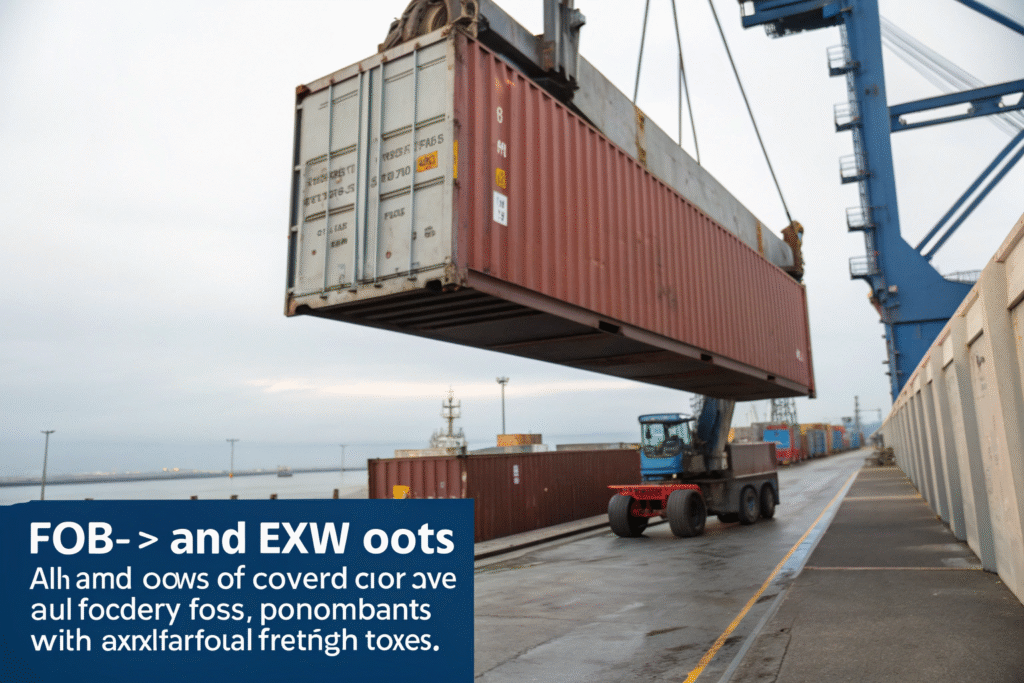
Inland logistics costs include factory-to-port transportation, port handling fees, customs clearance documentation, and container loading charges. For belt imports from China, these costs typically represent 4-8% of the product value, depending on factory location relative to Shanghai, Ningbo, or Shenzhen ports. Manufacturers offering FOB terms leverage their volume discounts with local logistics providers, often achieving 15-30% better rates than individual importers can negotiate. The International Chamber of Commerce's Incoterms 2020 rules provide detailed specifications of cost responsibilities under different terms.
What Hidden Administrative Costs Should Importers Consider?
Hidden administrative costs include document preparation fees, communication expenses, quality inspection coordination, and personnel time managing multiple service providers. EXW terms require importers to coordinate Chinese trucking, port operations, and documentation—activities that often demand local language capabilities and understanding of Chinese export procedures. These administrative burdens typically add 2-4% in indirect costs that many importers underestimate. Resources from the National Customs Brokers & Forwarders Association of America provide guidance on the full scope of administrative requirements for EXW shipments.
How Does Risk Allocation Differ Between These Terms?
Risk transfer represents one of the most significant differences between FOB and EXW arrangements. The point at which risk transfers from seller to buyer determines responsibility for loss or damage at various supply chain stages.
Under EXW terms, risk transfers to the buyer immediately upon goods availability at the factory, while FOB terms delay risk transfer until goods are safely loaded aboard the vessel. This difference means EXW buyers bear risk during inland transportation, port handling, and loading operations—periods when damage or loss frequently occurs.

When Does Cargo Insurance Responsibility Begin?
Cargo insurance responsibility begins the moment risk transfers to the buyer. For EXW terms, this means insurance must cover goods from the factory gate, requiring complex policies with Chinese providers or extensions to marine policies. Under FOB terms, insurance typically begins once goods cross the ship's rail, simplifying coverage under standard marine cargo policies. The International Union of Marine Insurance provides guidelines for appropriate insurance coverage under different Incoterms, highlighting the additional complexities of EXW arrangements.
Who Bears Loss Risk During Port Operations?
Under EXW terms, the buyer bears all risk during port operations including handling damage, theft, weather exposure, and customs inspection. These risks are significant in congested Chinese ports where goods may sit for days before vessel loading. FOB terms place these risks with the seller until loading completion, protecting buyers from common port-related losses. Claims data from TT Club, a leading transport insurance provider, shows that 27% of cargo incidents occur during port operations—highlighting the risk allocation importance.
What Control and Flexibility Factors Matter Most?
The choice between FOB and EXW significantly impacts an importer's control over shipping schedules, carrier selection, and logistics quality. Control preferences often outweigh minor cost differences for established importers.
EXW provides maximum control over carrier selection, shipping schedules, and logistics quality, while FOB offers simplified operations with less direct control. The optimal balance depends on the importer's logistics capabilities, volume, and quality requirements for belt shipments.

How Does Carrier Selection Impact Supply Chain Reliability?
Carrier selection directly impacts transit times, handling quality, and communication effectiveness. EXW allows importers to choose carriers based on performance history and specific service needs, while FOB leaves carrier selection to manufacturers who may prioritize cost over reliability. For fashion items like belts where timing affects seasonal sales, this control difference can significantly impact business results. Performance data from Shipping Exchange shows that carrier selection can create 7-14 day variations in China-to-US transit times for similar routes.
What Operational Flexibility Do EXW Terms Provide?
EXW terms provide flexibility to consolidate shipments, choose optimal routing, and adjust schedules based on inventory needs. This flexibility is particularly valuable for belt importers managing multiple product lines or coordinating with production from different factories. However, realizing these benefits requires sophisticated logistics management capabilities that many small to mid-sized importers lack. The Council of Supply Chain Management Professionals provides frameworks for evaluating whether companies possess the capabilities to benefit from EXW flexibility.
How Should Relationship Factors Influence Terms Negotiation?
The choice between FOB and EXW should consider the manufacturer relationship stage, strategic importance, and long-term partnership goals. Different terms create different relationship dynamics and opportunities.
EXW terms typically work better for established relationships with proven reliability, while FOB terms reduce risk during initial partnerships. The terms negotiation often reflects broader relationship dynamics beyond mere cost considerations.

How Do Payment Terms Interact with Incoterms Choices?
Payment terms should align with risk allocation under chosen Incoterms. EXW terms with advance payments create significant buyer risk, while FOB terms better match with Letters of Credit or payment upon shipping document presentation. Many manufacturers view willingness to accept FOB terms as a sign of commitment to the partnership, potentially unlocking better pricing or priority production slots. Guidance from The International Trade Administration recommends aligning payment terms with risk allocation under chosen Incoterms.
Can Incoterms Negotiation Build Stronger Partnerships?
Incoterms negotiation can build stronger partnerships when approached collaboratively rather than adversarially. Discussing risk preferences, capabilities, and mutual benefits creates understanding that extends beyond the immediate transaction. Manufacturers often appreciate buyers who understand their challenges with EXW terms, such as coordinating multiple buyers' goods in consolidated containers. The World Trade Organization provides case studies showing how Incoterms flexibility can strengthen long-term trading relationships.
Conclusion
The FOB vs. EXW decision requires balancing cost, control, risk, and relationship factors specific to each importer's situation. While EXW offers apparent cost savings, the total landed cost often favors FOB for small to mid-sized importers lacking sophisticated logistics capabilities. The optimal choice depends on accurately assessing hidden costs, risk tolerance, and operational capabilities.
Successful negotiation involves understanding both parties' perspectives and finding terms that create mutual benefit rather than simply pushing risk to the other party. If you're seeking guidance on Incoterms strategy for your belt imports, our experience with both perspectives can help identify the optimal approach. Contact our Business Director, Elaine, to discuss how we can structure shipping terms that balance your cost objectives with operational practicality. Reach out to Elaine at elaine@fumaoclothing.com. Let's build import strategies that support your business growth.