
The private label belt market presents a significant opportunity for retailers and brands, yet many struggle to achieve consistent profitability despite seemingly favorable pricing. The gap between manufacturing cost and retail price doesn't automatically translate to healthy margins—multiple hidden factors can erode profitability long before products reach consumers. What separates successful private label belt programs from those that merely generate revenue without real profit?
Profit margins for private label belts are determined by material quality choices, production efficiency, order quantities, shipping and duty structures, marketing investments, and retail channel strategies. Successful private label programs typically achieve 50-70% gross margins by optimizing these factors, while poorly managed programs may struggle to reach 30% despite similar wholesale pricing. The most profitable programs treat margin management as an integrated system rather than focusing solely on manufacturing cost reduction.
Understanding margin drivers requires examining both obvious and subtle factors throughout the product lifecycle. Let's explore cost structures, production efficiencies, pricing strategies, and operational factors that collectively determine private label belt profitability.
How Do Material Choices Impact Cost Structure?
Material selection represents the most significant variable cost in belt production and directly influences both manufacturing expense and perceived value. Understanding these trade-offs helps brands make informed decisions that balance quality, cost, and margin objectives.
Material costs typically account for 40-60% of total manufacturing cost, with genuine leather commanding premium prices while synthetic alternatives offer cost savings but potentially lower perceived value. The most profitable programs match material quality to target price points and customer expectations rather than automatically choosing the cheapest options.

What Are the True Costs of Different Leather Grades?
The true costs vary significantly: full-grain leather may cost $8-12 per square foot but commands premium pricing, while genuine leather grades range from $4-7 per square foot, and bonded leather costs $2-4 but offers limited durability and margin potential. Beyond raw material costs, consideration must include yield efficiency (how much material is wasted during cutting), finishing requirements, and consistency across production runs. The Leather Working Group provides standards for evaluating leather quality and environmental compliance that impact both cost and brand reputation.
How Do Hardware Choices Affect Margins?
Buckle and hardware costs range from $0.50-1.50 for basic zinc alloy castings to $5-15 for custom-designed, plated, or specialty mechanisms. While premium hardware increases manufacturing cost, it often justifies significantly higher retail pricing and enhances perceived value. The most profitable programs select hardware that aligns with their brand positioning and price points, avoiding both over-specifying for budget lines and under-specifying for premium collections. Industry data from the International Zinc Association provides cost benchmarks for different hardware manufacturing processes and finishes.
What Production Factors Influence Margin Efficiency?
Manufacturing efficiency extends beyond per-unit pricing to encompass factors that impact total cost structure, minimum order requirements, and production flexibility. These elements collectively determine how effectively manufacturing investments convert to profitable inventory.
Key production factors include order quantity economies, production method efficiency, quality control effectiveness, and payment term structures. Optimizing these elements often matters more than negotiating the lowest per-unit price.

How Do Order Quantities Impact Per-Unit Costs?
Order quantities dramatically impact per-unit costs: increasing from 500 to 2,000 units might reduce per-belt cost by 25-40% through better material purchasing, optimized production line setup, and amortized tooling costs across more units. However, larger orders also increase inventory carrying costs and risk. The most profitable programs balance quantity discounts with sales velocity to avoid excessive inventory that erodes margin through storage costs and potential markdowns. Economic order quantity models from Supply Chain Council provide frameworks for optimizing order sizes based on demand patterns and cost structures.
What Production Methods Deliver Best Margin Results?
The production methods delivering best margin results include modular designs sharing components across multiple styles, standardized sizing that minimizes custom tooling, and strategic outsourcing of specialized processes like plating or embossing. Programs that develop long-term manufacturing partnerships often achieve better pricing and flexibility than those constantly seeking new suppliers for each collection. The American Apparel & Footwear Association provides resources on production optimization specific to fashion accessories manufacturing.
How Should Pricing Strategy Support Target Margins?
Pricing represents the most direct margin management tool, yet many private label programs use simplistic markup formulas that fail to account for channel-specific costs and consumer price sensitivity.
Effective pricing strategies consider manufacturing costs, competitive positioning, channel margin requirements, perceived value factors, and psychological pricing thresholds. The most profitable programs use tiered pricing across channels and product categories rather than uniform markup percentages.
What Markup Structures Work Across Different Channels?
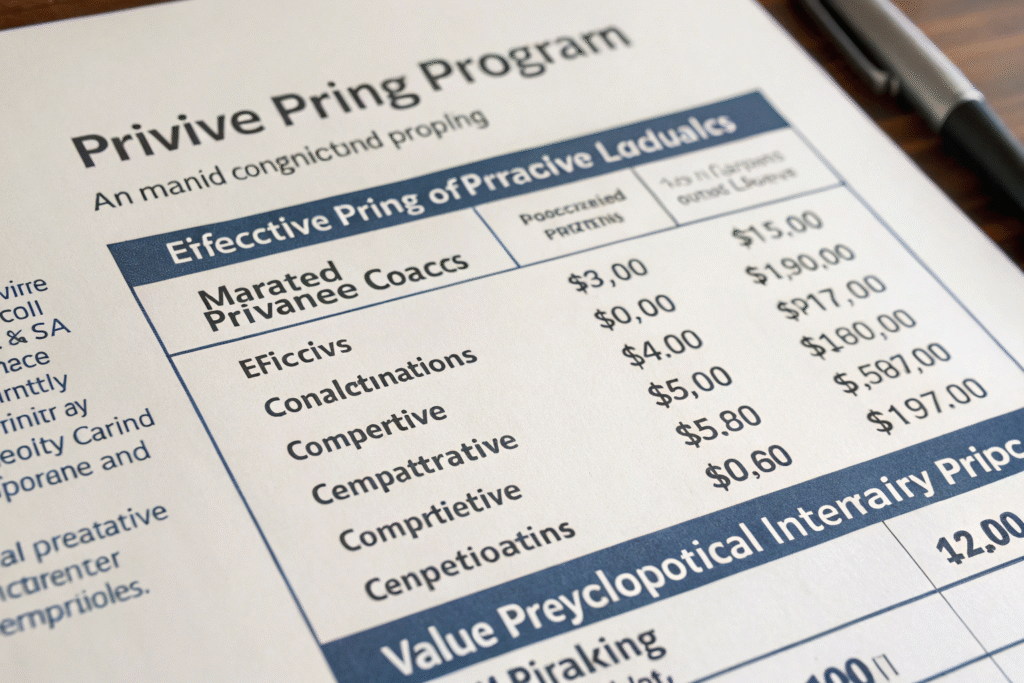
Markup structures must accommodate channel-specific requirements: direct-to-consumer typically allows 2.5-3.5x markup on landed cost, wholesale requires 2-2.5x to accommodate retailer margins, while marketplace sales need 2-2.8x after accounting for platform commissions and marketing costs. Successful programs calculate backwards from target retail prices to determine maximum allowable manufacturing costs rather than simply marking up whatever manufacturers charge. Retail margin calculators from the National Retail Federation provide industry-standard frameworks for multi-channel pricing strategies.
How Can Value-Based Pricing Increase Margins?
Value-based pricing focuses on what customers will pay based on perceived value rather than simply adding markup to costs. This approach allows higher margins for products with unique designs, premium materials, compelling brand stories, or innovative features. Elements that support value-based pricing include exclusive designs, superior craftsmanship, sustainable materials, and brand heritage that differentiate from commodity alternatives. Research from Pricing Solutions demonstrates that value-based pricing typically achieves 15-25% higher margins than cost-plus approaches in fashion accessories.
What Operational Factors Protect Hard-Earned Margins?
Even well-designed margin structures can be eroded by operational inefficiencies, hidden costs, and poor inventory management. Protecting margins requires attention to the entire business system beyond product creation.
Critical operational factors include shipping and duty costs, inventory management efficiency, return rates, payment processing fees, and marketing investment returns. These elements collectively determine whether theoretical margins translate to actual profitability.

How Do Shipping and Duties Impact Landed Cost?
Shipping and duties typically add 15-30% to manufacturing costs, with variations based on shipment size, transportation mode, and trade agreements. Factors include ocean freight charges, insurance, customs brokerage, import duties (typically 6-17% for belts depending on materials), and domestic distribution. The most profitable programs optimize these costs through consolidated shipping, proper customs classification, and leveraging trade programs like de minimis exemptions where applicable. Resources from U.S. Customs and Border Protection provide guidance on duty optimization strategies for imported accessories.
What Inventory Management Practices Protect Margins?
Inventory management practices that protect margins include demand forecasting to prevent overstocking, seasonally appropriate assortment planning, careful color and size ratio determination, and agile reordering systems for best-sellers. Carrying excess inventory not only ties up capital but often leads to margin-eroding markdowns—industry data shows that fashion accessories typically lose 2-3% of value monthly when overstocked. Inventory optimization platforms like NetSuite provide tools for balancing inventory levels with sales velocity to maximize full-price sell-through.
Conclusion
Profit margins for private label belts depend on an integrated approach that balances material quality, production efficiency, strategic pricing, and operational excellence. Successful programs manage margins as a holistic system rather than focusing on individual cost components in isolation.
The most profitable private label belt programs combine manufacturing expertise with business acumen, creating products that deliver value to customers while maintaining healthy margins across their lifecycle. If you're looking to develop or optimize a private label belt program with strong margin performance, our manufacturing and business expertise can help structure a profitable operation. Contact our Business Director, Elaine, to discuss how we can help build your private label belt collection with optimal margin structure. Reach out to Elaine at elaine@fumaoclothing.com. Let's create a program that delivers both customer satisfaction and business profitability.