In an era of conscious consumption and personalized style, the traditional one-belt-one-buckle model feels increasingly outdated. Consumers are seeking versatility and sustainability from their accessories, leading to frustration with closets full of belts that serve limited purposes. The interchangeable buckle system emerges as an elegant solution to this problem, but what specific factors are driving its rapid market adoption?
Interchangeable buckle systems are gaining popularity because they offer unprecedented versatility, reduce accessory clutter, support sustainable consumption, and provide cost-effective style refreshing. These systems allow consumers to create multiple belt looks from a single base, transforming a functional accessory into a customizable fashion statement. The ability to match buckles with different outfits, occasions, and moods addresses the modern consumer's desire for personalization without excessive consumption.
The rise of interchangeable systems represents a fundamental shift in how consumers view accessories. Let's examine the versatility benefits, sustainability advantages, economic factors, and technical innovations driving this trend's momentum.
What Versatility Benefits Drive Consumer Adoption?
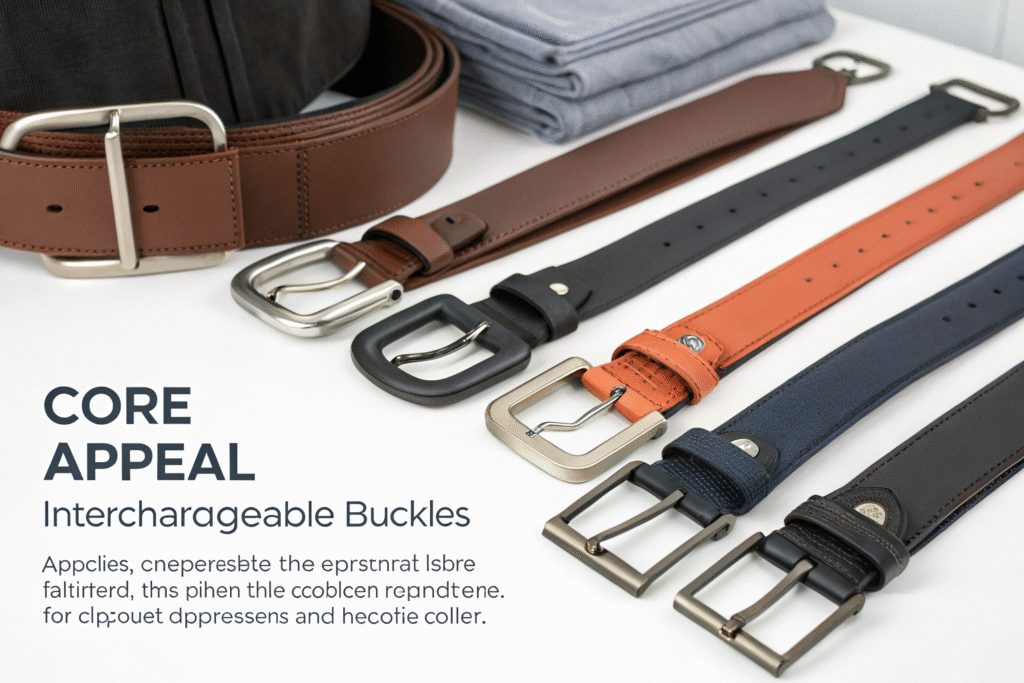
The core appeal of interchangeable buckle systems lies in their ability to maximize style options while minimizing closet space. This versatility addresses multiple consumer pain points simultaneously.
Interchangeable systems provide outfit-matching flexibility, occasion adaptation, seasonal style refreshing, and travel convenience. Consumers can maintain a minimal wardrobe while achieving maximum style variation, making these systems particularly appealing to urban dwellers with limited storage space and frequent travelers seeking to pack light.
How Do These Systems Simplify Outfit Coordination?
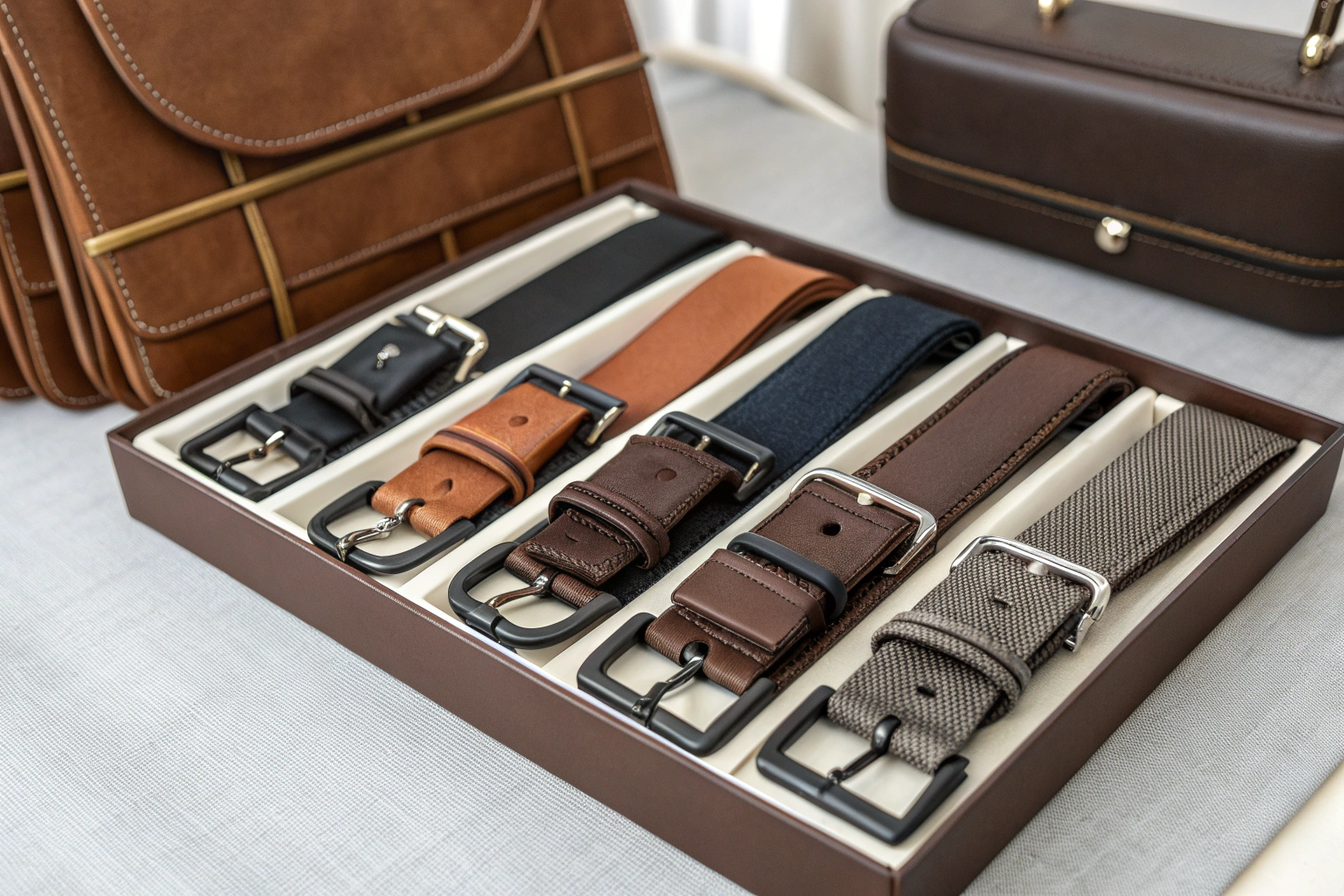
Interchangeable buckle systems simplify outfit coordination by allowing exact metal matching with jewelry, watch hardware, and other accessories. Instead of owning multiple complete belts in different buckle finishes (silver, gold, rose gold, black), consumers can switch a single strap between various buckle options. This capability is particularly valuable for fashion-conscious consumers who pay attention to metal coordination as an essential style detail. Market research from The Fashion Innovation Agency shows that 68% of consumers consider metal coordination important in their accessory choices.
What Makes Them Ideal for Travel and Minimalist Lifestyles?
The systems are ideal for travel and minimalist lifestyles because they reduce packing bulk while maintaining style options. Business travelers can carry one belt strap and multiple buckles to coordinate with different suits and shoes, while vacationers can switch between casual and dressy buckles without packing multiple belts. This efficiency aligns perfectly with the "capsule wardrobe" philosophy that emphasizes versatile pieces over single-use items. Travel industry data from Travel Goods Association indicates that versatile, multi-use products are growing 3x faster than single-purpose travel accessories.
What Sustainability Advantages Do These Systems Offer?
The environmental benefits of interchangeable buckle systems extend beyond reduced production to encompass broader sustainable consumption patterns that resonate with eco-conscious consumers.
Sustainability advantages include reduced material consumption, extended product lifespan, decreased transportation impacts, and support for circular economy principles. These systems represent a tangible application of "buy less, choose well" philosophy in the accessories market.

How Do They Reduce Fashion's Environmental Footprint?
Interchangeable systems reduce fashion's environmental footprint by decreasing the number of complete belts needed, thus conserving leather, metals, and production resources. Manufacturing multiple buckles consumes significantly fewer resources than producing multiple complete belts with straps. Additionally, when a strap wears out, consumers can replace just that component while retaining their buckle collection, further extending the system's overall lifespan. Lifecycle assessment data from the Sustainable Apparel Coalition demonstrates that modular designs can reduce accessory environmental impact by 40-60% compared to traditional models.
What Circular Economy Principles Do They Support?
These systems support circular economy principles through component-level replacement, repair facilitation, and emotional durability. Instead of discarding an entire belt when one component fails, consumers can replace only the worn part. The ability to update style through new buckles rather than complete belts also creates emotional durability—consumers develop attachment to their buckle collections and are motivated to maintain the system long-term. Frameworks from the Ellen MacArthur Foundation highlight how modular designs are essential for transitioning fashion toward circular business models.
What Economic Factors Make These Systems Appealing?
The financial benefits of interchangeable buckle systems operate at both initial purchase and long-term ownership levels, creating compelling value propositions across consumer segments.
Economic advantages include lower cost per wear, reduced long-term accessory spending, protection against fashion obsolescence, and higher perceived value. These factors make the systems attractive to both budget-conscious consumers and those viewing them as investments in versatile style.
How Does the Cost Per Wear Calculation Favor These Systems?
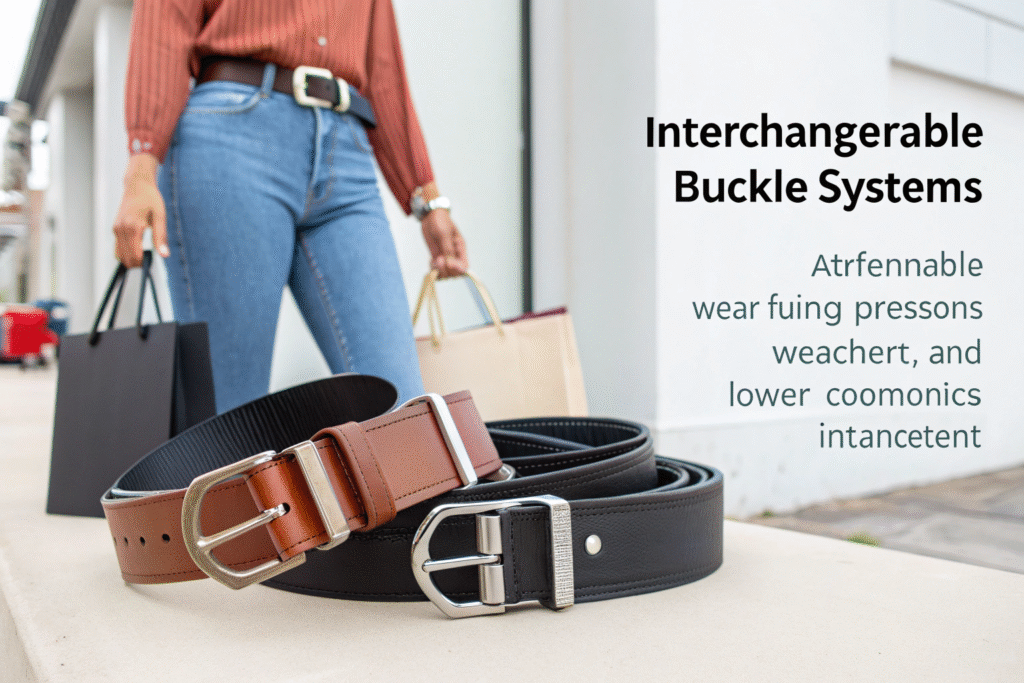
The cost per wear calculation strongly favors interchangeable systems because the initial investment spreads across numerous style combinations. While a complete system (one strap plus multiple buckles) may cost slightly more than a single high-quality traditional belt, the cost per outfit drops dramatically as additional buckles are much cheaper than complete belts. This mathematics becomes increasingly favorable as the system expands, with each new buckle option effectively costing 60-70% less than a comparable complete belt. Consumer spending analysis from McKinsey's Fashion Scope shows that consumers increasingly evaluate fashion purchases through cost-per-wear calculations rather than initial price.
What Investment Protection Do They Offer Against Style Changes?
Interchangeable systems offer protection against style changes because buckles can be updated independently of straps. When metal trends shift or personal style evolves, consumers can refresh their collection with new buckles rather than replacing entire belts. This flexibility is particularly valuable given that belt straps (especially leather) often outlast buckle style relevance. The systems also allow for seasonal experimentation without commitment—consumers can try trend-forward buckles knowing they're not investing in a complete belt that might feel dated next season. Fashion trend data from WGSN indicates that buckle styles typically cycle faster than belt strap preferences, making interchangeability particularly valuable.
What Technical Innovations Enable These Systems?
The popularity of interchangeable buckle systems depends entirely on the reliability and elegance of their connection mechanisms. Recent technical advances have solved earlier systems' shortcomings, making them both functional and fashionable.
Key technical innovations include magnetic locking systems, precision mechanical attachments, tool-free operation, and universal compatibility standards. These advances ensure the systems are secure, easy to use, and compatible across product lines.
How Do Modern Attachment Systems Ensure Security?
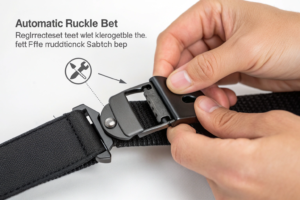
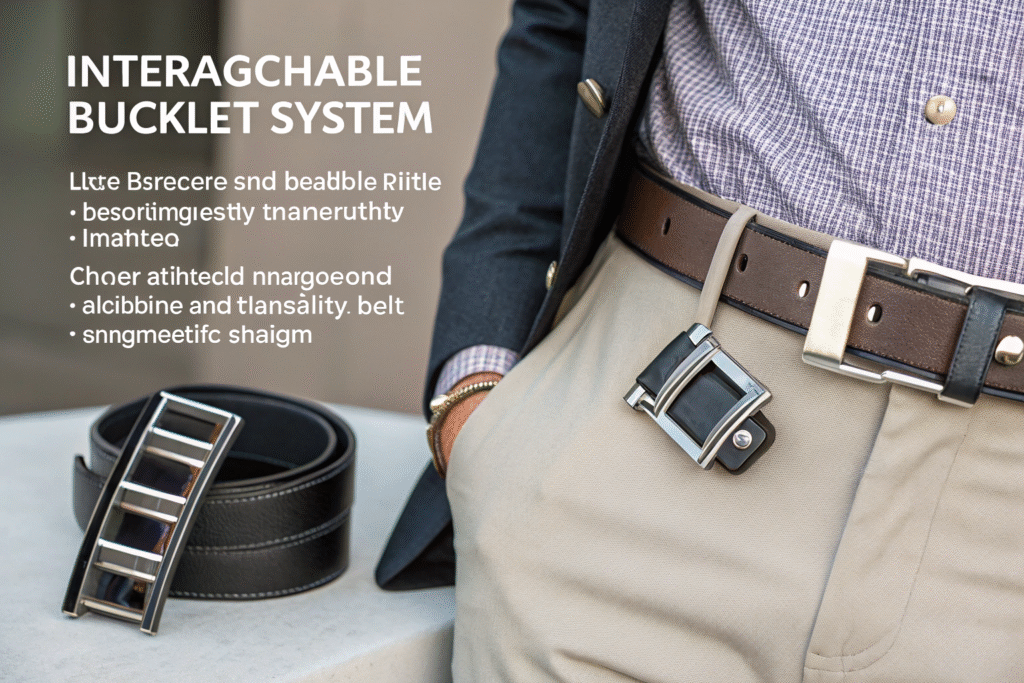
Modern attachment systems ensure security through positive locking mechanisms that require specific actions to release, preventing accidental detachment. The most reliable systems use dual-stage locking—often combining magnetic attraction with mechanical engagement—that provides both easy operation and fail-safe security. These mechanisms are tested to withstand forces significantly exceeding normal wearing conditions, typically 5-10 times the weight a belt would experience during regular use. Engineering standards from the American Society of Mechanical Engineers provide testing protocols for wearable product attachments that ensure safety and reliability.
What Design Considerations Enable Easy Operation?
Design considerations for easy operation include tool-free changing, intuitive operation without instructions, clear visual indicators of proper engagement, and mechanisms that work equally well for people with different hand strengths and dexterity. The most successful systems can be operated with one hand and provide tactile or auditory feedback when properly secured. Universal design principles from the Industrial Designers Society of America ensure these systems are accessible to the broadest possible user base regardless of age or physical ability.
Conclusion
Interchangeable buckle systems represent a significant evolution in belt design that addresses modern consumer priorities around versatility, sustainability, and value. Their growing popularity reflects broader shifts in how consumers approach fashion—seeking personalized expression through smart, multi-functional products rather than accumulating single-purpose items.
The success of these systems demonstrates how technical innovation can create both business opportunities and consumer benefits simultaneously. If you're interested in developing interchangeable buckle systems for your brand, our manufacturing expertise includes specialized experience with these mechanisms and their unique production requirements. Contact our Business Director, Elaine, to discuss how we can create customizable belt systems for your collection. Reach out to Elaine at elaine@fumaoclothing.com. Let's develop accessories that adapt to your customers' evolving style needs.