Uniform programs face a unique challenge: finding belt styles that balance professional appearance, employee comfort, durability under daily wear, and cost-effectiveness across potentially hundreds or thousands of users. The wrong belt choice can lead to inconsistent appearance, frequent replacements, and employee dissatisfaction. What belt characteristics truly serve uniform programs best across various industries and applications?
The best belt styles for uniform programs combine classic design simplicity, durable construction, easy maintenance, and versatile styling that works across multiple uniform types. Successful uniform belts typically feature conservative buckle designs, durable leather or heavy-duty webbing, standardized sizing, and colors that coordinate with uniform palettes without drawing attention away from the overall professional appearance.
Selecting the right uniform belts requires understanding both practical workplace demands and the psychological impact of professional appearance. Let's examine the key style categories, material considerations, buckle options, and program management strategies that define successful uniform belt implementations.
What Style Categories Serve Different Uniform Types?
Uniform belts aren't one-size-fits-all; different industries and roles require specific style approaches that align with their functional needs and professional standards.
Key uniform belt categories include formal corporate styles, practical duty belts, hospitality-appropriate designs, and industrial work belts. Each category addresses distinct requirements while maintaining the consistency essential to uniform programs.
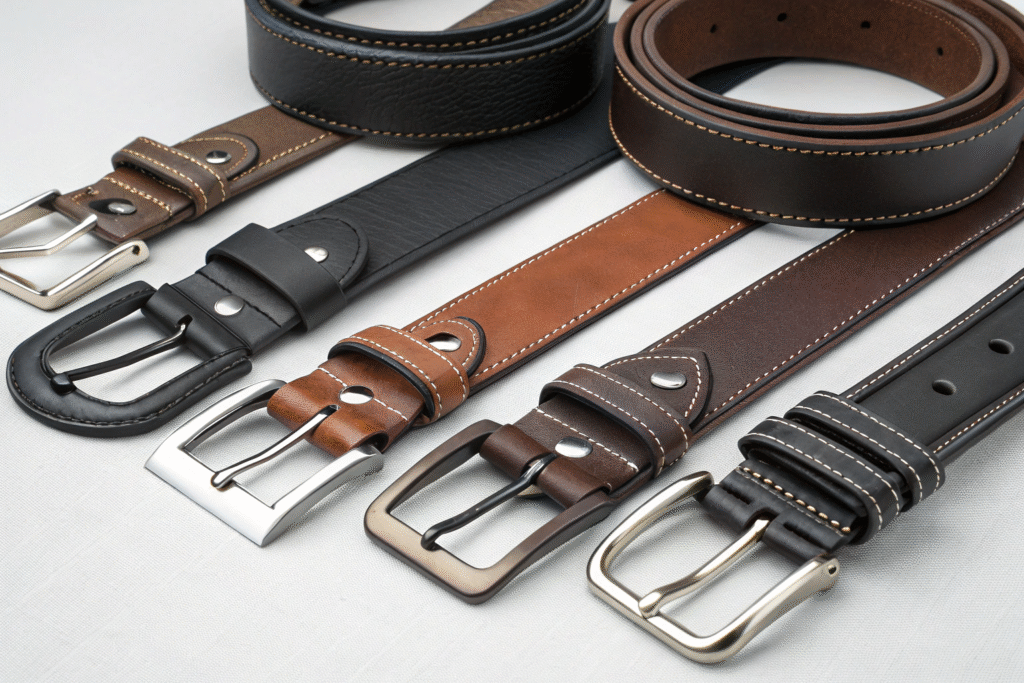
What Defines an Effective Corporate Uniform Belt?
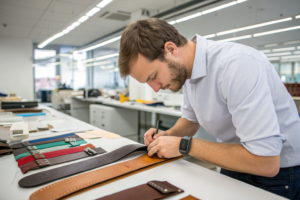
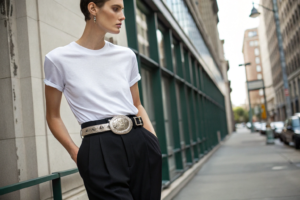
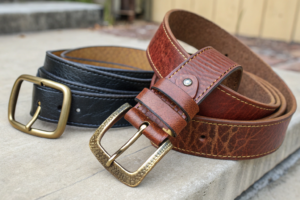
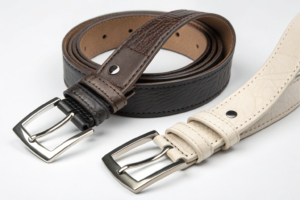
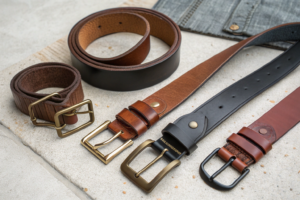
Effective corporate uniform belts feature conservative 1.25-1.5 inch widths, simple buckle designs in silver or gold tones, high-quality leather with subtle finishes, and colors that coordinate with business attire (typically black or brown). These belts should maintain a professional appearance through long workdays without requiring frequent adjustment or drawing excessive attention. The most successful corporate uniform belts disappear into the professional ensemble while providing reliable performance. Style guidelines from the Professional Association of Image Consultants provide frameworks for accessory selection that enhances rather than distracts from professional appearance.
How Do Duty Belts Differ from Standard Uniform Belts?
Duty belts differ significantly from standard uniform belts, featuring wider profiles (typically 1.75-2.25 inches), reinforced construction to support equipment weight, quick-release mechanisms for safety, and durable materials that withstand physical activity. These belts serve functional requirements beyond mere appearance, often incorporating equipment loops, reinforced stress points, and designs that distribute weight comfortably during extended wear. Standards from the National Tactical Officers Association provide specifications for duty gear that ensures both officer safety and professional appearance.
What Materials Provide Optimal Durability and Maintenance?
Material selection directly impacts both the lifespan of uniform belts and the maintenance burden on program administrators. The best materials balance longevity, appearance retention, and easy care.
Optimal uniform belt materials include full-grain leather for professional settings, ballistic nylon for duty applications, polyester webbing for industrial environments, and coated materials for hospitality where spill resistance matters. Each material offers different advantages for specific uniform contexts.
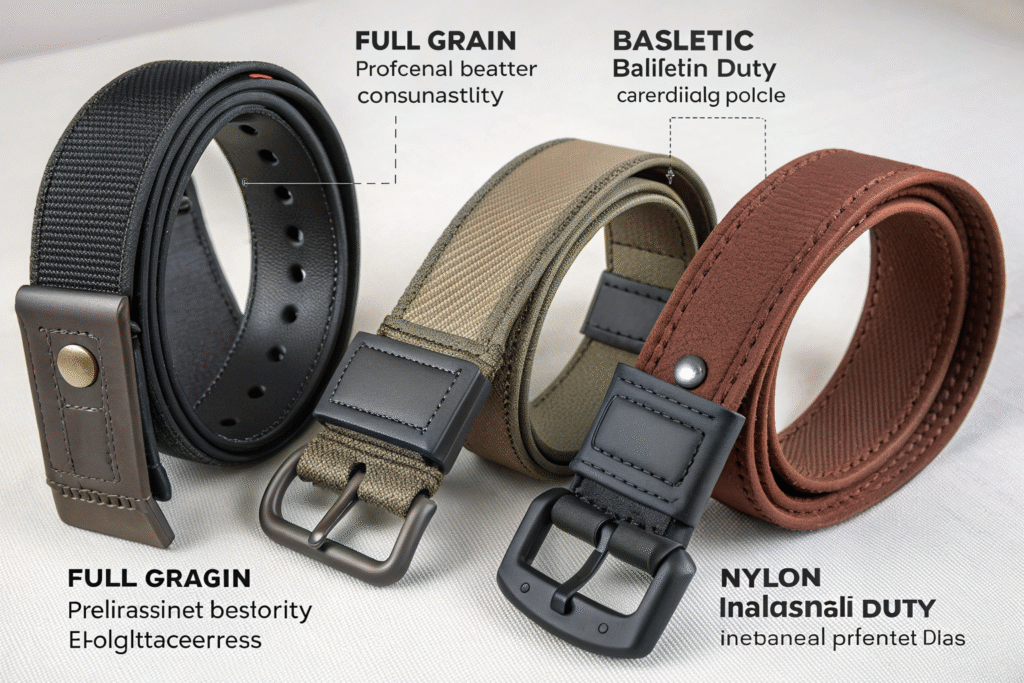
Why Does Full-Grain Leather Excel in Corporate Environments?
Full-grain leather excels in corporate environments because it develops an attractive patina rather than showing wear, maintains its shape through years of daily use, and conveys appropriate professionalism for business settings. Unlike cheaper leather alternatives that crack or peel, full-grain leather actually improves with proper care, making it cost-effective despite higher initial investment. The material's natural breathability also provides comfort during long wear periods. Durability testing from the Leather Working Group demonstrates that full-grain leather outperforms other leather types in lifespan and appearance retention.
What Makes Synthetic Materials Practical for Industrial Uniforms?
Synthetic materials like polyester webbing and reinforced nylon provide practical advantages for industrial uniforms including complete washability, resistance to oils and chemicals, consistent appearance across large programs, and lower replacement costs. These materials maintain their appearance in environments where leather would stain, warp, or deteriorate quickly. The most effective synthetic uniform belts incorporate anti-fray stitching, reinforced buckle attachment points, and color-fast dying that survives repeated industrial laundering. Performance standards from ASTM International provide testing protocols for industrial textiles that ensure adequate durability.
How Should Buckle Selection Balance Function and Appearance?
Buckle design significantly impacts both the practicality and professional appearance of uniform belts. The right buckle choices ensure easy operation while maintaining appropriate style standards.
Effective uniform program buckles include simple plate buckles for corporate settings, quick-release mechanisms for safety-sensitive roles, durable cast buckles for industrial applications, and discreet designs for hospitality uniforms. Each style addresses different functional and aesthetic requirements.
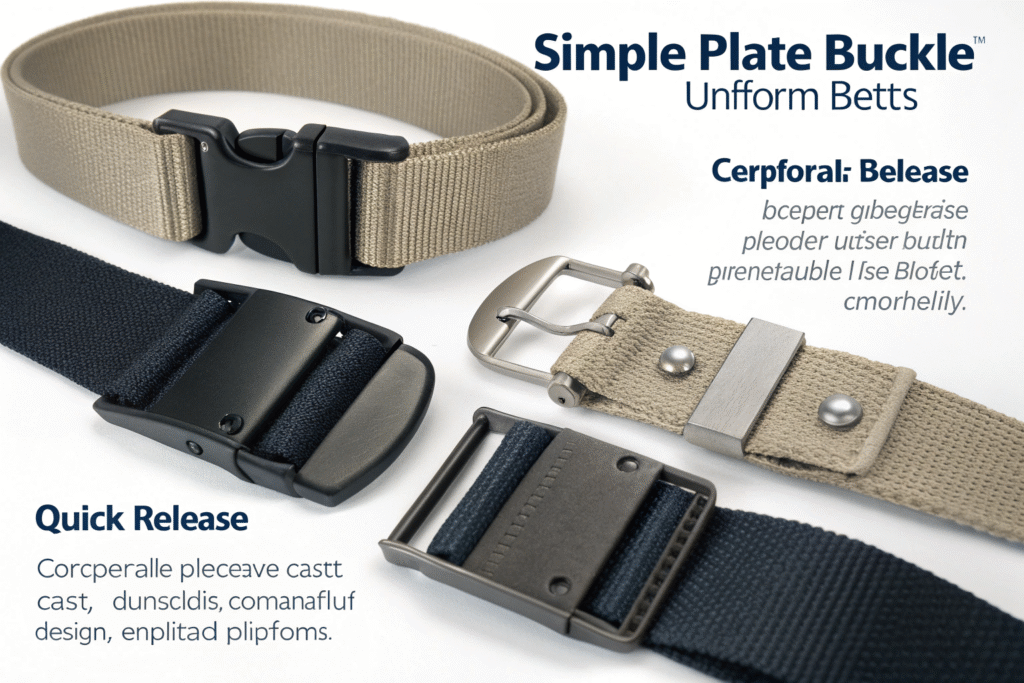
What Buckle Mechanisms Work Best for High-Use Uniforms?
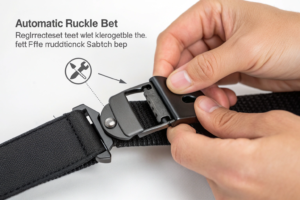
Buckle mechanisms that work best for high-use uniforms feature simple, reliable operation that functions consistently despite frequent use. Plate buckles with secure pin mechanisms provide dependable performance for most uniform applications, while roller buckles offer easier adjustment for roles requiring frequent sitting and standing. For safety-sensitive positions, quick-release buckles that open with specific motions prevent accidental opening while allowing rapid removal when necessary. Ergonomics research from the Human Factors and Ergonomics Society informs buckle designs that balance ease of use with security.
How Can Buckle Finishes Maintain Professional Appearance?
Buckle finishes maintain professional appearance through corrosion-resistant coatings, scratch-resistant surfaces, and color consistency across production batches. The most durable finishes include hard-anodized aluminum, powder-coated brass, and PVD (Physical Vapor Deposition) coatings that resist wear while maintaining consistent appearance. Uniform programs should avoid polished finishes that show scratches quickly and instead select brushed or satin finishes that maintain their appearance through daily use. Manufacturing standards from the American Society of Electroplated Plastics ensure consistent finish quality across large production runs.
What Program Management Strategies Ensure Success?
Successful uniform belt programs extend beyond product selection to encompass sizing, distribution, maintenance, and replacement strategies that ensure consistency and cost-effectiveness.
Key program management strategies include standardized sizing systems, efficient distribution methods, clear maintenance guidelines, and systematic replacement scheduling. These elements ensure the program operates smoothly at scale.
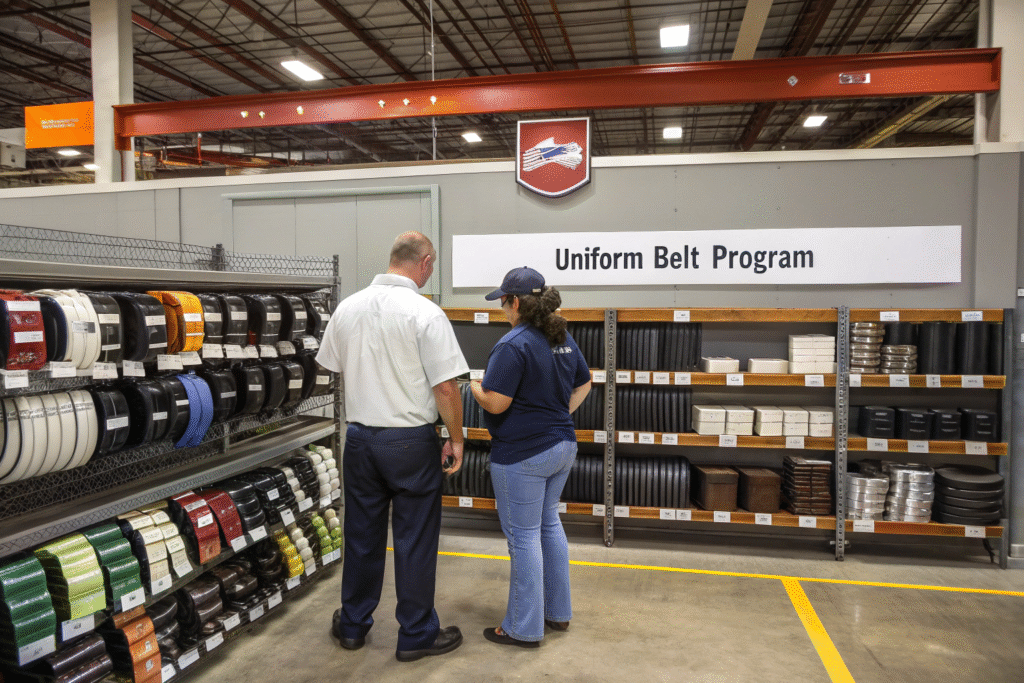
How Should Uniform Programs Handle Sizing and Fit?
Uniform programs should handle sizing and fit through standardized sizing systems that accommodate the majority of employees, with provisions for special sizing needs. The most effective programs use numerical sizing (32, 34, 36, etc.) rather than generic sizing (S, M, L) for better fit precision, provide clear measurement guides to employees, and maintain adequate inventory across the size range. Programs serving diverse workforces should include extended sizing options to ensure all employees can be properly outfitted. Anthropometric data from the CDC provides population sizing information that helps programs stock appropriate size distributions.
What Replacement Strategies Maximize Program Value?
Replacement strategies that maximize program value include scheduled replacement before failure, condition-based replacement for visibly worn items, and emergency replacement protocols for damaged belts. The most cost-effective programs typically replace belts on 18-24 month cycles for daily wear, preventing the unprofessional appearance of worn accessories while avoiding premature replacement. Maintaining a small inventory of replacement belts ensures employees can quickly exchange damaged items without extended wait times. Inventory management principles from the Council of Supply Chain Management Professionals help optimize replacement cycles and inventory levels.
How Do Uniform Belts Impact Professional Image?
The role of belts in uniform programs extends beyond functionality to significantly influence perceived professionalism, brand consistency, and employee confidence.
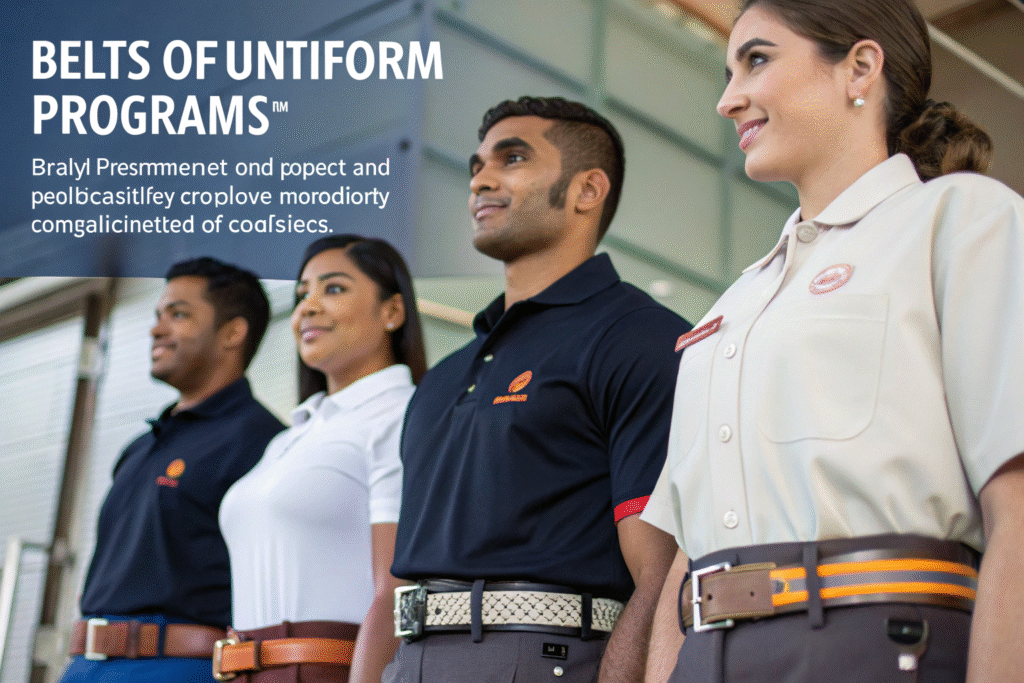
Professional image impacts include creating visual consistency across the organization, reinforcing brand standards through detail attention, enhancing employee confidence through proper fit, and communicating organizational standards through accessory quality.
What Psychological Effects Do Consistent Accessories Create?
Consistent accessories create psychological effects including perceived competence, organizational cohesion, and attention to detail that influences how both employees and customers perceive the organization. Studies show that consistent professional appearance increases perceived service quality by 15-20% and enhances brand recall. When all uniform elements—including belts—maintain consistency, they create a powerful visual identity that reinforces organizational standards. Research from the Journal of Applied Social Psychology demonstrates how consistent professional appearance influences perception across service industries.
How Can Belt Choices Support Brand Identity?
Belt choices support brand identity through color selection that aligns with brand colors, buckle designs that reflect brand personality (traditional vs. modern), and quality levels that communicate organizational standards. Even subtle details like buckle shape and finish can reinforce whether a brand wants to appear authoritative, approachable, innovative, or traditional. The most effective uniform programs treat belts as integral brand elements rather than afterthoughts. Brand management frameworks from Interbrand provide methodologies for ensuring all visual elements—including uniforms and accessories—support brand identity.
Conclusion
Selecting the best belt styles for uniform programs requires balancing professional appearance, functional requirements, durability needs, and program management practicalities. The most successful approaches treat belts as integral uniform components rather than accessories, recognizing their impact on both functionality and professional image.
The right belt choices contribute to program success through improved appearance consistency, reduced replacement costs, and enhanced employee satisfaction. If you're developing or refreshing a uniform program and need guidance on belt selection, our manufacturing expertise includes specialized experience with uniform accessories designed for program-scale implementation. Contact our Business Director, Elaine, to discuss how we can develop belt solutions that meet your uniform program requirements. Reach out to Elaine at elaine@fumaoclothing.com. Let's create uniform accessories that support your organizational standards and operational needs.