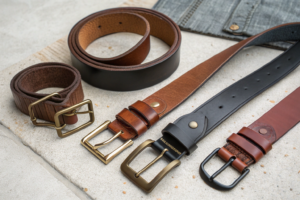
Belt stitching represents one of the most visible quality indicators, where minor inconsistencies can undermine perceived value and lead to premature product failure. While many manufacturers focus on material selection and buckle quality, stitching often receives inadequate attention despite being the structural element that determines long-term durability. What comprehensive quality control measures ensure perfect stitching consistency across entire production runs?
The best QC checklists for belt stitching consistency address thread integrity, stitch formation, tension uniformity, seam alignment, and stress point reinforcement through systematic inspection protocols. Successful quality control systems typically identify and resolve 95%+ of stitching defects before products leave the factory, combining visual inspection, measurement verification, and stress testing to ensure every belt meets exacting standards for both appearance and durability.
Achieving perfect stitching consistency requires attention to both technical specifications and visual harmony. Let's examine the thread quality standards, stitch formation criteria, tension verification methods, and reinforcement protocols that define world-class belt stitching quality control.
What Thread Quality Standards Ensure Durability?
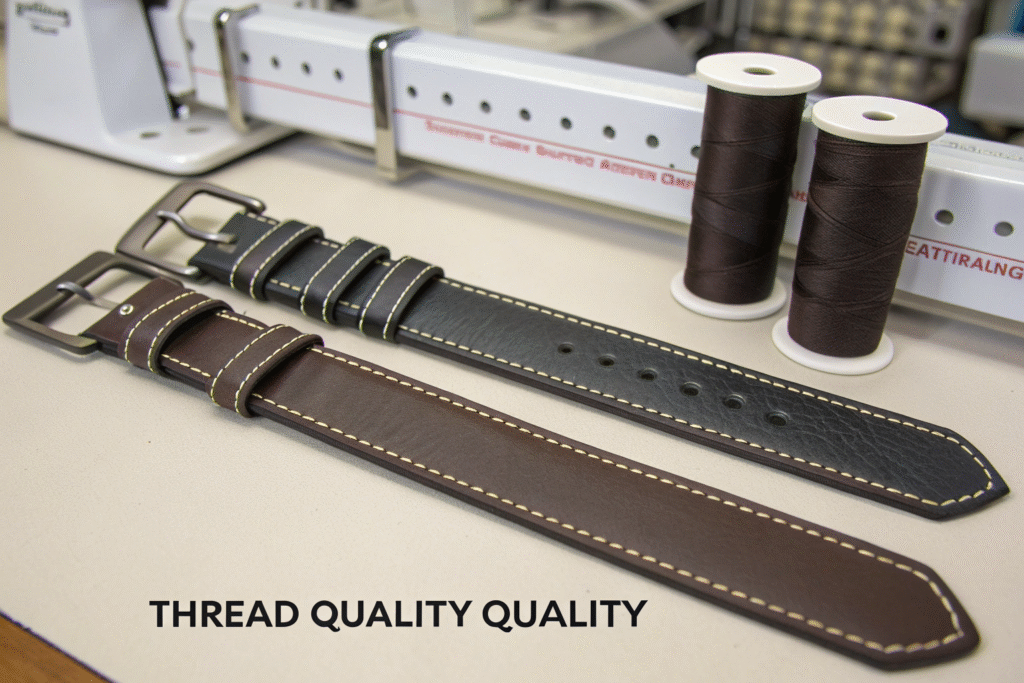
Thread selection and quality directly impact both the appearance and structural integrity of belt stitching. Compromised thread quality inevitably leads to stitching failures regardless of sewing precision.
Thread quality standards encompass material composition, weight specification, color fastness, tensile strength, and twist consistency. Each factor contributes to the long-term performance and appearance retention of stitched belts.
How Should Thread Material and Weight Be Specified?
Thread material and weight should be specified based on belt type: synthetic threads (polyester or nylon) for durability and moisture resistance in casual belts, linen or bonded nylon for traditional leather belts, and specific denier weights matching leather thickness. The industry standard follows the ASTM D204 test methods for sewing threads, with typical specifications calling for Tex 40-60 weight for medium-weight belts and Tex 80-120 for heavy-duty applications. Thread diameter should fill approximately 60-70% of the needle hole to prevent excessive friction while maintaining full coverage.
What Tests Verify Color Fastness and UV Resistance?
Tests verifying color fastness and UV resistance include the ISO 105-B02 method for color fastness to artificial light and AATCC 16 for colorfastness to light. For belt stitching, thread should withstand 40+ hours of xenon-arc exposure without noticeable fading, ensuring the stitching won't discolor before the leather shows significant wear. Additionally, rub tests (ISO 105-X12) verify that thread color won't transfer to adjacent materials during normal use. Third-party certification from organizations like OEKO-TEX provides independent verification of thread safety and performance.
What Stitch Formation Criteria Define Excellence?
Consistent stitch formation creates both visual harmony and structural reliability. Precise stitch parameters must be maintained throughout entire production runs without deviation.
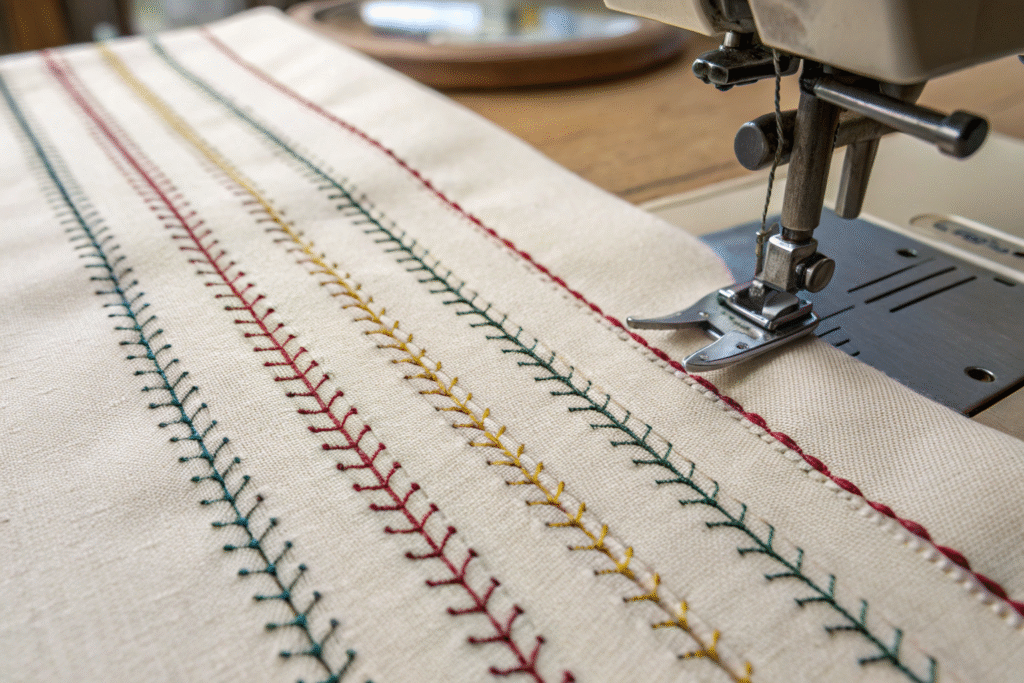
Stitch formation criteria include stitch length consistency, depth penetration accuracy, loop formation integrity, and pattern alignment. Each element contributes to the overall quality perception and functional performance.
What Are Optimal Stitch Lengths for Different Belt Types?
Optimal stitch lengths vary by belt type: 6-8 stitches per inch (SPI) for heavy leather work belts, 8-10 SPI for standard dress belts, and 10-12 SPI for fine leather fashion belts. These specifications balance structural integrity with aesthetic refinement, with tolerance limits of ±0.5 SPI throughout a single belt. Measurement should occur at multiple points, particularly checking for stitch crowding at curves or stretching on straight sections. The Industrial Sewing and Innovation Center provides guidelines for stitch length optimization based on material properties.
How Should Stitch Depth and Needle Penetration Be Verified?
Stitch depth and needle penetration should be verified through cross-section analysis ensuring the needle penetrates within 1/32 inch (0.8mm) of the material's bottom surface without passing completely through lining materials where present. Proper penetration ensures thread security while preventing visible needle marks on the belt's backside. Inspection protocols should include periodic destructive testing where sample belts are disassembled to verify thread burial depth and loop formation within the material layers. Standards from the International Association of Leather Crafters provide technical specifications for optimal stitch penetration.
What Tension Verification Methods Prevent Problems?
Thread tension represents the most common source of stitching inconsistencies, affecting both appearance and structural integrity. Proper tension creates flat, secure stitches without puckering or looping.
Tension verification methods include visual inspection protocols, measurement systems, consistency monitoring, and adjustment procedures. These approaches ensure uniform tension throughout production runs.

How Can Visual Inspection Identify Tension Issues?
Visual inspection can identify tension issues by looking for puckering (excessive tension), looping (insufficient tension), inconsistent stitch appearance, and material distortion. Inspectors should examine both sides of the belt, as tension problems often manifest differently on the top and bottom surfaces. The "pull test" – gently pulling adjacent stitches apart to check for movement – can reveal tension inconsistencies not visible to the naked eye. Training materials from the American Apparel & Footwear Association provide visual reference standards for tension evaluation.
What Mechanical Tests Quantify Tension Consistency?
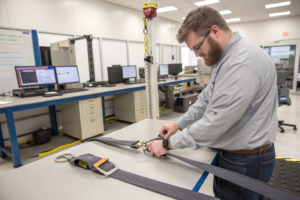
Mechanical tests quantifying tension consistency include using tension meters that measure thread force during sewing, peel tests that measure stitch security, and elongation tests that verify the stitching can accommodate normal belt flexing without failure. The most advanced systems use computerized sewing machines with integrated tension monitoring that records and graphs tension variations throughout production. For quality control sampling, ASTM D5035 provides standardized methods for testing breaking strength and elongation of textile fabrics that can be adapted for stitch testing.
What Reinforcement Protocols Ensure Long-Term Integrity?
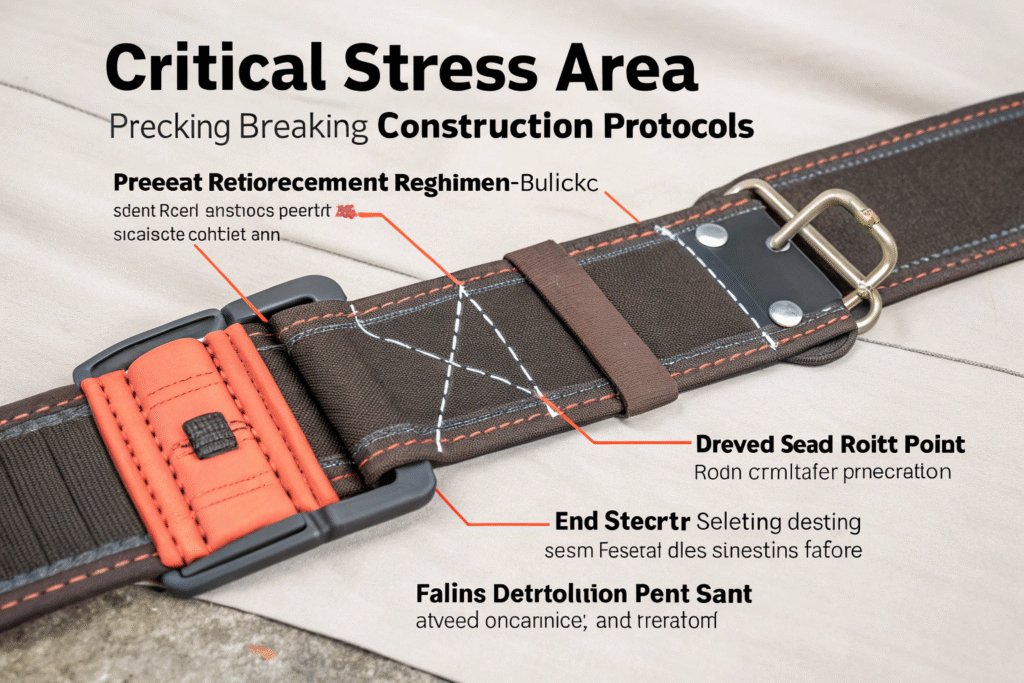
Critical stress areas require specific reinforcement protocols to prevent premature failure. These high-stress zones demand special attention beyond standard stitching guidelines.
Reinforcement protocols include buckle attachment strengthening, end point security, stress distribution design, and failure point prevention. Each protocol addresses specific vulnerability points in belt construction.
How Should Buckle Attachment Points Be Reinforced?
Buckle attachment points should be reinforced through back-tacking (3-4 reverse stitches at beginning and end), bar tacks across high-stress areas, and potentially additional stitching rows parallel to the primary seam. The reinforcement should distribute stress across multiple stitch lines rather than concentrating it at single points. For heavy-duty belts, folded and stitched leather layers at attachment points provide additional strength. Military specifications (MIL-STD-1398) provide tested reinforcement methods for load-bearing leather goods.
What Protocols Prevent End Point Unraveling?
Protocols preventing end point unraveling include melted thread ends (for synthetic threads), lock stitches that secure thread tails, and adequate thread length left after stitching (minimum 3/8 inch or 10mm). For premium products, hand-knotted thread ends provide the most secure finish. Quality control should include specific inspection of both starting and ending points, with rejection of any belts showing insufficient thread security at terminals. The CPSIA provides guidelines for thread security in wearable products.
Conclusion
Comprehensive QC checklists for belt stitching consistency must address thread quality, stitch formation, tension control, and strategic reinforcement through systematic inspection protocols. The most effective quality control systems combine trained visual inspection with precise measurement and periodic destructive testing to verify both aesthetic consistency and structural integrity.
The investment in rigorous stitching quality control pays dividends through reduced returns, enhanced brand reputation, and longer product lifespan. If you're seeking manufacturing partners with exceptional stitching quality standards, our production facilities implement comprehensive QC protocols that exceed industry norms. Contact our Business Director, Elaine, to discuss how we can ensure perfect stitching consistency for your belt collections. Reach out to Elaine at elaine@fumaoclothing.com. Let's create products where every stitch reflects quality commitment.