Hotel uniform managers face constant pressure to reduce costs while maintaining professional appearance standards. The traditional approach of issuing multiple belt colors to match different uniform combinations creates inventory management challenges, storage issues, and higher initial costs. Housekeeping carts overflow with accessory options, and staff frequently wear mismatched belts when their preferred color is unavailable.
Reversible belts are gaining hotel uniform contracts because they solve multiple operational challenges simultaneously. A single reversible belt replaces 2-3 standard belts, reducing inventory costs by 40-60% while ensuring staff always have appropriate color options available. The practical benefits extend beyond cost savings to include simplified uniform management, reduced storage requirements, and consistent professional appearance across shifts and departments.
The global corporate uniform market exceeds $70 billion annually, with hospitality representing the largest segment. As hotels seek operational efficiencies without compromising brand image, reversible belts offer a simple solution with immediate ROI. Understanding the specific advantages helps uniform suppliers position these products effectively within the competitive hotel procurement landscape.
How Do Reversible Belts Reduce Operational Costs?
The financial advantages of reversible belts extend far beyond the initial purchase price. The true cost savings emerge throughout the uniform lifecycle, from procurement through daily management and replacement. Hotels implementing reversible belt systems typically achieve 12-18 month payback periods through quantifiable operational improvements.
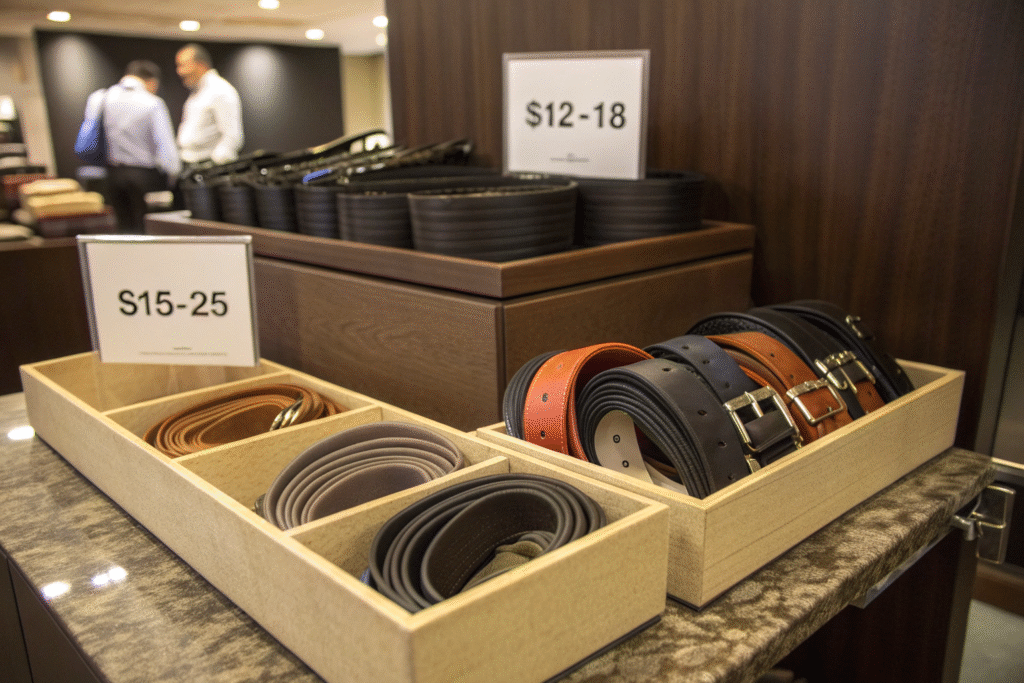
A single reversible belt costing $15-25 replaces two traditional belts costing $12-18 each, creating immediate 30-40% savings on initial procurement. More significantly, the reduced SKU count simplifies inventory management, decreases storage space requirements, and minimizes losses from misplaced or damaged items. The consolidation also reduces administrative time spent on uniform allocation and tracking.
What Inventory Management Efficiencies Do Reversible Belts Create?
Traditional belt systems require hotels to stock multiple sizes in multiple colors, creating complex inventory matrices. A property with 200 staff needing black, brown, and navy belts in 5 sizes maintains 15 separate SKUs. The reversible approach reduces this to 5 SKUs—one for each size—while providing the same color options.
This simplification creates dramatic improvements in inventory turnover ratios and reduces capital tied up in uniform inventory. Hotels report 50-70% reductions in belt inventory value while maintaining equivalent service levels. The space savings also create tangible benefits, with many properties reclaiming valuable storage areas for revenue-generating uses.
How Does Longevity Compare to Traditional Belt Options?
Quality reversible belts typically outperform traditional belts in lifespan due to their construction. The double-layer design provides reinforcement that resists the stretching and deformation that often plagues single-layer belts. The reversible mechanism distributes wear across two surfaces rather than concentrating it on one.
The total cost of ownership calculation for reversible belts shows significant advantages. While premium reversible belts carry higher initial costs, their extended lifespan (typically 18-24 months versus 12-15 for traditional belts) and replacement cost avoidance create 25-35% savings over three-year periods. This long-term perspective resonates with hotel operators focused on lifecycle costs rather than just procurement expenses.
What Staff Management Benefits Drive Adoption?
Beyond financial considerations, reversible belts address persistent staff management challenges that affect hotel operations daily. The convenience factor improves uniform compliance while reducing supervisory time spent enforcing dress code standards. These soft benefits often prove more compelling to hotel managers than the direct cost savings.
Staff appreciation for reversible belts stems from the flexibility and convenience they provide. Employees can adapt their appearance to shift changes or special events without returning to locker rooms. The elimination of "belt anxiety"—worrying about having the correct color available—reduces stress and improves focus on guest service.

How Do Reversible Belts Improve Uniform Compliance?
Traditional belt systems create compliance issues when staff cannot find their assigned color or when belts become damaged between laundry cycles. The reversible approach provides built-in backup options—if one side becomes stained or damaged, staff simply use the reverse side until replacement.
This flexibility reduces instances of staff wearing non-compliant accessories, a common issue in uniform programs. Hotels implementing reversible belts report 60-80% reductions in dress code violations related to belts. The improved consistency enhances brand image while reducing management time spent addressing appearance issues.
What Training and Onboarding Simplifications Occur?
New employee onboarding becomes significantly simpler with reversible belt systems. Instead of explaining complex color-coding systems and maintaining multiple inventory items for new hires, uniform managers issue a single belt with simple orientation. This standardization reduces training time and ensures consistency from day one.
The simplified system also benefits seasonal and temporary staff who represent significant portions of hotel workforces. The onboarding efficiency gains extend beyond uniform distribution to include reduced documentation, simpler inventory reconciliation, and easier returns during offboarding. These operational improvements create meaningful time savings for HR and uniform management staff.
How Does Design Innovation Support Professional Appearance?
Early reversible belts suffered from bulky profiles and obvious reversible mechanisms that undermined professional appearance. Modern designs have eliminated these aesthetic compromises through innovative construction techniques that create sleek, professional profiles indistinguishable from traditional belts.
Advanced manufacturing allows for thinner yet more durable leather splits and improved bonding techniques. The best reversible belts now feature profiles of 3-4mm—comparable to premium traditional belts—with seamless edges and discreet buckles that don't reveal their dual-purpose nature. This aesthetic refinement has been crucial for luxury hotel adoption.

What Material Advances Have Improved Reversible Belt Quality?
Micro-perforated leather layers allow better adhesion while maintaining flexibility. New coating technologies create more consistent color penetration and superior scratch resistance on both sides. The development of specialized reversible buckles with quick-change mechanisms maintains security while enabling easy color switching.
The material science innovations in split leather processing have been particularly important. Modern splitting machines create consistently thin layers without weak spots, while improved finishing techniques create surfaces that resist staining and wear. These advances address the durability concerns that initially limited reversible belt adoption in demanding hotel environments.
How Are Color Combinations Optimized for Hotel Use?
Successful hotel reversible belts feature color combinations that maximize versatility. Black/brown combinations serve multiple departments, while black/navy options work for both front-of-house and back-of-house staff. The most sophisticated programs offer customized color pairs matching specific brand color standards.
The strategic color selection ensures that a single belt option works across multiple uniform combinations. This approach supports the hotel industry trend toward more fashionable uniform programs without increasing complexity. Staff appreciate having coordinated options that work with different uniform elements as they rotate through their wardrobe selections.
What Sustainability Advantages Support CSR Initiatives?
Corporate social responsibility has become a significant factor in hotel procurement decisions. Reversible belts align with sustainability initiatives through reduced resource consumption, extended product lifespan, and simplified recycling at end-of-life. These environmental benefits provide additional justification beyond operational advantages.
The reduced material requirements of one belt versus two create immediate environmental benefits. Fewer belts mean less leather processing, reduced chemical usage in tanning and dyeing, and lower transportation impacts. The consolidated manufacturing process typically uses 30-40% less water and energy compared to producing two separate belts.

How Do Reversible Belts Support Waste Reduction Goals?
The extended lifespan of reversible belts directly reduces waste generation. Where traditional belt programs might cycle through 2-3 complete replacements, reversible belts typically last through the same period with minimal replacements. This reduction in discarded uniform items supports hotel zero-waste initiatives and environmental certifications.
The simplified composition of reversible belts—typically two leather layers without complex interlinings—makes them more recyclable at end-of-life. Traditional belts with multiple material types often end in landfills, while reversible belts can be separated into component materials for proper recycling. This lifecycle consideration increasingly factors into hotel sustainable procurement decisions.
How Does Reduced Laundry Frequency Impact Environmental Footprint?
Reversible belts require less frequent laundering since staff can simply flip them rather than replacing with a clean belt. This reduction in laundry cycles creates meaningful environmental benefits through decreased water consumption, chemical usage, and energy consumption.
The environmental impact of commercial laundry operations is substantial, with typical hotel uniform programs accounting for significant portions of water usage. By extending time between launderings, reversible belts contribute to conservation goals while reducing operational costs. These dual benefits make them particularly attractive for environmentally conscious hotel brands.
Conclusion
Reversible belts represent an innovative solution addressing multiple challenges in hotel uniform management. The combination of cost reduction, operational simplification, staff satisfaction, and sustainability benefits creates a compelling case for adoption across hotel departments and categories.
The initial resistance to reversible belts based on aesthetic concerns has been overcome through design innovations that deliver professional appearance without compromising functionality. As hotels continue seeking operational efficiencies that maintain or enhance service quality, reversible belts offer a simple yet effective improvement to uniform programs.
Ready to explore how reversible belts can enhance your hotel uniform program? Contact our Business Director, Elaine, at elaine@fumaoclothing.com to discuss our specialized reversible belt designs and how they can deliver operational benefits while maintaining the professional standards your brand requires.