Frequent travelers face constant weight restrictions and the frustration of heavy, bulky accessories that consume precious luggage space. Traditional belt buckles made from brass, steel, or zinc alloys add unexpected weight while offering limited durability. The search for the perfect travel belt often ends with compromises between weight, strength, and style.
Titanium buckles are ideal for lightweight travel belts because they offer the highest strength-to-weight ratio of any metal used in accessories, exceptional corrosion resistance, hypoallergenic properties, and enduring aesthetic appeal. A titanium buckle weighing 15-20 grams can provide the same strength as a stainless steel buckle weighing 45-60 grams, creating significant weight savings without compromising security or style. This unique combination of properties addresses multiple travel-specific challenges simultaneously.
The global travel accessories market is projected to reach $2.3 trillion by 2032, with lightweight and multi-functional products driving growth. Understanding why titanium outperforms alternative materials helps manufacturers and retailers develop products that meet the evolving needs of modern travelers while justifying premium pricing through demonstrable benefits.
How Does Titanium's Strength-to-Weight Ratio Benefit Travelers?
Titanium possesses the highest strength-to-density ratio of any metallic element, creating buckles that are simultaneously incredibly strong and remarkably light. This fundamental material property translates to practical advantages that travelers notice immediately and appreciate throughout their journeys.
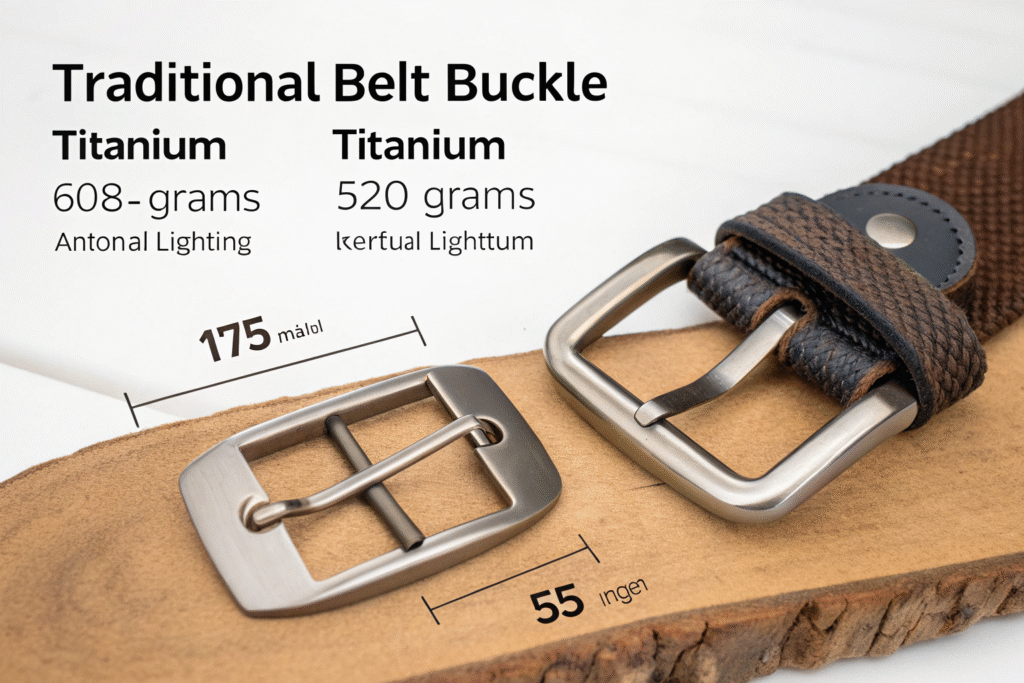
The weight savings become particularly meaningful for frequent flyers managing strict baggage allowances and ultralight travelers seeking to minimize every ounce. A traditional belt buckle can weigh 60-80 grams, while a titanium equivalent providing equivalent strength might weigh only 15-25 grams. This 50-70% weight reduction creates meaningful savings in contexts where every gram counts.
What Engineering Advantages Does Titanium Offer?
Titanium's tensile strength ranges from 230 MPa (commercially pure grades) to 1,400 MPa (high-strength alloys), compared to stainless steel's 500-1,000 MPa. However, titanium achieves this strength at approximately 45% of steel's weight. This enables designers to create buckles with thinner profiles and more elegant proportions while maintaining security and durability.
The fatigue strength of titanium—its ability to withstand repeated stress cycles—significantly exceeds most metals used in buckles. This property ensures the buckle mechanism maintains integrity through thousands of openings and closings, plus the vibrations and impacts inherent to travel. This durability prevents the mechanism failures that often strand travelers with malfunctioning accessories.
How Does Reduced Weight Impact Travel Experience?
The cumulative effect of lightweight accessories creates meaningful quality-of-life improvements during travel. A heavy traditional belt becomes noticeably uncomfortable during long flights or extended walking, while titanium buckles distribute minimal weight evenly. This comfort difference becomes increasingly significant as travel duration extends.
The ergonomic considerations for wearable items during travel emphasize weight distribution and pressure points. Titanium buckles eliminate the "bounce" and drag sensation of heavier metals, particularly when carrying backpacks or shoulder bags whose straps interact with belt hardware. This subtle but meaningful improvement enhances comfort throughout demanding travel days.
What Corrosion Resistance Properties Matter for Travel?
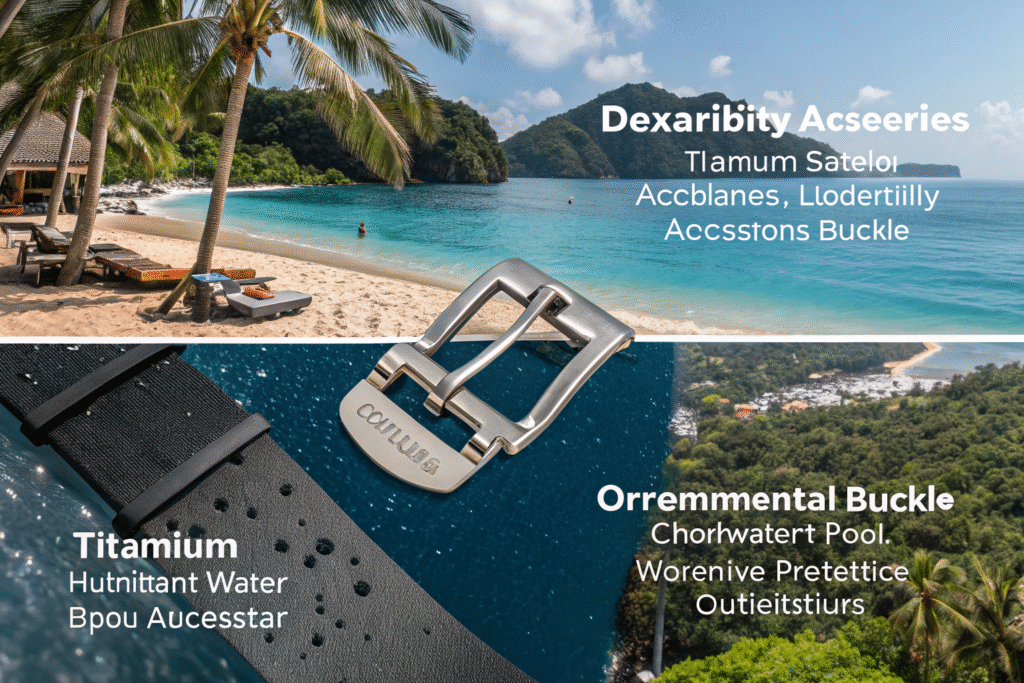
Travel exposes accessories to diverse environmental conditions that rapidly degrade inferior materials. Saltwater at beach destinations, humidity in tropical climates, chlorinated pool water at resorts, and perspiration during active exploration all accelerate corrosion in common buckle materials. Titanium's resistance to these corrosive elements ensures consistent appearance and function regardless of destination.
The protective oxide layer that forms naturally on titanium surfaces provides self-healing corrosion protection unmatched by other metals. Unlike plated or coated buckles that degrade when scratched, titanium maintains its corrosion resistance even when the surface is marred because the oxide layer reforms immediately upon exposure to oxygen.
 ")
")
How Does Titanium Withstand Marine Environments?
Titanium demonstrates exceptional resistance to saltwater corrosion, making it ideal for coastal travel and cruise vacations. While stainless steel may develop pitting and rust in marine environments, titanium remains completely unaffected even after prolonged immersion. This property eliminates concerns about beach activities, water sports, or unexpected exposure to sea spray.
The corrosion resistance data from marine applications demonstrates titanium's superiority in saltwater contexts. Titanium buckles maintain their appearance and mechanical properties despite constant salt exposure that would rapidly degrade steel, brass, or zinc alloy alternatives. This reliability provides peace of mind for travelers visiting multiple climates during single trips.
What Role Does Hypoallergenic Nature Play in Travel Comfort?
Many travelers develop skin irritations from nickel-containing metals, particularly in hot climates where perspiration accelerates metal ion transfer to skin. Titanium is completely nickel-free and biologically inert, making it the optimal choice for travelers with metal sensitivities or those seeking to avoid potential allergic reactions during trips.
The medical device industry's reliance on titanium for implants demonstrates its biocompatibility. This same property ensures titanium buckles won't cause skin discoloration, irritation, or allergic responses even during extended direct skin contact in humid environments. This benefit becomes particularly valuable for travelers who may not have access to their usual healthcare resources while abroad.
How Do Manufacturing Advances Make Titanium Accessible?
Historically, titanium's manufacturing challenges and high material costs limited its use to aerospace, medical, and military applications where performance justified expense. Recent advances in manufacturing technology have dramatically improved production efficiency, making titanium accessible for premium consumer accessories like belt buckles.
Computer-controlled machining centers, improved tooling designs, and optimized production processes have reduced titanium machining costs by approximately 40% over the past decade. These efficiencies, combined with growing material availability, have created price points that work for premium travel accessories while maintaining titanium's exceptional properties.
What Manufacturing Techniques Optimize Titanium Buckle Production?
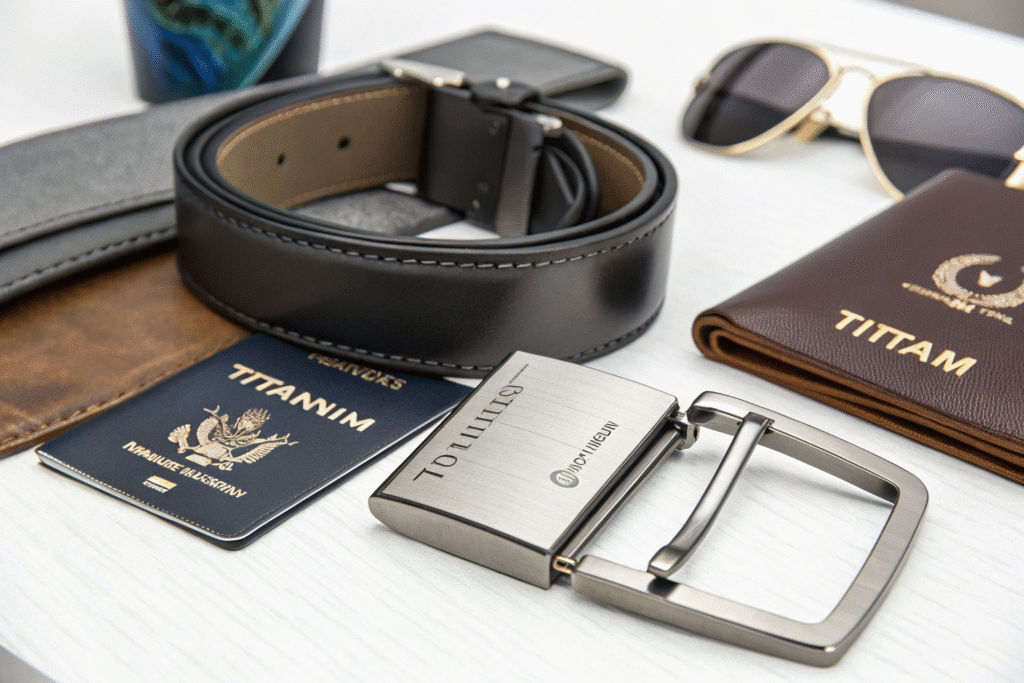
CNC machining remains the most common method for titanium buckle production, allowing precise, complex geometries with excellent surface finishes. The development of titanium-specific cutting tools and coolants has dramatically improved production speeds and reduced tool wear that previously made titanium machining prohibitively expensive.
The additive manufacturing advances with titanium powders enable designs impossible with traditional machining. While currently premium-priced, 3D-printed titanium buckles allow optimal material placement—putting metal only where needed for strength—creating even lighter components without sacrificing durability. This technology continues to evolve toward broader commercial accessibility.
How Have Design Innovations Leveraged Titanium's Properties?
Modern titanium buckle designs specifically exploit the material's unique characteristics. Thin, elegant profiles maintain strength while minimizing weight. Complex geometric cutouts reduce mass without compromising function. The ability to create spring elements integrally rather than as separate components improves reliability while reducing part count.
The design for manufacturability principles applied to titanium have evolved significantly. Designers now understand how to orient features to work with titanium's grain structure, minimizing machining time while maximizing strength. This knowledge translation from aerospace to consumer goods has been crucial for creating commercially viable titanium buckles.
What Aesthetic Advantages Support Premium Positioning?
Beyond technical performance, titanium offers aesthetic benefits that align with modern travel aesthetics. The metal's natural color provides a sophisticated, neutral tone that works across style preferences, while various surface treatments create distinctive appearances that maintain their integrity through years of use.
The natural gray-silver hue of titanium serves as a versatile neutral that complements both warm and cool color palettes. Unlike plated metals where wear reveals underlying base material, titanium's color runs throughout the material, ensuring scratches and wear don't create visually distracting contrasts.
How Do Surface Treatments Enhance Visual Appeal?
Anodizing creates durable, vibrant colors on titanium surfaces through controlled oxide layer thickening. Unlike paints or platings that add thickness and can chip or peel, anodizing transforms the surface itself, creating colors that won't wear off through normal use. This process enables brand-specific color matching while maintaining titanium's inherent benefits.
The electrochemical coloring processes for titanium produce exceptionally stable colors ranging from bronze and blue to purple and green. These colored surfaces maintain their appearance despite exposure to UV radiation, saltwater, and temperature extremes that would fade or degrade many alternative finishing methods. This color stability ensures travel belts maintain their premium appearance throughout years of use.
How Does Titanium Age Compared to Alternative Materials?
Titanium develops a subtle patina over time rather than the dramatic tarnishing or corrosion that affects many metals. This gentle aging process creates character without degradation, telling the story of travels without compromising appearance or function. Many travelers appreciate this evolving appearance that reflects their journey experiences.
The maintenance requirements for titanium are significantly lower than for many premium buckle materials. Unlike silver that requires regular polishing or brass that develops verdegris, titanium maintains its appearance with simple cleaning using mild soap and water. This low-maintenance characteristic aligns perfectly with travel needs where specialized cleaning supplies may be unavailable.
Conclusion
Titanium buckles represent the optimal solution for lightweight travel belts by combining unparalleled strength-to-weight ratio, exceptional corrosion resistance, hypoallergenic properties, and enduring aesthetic appeal. These material advantages directly address the specific challenges faced by modern travelers while supporting the minimalist, multi-functional approach that defines contemporary travel accessories.
The convergence of manufacturing advances, material availability, and consumer recognition of titanium's benefits has created a compelling value proposition that justifies premium positioning. As travelers increasingly prioritize weight savings, durability, and versatility in their accessories, titanium buckles will continue gaining market share from traditional materials.
Ready to develop travel belts with titanium buckles that meet modern traveler needs? Contact our Business Director, Elaine, at elaine@fumaoclothing.com to discuss our titanium manufacturing capabilities and how we can create lightweight, durable travel belts that deliver exceptional performance and customer satisfaction.