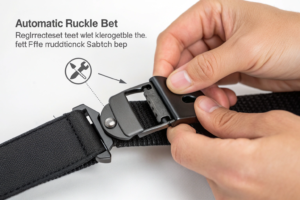
The modern retail landscape demands more than just transactional relationships between brands and customers. Integrated post-purchase surveys represent a revolutionary approach to gathering real-time feedback while enhancing customer engagement. For belt manufacturers and retailers, this technology provides invaluable insights while creating competitive differentiation in a crowded market.
Sourcing belts with integrated post-purchase surveys requires identifying suppliers with QR code or NFC technology capabilities, establishing data collection infrastructure, ensuring seamless user experience, and maintaining product quality while incorporating feedback mechanisms. The most successful implementations balance technological sophistication with practical usability, creating natural feedback opportunities that customers actually want to use rather than avoid.
As consumer expectations evolve toward interactive product experiences, understanding how to source these smart belt solutions becomes crucial for brands seeking deeper customer relationships and continuous product improvement.
What Technical Capabilities Should Suppliers Possess?
The foundation of successful survey-integrated belts lies in the supplier's technical capabilities and understanding of both physical manufacturing and digital integration.
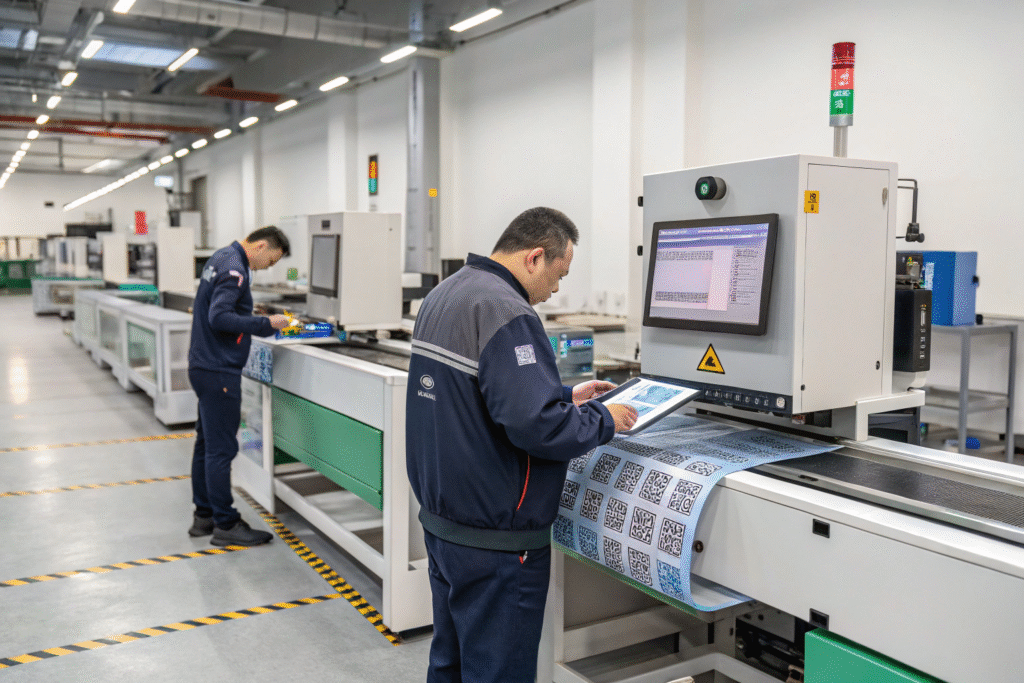
How Do QR Code and NFC Technologies Compare?
Understanding the technical differences between QR codes and NFC tags is essential for selecting the right approach. QR codes offer cost-effective implementation through simple printing on tags or direct belt stamping, requiring only smartphone cameras for activation. NFC tags provide tap-to-connect convenience but require embedded components that increase production complexity and cost. Each technology serves different customer demographics and use cases.
QR codes typically work best for budget-conscious implementations where survey participation is encouraged but not required for product use. The technology has near-universal smartphone compatibility and minimal production impact. NFC tags suit premium products where seamless experience justifies additional cost, particularly for brands targeting tech-savvy consumers who appreciate the "magical" interaction of tap-based activation. The most forward-thinking suppliers offer both options, guiding brands toward optimal choices based on target market and budget.
What Data Infrastructure Must Suppliers Support?
Competent suppliers provide comprehensive data handling infrastructure that protects customer information while delivering actionable insights. This includes secure landing pages for survey completion, data encryption during transmission, and analytical dashboards that transform raw feedback into product intelligence. The infrastructure must scale with survey response volumes while maintaining performance during peak usage periods.
The most sophisticated suppliers offer tiered data services ranging from basic survey hosting to advanced analytics identifying correlation between customer feedback and specific production batches. This granularity enables precise quality control improvements and targeted design modifications. Suppliers should demonstrate compliance with international data protection regulations (GDPR, CCPA) and provide clear documentation of their security protocols and data handling practices.
How Does Integration Impact Product Design and Quality?
Incorporating survey technology must enhance rather than compromise the belt's primary function and aesthetic appeal.

What Placement Strategies Maintain Product Integrity?
Strategic tag and code placement ensures technology integration doesn't compromise comfort or durability. QR codes typically work best on removable tags or discreet belt loop positions that don't contact skin or clothing. NFC tags require careful positioning within belt layers to maintain flexibility while ensuring consistent scan reliability. The most successful placements balance accessibility with preservation of the product's fundamental characteristics.
Quality suppliers conduct rigorous testing to validate placement decisions, evaluating how integration affects belt drape, flexibility, and long-term wear patterns. The best implementations make the technology virtually undetectable during normal use while remaining instantly accessible when customers decide to provide feedback. This seamless integration demonstrates respect for the product's primary function while adding valuable secondary capabilities.
How Can Materials Accommodate Embedded Technology?
Selecting appropriate materials that accommodate embedded technology without compromising quality requires specialized expertise. Leather belts need careful skiving to create pockets for NFC tags without creating weak points, while woven fabrics may require reinforced zones to support integrated components. The material selection process must consider both the physical requirements of technology housing and the customer's tactile experience.
Advanced suppliers have developed proprietary techniques for embedding technology across various material types, maintaining surface continuity while ensuring component protection. These techniques include laser-cut pockets in leather, woven compartments in textile belts, and injection-molded cavities in synthetic materials. The most successful implementations use these integration methods as quality differentiators rather than necessary compromises, often resulting in patents or exclusive manufacturing capabilities.
What User Experience Considerations Drive Participation?
The survey experience itself determines whether customers provide feedback or abandon the process, making user-centric design essential for success.

How Can Frictionless Activation Be Achieved?
The activation process must minimize friction through intuitive design and clear value proposition. Successful implementations use simple visual cues indicating scanning points, straightforward instructions requiring minimal reading, and immediate reward for participation. The time between deciding to provide feedback and beginning the survey should be under 10 seconds to prevent abandonment.
The most effective activations create "aha moments" where customers feel clever for discovering the feature rather than confused by complicated technology. This often involves designing the scanning point as a natural part of the product rather than an obvious add-on. The activation experience should feel like a bonus feature rather than an obligation, setting positive tone for the subsequent survey interaction.
What Survey Design Maximizes Completion Rates?
Well-designed surveys respect the customer's time while gathering meaningful data. The most successful implementations limit surveys to 3-5 focused questions that can be completed in under 90 seconds. Questions should progress from emotional responses (how the belt makes them feel) to specific feedback (fit, comfort, appearance) to demographic information (optional). This structure maintains engagement while collecting progressively detailed information.
Advanced systems use conditional logic to customize questions based on previous answers, creating personalized experiences that feel relevant rather than generic. The survey conclusion should acknowledge participation while offering value in return—early access to new designs, exclusive content, or entry into prize drawings. This reciprocal approach encourages continued participation across multiple purchases.
How Can Sourcing Strategy Maximize ROI?
Strategic sourcing decisions determine whether survey-integrated belts deliver sufficient value to justify their additional cost and complexity.
| Sourcing Consideration | Impact on ROI | Implementation Tip |
|---|---|---|
| Technology Cost vs. Data Value | Higher initial cost must be justified by actionable insights | Start with pilot programs measuring data quality before full implementation |
| Production Scalability | per-unit costs decrease with volume but require commitment | Negotiate tiered pricing based on order volume and data services required |
| Customer Participation Rate | Directly impacts data collection effectiveness | Design compelling value exchange that encourages ongoing participation |
| Data Integration Capabilities | Determines how easily insights inform business decisions | Require API access or regular data exports for internal analysis |

What Pricing Models Balance Cost and Value?
Sophisticated suppliers offer flexible pricing models that align with the value derived from survey data. Traditional per-unit pricing works for basic implementations, while value-based models tying costs to participation rates or data quality may better serve advanced programs. The most strategic approaches include revenue-sharing components where suppliers benefit from product improvements driven by their technology.
The total cost analysis should include both direct manufacturing expenses and ongoing data management costs. Suppliers should provide transparent breakdowns of these components, enabling accurate ROI calculations based on projected participation rates and data utilization. The most successful partnerships establish clear metrics for success during sourcing negotiations, creating shared objectives rather than purely transactional relationships.
How Can Implementation Be Phased for Risk Management?
A phased implementation approach minimizes risk while validating the concept before full commitment. The initial phase might involve simple QR codes on hang tags for a single product line, measuring participation rates and data quality. Successful results justify progression to embedded NFC technology and expanded product range, while disappointing outcomes allow for strategy adjustment without significant sunk costs.
Each phase should include specific learning objectives and success criteria, creating clear gates for progression or pivot decisions. The most effective phased approaches test both technology performance and customer response, recognizing that technical success means little without customer participation. This methodical progression builds organizational confidence while developing internal capabilities for leveraging the collected data.
Conclusion
Sourcing belts with integrated post-purchase surveys represents a significant opportunity to transform customer relationships from transactional to conversational. The technology enables continuous product improvement while creating engaging experiences that differentiate brands in competitive markets. Successful implementation requires careful supplier selection, thoughtful integration planning, and strategic data utilization.
The brands that master this approach gain unprecedented visibility into customer satisfaction and product performance, enabling data-driven decisions that increase loyalty and reduce returns. As this technology becomes more accessible, early adopters stand to build significant competitive advantages through deeper customer understanding and more responsive product development.
Ready to explore survey-integrated belts for your brand? Contact our Business Director, Elaine, at elaine@fumaoclothing.com to discuss how our manufacturing expertise and technology partnerships can create intelligent belt solutions that gather valuable customer insights while enhancing product appeal.