The wearable technology market has expanded beyond wrist-based devices to incorporate tracking capabilities into everyday accessories, with belts emerging as an ideal platform for discreet, continuous health monitoring. This convergence of fashion and function represents a significant opportunity for brands seeking to capitalize on the growing wellness market while differentiating their accessory offerings. However, sourcing these hybrid products requires navigating complex technical requirements and supply chain considerations.
Sourcing belts with integrated activity trackers requires identifying manufacturers with electronics expertise, selecting appropriate sensor technologies, ensuring seamless connectivity, managing power requirements, and maintaining aesthetic integrity. The most successful implementations balance technical capability with fashion sensibility, creating products that function as precision monitoring devices while remaining credible as style accessories. This dual requirement demands suppliers capable of operating at the intersection of traditional leathercraft and advanced electronics manufacturing.
As consumers increasingly expect their accessories to serve multiple purposes, understanding how to source integrated tracker belts becomes essential for brands seeking to remain competitive in the evolving accessories landscape.
What Technical Capabilities Should Suppliers Possess?
The foundation of successful activity tracker belt sourcing lies in identifying suppliers with specific technical competencies beyond traditional belt manufacturing.
How Do Electronics Integration Capabilities Vary?
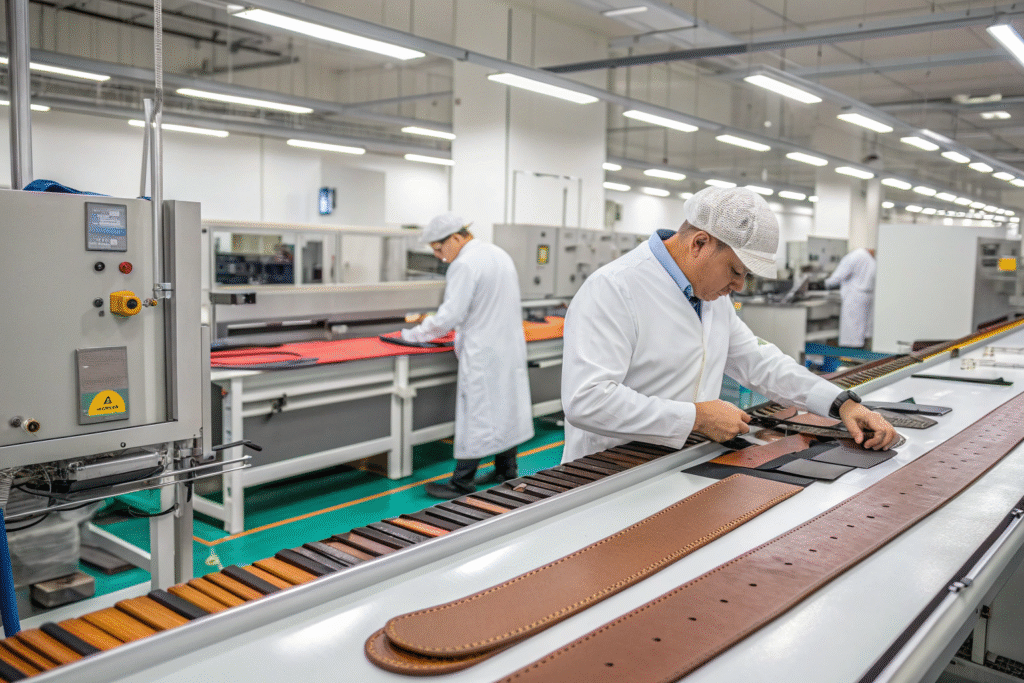
Suppliers range from traditional belt manufacturers who outsource electronics assembly to fully integrated operations handling both leathercraft and electronics in-house. The most capable suppliers maintain electrostatic discharge (ESD) protected areas for circuit board assembly, precision equipment for embedding sensors without compromising materials, and testing facilities that verify both fashion quality and technical performance. This comprehensive approach ensures cohesive products rather than accessories with visibly added technology.
The manufacturing process for integrated tracker belts requires specialized knowledge in multiple domains: flexible circuit design that withstands repeated bending, power management for extended battery life, and mechanical engineering that protects delicate components from impact and moisture. Suppliers should demonstrate experience with the specific challenges of wearable electronics, particularly the trade-offs between device size, battery capacity, and functionality that determine product viability in competitive markets.
What Sensor Technologies Are Most Suitable for Belt Integration?
Activity tracking belts typically incorporate inertial measurement units (IMUs) containing accelerometers, gyroscopes, and sometimes magnetometers to capture movement data. The most advanced implementations also include optical heart rate sensors, though these present particular challenges in belt form factors where consistent skin contact isn't guaranteed. Suppliers should understand the positioning requirements for different sensor types and have strategies for maintaining sensor performance despite the flexible nature of belt wear.
The most sophisticated suppliers offer sensor fusion algorithms that combine data from multiple sources to improve accuracy. For example, combining accelerometer data with heart rate information creates more reliable activity classification and calorie expenditure calculations. These software capabilities are as important as hardware quality, requiring suppliers to maintain both electrical engineering and data science expertise—a combination rarely found in traditional accessories manufacturing.
How Should Connectivity and Power Management Be Handled?
Seamless connectivity and practical power management determine whether integrated tracker belts succeed as convenient daily wear items or become frustrating high-maintenance gadgets.
What Connectivity Standards Ensure Reliable Performance?
Integrated tracker belts typically utilize Bluetooth Low Energy (BLE) for connection to smartphones, balancing range, data throughput, and power consumption appropriately for activity tracking applications. The most reliable implementations incorporate antenna designs optimized for the belt's form factor, where the device's position against the body can signal strength. Suppliers should demonstrate understanding of these RF engineering considerations rather than treating connectivity as a standard component.
Beyond basic connectivity, sophisticated systems implement smart synchronization strategies that manage data transfer to preserve battery life. Rather than maintaining constant connection, these systems batch data and synchronize when connection quality is high or when the companion application is actively used. This approach extends operational time between charges while ensuring activity data isn't lost. Suppliers should provide detailed specifications about connection stability, reconnection behavior, and data integrity under real-world use conditions.
What Power Solutions Balance Performance and Practicality?
Belt-integrated trackers face significant power management challenges due to size constraints that limit battery capacity. The most effective solutions combine hardware efficiency with intelligent power management software. Suppliers should demonstrate sophisticated approaches to extending battery life through motion-activated waking, adaptive sampling rates that increase during activity and decrease during rest, and ultra-low-power sleep states that maintain basic functionality while minimizing energy consumption.
Charging solutions represent another critical consideration, with the most user-friendly implementations utilizing wireless charging or magnetic connectors that don't require precise alignment or multiple attempts to establish connection. These approaches maintain the belt's aesthetic integrity while ensuring the charging process doesn't become a usability barrier. Suppliers should provide verified battery life under typical usage patterns and clear documentation about charging times and battery longevity over repeated cycles.
What Design Considerations Maintain Fashion Integrity?
The successful integration of tracking technology must enhance rather than compromise the belt's function as a fashion accessory.

How Can Technology Be Visually Minimized?
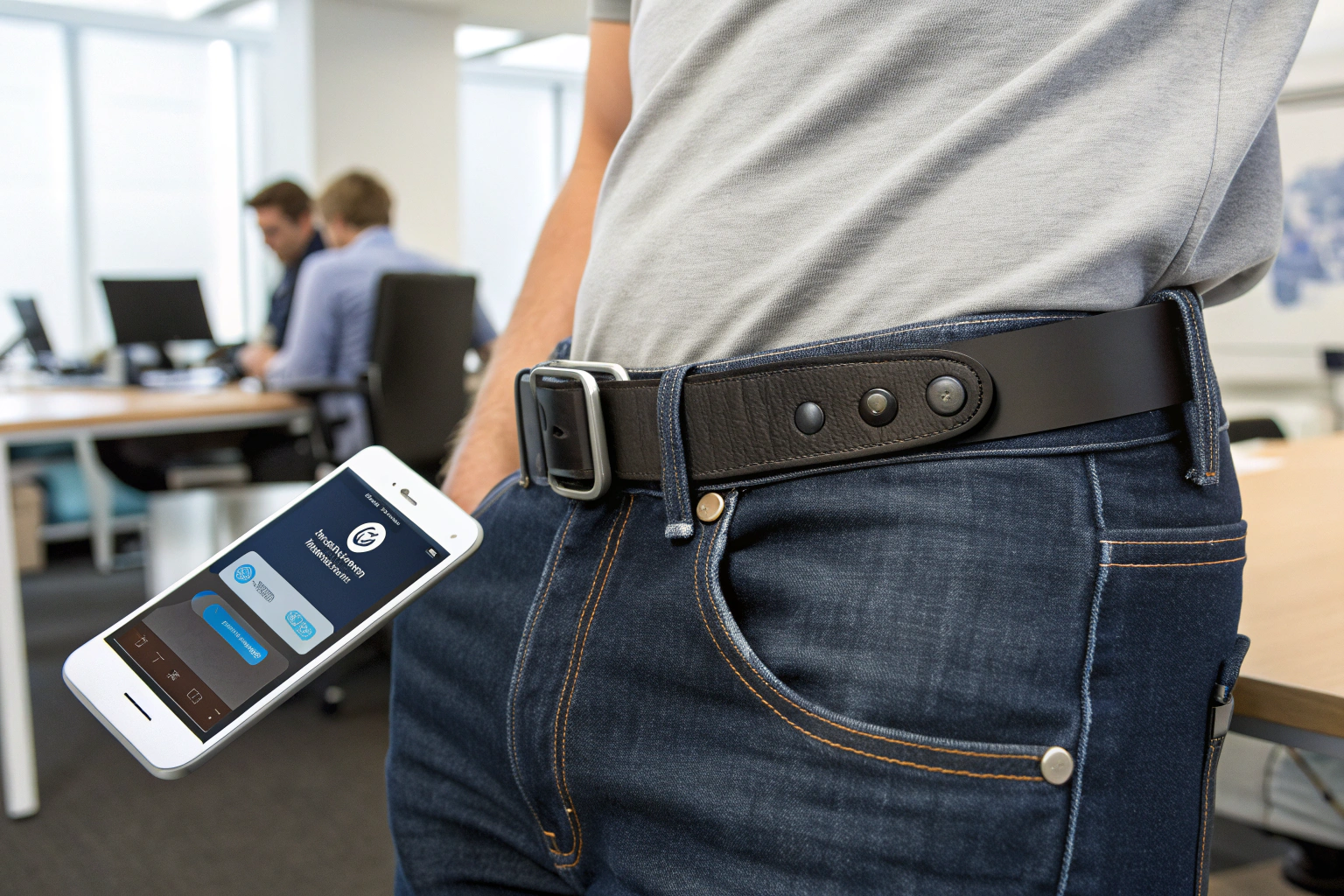
The most successful tracker belts employ discreet design strategies that conceal technology within existing belt elements. Rather than adding visible plastic modules, advanced implementations embed sensors within the buckle itself, use flexible batteries that follow the belt's contour, and distribute electronics to prevent localized bulges. This approach maintains the clean silhouette expected of quality belts while incorporating sophisticated monitoring capabilities.
Material selection plays a crucial role in visual integration. Leather with natural grain patterns helps disguise seams around electronic compartments, while metal buckles provide both aesthetic appeal and functional RF window for wireless communication. The most sophisticated designs make the technology virtually undetectable during normal wear, revealing its capabilities only through the companion application or subtle indicator lights visible only to the wearer.
What Compromises Between Function and Form Are Necessary?
Despite technological advancements, some design compromises remain inevitable when integrating electronics into belts. Tracking accuracy might be slightly lower than dedicated fitness devices due to less consistent positioning, battery life will be limited by size constraints, and certain materials may interfere with sensor performance. Transparent suppliers clearly communicate these trade-offs rather than overpromising capabilities.
The most honest implementations focus on the specific activities where belt-based tracking excels—all-day activity monitoring, sleep tracking, and posture assessment—rather than attempting to replicate the specialized functions of wrist-based fitness devices. This focused approach creates products with clear value propositions rather than attempting to be everything to all users. Suppliers should help brands identify which tracking capabilities align with their customers' actual needs rather than simply offering the longest possible feature list.
How Can Data Accuracy and Privacy Be Ensured?
The value of activity tracking depends entirely on data reliability and security, requiring specific verification and protection measures.
| Data Consideration | Implementation Requirement | Verification Method |
|---|---|---|
| Activity Recognition | Machine learning algorithms trained on belt-worn data | Comparison against research-grade accelerometers |
| Heart Rate Monitoring | Optical sensors with pressure management systems | Clinical validation against ECG measurements |
| Sleep Stage Detection | Multi-sensor fusion algorithms | Comparison against polysomnography |
| Data Security | End-to-end encryption and anonymization | Third-party security auditing |
| Privacy Compliance | GDPR, CCPA, and healthcare regulation adherence | Legal review and certification |

What Validation Processes Ensure Accuracy?
Reputable suppliers conduct rigorous validation testing comparing their tracker data against gold-standard measurement systems. For activity tracking, this typically involves having subjects wear both the tracker belt and research-grade accelerometers while performing structured activities. The resulting data is analyzed to quantify accuracy for step counting, activity classification, and energy expenditure estimation—with reputable suppliers providing these validation results to potential partners.
The validation process should extend beyond laboratory conditions to real-world usage scenarios where factors like clothing layers, varying wearing positions, and different body types can affect performance. Suppliers with extensive experience understand these variables and have developed compensation algorithms that maintain reasonable accuracy across diverse user populations and wearing conditions. This practical validation is more valuable than perfect laboratory results that don't translate to daily use.
How Is User Data Protected?
With growing concern about personal data security, suppliers must demonstrate comprehensive protection strategies for the sensitive health information collected by tracker belts. This includes encryption of data both during transmission and storage, anonymization practices that separate identity from activity data, and clear privacy policies that explain how data is used. The most responsible suppliers undergo independent security audits and maintain certifications like ISO 27001 that verify their data protection capabilities.
Beyond basic security, ethical data handling includes giving users control over their information through clear consent processes, easy-to-understand privacy settings, and straightforward data deletion options. Suppliers should provide brands with the tools to implement these privacy-respecting features in their companion applications, recognizing that data responsibility is a shared commitment throughout the product ecosystem.
Conclusion
Sourcing belts with integrated activity trackers requires navigating the intersection of traditional accessories manufacturing and advanced electronics capabilities. The most successful implementations balance technical sophistication with fashion sensibility, creating products that function reliably as tracking devices while remaining desirable as personal accessories. This balance demands suppliers with unusual combinations of expertise and a commitment to addressing the unique challenges of wearable technology.
As the market for smart accessories grows, brands that master the sourcing of integrated tracker belts will position themselves at the forefront of the convergence between fashion and technology. The ability to offer genuine utility alongside style represents a significant competitive advantage in an increasingly crowded accessories market.
Ready to explore belts with integrated activity trackers for your collection? Contact our Business Director, Elaine, at elaine@fumaoclothing.com to discuss our technical capabilities and experience creating fashionable, functional tracker belts that meet both style and performance standards.