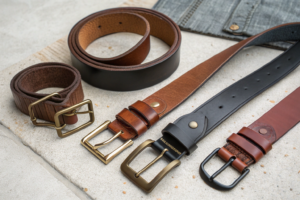
Workplace safety standards increasingly recognize that every component of protective equipment—including belts—must meet specific flame resistance requirements in hazardous environments. For workers in oil and gas, electrical utilities, chemical processing, and firefighting, ordinary belts can become serious safety hazards when exposed to high temperatures, electrical arcs, or flash fires. Verifying genuine flame resistance requires moving beyond supplier claims to systematic validation through standardized testing and documentation review.
Verifying flame resistance in workwear belts requires conducting standardized laboratory testing, reviewing certification documentation, inspecting material composition, assessing construction quality, and understanding applicable safety standards for specific industries. The verification process must confirm that belts won't ignite, continue burning, melt, or drip when exposed to ignition sources—failures that could turn a simple accessory into a primary injury source in emergency situations.
With worker safety and regulatory compliance at stake, understanding proper verification methods is essential for safety managers, procurement specialists, and workers who depend on their protective equipment performing as expected during critical moments.
What Laboratory Testing Methods Provide Verification?
Standardized laboratory testing forms the foundation of flame resistance verification, providing objective, reproducible data under controlled conditions that simulate workplace hazards.
How Does Vertical Flame Testing Work?
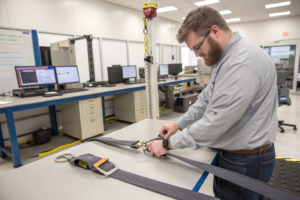
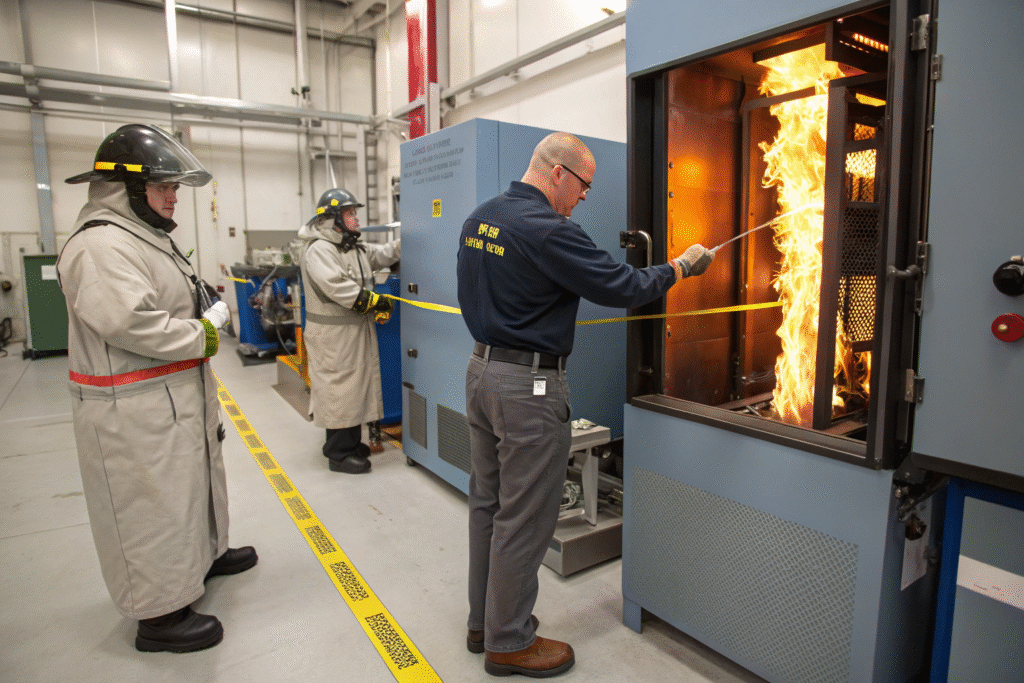
The ASTM D6413 Standard Test Method for Flame Resistance of Textiles represents the most widely recognized verification method for flame-resistant belts. This test suspends belt specimens vertically in a specialized chamber and exposes them to a controlled flame for 12 seconds. After removing the flame, technicians precisely measure after-flame time (how long specimens continue burning) and after-glow time (how long they continue glowing). To pass, belts must demonstrate after-flame times under 2 seconds with no melting or dripping that could cause additional injury.
The test's validity depends on proper specimen preparation, calibration of equipment, and controlled laboratory conditions. Reputable testing facilities follow strict protocols including conditioning specimens at standard temperature and humidity before testing, using verified methane gas with specific BTU content, and conducting regular calibration of timing instruments. These controls ensure results are comparable across different testing sessions and laboratories, providing the consistency needed for safety verification.
What Additional Specialized Tests Might Be Required?
Depending on the workplace environment, belts may require additional verification testing beyond basic flame resistance. For electrical workers, arc rating testing determines how much thermal energy a belt would transmit during an electrical arc event. The ASTM F1959 test measures arc thermal performance value (ATPV), while the NFPA 70E standard specifies required protection levels. For petrochemical environments, thermal shrinkage testing ensures belts won't constrict dangerously when exposed to heat, potentially trapping workers or compromising other protective equipment.
The most comprehensive verification programs include durability testing that confirms flame resistance persists through conditions simulating actual use. This might involve abrasion resistance testing, flex durability testing, and laundering verification according to manufacturer instructions. These additional tests address the real-world concern that flame resistance might degrade through wear, cleaning, or environmental exposure, leaving workers unprotected when they need it most.
What Certification Documentation Provides Assurance?
Proper documentation verifies that testing has been conducted appropriately and products meet recognized safety standards.

What Third-Party Certification Should You Look For?
Independent third-party certification marks provide the most reliable verification of flame resistance claims. In North America, UL (Underwriters Laboratories) certification indicates products have been tested against specific safety standards and manufacturing facilities undergo regular audits to ensure consistent quality. Similarly, CSA Group certification provides assurance that products meet applicable Canadian standards. These independent verifications are more credible than supplier self-declarations, which may not follow standardized protocols.
The certification process typically involves initial product testing followed by ongoing surveillance of manufacturing facilities. Certified products display specific marks that indicate which standard they meet, such as "UL Certified FR" for flame resistance or specific designations for electrical protection. Verification should include confirming that certifications are current rather than expired, as standards updates or manufacturing changes can void previous certifications. The most reputable manufacturers provide easy online verification of certification status using unique product identifiers.
What Test Reports Should Manufacturers Provide?
Comprehensive test reports from accredited laboratories provide detailed verification data beyond simple certification marks. These reports should specify the testing standard used, complete test conditions, individual results for all specimens tested, and precise measurements of all required parameters. For flame resistance, this includes after-flame time, after-glow time, char length (how much the material deteriorated), and observations about melting, dripping, or other failure modes.
The most valuable test reports include information about lot traceability, confirming that tested samples came from the same production batch as belts being purchased. Without this connection, test results may not accurately represent the specific products being verified. Reports should also indicate the laboratory's accreditation status, with ISO 17025 accreditation representing the highest standard for testing competence. This detailed documentation creates an audit trail that supports verification decisions with concrete data rather than marketing claims.
What Material and Construction Factors Affect Performance?
The specific materials and construction methods used in belt manufacturing determine whether flame resistance claims are technically credible.
| Material Characteristic | Flame Resistance Impact | Verification Method |
|---|---|---|
| Base Fiber Type | Inherently FR fibers (aramid, modacrylic) vs. treated fibers | Review material specifications and supplier documentation |
| Fabric Weight | Heavier weights typically provide better protection | Measure grams per square meter and compare to tested samples |
| Construction Method | Tight weaves resist flame penetration better than loose weaves | Examine weave density under magnification |
| Thread Composition | FR thread required to prevent stitch failure | Verify thread specifications match fabric ratings |
| Hardware Materials | Must not melt or transfer heat excessively | Review metal composition and melting points |
How Do Material Choices Determine Flame Resistance?
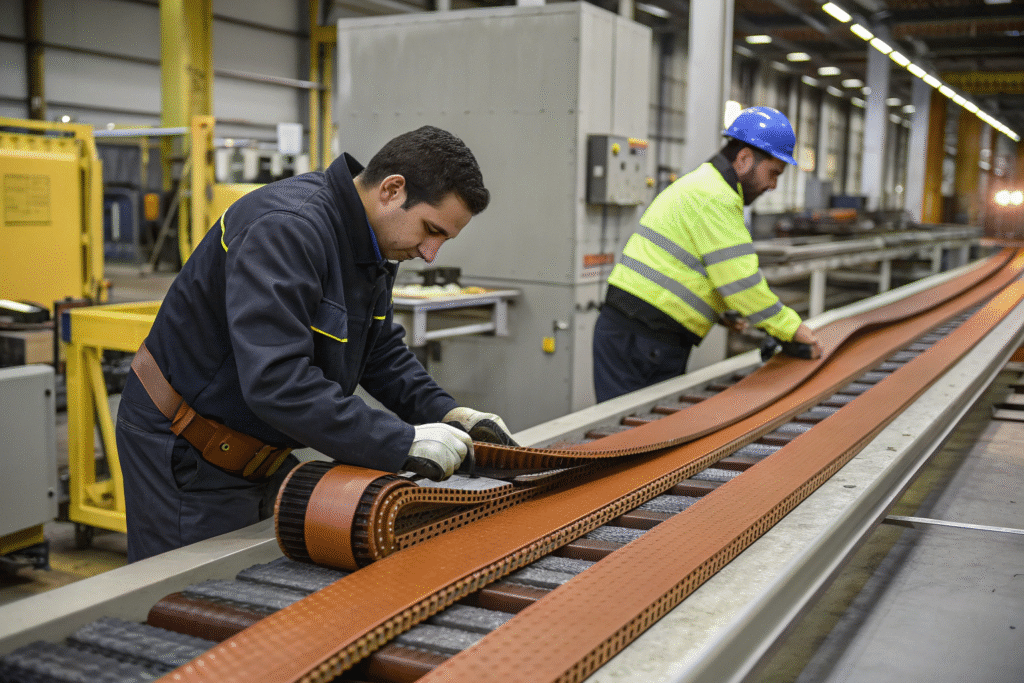
Workwear belts utilize either inherently flame-resistant fibers or treated materials that achieve flame resistance through chemical applications. Inherent FR fibers like aramid (Nomex, Kevlar), modacrylic, or FR rayon contain chemical structures that resist combustion naturally, providing permanent protection that doesn't wash out. Treated FR materials typically use cotton or cotton-blend fabrics with flame-retardant chemicals applied, which can diminish over time with laundering or wear. Verification should identify which approach a belt uses, as this affects long-term performance and maintenance requirements.
The material verification process should include reviewing material safety data sheets (MSDS) that specify fiber content, treatment chemicals (if applicable), and any potential health considerations. For treated FR materials, verification should confirm the durability of the treatment through multiple laundering cycles, as some treatments can lose effectiveness if not properly maintained. The most reliable manufacturers provide clear care instructions that preserve flame resistance throughout the product's service life.
What Construction Elements Require Verification?
Flame resistance can be compromised by non-compliant construction elements even when primary materials meet standards. Stitching thread must have equivalent flame resistance to the main belt material, or it may fail first in a fire situation. Hardware components like buckles and keepers must withstand high temperatures without melting, deforming, or transferring excessive heat to the wearer. Dyes and finishes must not compromise flame resistance or introduce new hazards when heated.
Verification should include careful inspection of how different components interact thermally. A belt might use FR webbing but standard metal buckles that heat rapidly and cause burns, or stitching that chars away while the main belt material remains intact. The most thorough verification examines complete assemblies rather than individual components, recognizing that safety depends on the weakest element in the system. This comprehensive approach prevents situations where belts technically meet material standards but fail in real-world use.
How Should Verification Be Integrated into Procurement?
Establishing systematic verification processes ensures consistent safety standards across purchasing decisions and protects organizations from liability.

What Pre-Qualification Process Ensures Compliance?
Implementing a supplier pre-qualification process streamlines verification by establishing approved vendors whose products have already been thoroughly vetted. This process typically involves reviewing manufacturers' quality management systems, auditing their testing protocols, and verifying their certification status with recognized bodies. Pre-qualified suppliers provide documented evidence that their manufacturing processes consistently produce compliant products, reducing the need for item-by-item verification.
The most effective pre-qualification systems include ongoing monitoring rather than one-time approval. This might involve periodic review of test reports from different production lots, facility audits to observe quality control processes, and verification that manufacturers promptly address any non-conformities identified during surveillance. This continuous approach recognizes that manufacturing conditions can change, potentially affecting product safety even with previously reliable suppliers.
What Incoming Inspection Procedures Provide Final Verification?
Even with pre-qualified suppliers, systematic incoming inspection provides final verification that received products meet specifications. This process should include visual inspection for proper labeling (including FR certification marks), random sampling for destructive testing when appropriate, and documentation review confirming lot traceability. These checks provide the last defense against non-compliant products entering inventory before distribution to workers.
The most practical incoming inspection programs use risk-based approaches that focus verification resources where they're most needed. High-volume purchases or safety-critical applications might warrant more extensive testing, while repeat orders of previously verified products might require only confirmation of consistent labeling and documentation. This balanced approach maintains safety standards without creating unnecessary delays or costs that might tempt workers to bypass proper procedures.
Conclusion
Verifying flame resistance in workwear belts requires a systematic approach combining standardized testing, documentation review, material verification, and procurement controls. This multi-layered process ensures that belts will perform as expected in hazardous environments where failure could have severe consequences. The most effective verification programs recognize that safety depends on both initial product qualification and ongoing confirmation that manufacturing consistency maintains protection levels.
As workplace safety standards evolve and new materials emerge, verification processes must adapt to address changing hazards and technologies. Maintaining rigorous verification standards protects both worker safety and organizational liability while ensuring that safety investments deliver their intended protection.
Ready to verify flame resistance for your workwear belt requirements? Contact our Business Director, Elaine, at elaine@fumaoclothing.com to discuss our certified flame-resistant belt options and comprehensive documentation that simplifies your verification process.