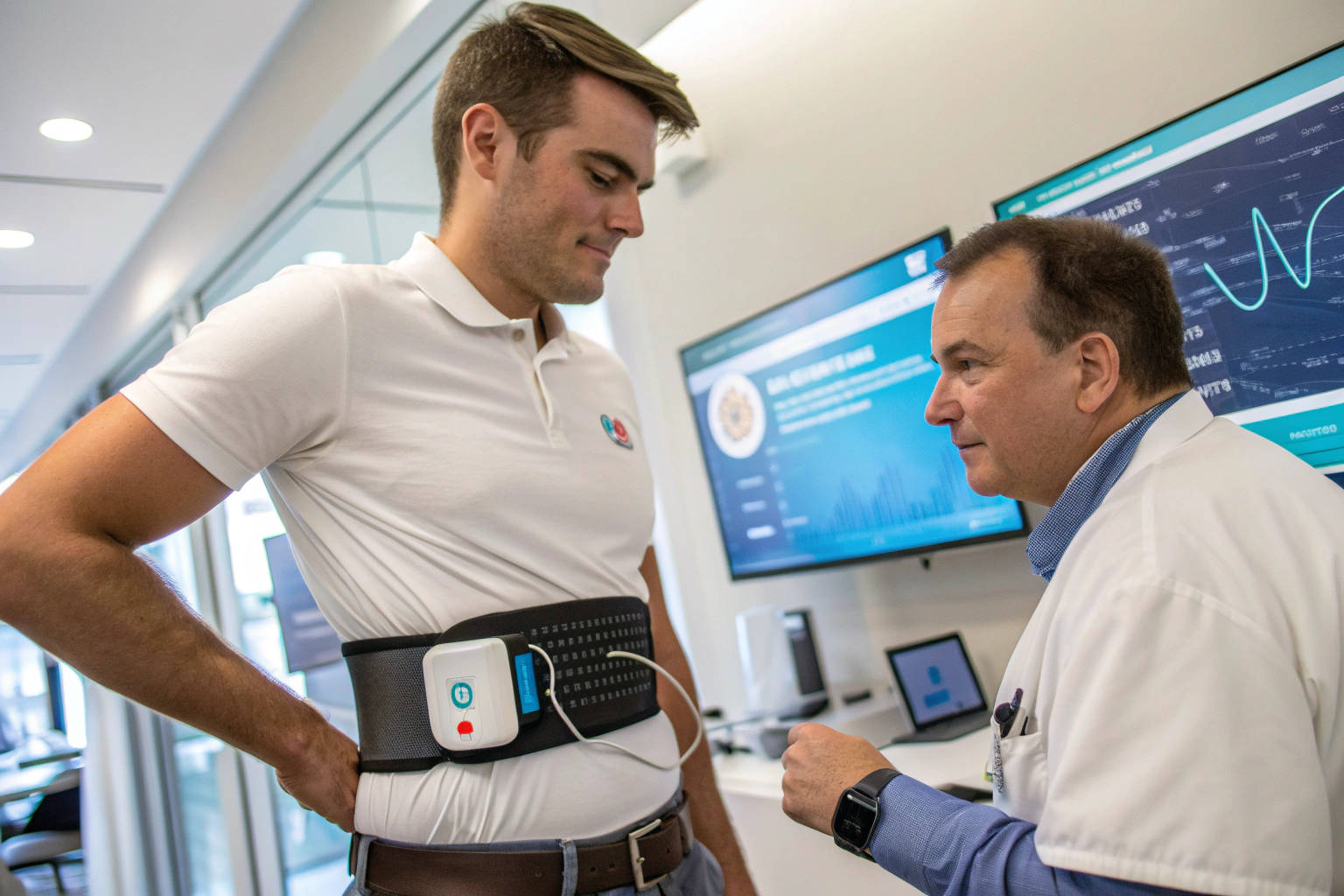
The healthcare technology landscape is undergoing a fundamental shift toward continuous, unobtrusive monitoring, with wearable devices evolving from fitness trackers to medical-grade diagnostic tools. In this transformation, belts have emerged as an ideal platform for biometric monitoring, offering unique advantages over wrist-worn devices and patch-based sensors for specific health applications. This convergence of medical technology and everyday accessories represents a significant advancement in personalized healthcare.
Biometric belts are emerging in health tech because they provide optimal positioning for core body measurements, enable continuous clinical-grade monitoring without lifestyle disruption, offer superior sensor stability compared to extremities, and facilitate early detection of specific health conditions through torso-based biometrics. These medical-grade accessories leverage the belt's natural position around the torso to capture data that wrist-worn devices cannot reliably measure, particularly for cardiovascular, respiratory, and metabolic monitoring.
As healthcare shifts toward prevention and early intervention, understanding why biometric belts are gaining traction reveals important insights about the future of continuous health monitoring and how medical technology is integrating seamlessly into daily life rather than remaining separate from it.
What Technical Advantages Do Biometric Belts Offer?
The physical positioning and construction of belts provide distinct technical benefits for biometric monitoring that other form factors cannot match.
How Does Torso Positioning Enhance Signal Quality?
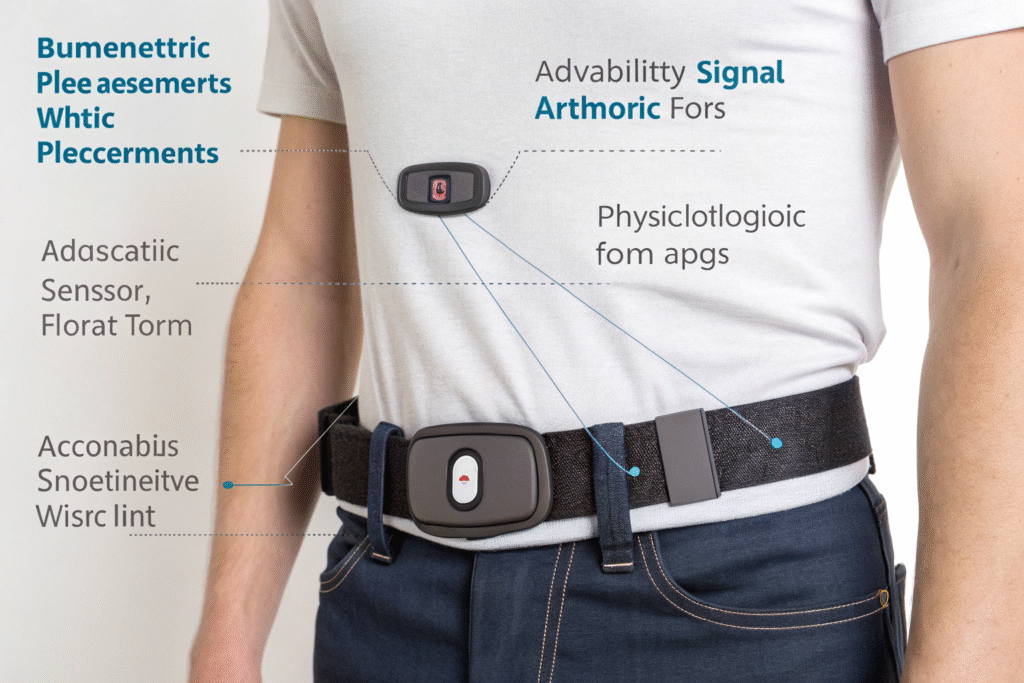
Biometric belts leverage their proximity to core organs to capture physiological signals with greater amplitude and clarity than peripheral devices. The torso's stable position relative to the heart provides cleaner electrocardiogram (ECG) readings without the motion artifacts that plague wrist-based measurements. Similarly, respiratory monitoring via thoracic expansion or bioimpedance delivers more direct measurement of breathing patterns than the derived respiratory rate calculations from heart rate variability used in wrist devices.
The mechanical stability of a properly fitted belt significantly reduces signal noise caused by device movement. While watches and patches can shift relative to the skin during daily activities, a belt maintains consistent sensor contact through its circumferential tension. This stable platform enables more accurate photoplethysmography (PPG) for blood oxygen monitoring, more reliable skin temperature measurement, and more precise bioimpedance analysis for fluid status and body composition—all crucial parameters for health assessment.
What Sensor Integration Opportunities Exist?
The belt form factor provides substantial surface area for integrating multiple sensing modalities that would be impractical in smaller wearables. This expanded real estate allows for sensor arrays that can measure from multiple positions, creating spatial data that single-point sensors cannot capture. For example, electrode arrays can capture multi-lead ECG information, while distributed temperature sensors can map thermal variations across the torso that might indicate inflammation or vascular issues.
The belt's structure also supports sensors that require specific mechanical properties. Pressure sensors can monitor intra-abdominal pressure changes that relate to digestive health or core stability. Strain gauges can precisely measure respiratory effort and tidal volume more accurately than accelerometer-based breathing detection in smartwatches. The rigid sections typical of belt buckles can house more sophisticated electronics that would be uncomfortable on flexible wristbands, including larger batteries for extended monitoring periods.
What Health Monitoring Capabilities Drive Adoption?
Biometric belts enable specific health assessments that align with growing healthcare priorities around preventive medicine and chronic condition management.
How Do They Enable Better Cardiovascular Monitoring?
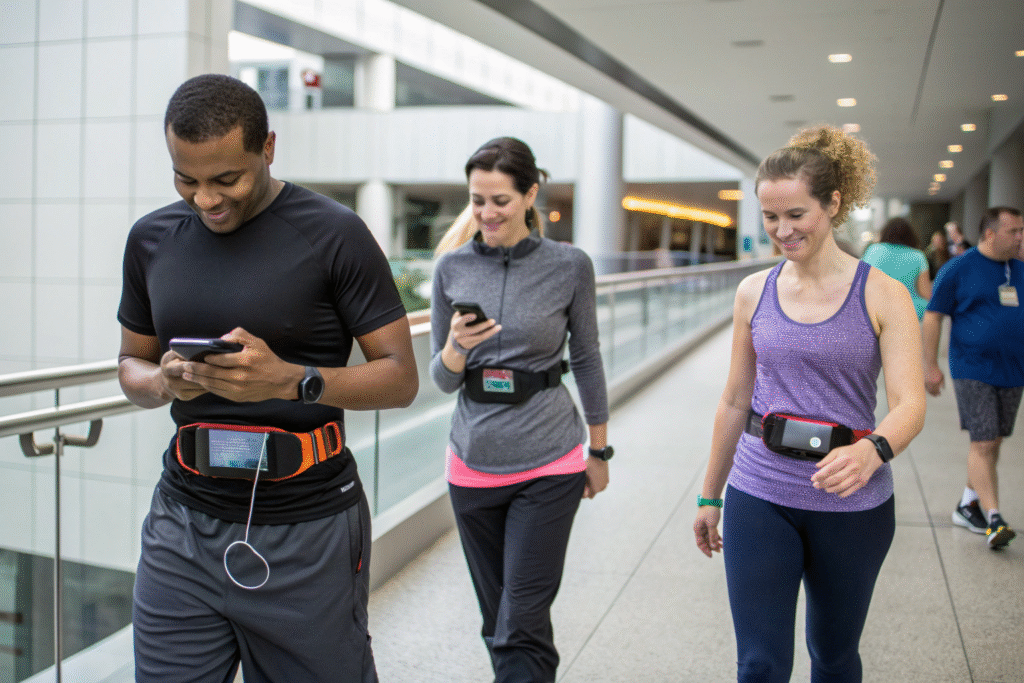
Biometric belts provide clinical-grade cardiovascular assessment through their ability to capture full ECG waveforms rather than just heart rate. The torso positioning allows for electrode placement that approximates clinical lead configurations, enabling detection of arrhythmias, conduction abnormalities, and ischemic changes that wrist-based devices typically miss. This capability is particularly valuable for conditions like atrial fibrillation, where early detection significantly impacts stroke prevention.
The continuous nature of belt-based monitoring addresses a critical limitation of traditional Holter monitors—the limited duration of observation. While Holter monitors typically record for 24-48 hours, biometric belts can monitor indefinitely, dramatically increasing the likelihood of capturing intermittent arrhythmias or ischemic events. This extended monitoring window provides clinicians with substantially more data to inform diagnosis and treatment decisions, particularly for symptoms that occur unpredictably.
What Metabolic Insights Do They Provide?
Through bioelectrical impedance analysis (BIA), biometric belts can track changes in fluid distribution and body composition that provide insights into metabolic health. The torso placement is particularly valuable for monitoring central fluid shifts that may indicate developing conditions like congestive heart failure or renal issues. Unlike consumer scales that provide whole-body impedance, belt-based BIA can focus specifically on core fluid status, offering more targeted information for clinical assessment.
The continuous nature of belt monitoring also enables metabolic rate estimation through respiratory quotient calculations and activity-specific energy expenditure tracking. By correlating breathing patterns with movement and heart rate, these systems can provide more accurate calorie expenditure data than heart rate alone, supporting weight management and metabolic condition monitoring. This comprehensive metabolic picture supports both preventive health approaches and chronic condition management.
How Do Biometric Belts Address Healthcare Challenges?
The emergence of biometric belts responds to specific limitations in current healthcare delivery models and monitoring technologies.
| Healthcare Challenge | Biometric Belt Solution | Impact on Care |
|---|---|---|
| Intermittent Data Collection | Continuous monitoring during normal activities | Identifies transient events missed during brief clinical assessments |
| Patient Adherence | Discreet, comfortable form factor integrated into daily wear | Improves compliance compared to medical devices that disrupt lifestyle |
| Early Detection | Baselines normal patterns and flags deviations | Enables intervention before conditions become symptomatic or critical |
| Remote Patient Monitoring | Continuous data transmission to clinicians | Reduces need for in-person visits while maintaining oversight |
| Health Disparities | Potentially lower-cost alternative to some medical devices | Could increase access to monitoring technology |
How Do They Support Aging in Place?
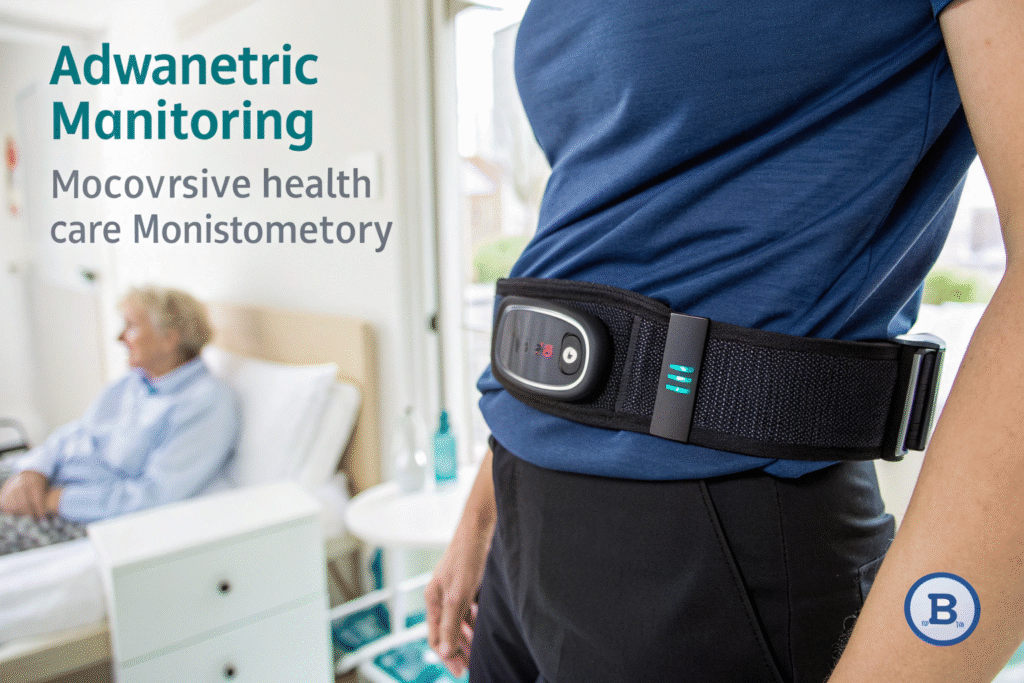
Biometric belts address the critical healthcare priority of supporting independent living for aging populations through continuous health assessment without the stigma of medical devices. For elderly individuals, these belts can monitor fall risk through gait analysis, detect dehydration through fluid status monitoring, and identify early signs of infection through temperature and heart rate variability changes. This comprehensive monitoring supports safer independent living while providing peace of mind for both seniors and their families.
The emergency detection capabilities of advanced biometric belts provide particular value for aging populations. Automatic fall detection through impact sensing and posture changes can trigger immediate alerts to caregivers or emergency services. Similarly, significant deviations from normal physiological patterns—such as dramatic heart rate changes or irregular breathing—can generate alerts before conditions become critical. These safety features address key concerns that often drive transitions to assisted living facilities.
What Role Do They Play in Chronic Disease Management?
For the growing population with chronic health conditions, biometric belts offer a practical approach to between-visit monitoring that can prevent complications and reduce hospitalizations. Patients with heart failure can benefit from continuous fluid status monitoring that detects worsening congestion before symptoms become severe. Those with respiratory conditions like COPD can be monitored for oxygen saturation and breathing pattern changes that indicate exacerbations. This early warning system enables timely intervention that can prevent emergency situations.
The objective data from continuous monitoring also addresses the limitation of symptom-based assessment, where patients may underestimate or fail to recognize significant changes in their condition. By establishing individual baselines and tracking deviations, biometric belts provide concrete data that supports clinical decision-making. This data-driven approach is particularly valuable for conditions where subtle trends over time provide important diagnostic information that might be missed during periodic office visits.
What Implementation Challenges Must Be Overcome?
Despite their potential, biometric belts face specific hurdles that must be addressed for widespread adoption in healthcare.

How Are Regulatory Hurdles Being Addressed?
Biometric belts intended for medical applications must navigate FDA regulations or equivalent international standards, requiring rigorous validation of their measurement accuracy and clinical utility. Manufacturers are pursuing various pathways from general wellness claims to full medical device approval depending on their intended use. This regulatory process ensures that health claims are supported by evidence but creates significant barriers to market entry, particularly for smaller companies.
The most sophisticated approaches involve collaboration with healthcare institutions to generate the clinical evidence needed for regulatory approval. These partnerships facilitate the controlled studies required to validate measurement accuracy against gold standard equipment and demonstrate clinical utility for specific conditions. This evidence-based approach, while time-consuming, builds the credibility needed for adoption by healthcare providers and reimbursement by insurance systems.
What Data Management Challenges Exist?
The continuous data generation from biometric belts creates significant challenges around storage, analysis, and privacy protection. Unlike intermittent monitoring that produces discrete data points, continuous monitoring generates vast datasets that require sophisticated algorithms to identify clinically relevant information amid normal variations. Developing these analytics capabilities represents a major technical hurdle that separates basic biometric tracking from clinically actionable insights.
Privacy and security concerns are particularly acute for health data, requiring robust encryption during both transmission and storage. Additionally, systems must establish clear protocols for data sharing with healthcare providers while maintaining patient control over their information. The most successful implementations provide transparent privacy policies and granular consent options that allow users to determine how their data is used and shared, building trust essential for adoption of personal health monitoring technology.
Conclusion
Biometric belts are emerging in health tech because they offer unique advantages for continuous, clinical-grade physiological monitoring that aligns with healthcare's shift toward prevention and early intervention. Their torso positioning provides superior signal quality for cardiovascular, respiratory, and metabolic monitoring compared to peripheral devices, while their integration into everyday wear addresses adherence challenges that limit other monitoring approaches.
As validation studies accumulate and regulatory pathways clarify, biometric belts are poised to become important tools for aging in place, chronic disease management, and preventive health monitoring. Their ability to provide continuous data without disrupting normal activities represents a significant advancement in how we monitor health outside clinical settings.
Ready to explore biometric belt technology for your healthcare applications? Contact our Business Director, Elaine, at elaine@fumaoclothing.com to discuss our expertise in integrating medical-grade sensors into wearable platforms that balance technical capability with user comfort.