In hazardous work environments and emergency situations, visibility can mean the difference between life and death. While traditional safety equipment often focuses on vests and helmets, glow-in-the-dark belts have emerged as critical safety components that provide continuous visibility without compromising mobility or comfort. These illuminated accessories address specific safety gaps that other protective equipment cannot fill, particularly in low-light conditions where traditional reflective materials fail without external light sources.
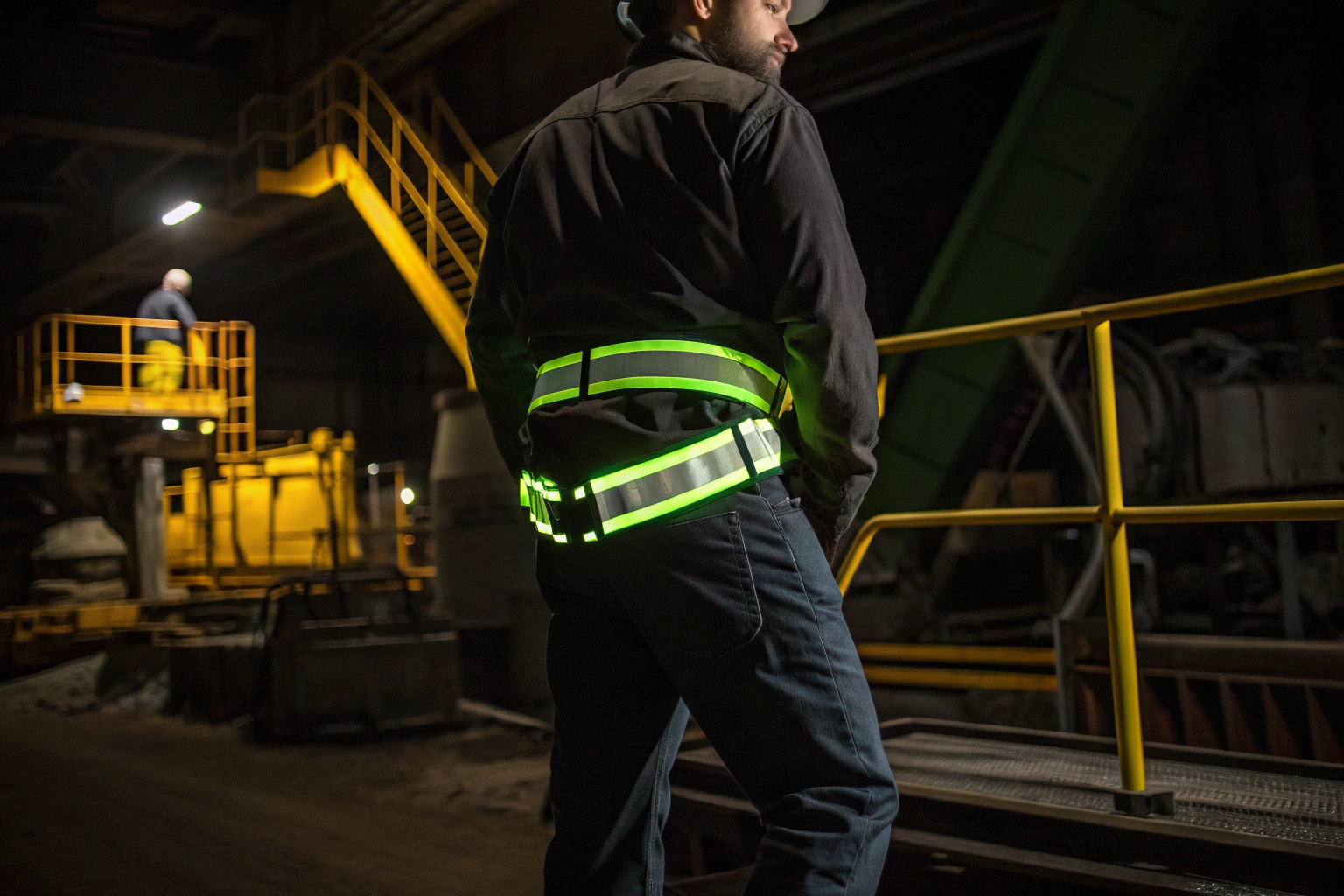
Glow-in-the-dark belts are essential for safety lines because they provide continuous visibility without external light sources, maintain identification during power failures or emergency situations, enable quick personnel location in smoke-filled or dark environments, and allow hands-free operation unlike flashlight-dependent solutions. These photoluminescent belts utilize advanced phosphor technology that stores ambient light and emits it consistently for hours, creating reliable visibility that works even when other systems fail. Their positioning at the body's core makes them particularly effective for location identification since they remain visible from multiple angles during various work positions.
The integration of glow-in-the-dark technology into safety belts represents a significant advancement in personal protective equipment, addressing critical visibility challenges across industries from construction and manufacturing to emergency services and aviation.
What Technical Advantages Do Glow Belts Offer?
The specific technical characteristics of photoluminescent belt technology create safety advantages that conventional reflective materials cannot match.

How Does Photoluminescent Technology Work?
Modern glow-in-the-dark belts utilize strontium aluminate phosphors that offer significantly improved performance over previous zinc sulfide formulations. These advanced materials absorb UV and visible light during exposure to any light source, then slowly release this stored energy as visible light through photoluminescence. The latest formulations can provide bright illumination for 8-12 hours after just 30 minutes of exposure to sunlight or standard workplace lighting, maintaining visibility throughout entire shifts or emergency operations.
The technical advantage lies in the self-contained nature of the illumination—unlike reflective materials that require external light sources to function, photoluminescent belts generate their own light. This makes them particularly valuable in total darkness during power outages, in confined spaces without light sources, or in situations where workers may be separated from their light sources. The most advanced safety belts incorporate multiple phosphor colors that indicate different information—green for general visibility, blue for supervisors, or red for emergency personnel—creating identification systems that function independently of external power.
What Performance Standards Govern Safety Applications?
Glow-in-the-dark belts used in safety-critical applications must meet specific performance standards that ensure reliable operation when needed most. ISO 17398:2004 establishes requirements for safety colors and photoluminescent safety signs, including minimum luminance levels and duration requirements. For industrial applications, ANSI/ISEA 107-2020 addresses high-visibility safety apparel, with growing recognition that positioning reflective and photoluminescent elements at the waist level provides important visual cues about worker position and movement.
The most rigorous testing evaluates performance under realistic conditions rather than ideal laboratory settings. This includes testing after exposure to environmental factors like moisture, temperature extremes, and UV degradation that might occur during normal use. Reputable manufacturers provide test data showing luminance levels at specific time intervals after charging, typically measured in millicandelas per square meter (mcd/m²). This quantitative approach allows safety managers to compare products and select options that meet their specific visibility duration requirements.
What Safety Scenarios Benefit Most from Glow Belts?
Specific hazardous situations demonstrate why glow-in-the-dark belts provide essential protection that other safety equipment cannot offer.

How Do They Enhance Safety in Confined Spaces?
Workers entering permit-required confined spaces face extreme visibility challenges where traditional safety equipment often fails. Tanks, silos, vessels, and other enclosed spaces frequently have limited lighting that may fail during emergencies. Glow-in-the-dark belts provide continuous visibility that helps attendants monitor workers' positions and status, while providing fallen workers with a light source to navigate toward exits. Their consistent glow creates reference points in completely dark environments where disorientation can prove fatal.
The confined space advantage extends to rescue operations, where the glow from a belt provides the fastest method for locating a worker in need of assistance. Unlike battery-powered lights that can fail or be turned off accidentally, photoluminescent belts require no activation and cannot be switched off, ensuring they remain visible throughout the entry operation. This reliability makes them particularly valuable for hazardous atmosphere entries where equipment failure could prevent timely rescue.
What Role Do They Play in Emergency Evacuations?
During emergency evacuations when power systems fail, glow-in-the-dark belts transform into essential way-finding tools that guide people to safety. In smoke-filled environments where overhead emergency lighting may be obscured, the waist-level illumination creates visible markers that others can follow to exits. This positioning proves particularly effective since the glow remains below the smoke layer that often obscures higher-mounted emergency signs and lighting.
The evacuation advantage extends beyond way-finding to personnel accounting. In large facilities during blackout conditions, safety officers can quickly identify and count personnel wearing glow belts, confirming successful evacuations without waiting for flashlight distribution or power restoration. Some systems use color-coded belts to indicate different departments or evacuation assembly points, streamlining the accountability process during chaotic emergency situations when every second matters.
How Do Glow Belts Complement Existing Safety Systems?
Photoluminescent belts fill specific gaps in safety programs rather than replacing existing equipment, creating comprehensive protection through layered approaches.
| Safety System | How Glow Belts Complement | Combined Safety Benefit |
|---|---|---|
| High-Visibility Vests | Provide visibility when vests are removed or not worn | Continuous protection during breaks, hot environments, or unexpected emergencies |
| Flashlights/Lights | Work during power failures or when lights are dropped | Hands-free, always-active visibility without battery dependence |
| Reflective Materials | Function without external light sources | Complete visibility system working with or without vehicle headlights |
| Emergency Lighting | Provide personal illumination during system failures | Individual safety during evacuation before reaching emergency lighting |
| Communication Systems | Visual location when communication fails | Physical finding when radios fail or in high-noise environments |
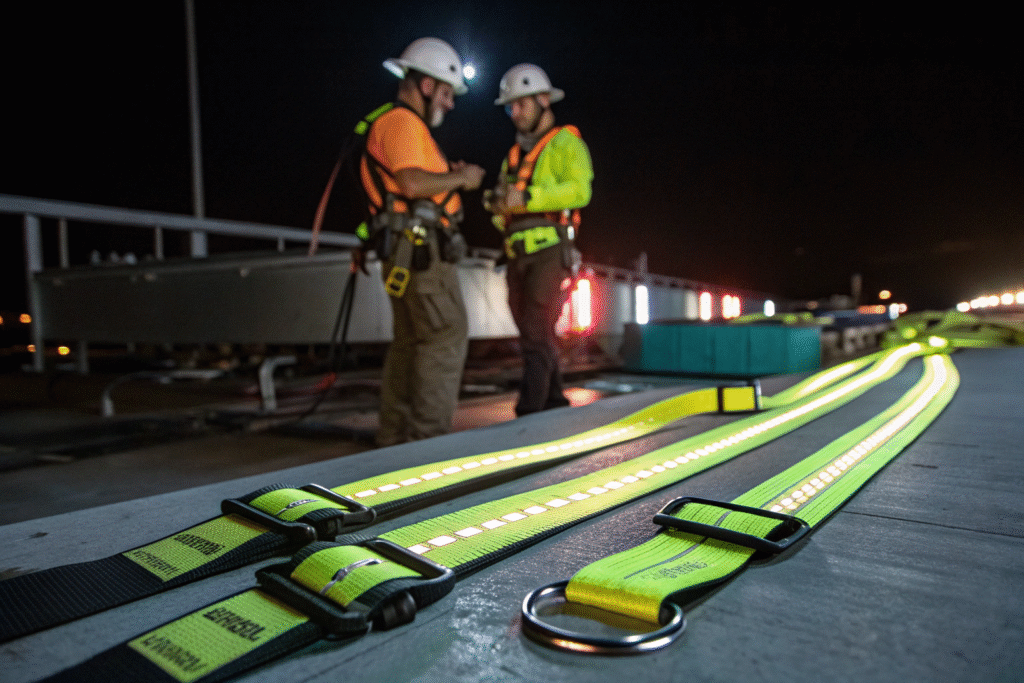
How Do They Address Limitations of Traditional PPE?
Traditional high-visibility personal protective equipment depends heavily on external factors that glow-in-the-dark belts eliminate. Reflective vests require vehicle headlights or workplace lighting to function, while glow belts provide their own illumination. Standard safety equipment often gets removed in hot environments or during breaks, leaving workers unprotected during precisely the moments when unexpected emergencies occur. Glow belts, being less restrictive and more comfortable for extended wear, maintain protection during these vulnerable periods.
The compatibility advantage extends to situations where workers must remove other PPE for specific tasks. A worker who removes a reflective vest to access tight spaces maintains visibility through their glow belt. Similarly, emergency personnel who shed outer layers during physically demanding operations retain the core visibility provided by their belts. This always-on protection creates a safety baseline that persists even when other equipment becomes impractical or is temporarily removed.
What Integration Benefits Exist with Safety Protocols?
Glow-in-the-dark belts enhance existing safety protocols by adding a visible component to procedures that normally depend on verbal or written communication. During night operations, different colored glow belts can instantly indicate team assignments, experience levels, or specific responsibilities without requiring conversation in high-noise environments. This visual communication system works alongside existing protocols to reduce errors and improve coordination when auditory communication is difficult.
The integration extends to safety monitoring systems where the consistent glow provides visual confirmation that personnel are following procedures. For example, in confined space operations, attendants can monitor multiple entrants simultaneously by observing their glow belts, rather than relying solely on verbal check-ins that might be missed in noisy environments. This visual verification layer adds redundancy to critical safety procedures, creating multiple failure points before protection is completely lost.
What Implementation Considerations Ensure Effectiveness?
Successful glow-in-the-dark belt programs require specific implementation strategies to maximize their safety benefits.

How Should Maintenance and Charging Be Managed?
The effectiveness of photoluminescent belts depends on proper maintenance and charging protocols that ensure they're ready when needed. Safety programs should establish clear procedures for exposing belts to light sources before use—typically requiring 30-60 minutes under bright workplace lighting or brief exposure to direct sunlight. Facilities with limited natural light may need dedicated charging stations with appropriate lighting to ensure belts achieve maximum luminosity before each shift.
The maintenance protocol should include regular testing of luminosity levels, particularly for belts used in safety-critical applications. Simple comparison against a reference standard can verify that belts still meet minimum visibility requirements, with replacement schedules based on performance rather than arbitrary time periods. Some advanced systems incorporate test strips that indicate when luminosity falls below effective levels, taking the guesswork out of maintenance decisions. These systematic approaches prevent the dangerous situation where belts appear functional but no longer provide adequate illumination.
What Training Maximizes Safety Benefits?
Effective safety training programs must educate workers on both the capabilities and limitations of glow-in-the-dark belts. Workers should understand that the technology requires pre-charging, has finite duration, and works best as part of a comprehensive safety system rather than a standalone solution. Training should include realistic demonstrations showing belt performance in actual work environments, building confidence in the equipment while establishing realistic expectations about its protective capabilities.
The most effective training connects the technology to specific workplace hazards through scenario-based exercises. Workers practice using the belts during simulated power failures, confined space operations, or emergency evacuations, developing muscle memory for how the equipment enhances their safety. This hands-on approach transforms the belts from abstract safety equipment to practical tools that workers understand and value, increasing the likelihood they'll maintain them properly and use them consistently.
Conclusion
Glow-in-the-dark belts have evolved from novelty items to essential safety equipment by providing reliable, hands-free visibility in situations where traditional safety systems fail. Their ability to function without external power sources, maintain visibility in complete darkness, and integrate seamlessly with existing PPE makes them particularly valuable for hazardous work environments and emergency situations. The technology addresses critical safety gaps that have long persisted despite advances in other protective equipment.
As photoluminescent technology continues improving with longer duration and brighter emissions, these belts will likely become standard equipment in more industries and applications. Their demonstrated effectiveness in enhancing worker visibility and safety during low-light conditions represents a significant advancement in personal protective equipment that saves lives through simple, reliable technology.
Ready to enhance your safety program with glow-in-the-dark belts? Contact our Business Director, Elaine, at elaine@fumaoclothing.com to discuss our photoluminescent belt options and implementation guidance for integrating this critical safety technology into your operations.