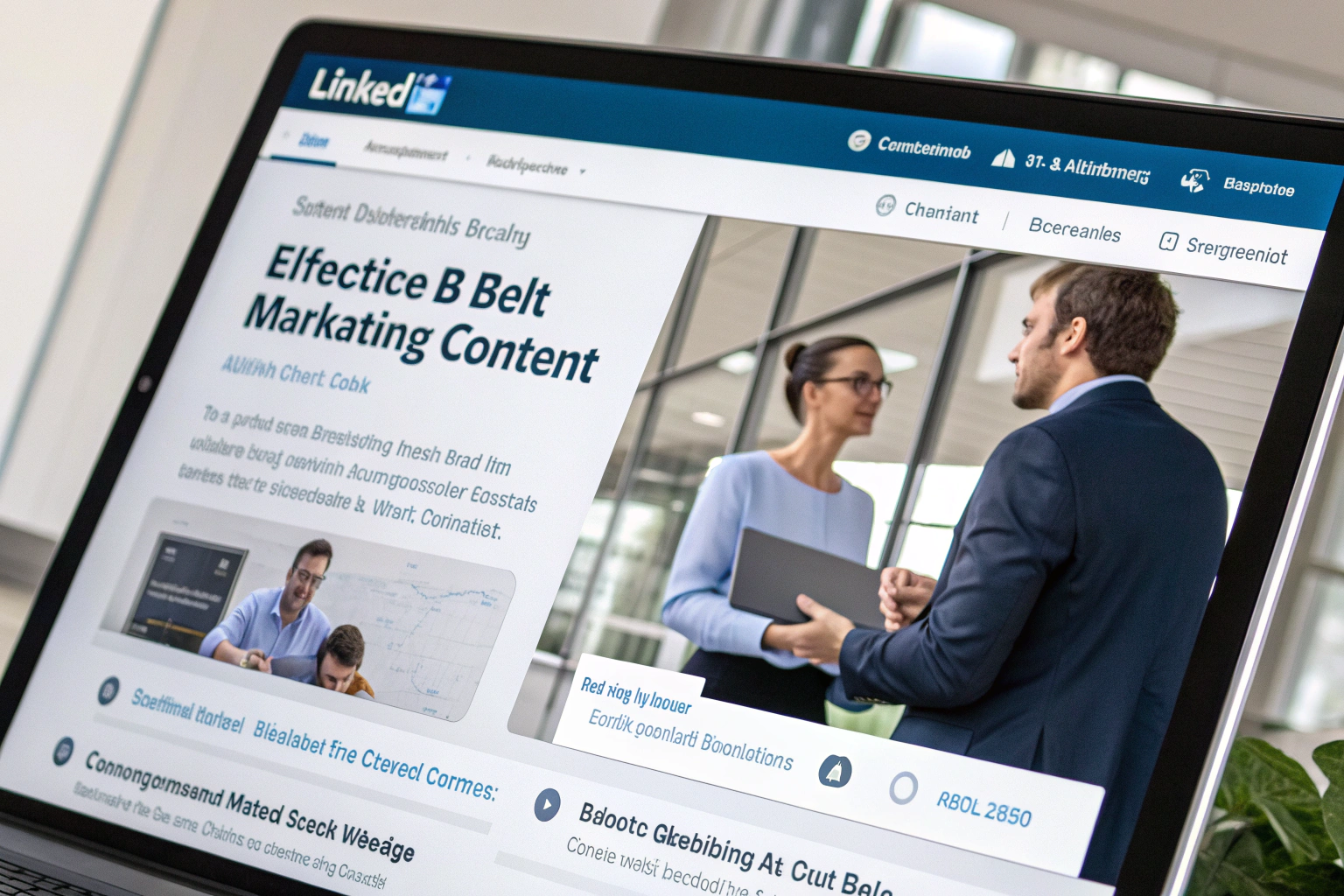
The professional landscape of LinkedIn presents unique opportunities and challenges for B2B belt marketing, requiring strategies fundamentally different from both consumer-focused campaigns and traditional B2B approaches. Success in this specific channel depends on understanding the platform's professional context, aligning with corporate procurement processes, and building relationships that transcend simple transactional interactions.
Success in LinkedIn B2B belt marketing is determined by establishing industry authority, demonstrating tangible business value, building strategic partnerships, leveraging employee advocacy, and implementing account-based marketing strategies that resonate with corporate buyers rather than individual consumers.
The B2B belt market on LinkedIn operates within a context of corporate branding programs, uniform procurement, and professional accessories that serve both functional and representational purposes. Understanding these dynamics separates successful campaigns from those that fail to gain traction in the professional sphere.
How Does Thought Leadership Establish Category Authority?
Thought leadership represents the foundation of successful B2B marketing on LinkedIn, transforming belt companies from simple manufacturers into industry authorities that corporate buyers seek out for both products and insights. This approach builds credibility that extends far beyond product specifications or pricing discussions.
The development of meaningful thought leadership requires consistently delivering valuable insights that address the specific challenges and opportunities facing B2B buyers in the corporate accessories space, from procurement managers to brand directors.

What content types demonstrate genuine expertise in B2B belt marketing?
Effective thought leadership encompasses several content formats:
- Industry trend reports analyzing corporate uniform and accessory purchasing patterns
- Technical white papers exploring material innovations and manufacturing advancements
- Case studies detailing successful implementations for recognizable corporate clients
- Sustainability documentation providing transparent supply chain and environmental impact data
- Compliance guides explaining international standards and certification requirements
According to LinkedIn's B2B Institute research, B2B buyers consume 3-7 pieces of content before engaging with sales, with technical documentation and case studies generating the highest quality leads. Companies that consistently publish valuable insights typically experience 3-5x higher engagement rates on their LinkedIn company pages.
How does authority building translate to commercial outcomes?
Established thought leadership drives measurable business results:
- Increased inbound inquiries with 40-60% of leads coming from content engagement
- Higher conversion rates averaging 25-35% for companies with strong authority positioning
- Premium pricing justification with recognized experts commanding 15-25% price premiums
- Shorter sales cycles reducing from 3-6 months to 1-3 months for known authorities
- Partnership opportunities attracting collaborations with complementary B2B brands
These outcomes demonstrate why 86% of top-performing B2B marketers prioritize thought leadership according to Edelman research. The investment in authority building typically delivers 3-4x ROI through improved lead quality and conversion efficiency.
What Value Proposition Resonates with Corporate Buyers?
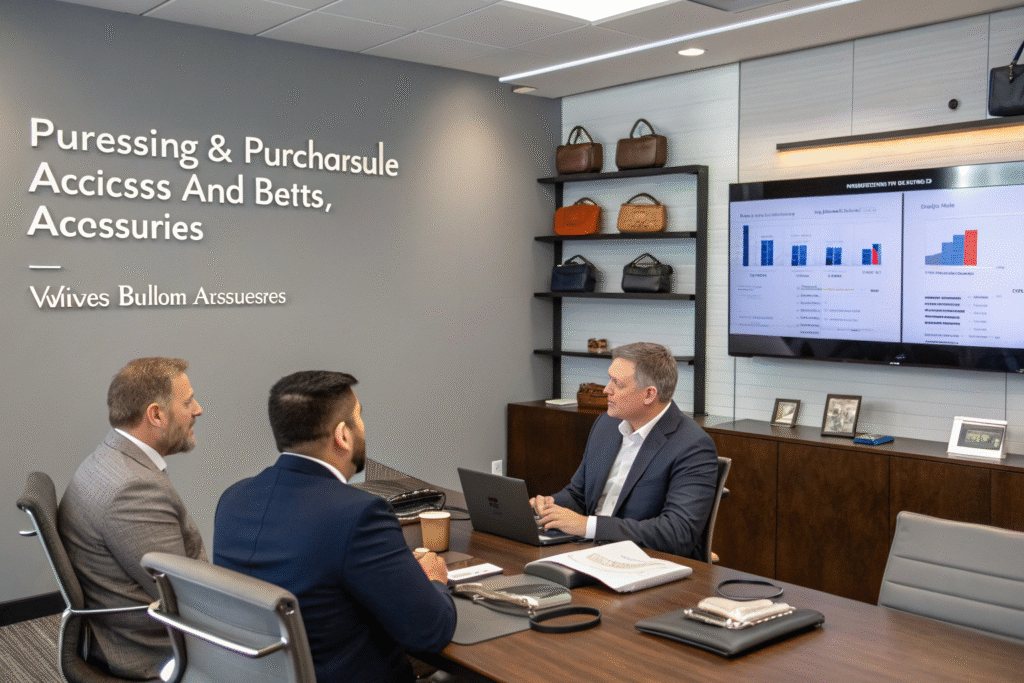
Corporate purchasing decisions for belts and accessories follow fundamentally different criteria than consumer purchases, emphasizing business value over personal preference. Successful LinkedIn marketing must articulate and demonstrate clear organizational benefits that align with corporate objectives and procurement standards.
The B2B value proposition extends beyond product features to encompass supply chain reliability, customization capabilities, and alignment with corporate branding and compliance requirements.
Which business benefits drive corporate purchasing decisions?
Corporate buyers prioritize specific value elements:
- Cost-per-wear calculations demonstrating long-term value versus initial purchase price
- Uniform program integration showing compatibility with existing corporate identity systems
- Supply chain transparency providing visibility into manufacturing and delivery reliability
- Customization capabilities offering branding, sizing, and feature adaptations
- Compliance documentation ensuring products meet industry-specific requirements
Research from Harvard Business Review on B2B purchasing indicates that corporate buyers now complete 60-70% of their decision-making process before engaging with sales, relying heavily on clear value communication through digital channels. Companies that articulate comprehensive business benefits typically generate 50% more qualified leads.
How should ROI be demonstrated to corporate decision-makers?
Effective ROI communication utilizes multiple approaches:
- Total cost analysis comparing long-term ownership costs across different belt options
- Employee satisfaction metrics linking uniform accessories to workplace morale and retention
- Brand impact measurements correlating professional appearance with customer perceptions
- Durability comparisons demonstrating reduced replacement frequency and costs
- Administrative efficiency highlighting simplified ordering and distribution processes
These demonstrations help corporate buyers justify purchasing decisions internally, particularly important in organizations with complex approval processes. The most successful case studies include specific metrics that resonate with financial decision-makers.
How Does Relationship Building Differ in B2B Context?
LinkedIn's professional nature makes it uniquely suited for the relationship-building that underpins successful B2B belt marketing. However, these relationships extend beyond simple connection counts to encompass strategic partnerships, industry networks, and multi-stakeholder engagement that supports complex sales cycles.
The relationship development process on LinkedIn requires consistent, valuable engagement that positions belt manufacturers as partners rather than vendors, creating stickiness that transcends individual transactions.
What relationship-building strategies work on LinkedIn?
Effective B2B relationship development involves several approaches:
- Strategic content sharing providing value to specific industries and roles
- Personalized engagement commenting meaningfully on prospects' and clients' content
- Group participation actively contributing to industry-specific LinkedIn groups
- Multi-level connecting building relationships across different departments and hierarchies
- Consistent nurturing maintaining regular, valuable contact throughout long sales cycles
According to LinkedIn's State of Sales report, 84% of B2B buyers are more likely to consider vendors recommended by their peers, highlighting the importance of relationship-driven marketing. Companies implementing systematic relationship-building typically see 35-50% higher deal sizes.
How can LinkedIn facilitate strategic partnerships?
The platform enables partnership development through several mechanisms:
- Shared content creation collaborating with complementary B2B brands on valuable resources
- Co-marketing initiatives partnering on webinars, research, or event sponsorship
- Referral relationships establishing formal or informal recommendation systems
- Industry association engagement participating in professional organizations and discussions
- Supply chain visibility connecting with both upstream suppliers and downstream distributors
These partnership approaches help create the ecosystem relationships that drive sustained B2B growth. The most successful belt manufacturers use LinkedIn to build networks that generate opportunities beyond direct sales, including co-development projects and industry influence.
What Role Does Employee Advocacy Play in B2B Marketing?
Employee advocacy transforms belt manufacturers from faceless corporations into collections of industry experts, creating authenticity that resonates strongly with B2B buyers on LinkedIn. When employees actively share company content and engage with industry conversations, they generate reach and credibility that corporate channels cannot achieve alone.
A strategic employee advocacy program amplifies marketing messages while providing the human touch that B2B buyers increasingly expect in their professional relationships.

How does employee advocacy impact B2B marketing metrics?
Strategic employee advocacy delivers measurable benefits:
- Extended reach with employee networks typically 10x larger than company follower bases
- Higher engagement with employee-shared content generating 8x more engagement than corporate posts
- Improved credibility with 76% of buyers stating they're more likely to trust content shared by employees
- Humanized branding making manufacturing companies feel more accessible and responsive
- Quality lead generation with employee-referred leads converting 7x more frequently
Data from Hinge Marketing's Visible Firm research indicates that companies with formal employee advocacy programs generate 26% more leads and achieve 20% higher conversion rates. The organic reach provided by employee networks is particularly valuable given LinkedIn's algorithmic prioritization of personal content.
What makes an effective employee advocacy program?
Successful programs incorporate several elements:
- Content accessibility making it easy for employees to find and share relevant content
- Training and guidelines providing education on effective sharing and engagement practices
- Recognition systems acknowledging and rewarding active employee advocates
- Content variety offering different types of content appealing to various employee networks
- Measurement frameworks tracking impact and optimizing based on performance data
These elements create sustainable advocacy that aligns employee and company interests while providing value to both employees and their networks. The most effective programs focus on empowering employees as industry experts rather than simply broadcasting corporate messages.
How Should Account-Based Marketing Be Implemented?
Account-Based Marketing (ABM) represents the pinnacle of B2B strategy on LinkedIn, allowing belt manufacturers to focus resources on high-value corporate accounts with customized approaches that resonate with specific needs and opportunities. LinkedIn's sophisticated targeting capabilities make it ideal for ABM implementation.
Successful ABM on LinkedIn requires integration between marketing and sales, deep account research, and personalized engagement strategies that demonstrate understanding of each target account's unique situation.
What LinkedIn features support effective ABM?
The platform offers several ABM-specific capabilities:
- Account targeting reaching employees at specific companies with tailored content
- Contact targeting engaging specific individuals based on role, seniority, and department
- Website retargeting re-engaging visitors from target accounts with relevant messaging
- Content recommendations suggesting relevant materials based on account characteristics
- Engagement analytics tracking how target accounts interact with content and campaigns
According to ITSMA ABM research, companies using ABM generate 200% more revenue from their marketing efforts compared to those using traditional approaches. The focused nature of ABM is particularly valuable for belt manufacturers targeting specific corporate uniform programs or industry verticals.
How should ABM campaigns be structured for belt manufacturers?
Effective ABM implementation follows a strategic process:
- Account selection identifying high-value prospects based on revenue potential and strategic fit
- Research phase understanding account needs, challenges, and decision-making processes
- Content development creating customized materials addressing specific account situations
- Multi-channel engagement reaching accounts through LinkedIn, email, and other appropriate channels
- Sales alignment ensuring marketing activities support and inform sales conversations
This approach creates the personalized experience that B2B buyers now expect, with 72% reporting they only engage with marketing messages tailored to their specific needs. The most successful ABM campaigns for belt manufacturers typically focus on 10-20 high-potential accounts at a time, allowing for meaningful customization and relationship development.
Conclusion
Success in LinkedIn B2B belt marketing hinges on establishing authority, demonstrating clear business value, building genuine relationships, leveraging employee advocacy, and implementing targeted account-based strategies. The professional context of LinkedIn demands approaches fundamentally different from consumer marketing or traditional B2B tactics, with an emphasis on expertise, partnership, and measurable business outcomes. By mastering these elements, belt manufacturers can effectively reach corporate buyers, build lasting relationships, and generate sustainable growth through LinkedIn's powerful professional network.
If your belt manufacturing company needs assistance developing effective LinkedIn B2B marketing strategies, our organization has extensive experience helping accessory brands succeed on professional social platforms. Contact our Business Director, Elaine, at elaine@fumaoclothing.com to discuss how we can help optimize your LinkedIn presence for B2B belt marketing success.