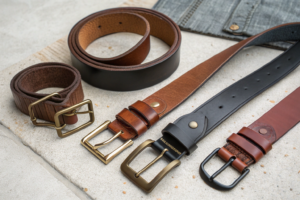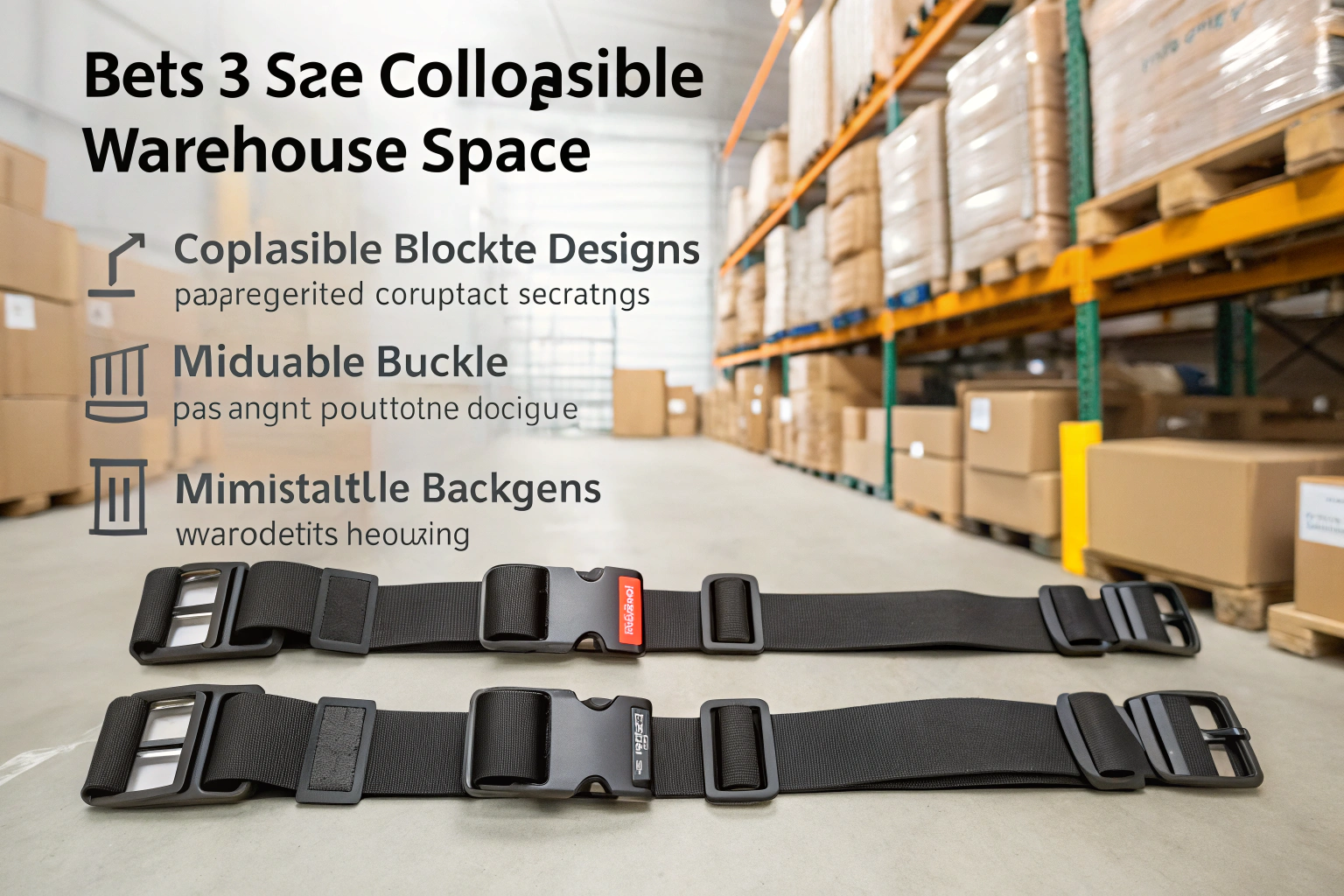
Every square foot of warehouse space costs money. For retailers, distributors, and brands holding inventory, bulky packaging and inefficient product shapes directly eat into profitability. Belts, with their long, rigid shape and often oversized presentation boxes, are notorious space-wasters. But what if your next belt collection could ship and store 30-40% more efficiently? The solution lies not in cheaper materials, but in smarter, space-conscious design from the very first sketch.
To design belts for reduced warehouse space, focus on three core strategies: implementing collapsible or modular buckle systems, switching to compact, minimalist packaging, and standardizing components across SKUs for denser master carton packing. This approach requires rethinking the traditional belt as a fixed object and viewing it as a system of efficiently packable parts.
As a manufacturer, we've helped major supermarket chains and fashion brands tackle this exact pain point. The benefits extend far beyond storage—they include lower shipping costs, reduced damage, and a more sustainable footprint. Let's explore the practical design shifts that make it possible.
What Are the Key Design Features for Space-Efficient Belts?
The journey to saving space starts with the product itself. A traditional belt is a fixed loop: a rigid buckle permanently attached to a strap of set length. This form factor is inherently awkward to pack. By introducing flexibility and modularity at the design stage, we can dramatically improve packability without sacrificing quality or style.
Key design features include: detachable or foldable buckles, the use of flexible materials throughout, standardized lengths with adjustable fits, and a reduction in overall product thickness. The goal is to transform the belt from a rigid circle into a set of flat or compact components that can be packed like books, not like pizza boxes.
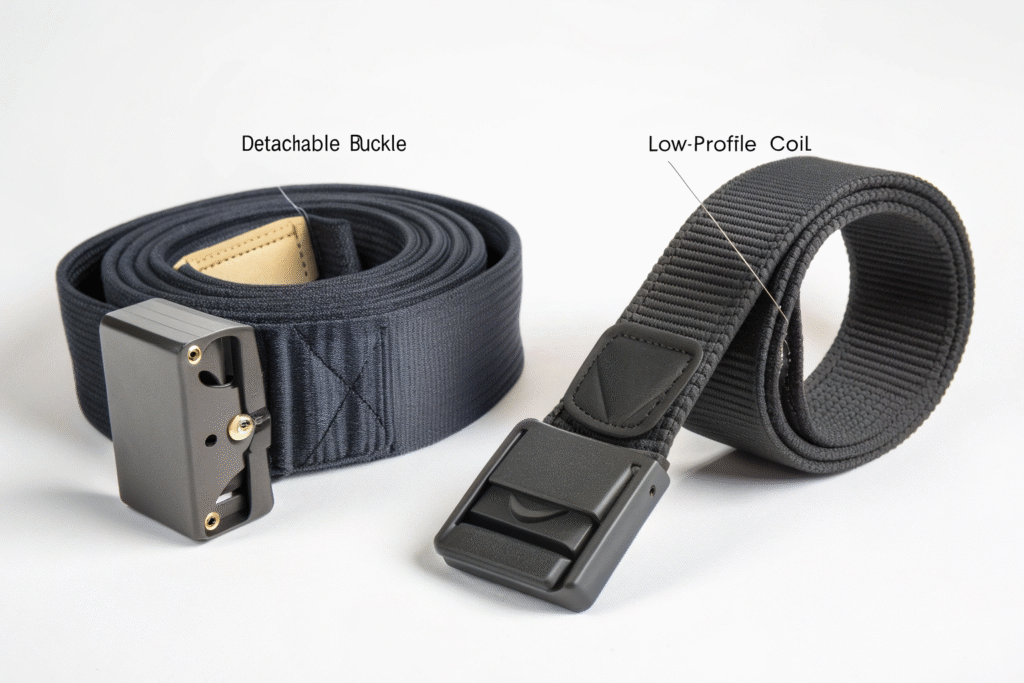
How Do Detachable and Foldable Buckles Work?
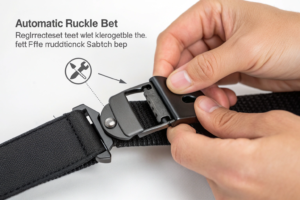
The buckle is the bulkiest part. A detachable buckle system, using a secure snap hook, lobster clasp, or a robust side-release buckle mechanism, allows the strap and buckle to be packed separately. The buckle can lie flat, and the strap can be coiled tightly without a rigid object in the center. For leather belts, this can mean a buckle that clips onto a sewn-in loop. For fabric belts, it's often integral. A foldable buckle is a more advanced solution where the buckle plate itself is hinged, allowing it to fold flat against the strap. This is common in high-tech travel belts and requires precise engineering but offers the ultimate space savings.
Why is Material Choice and Strap Design Critical?
A thick, stiff full-grain leather belt will always resist tight coiling. Alternatives include:
- Thinner Leathers: Using split leather or lambskin for fashion belts.
- Woven Fabrics: Nylon, canvas, or elastic belts that naturally lie flat.
- Thin Dress Belt Designs: Pursuing elegance through slim width (e.g., 1.25 inches) rather than thick substance.
The strap end should be designed to be slim. A bulky, folded-and-stitched end adds unnecessary depth. A tapered end or one secured with a slim belt keeper is more pack-friendly. Designing for flat-packing from the start often leads to a more modern, minimalist aesthetic that is also on-trend.
How Can Packaging Innovation Maximize Density?
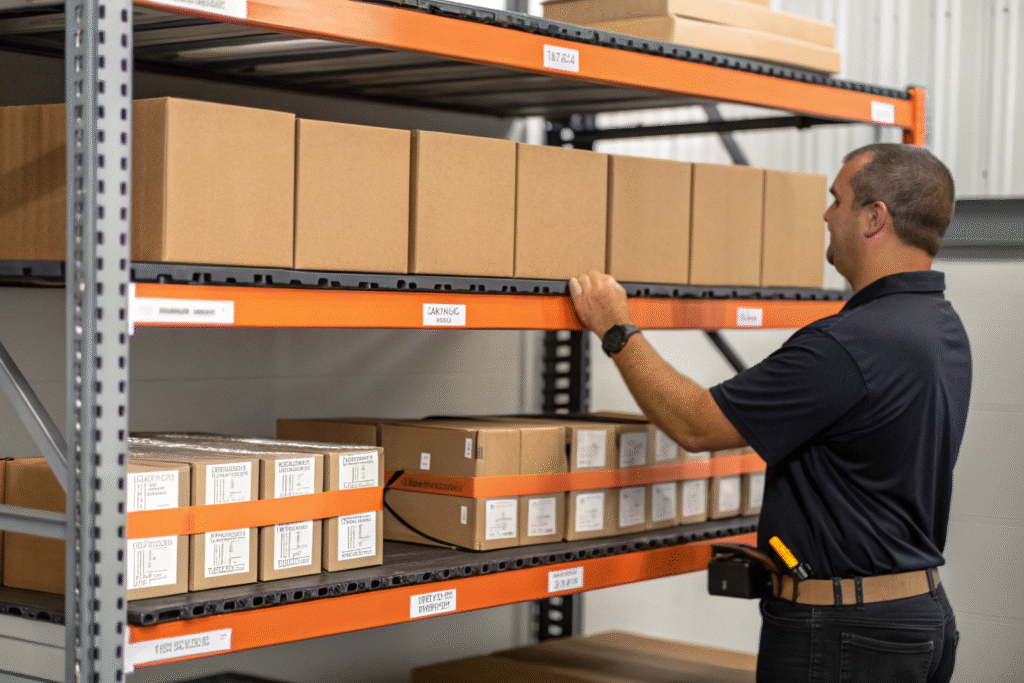
Even a perfectly designed belt can be wasted if placed in a box full of air. Packaging is not just for presentation; in a warehouse, it's a volumetric cost center. Innovative, right-sized packaging is the second pillar of space reduction, working hand-in-hand with product design.
The goal of space-efficient packaging is to achieve the highest possible cartonization efficiency—the percentage of a shipping carton filled by product. This is done by moving away from rigid, pillow-style boxes to slim, flat formats like die-cut sleeves, flat pouches, or minimalist two-piece boxes that hug the product's new, compact form.
What Are the Best Slim-Packaging Formats?
- Cardboard Sleeves: A flat, scored cardboard sleeve that the coiled belt slides into. It’s lightweight, cheap, and extremely flat.
- Flat Poly Bags: For basic belts in volume retail (like supermarkets), a simple, printed poly bag with a header card is the most space-efficient option. It also reduces packaging waste.
- Two-Piece Tuck-End Boxes: Similar to a smartphone box—a slim tray and a separate lid. It provides more premium structure than a sleeve but remains far slimmer than a full-wrap box.
- Minimalist Internal Structuring: Using a single die-cut cardboard insert to hold a detachable buckle in place, rather than molded plastic foam. This insert can often be flat-packed with the strap.
How Does This Affect Master Carton and Pallet Loads?
This is where the savings multiply. Let's model it:
| Packaging Type | Units per Inner Box | Inner Box Dimensions (cm) | Units per Master Carton | Carton Cube (m³) | Belts per m³ |
|---|---|---|---|---|---|
| Traditional Rigid Box | 1 | 35L x 15W x 5H | 24 | 0.063 | ~381 |
| Slim Sleeve/Pouch | 1 | 32L x 10W x 2H | 60 | 0.0384 | ~1,562 |
Table: Simplified model showing volumetric efficiency gain.
The numbers are stark. The slim package allows over 4x more belts to be stored or shipped in the same cubic volume. This directly lowers per-unit logistics costs and increases the number of units per pallet, reducing handling. For a buyer like Ron concerned with shipping schedules and costs, this is a major operational win.
How Does Component Standardization Streamline Inventory?
Brands often carry dozens of belt SKUs—different sizes, colors, buckle styles. Managing this variety in a warehouse is complex and space-intensive. The third strategy attacks this problem at the root: by designing belts around a modular system where final assembly is postponed until the point of sale or even delivery.
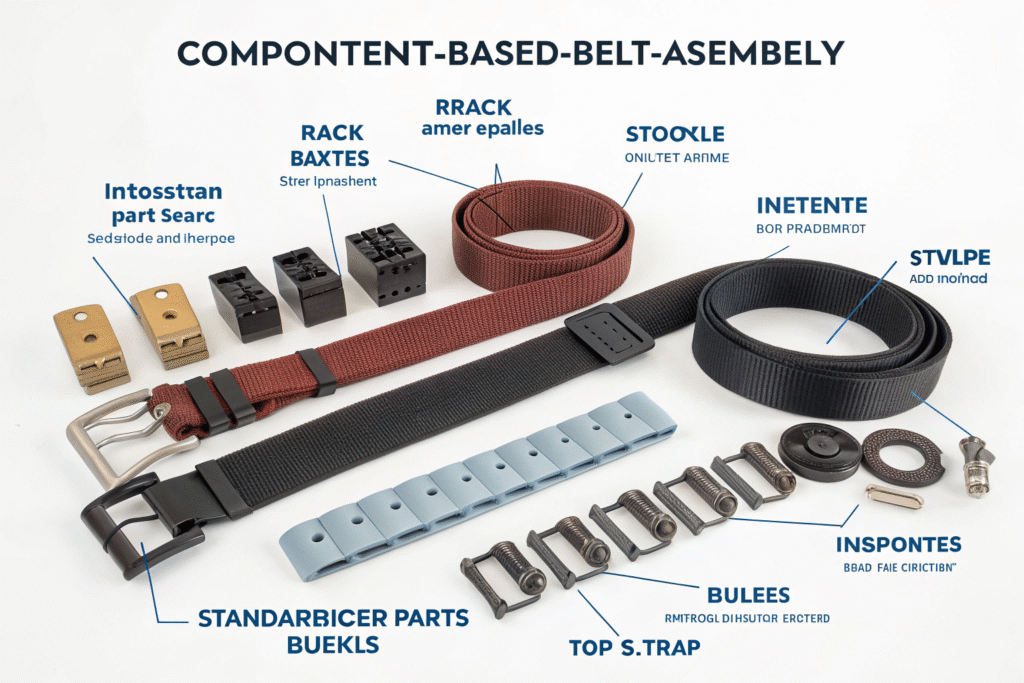
Component standardization involves creating a universal attachment system between straps and buckles, and then stocking these components separately. Instead of 50 pre-assembled SKUs, you might stock 10 buckle styles and 5 strap types, which can be combined to create 50 variations. This postponement strategy drastically reduces the number of finished goods SKUs taking up space, replacing them with more densely packed components.
What is a Universal Buckle Attachment System?
This is the hardware that makes standardization possible. It could be a standardized snap button system on the strap end that clicks into a socket on all buckles. Or a patented clip mechanism that is common across the collection. The key is that any buckle can be securely attached to any strap in seconds, without tools. This allows retailers to offer vast customization (e.g., choose your strap, choose your buckle) while holding inventory in a compact, componentized form. For children's belts where character licensing changes frequently, this means stocking plain straps and a variety of licensed buckle toppers.
How Does This Reduce Warehousing Complexity and Cost?
Holding components is more efficient than holding finished goods for several reasons:
- Denser Packing: Buckles can be packed in bulk in small dividers; straps can be rolled and packed in tubes or flat bundles.
- Reduced Obsolescence Risk: If a specific stripe color doesn't sell, the buckle components are not tied up and can be paired with a new strap.
- Faster Replenishment: Manufacturing components in bulk is faster and cheaper than assembling all final variations.
This approach requires robust inventory management software but aligns with lean manufacturing principles. It turns the warehouse from a static storage unit into a dynamic assembly hub, dramatically increasing inventory turnover per square foot.
What Are the Trade-offs and How to Implement the Shift?
Adopting space-efficient design involves trade-offs and requires close collaboration between brand and manufacturer. It's a systemic change that impacts design, procurement, packaging, and logistics. A clear understanding of priorities is essential for successful implementation.
The primary trade-offs to consider are: a potential perception shift from "luxury" to "practical" due to minimalist packaging, the upfront cost of new tooling for modular buckle systems, and the need for retail staff training if final assembly is required in-store. Successful implementation follows a phased approach: start with a specific product line (e.g., online-exclusive or travel belts), prototype extensively, and calculate the total landed cost savings to justify the investment.

How to Manage the Perception of Premium Value?
Luxury has long been associated with heavy, substantial packaging. The shift requires re-educating the customer on where value lies: in the product, not the box. This can be done through marketing that highlights the sustainability (less waste) and innovation (smart design) of the new format. The product itself must feel premium—the buckle mechanism must be flawless, the leather must be supple. The unboxing experience can be redesigned to be elegant and deliberate with slim packaging, rather than just big. Many modern direct-to-consumer brands have successfully made slim, sustainable packaging a part of their premium identity.
What is a Practical Step-by-Step Implementation Plan?
- Audit & Analyze: Review your top-selling belt lines. Identify the biggest space-wasters in terms of packaging volume and product rigidity.
- Collaborative Design: Work with your manufacturer's design team (like ours at StylishBelts) to develop 1-2 prototype concepts focusing on detachability and packability.
- Cost-Benefit Modeling: Create a total cost model comparing old vs. new. Include: material cost, packaging cost, shipping cost per unit, and estimated warehouse storage cost savings. Don't forget tooling costs for new buckles.
- Pilot Launch: Introduce the new design in a controlled channel. Gather feedback on customer reception and operational savings.
- Scale and Rollout: Refine the design based on pilot data, then roll it out across more product lines.
For a brand, this process turns a logistical headache into a competitive advantage in cost structure and sustainability profile.
Conclusion
Designing belts for reduced warehouse space is a powerful exercise in efficiency that touches every part of the supply chain, from initial design to the retailer's shelf. By embracing collapsible product design, minimalist right-sized packaging, and intelligent component standardization, brands can achieve dramatic reductions in shipping costs, storage footprints, and environmental impact.
This approach requires a shift in mindset from viewing the belt as a fixed object to seeing it as a system optimized for logistics. While there are trade-offs to manage, the financial and operational benefits for volume sellers, supermarkets, and e-commerce brands are too significant to ignore. In an era of tight margins and heightened focus on sustainability, smart design is no longer optional—it's essential.
If you are looking to optimize your belt line for better margins and a smaller logistical footprint, our design and engineering team specializes in creating space-efficient, cost-effective solutions without compromising on style or quality. Contact our Business Director, Elaine, to start a conversation about redesigning your inventory for density: elaine@fumaoclothing.com. Let's pack more value into less space.