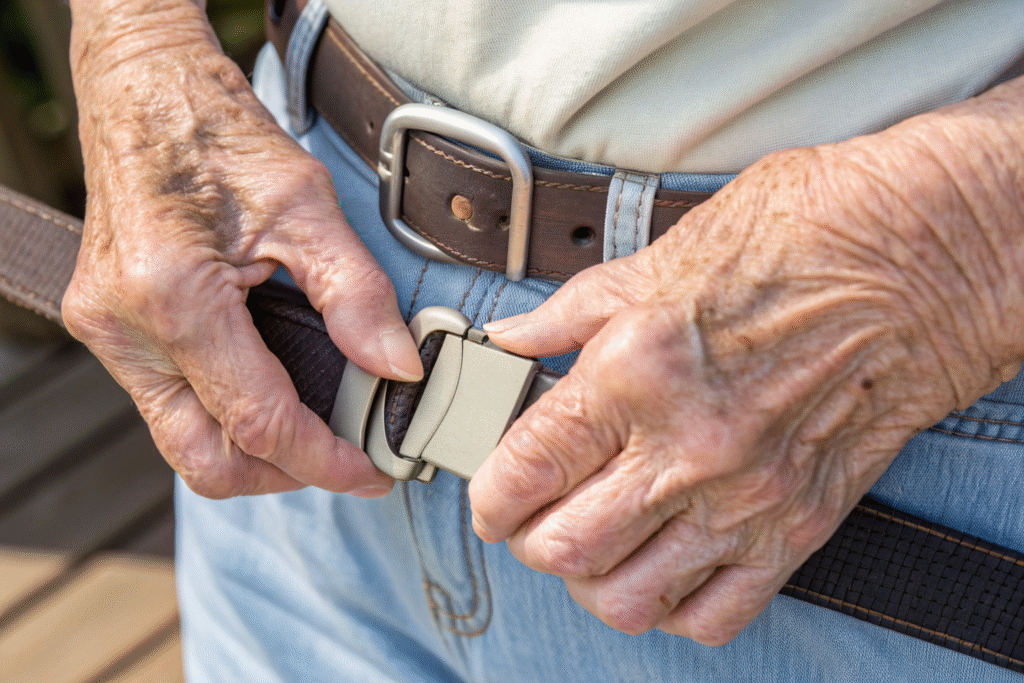
For many seniors, the simple act of fastening a traditional belt can become a daily source of frustration and a quiet reminder of diminishing dexterity. The struggle to thread a stiff leather end through a small buckle hole, align it just right, and secure the prong is a fine-motor challenge that can lead to dependence or the abandonment of belts altogether. However, a simple yet profound innovation—the magnetic docking buckle—is restoring independence and ease to this everyday task. But what specific design and functional attributes make these buckles not just an alternative, but the ideal choice for senior users?
Magnetic docking buckles are ideal for seniors because they eliminate the need for precise fine-motor coordination, offering a forgiving, intuitive "snap-to-connect" action that can be performed with one hand, using gross motor skills. They combine effortless operation with secure, reliable hold and are often designed with larger, easy-to-grip components that accommodate arthritic hands, reduced grip strength, or tremors.
This is more than a convenience feature; it's a tool for maintaining autonomy and dignity in daily dressing. For brands in the adaptive fashion, senior care, or thoughtful gifting markets, understanding the nuanced benefits of this technology is key to product development and effective marketing. Let's explore the multifaceted advantages.
How Do Magnetic Buckles Address Dexterity and Strength Challenges?
The physical challenges associated with aging are diverse but often converge on the hands. Arthritis stiffens joints, reducing flexibility. Reduced muscle mass and conditions like neuropathy weaken grip strength. Essential tremors can make precise tasks nearly impossible. Traditional belt buckles are engineered in direct opposition to these limitations.
Magnetic buckles address these challenges by transforming a multi-step, precision task into a single, coarse action. They leverage magnetic force to guide alignment, provide audio-tactile feedback for confirmation, and require minimal compressive grip strength—often just a palm press. This design philosophy aligns with universal design principles, creating a product that is easier for everyone, but essential for some.
What Specific Design Features Overcome Arthritis and Tremors?
- Gross Motor Operation: Instead of requiring the pincer grasp (thumb and forefinger) to manipulate a prong, magnetic buckles use a palmar grasp or a whole-hand motion to bring two large pieces together. This utilizes stronger muscle groups.
- Magnetic Self-Alignment: High-quality buckles use rare-earth neodymium magnets with a strong pull. As the two halves come within about an inch, the magnetic force "grabs" and pulls them into perfect alignment, compensating for shaky hands.
- Large, Tactile Components: The buckle halves are designed to be larger than traditional buckles, with smooth, rounded edges that are easy to locate by feel and provide a substantial surface to push against. There are no small, fiddly parts.
- Clear Feedback: The audible "click" and solid tactile sensation of the magnets engaging provide unmistakable confirmation that the belt is securely fastened, reducing anxiety about it coming undone.
How Does This Compare to Other Adaptive Closures?
While hook-and-loop (Velcro) is also easy to use, it can snag on clothing, lose strength after repeated washing, and may be difficult to separate for those with very weak hands if the adhesive is too strong. Elastic belts solve the fastening issue but offer no adjustability and can roll or slide. Magnetic buckles offer a superior balance: the ease of connection of Velcro, the security and clean look of a traditional buckle, and the ability for micro-adjustment if designed with a sliding rail or multiple connection points.
What Are the Safety and Security Advantages?
A primary concern for both seniors and their caregivers is safety. A belt must stay securely fastened to prevent embarrassing or hazardous situations, but it also must not become a trap in an emergency, such as a fall where quick access is needed for medical assessment. Modern magnetic docking buckles are engineered with this dual mandate in mind.
Safety and security are ensured through engineered release mechanisms that prevent accidental opening under normal movement but allow intentional disengagement, the use of medical-grade, hypoallergenic materials, and designs that eliminate pinch points and sharp edges common in traditional buckles. They provide reliable security without the risk of becoming a constrictive hazard.
How Do Modern Buckles Prevent Accidental Opening?
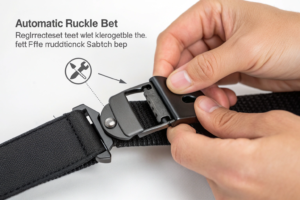
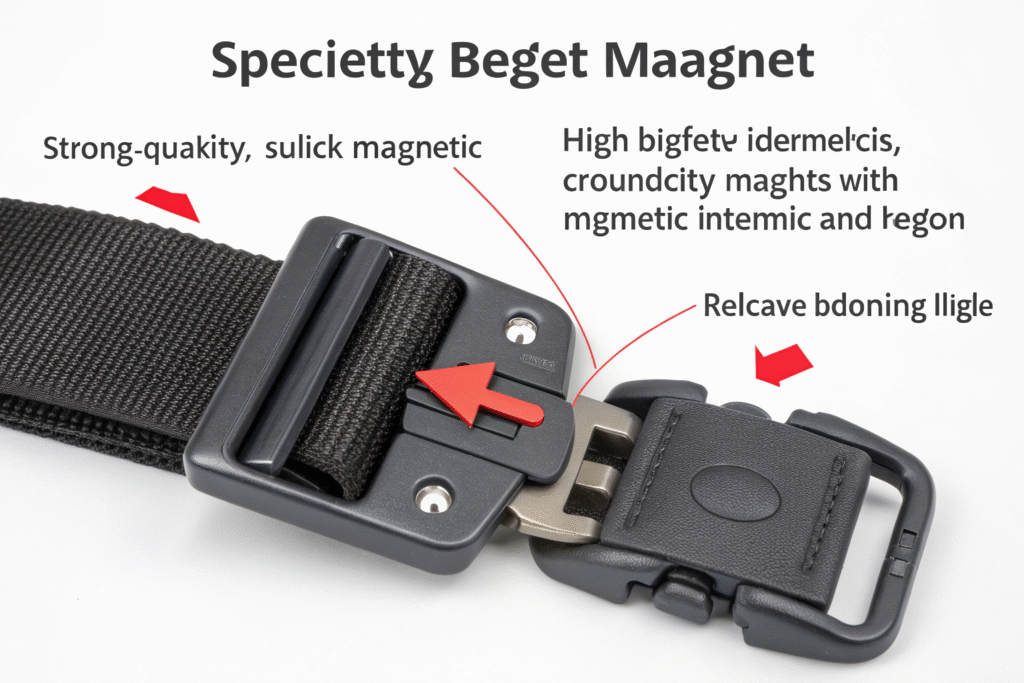
Cheap magnetic clasps rely solely on magnetic force and can pop open if snagged. Senior-grade buckles incorporate a secondary mechanical lock. The most common is the slide-to-release or twist-to-release mechanism.
- Slide-to-Release: Once the magnetic halves connect, a small physical latch engages. To open, the user must deliberately slide one half laterally (left or right), which first disengages the mechanical latch, then breaks the magnetic seal. This two-step process means that pulling straight apart (as would happen if the belt caught on a doorknob) will not open it.
- Fidlock-Style: Uses a patented Fidlock magnetic buckle where a magnetic male part twists into a female receiver, creating a vibration-proof and snag-proof connection that still opens with a simple twist.
These designs are tested to withstand significant pull forces (often 15-25 kg) while remaining easy for the user to open intentionally.
Why is the "Quick-Release" Aspect a Critical Safety Feature?
Paradoxically, the ability to open quickly is a security feature. In a fall, especially for seniors at higher risk of hip fractures, first responders may need to cut clothing away. A belt that can be quickly unfastened prevents the use of shears near the body and allows for faster assessment. A high-quality magnetic buckle with a slide release can be opened by a caregiver or first responder in seconds, even if the wearer is confused or incapacitated. This makes it a safer alternative to a tightly knotted traditional belt, which might require cutting.
How Does Ease of Use Promote Independence and Dignity?
The psychological impact of being able to dress oneself cannot be overstated. Loss of independence in daily activities (Activities of Daily Living, or ADLs) is a major contributor to decreased self-esteem, depression, and a feeling of burden among seniors. A product that restores a small piece of that independence has value far beyond its functional utility.
Ease of use directly promotes independence by allowing seniors to complete the task of dressing without assistance, reinforcing their capability and self-worth. It reduces frustration and the associated stress that can come from struggling with clothing, and it empowers them to maintain their personal style and presentation, which is integral to personal identity and social engagement.

What is the Connection Between Dressing and Psychological Well-being?
The ability to choose one's clothing and put it on is a fundamental expression of autonomy. When this is compromised, it can lead to a sense of infantilization. Research in gerontology and occupational therapy consistently highlights that supporting independence in ADLs is crucial for mental health. A magnetic buckle removes a common barrier in the dressing sequence. This small victory can set a positive tone for the day, fostering a sense of control and competence. For children purchasing for parents, it's a gift of dignity, not just a practical item.
How Does This Simplify Life for Caregivers?
For family or professional caregivers, time and emotional energy are precious. Assisting with dressing can be time-consuming and sometimes resisted by the care recipient. A belt with a magnetic buckle is an item the senior can likely manage on their own, reducing the caregiver's task load and minimizing potential conflicts. It’s a simple intervention that supports a person-centered care model, where the individual's preferences and abilities are prioritized. This makes it an attractive product for both the direct consumer and the "concerned shopper" (adult children, grandchildren).
What Should Buyers Look for When Sourcing Senior-Friendly Magnetic Buckles?
Sourcing a product for the senior market carries a heightened responsibility. It is not enough for the buckle to be magnetic; it must be thoughtfully designed, durably constructed, and verifiably safe. Buyers, whether retailers, adaptive clothing brands, or institutional purchasers, must apply rigorous criteria.
Key sourcing criteria include: verifiable magnet strength and locking mechanism (request pull-force test reports), material safety certifications (RoHS, REACH, FDA-compliant materials for skin contact), ergonomic testing with actual senior users, and supplier transparency regarding their design process for inclusive products. The goal is to source a buckle that is a tool for independence, not a novelty.
How to Evaluate the Functional Design and Durability?
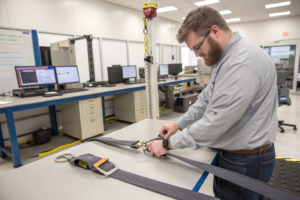
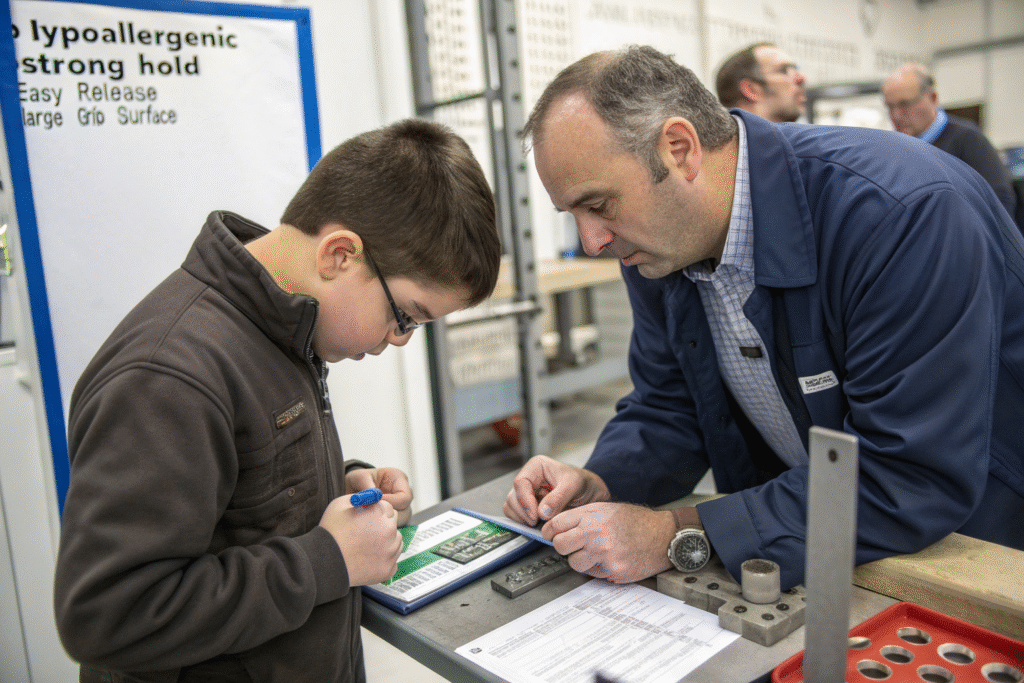
Request samples and put them through real-world tests:
- One-Handed Operation Test: Can you fasten and unfasten it with one hand (simulating limited mobility in the other)?
- "Glove Test": Can it be operated with winter gloves or with reduced fingertip sensation?
- Snag Test: Run it against loose knitwear to see if it catches and opens.
- Cycle Testing: Ask the manufacturer for data on how many open/close cycles the buckle is rated for (should be in the tens of thousands).
- Wash/Durability: If integrated into a washable belt, how does the buckle and its housing withstand repeated laundering?
The manufacturer should provide documentation, such as test reports from a certified lab, to back their durability and strength claims.
What Material and Compliance Standards are Non-Negotiable?
- Skin-Contact Safety: All materials (plastic polymer, metal plating, dyes) must be non-toxic and hypoallergenic. Request a Statement of Compliance with REACH and Proposition 65 if selling in California.
- Magnet Security: The magnets must be securely potted or encapsulated within the buckle housing to prevent them from becoming a choking hazard if the buckle were to somehow break.
- Ease of Integration: The buckle design should be easy for your belt factory to integrate into various strap materials (leather, nylon, elastic) without creating stiff or uncomfortable points.
A reputable supplier will have this information readily available and will understand the importance of designing for the aging population, seeing it as a specialty, not an afterthought.
Conclusion
Magnetic docking buckles are ideal for seniors because they are a near-perfect example of empathetic design solving a clear, widespread problem. They translate advanced material science (powerful, compact magnets) and intelligent mechanical design (secure locking mechanisms) into a daily life benefit that is profound in its simplicity: restored independence.
For the senior user, the benefit is autonomy, confidence, and safety. For brands and buyers, it represents an opportunity to serve a growing demographic with a product that has genuine, meaningful impact. Success in this market requires moving beyond gimmicks to source or develop products that are robust, safe, and truly user-validated.
If you are looking to develop belts or adaptive clothing that genuinely enhances the lives of senior users, partnering with a manufacturer that prioritizes functional, inclusive design is essential. We specialize in sourcing and integrating certified, senior-friendly components into high-quality products. Contact our Business Director, Elaine, to discuss creating solutions that empower independence: elaine@fumaoclothing.com. Let's design for a lifetime of ease and dignity.