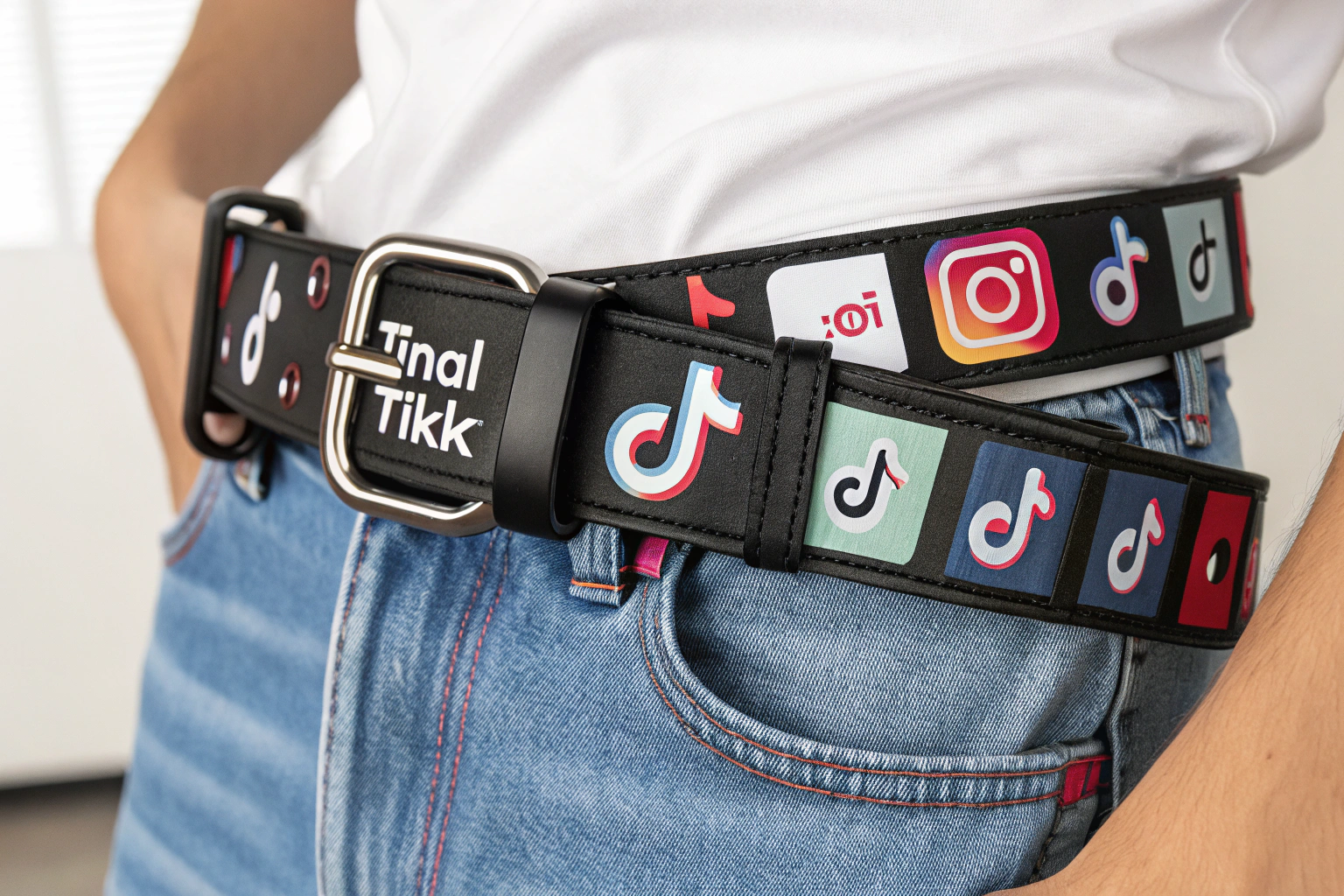
In the hyper-accelerated world of TikTok, a single viral challenge can catapult a product from obscurity to sold-out status in 48 hours. But while many brands chase trends, few successfully engineer products for them. Belts, as a central, visible accessory, have unique potential to become the hero prop of a viral moment. So, how do you move beyond hoping your belt gets featured, to deliberately designing one that creates its own TikTok challenge? The answer lies in embedding shareable mechanics, visual spectacle, and participatory hooks directly into the product's DNA.
To design belts for viral TikTok challenges, you must create products with inherently performative features—transformative elements, surprising interactions, or customizable components that users are compelled to show off. The design must prioritize high visual contrast for small screens, enable easy user participation with a low skill barrier, and possess a clear, catchy hashtag-able identity that structures the challenge narrative.
This is product design as content strategy. For fashion brands and accessories manufacturers, it's a shift from selling a static item to providing a tool for creative expression and social currency. Let's deconstruct the blueprint for a belt built to trend.
What Are the Hallmarks of a "Challenge-Ready" Belt Design?
Not every belt can go viral. The ones that do are rarely just "pretty." They possess intrinsic qualities that beg to be filmed and shared. They offer users a moment of spectacle, a novel interaction, or a blank canvas for personalization that performs brilliantly in a 15-60 second video loop.
A challenge-ready belt design features: transformative visual properties (color-change, light-up, extreme textures), satisfying mechanical interactions (magnetic snaps, spinny components, unfolding elements), highly customizable elements that encourage collection and swapping, and a clear "before and after" or "reveal" moment that fits TikTok's rapid-cut editing style. It is, above all, fun to film.
Why is the "Reveal" or "Transformation" Moment Crucial?
TikTok's algorithm favors videos that hold attention. A compelling narrative arc within seconds is key. Belt designs that facilitate a "reveal" create this arc naturally. Examples:
- Thermochromic Belts: A plain black belt that, when sprayed with cold water or touched with an ice cube, reveals a hidden pattern or color. The #IceRevealChallenge.
- "Inside-Out" or Reversible Belts with Contrast: A sleek leather belt that, when flipped, is a wild animal print or neon color. The #FlipYourStyleChallenge.
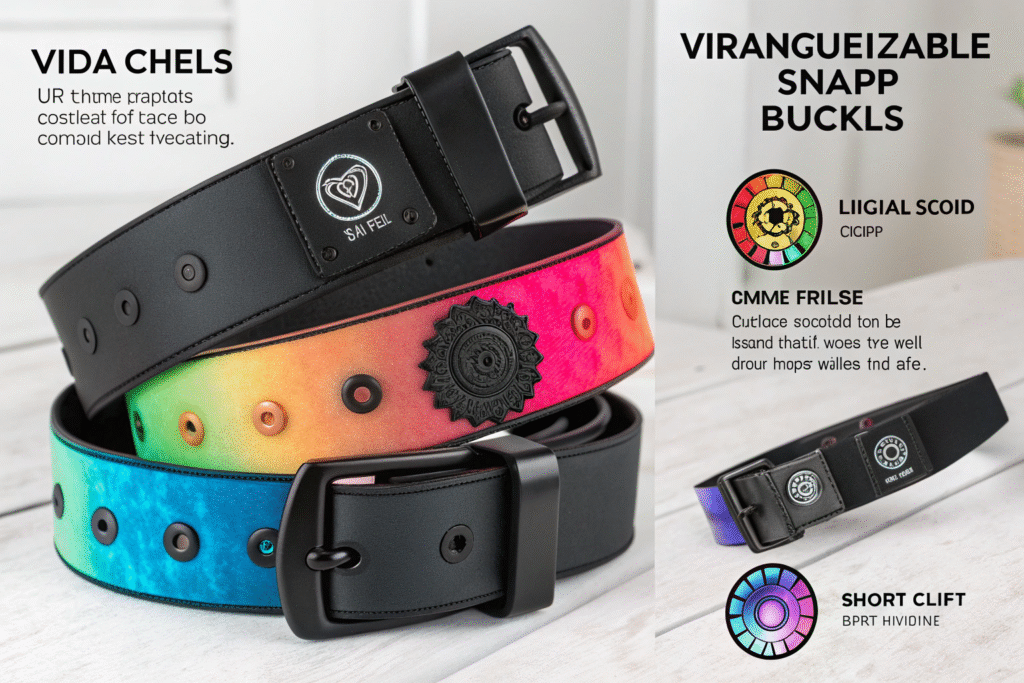
- Build-Your-Own-Buckle Kits: A plain belt strap sold with a dozen small, snap-on charms or plates. The challenge becomes #BuildMyBuckle, showing the unique combination created.
These designs provide the "plot" for the video: setup (showing the ordinary state), action (the transformation), payoff (the dramatic reveal). This structure is the cornerstone of satisfying TikTok content.
How Does "Satisfying Interaction" Drive Engagement?
ASMR (Autonomous Sensory Meridian Response) and "satisfying" videos are a massive subgenre. Belts can tap into this with designed sounds and motions:
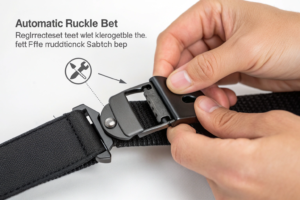
- A Magnetic Buckle with an incredibly crisp, loud "SNAP" sound.
- A Ratchet Mechanism with a smooth, continuous clicking sound as it tightens.
- A Fidget Spinner or Bearing integrated into the buckle plate.
These features give users a tangible, repeatable action to film in extreme close-up. The sound and motion are inherently shareable and encourage duets or "try it" videos. It's product-focused ASMR marketing in physical form.
How to Engineer for Shareability and Participation?
A product can be cool, but virality requires a system that lowers the barrier to entry and incentivizes replication. The design must not only be interesting to use but also easy to film and simple for others to imitate, remix, and put their own spin on. You're designing a format, not just an object.
To engineer for shareability, design belts that are easy to demonstrate in under 30 seconds, have a simple, replicable core action, come with suggested audio (a specific song or sound), and are packaged or presented with a clear challenge prompt (e.g., a card in the box saying "Show us your flip! #VersaBeltChallenge"). Lowering the creative burden on the user is strategic.
Why is Packaging and In-Box Experience Part of the Design?
The unboxing is the first user-generated content (UGC) opportunity. Design the package to be part of the challenge.
- Challenge Card: Include a visually striking card that clearly states the challenge name, the hashtag, and shows example shots (e.g., "1. Film the plain belt. 2. Apply heat. 3. Reveal the magic! Use #HeatWaveBelt").
- Ready-to-Film Props: If the belt changes with temperature, include a small, branded hairdryer or ice pack cube as a prop. This standardizes the challenge and makes it easier to execute.
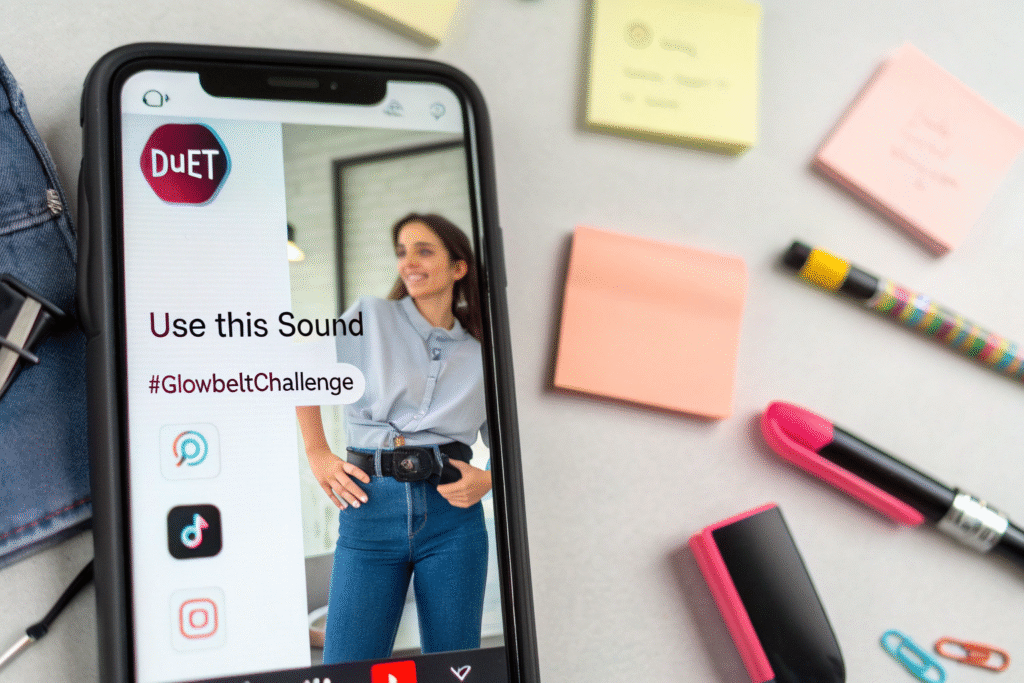
- Branded Audio: Create a 15-second signature sound—a specific song snippet or a created sound effect of the belt's click—and list its name on the card. Encourage users to "Use this sound." This bundles your product with a trending audio, amplifying reach.
How Does Customization Fuel a Content Engine?
Customizable products have a longer content lifecycle. A belt with interchangeable parts doesn't just generate one video; it generates many.
- Weekly Challenge Series: "#MondayMetal" (show your metallic buckle face), "#FloralFriday" (show your floral snap-on).
- Duets and Stitches: Users can duet a creator's belt combo, showing their own. This builds community.
- User-Generated Design Contests: Encourage users to suggest or vote on the next buckle face design, turning them into co-creators.
This approach leverages the power of UGC to create a perpetual content stream, with your product at the center. The belt becomes a platform for expression, not just an accessory.
What Are the Production and Sourcing Implications?
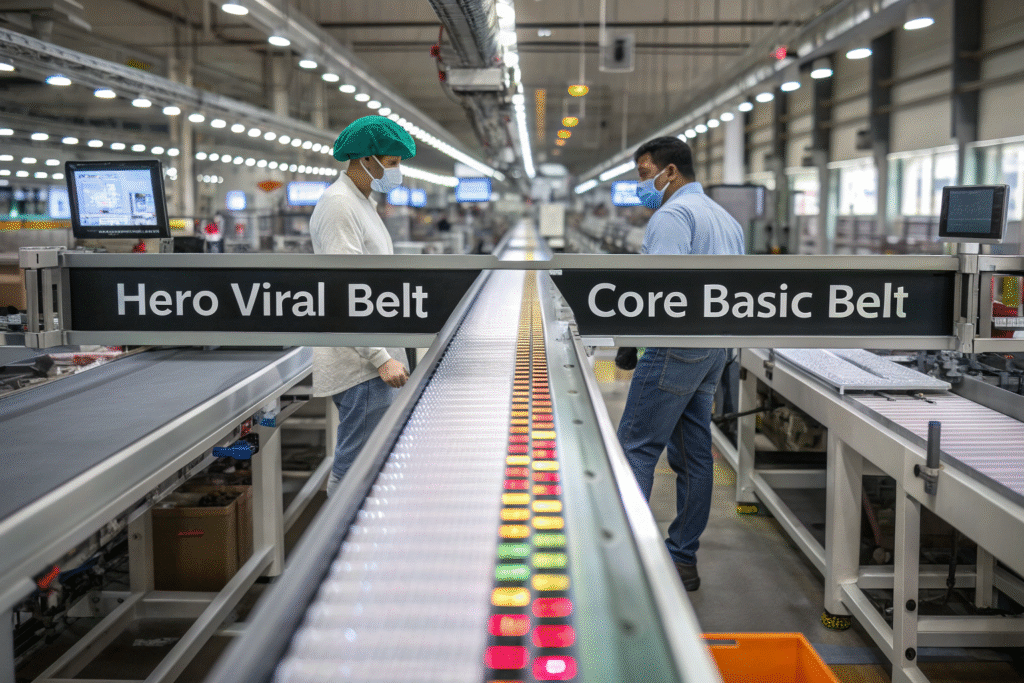
Designing for virality has direct consequences for your supply chain. You are no longer producing a seasonal collection with predictable demand; you are potentially creating a phenomenon that demands rapid scalability, high component variety, and resilience against copycats. Your manufacturing partner must be agile and tech-integrated.
Key production implications include: the need for modular design to allow rapid iteration on viral components (like new buckle faces), scalable but flexible assembly to handle sudden order spikes, strong IP protection and rapid tooling for unique mechanisms, and direct-to-consumer (DTC) fulfillment readiness to capture impulse buys from TikTok's integrated shopping features.
How Do You Source "Special Effect" Components?
The magic ingredients—thermochromic pigments, UV-reactive dyes, micro-LED modules, strong rare-earth magnets—require specialized suppliers.
- Vet for Performance & Safety: Thermochromic pigment must be non-toxic and rated for textile use. LEDs need a reliable, slim battery solution. Magnets must be securely housed.
- Dual Sourcing: For critical viral components, have a backup supplier to mitigate risk.
- Test for Content-Worthiness: Prototype and film the effect in various lighting conditions (especially under TikTok's common ring light setup) to ensure it "pops" on camera. A subtle effect in person might be invisible on phone video.
Your manufacturer should have experience sourcing these specialty materials or be willing to establish those supply lines with you.
How to Structure Production for Demand Volatility?
Adopt a platform + modules approach.
- Platform: A standardized, high-quality belt strap (in a few core colors/sizes). This is produced in steady volume.
- Modules: The viral "engine"—the special buckle, the snap-on faces, the LED kit. These are produced in smaller, more frequent batches based on trend data.
This allows you to react quickly. If the #GlowBeltChallenge takes off, you ramp up module production and attach them to pre-made straps. It also lets you test multiple concepts cheaply. This agile manufacturing model is essential for the TikTok era.
How to Launch and Seed the Challenge Effectively?
Recraft指令--Generate an image of a coordinated viral launch. Show a multi-screen command center: one monitor shows a scheduled post going live on a TikTok creator's account (with a blue checkmark). Another shows paid ad targeting parameters set for "interest: DIY fashion, TikTok challenges." A third shows an inventory dashboard. A whiteboard lists launch steps: "1. Seed to micro-creators, 2. Launch branded effect, 3. Monitor hashtag, 4. Restock trigger." The style is strategic and cross-channel. No faces.
A brilliantly designed belt will not go viral on its own. It needs a launch strategy that seeds the challenge in the right communities, leverages the platform's tools, and is prepared to capitalize on the moment. This is a carefully orchestrated campaign, not a product drop.
An effective launch involves seeding products to a tiered network of TikTok creators (micro, mid, and macro), creating a branded AR effect (e.g., a filter that adds digital sparkles to your belt), utilizing TikTok Shopping ads with the challenge video, and having a real-time social listening and fulfillment team ready to engage and ship. You are launching a meme, not just a product.

What is the Creator Seeding Strategy?
Avoid the top-tier celebrity splash. Work with a cohort of creators who specialize in:
- Unboxing/Satisfying ASMR
- Fashion DIY & Transformation
- Challenge Participation
Send them the product before the public launch with a simple brief, not a rigid script. Encourage their authentic take. The goal is to have 20-50 videos from trusted creators go live within a 48-hour window, creating the illusion of an organic trend. Use a platform like CreatorIQ or AspireIQ to manage these relationships. The most authentic videos will come from micro-influencers with highly engaged niche audiences.
How to Use TikTok's Native Tools to Fuel the Fire?
- Branded Effect: Create a TikTok filter or AR lens that interacts with your belt. For a color-change belt, a filter could simulate the change when the user blows on the screen. This makes the challenge more fun and spreads your brand visually.
- Hashtag Challenge Plus: If budget allows, use TikTok's official Hashtag Challenge Plus ad product, which places the challenge directly on the Discover page and includes a shopping tab.
- Live Shopping: Once momentum builds, host a live shopping event with a top creator demonstrating the belt and answering questions in real-time, driving immediate conversions.
This integrated approach treats the platform as a full-funnel marketing channel, from awareness (challenge) to consideration (creator demos) to conversion (in-app shopping).
Conclusion
Designing belts for viral TikTok challenges is a multidisciplinary feat that merges playful industrial design, savvy content strategy, and hyper-agile supply chain management. The winning product is one that serves as both a functional accessory and a compelling prop for self-expression, engineered from the start to be demonstrated, customized, and shared.
For brands, this approach offers a path to breakout growth in a crowded market, but it demands a shift in mindset—from viewing products as endpoints to viewing them as catalysts for community participation. Success lies not in predicting the next trend, but in creating the tools that allow your community to start it.
If you are ready to design a belt that doesn't just follow trends but has the innate potential to create them, partnering with a manufacturer that understands speed, modularity, and the unique demands of social-first commerce is critical. We specialize in rapid prototyping and scalable production of innovative, conversation-starting accessories. Contact our Business Director, Elaine, to brainstorm your next viral concept: elaine@fumaoclothing.com. Let's build something worth sharing.