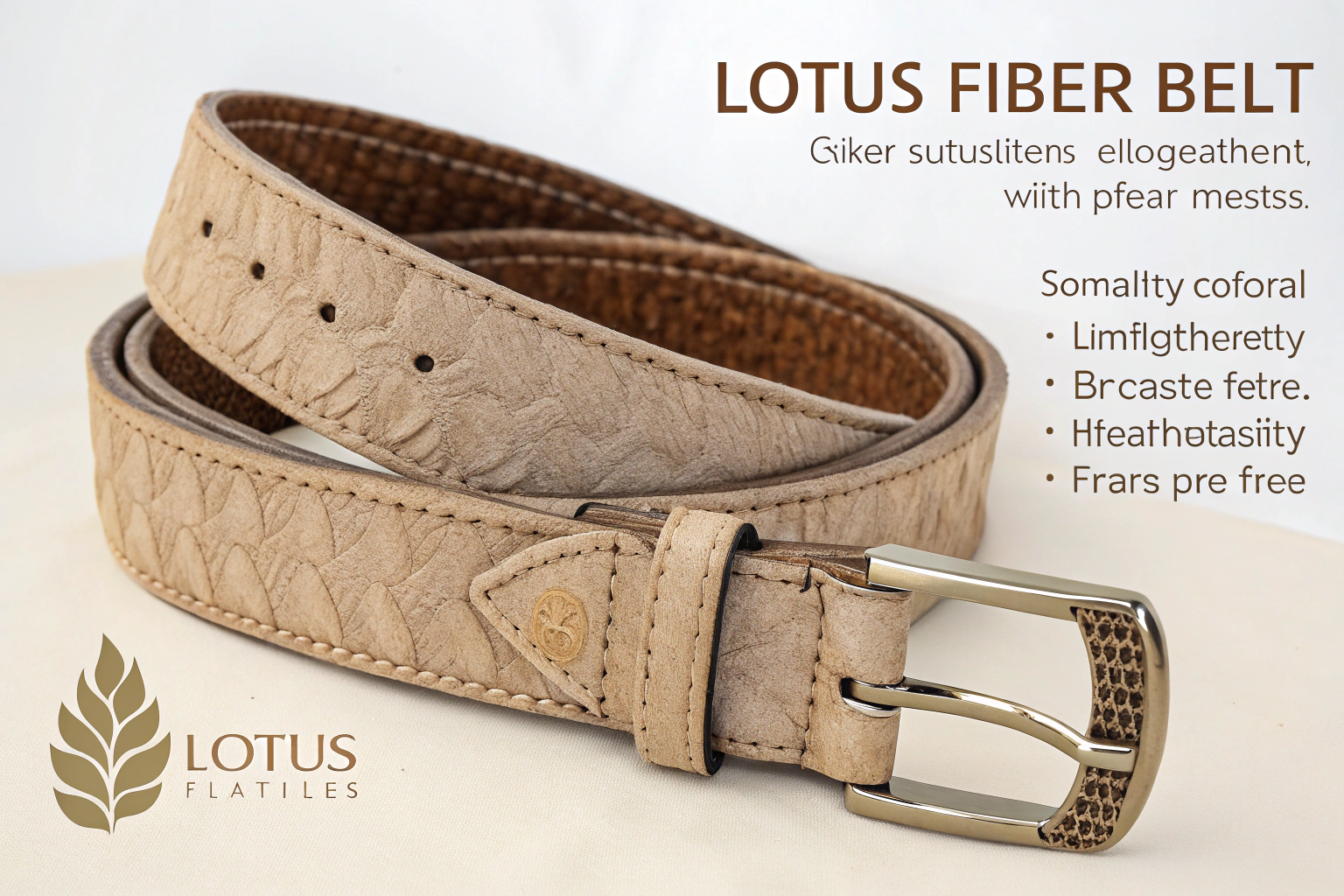
In the rarefied world of ultra-luxury accessories, where exclusivity is the currency, a new and extraordinary material is capturing the imagination of connoisseurs and designers: lotus fiber. Extracted not from a common plant, but from the sacred stems of the Nelumbo nucifera lotus flower, this textile is one of the rarest and most labor-intensive natural fibers on Earth. But why would a brand choose such an esoteric material for a belt, an item traditionally grounded in leather and metal? The answer transcends mere aesthetics, weaving together unparalleled lightness, a story of sublime craftsmanship, and an ethical narrative that resonates with the modern luxury consumer.
Lotus fiber is chosen for ultra-light luxury belts because it delivers an almost weightless wearing experience with a unique, breathable texture, carries an unmatched narrative of artisanal rarity and spiritual heritage, and aligns with the highest principles of sustainable and cruelty-free luxury. It is not just a material; it is a statement of discerning values, exclusivity, and a connection to a timeless, natural artistry.
For a brand positioning itself at the absolute pinnacle of the market, a lotus fiber belt is less about function and more about philosophy—a wearable artifact that speaks volumes about the wearer's appreciation for the rare and the exquisitely made. Let's explore the profound reasons behind this choice.
What is Lotus Fiber and How is it Harvested?
To understand its value, one must first understand its origin. Lotus fiber is not woven from the petals or leaves, but from the long, slender stems that grow underwater. Each stem contains minute, cellulose-based filaments that must be extracted and joined by hand in a process that is as much an art as it is a technique. This method, refined over centuries in communities in Myanmar (Inle Lake) and Cambodia, remains almost entirely untouched by industrial automation.
Lotus fiber is harvested by hand from fresh lotus stems. The forager carefully breaks the stem and pulls it apart, revealing 20-30 ultra-fine, sticky filaments. These filaments are then individually rolled on a wet wooden board or table to bind them end-to-end, creating a single, continuous thread. This process must be done within minutes of harvesting, before the natural gum dries. It takes approximately 10,000 stems and 2 months of skilled labor to produce enough thread for one standard scarf, indicating the extreme scarcity for belt production.

Why is the Hand-Processing So Central to Its Identity?
The impossibility of mechanization is the core of its luxury proposition. The filaments are too delicate, too inconsistent, and require a tactile finesse that machines cannot replicate. This ensures that every meter of lotus silk is a direct record of human labor and patience. The spinning technique itself, often passed down through generations of artisans (predominantly women), creates a thread with a unique, slightly irregular texture and a natural, pearlescent sheen. This stands in stark contrast to the uniform perfection of mass-produced mulberry silk or high-thread-count cottons. For the luxury consumer, this human "imperfection" is the ultimate mark of authenticity and value.
What Are the Geographic and Cultural Origins?
The most renowned lotus fiber comes from the Intha people living around Inle Lake in Myanmar. The practice is deeply intertwined with Buddhist culture, where the lotus symbolizes purity, enlightenment, and rebirth. The fiber is sometimes referred to as "the silk of the gods." In Cambodia, similar traditions exist, often linked to efforts to preserve cultural heritage and provide sustainable livelihoods. Sourcing this material, therefore, is not just a procurement exercise; it is an act of cultural patronage and requires building direct, ethical trade relationships with these artisan communities, ensuring fair trade principles are upheld.
What Sensory and Performance Benefits Does It Offer?
In the realm of ultra-luxury, performance is redefined. It's not about durability in the traditional sense, but about the intimate, personal experience of wearing the object. Lotus fiber delivers a constellation of sensory benefits that are immediately perceptible to the wearer and define its ultra-light luxury character.
Lotus fiber offers a remarkably cool, breathable, and moisture-wicking feel against the skin, an exceptional strength-to-weight ratio making it robust yet barely perceptible when worn, a natural, subtle luster that avoids artificial shine, and a distinctive, dry hand-feel that is crisp yet soft. It is hypoallergenic and becomes softer with each wear.
How Does the "Weightless" Experience Translate?
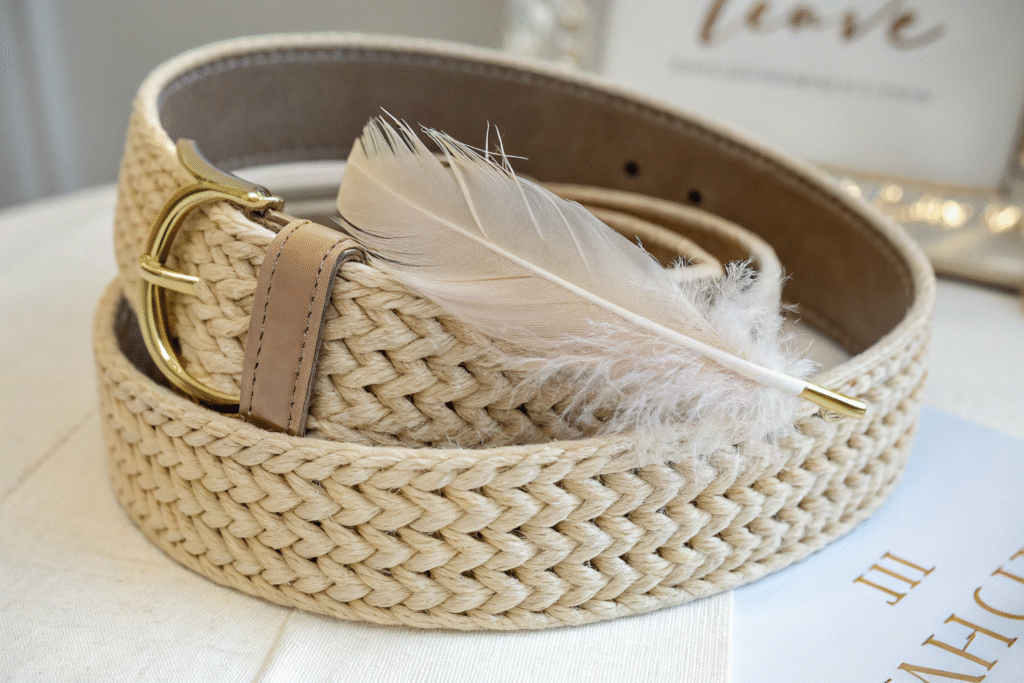
A belt's primary function is to secure, but traditional leather or even fine calfskin has a tangible heft. A lotus fiber belt, especially when woven into an open or fine twill structure and paired with a minimalist titanium or polished wood buckle, can weigh less than 15 grams. The wearer experiences a sensation of being unbound—the belt performs its function without announcing its presence. This aligns with a modern luxury ethos of effortless elegance and comfort. For high-net-worth individuals who value discretion and physical ease in their tailored clothing, this is a significant benefit. It’s the sartorial equivalent of a high-comfort, high-style "quiet luxury" movement.
What About Its Durability and Care?
Contrary to assumptions about delicate natural fibers, lotus thread is surprisingly strong due to its long cellulose structure. Woven properly, a lotus fiber belt is durable enough for daily luxury wear. However, its care is part of its ritual. It is not a product for rough, unthinking use. It should be spot-cleaned only, kept away from direct moisture and harsh chemicals, and stored carefully. This requirement for mindful maintenance is not a drawback but a feature in luxury—it elevates the object to something that requires and deserves attention, much like a fine watch or piece of jewelry. This fosters a deeper, more respectful relationship between the owner and the object.
How Does It Define a New Narrative in Sustainable Luxury?
Today's luxury consumer is increasingly an "intentional consumer." They seek products that align with their values regarding sustainability, ethical production, and cultural preservation. Lotus fiber doesn't just tick these boxes; it writes a new chapter, offering a compelling alternative to the environmental and ethical complexities of conventional luxury materials like calfskin, exotic leathers, or even mass-produced silk.
Lotus fiber represents a pinnacle of regenerative and circular luxury. The plant is grown in natural wetland ecosystems without pesticides, the harvesting process is water-based and chemical-free, the fiber is 100% biodegradable, and its production supports rural artisan communities with viable, skilled livelihoods. It offers a complete, guilt-free narrative that leather, even vegetable-tanned, cannot fully replicate.

What is the Full Environmental and Ethical Lifecycle?
- Cultivation: Lotus plants purify the water they grow in, contributing to healthy wetland ecosystems. They require no additional farmland or irrigation.
- Processing: The fiber extraction uses only water—no chemicals, dyes (the natural color is a soft ecru), or heavy energy inputs.
- End of Life: At the end of its long life, a lotus fiber belt can compost naturally, returning to the earth without trace. This is the ultimate circular economy model.
- Social Impact: Purchasing supports a specific, identifiable community of artisans, often through direct partnerships that bypass exploitative middlemen. This allows brands to tell a transparent, impactful story of social entrepreneurship.
This holistic sustainability is far more profound and credible than the "sustainable" claims of many mass-market brands, making it uniquely powerful for a luxury audience that values authenticity and impact.
How Does It Compare to Other "Green" Luxury Materials?
While organic cotton and Tencel are excellent sustainable materials, they are produced at an industrial scale. Lotus fiber's extreme rarity is its differentiator. It sits alongside materials like peace silk (Ahimsa) and hand-woven vicuña in a tier of luxury defined by ethical rarity. However, its plant-based origin and completely non-violent production give it a unique ethical clarity that even peace silk (which requires rearing silkworms) cannot claim.
What Are the Sourcing and Production Complexities?
Sourcing lotus fiber is not like ordering a roll of leather from a tannery. It is an exercise in building and managing a fragile, extended, and highly specialized supply chain that spans continents and cultures. The production of a single belt is a logistical feat that contributes significantly to its ultimate cost and exclusivity.
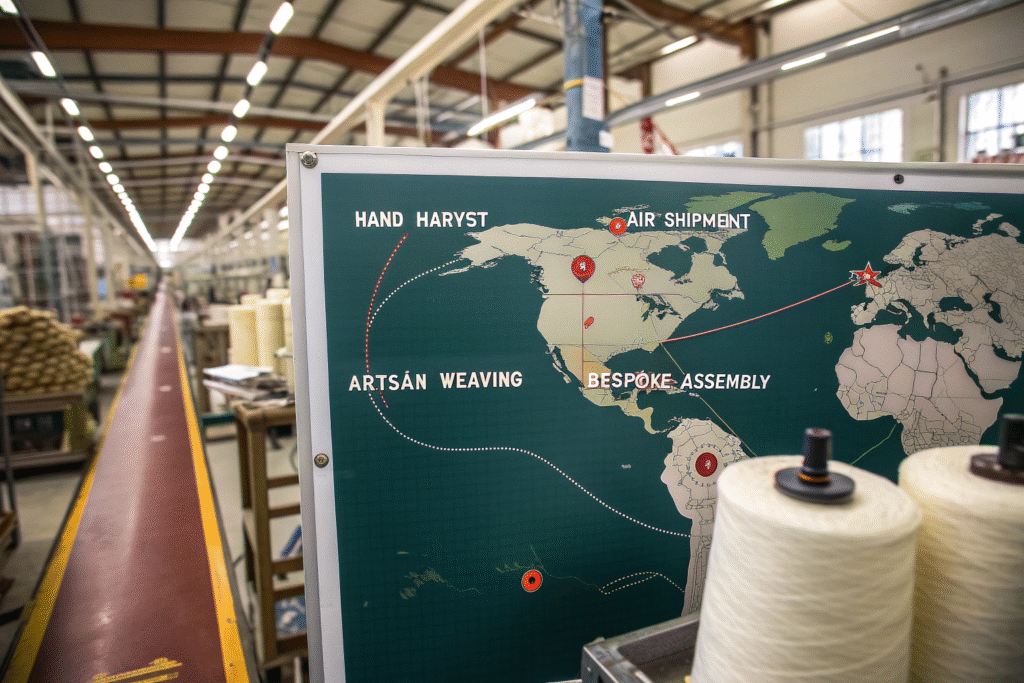
The complexities include: securing a consistent supply of raw thread from small, weather-dependent artisan cooperatives; managing international logistics for a precious, low-volume cargo; partnering with specialized hand-weavers (often in Europe or Japan) who can work with the delicate thread; and integrating the woven fabric with ultralight, commensurate hardware (e.g., titanium, ceramic, or antique silver buckles) in a controlled, luxury-grade assembly environment.
How to Establish a Viable and Ethical Supply Chain?
This requires a long-term, partnership-based approach:
- Direct Relationships: A brand or its manufacturing partner must establish direct ties with a specific cooperative in Myanmar or Cambodia. This often involves visits, building trust, and agreeing on fair pricing models that account for the artisans' skilled labor, not just commodity cost.
- Expert Intermediate Weaving: The raw thread is typically shipped to master weavers who specialize in rare fibers. These weavers, perhaps using traditional handlooms or specialized small Jacquard looms, create the narrow fabric tape for belts. This step might occur in Italy, France, or Japan—centers of textile excellence.
- Luxury Assembly: The woven lotus tape is then sent to a final assembly manufacturer (like our facility) that specializes in ultra-high-end accessories. Here, it is finished with hand-rolled edges, fitted with a custom-designed, ultra-light buckle, and presented in packaging that reflects its heritage.
The entire process is documented to provide full provenance traceability to the end client—a story that is part of the product's delivered value.
What is the Real Cost and Value Proposition?
The cost is extraordinarily high. The raw material can cost hundreds of dollars per meter before any weaving or construction. A finished belt can retail for several thousand dollars. The value proposition is therefore not "cost per wear" but "value per experience." It is for the client who seeks the most exclusive, storied, and ethically impeccable object available. It is a collector's item and a piece of wearable art. Marketing must focus on this narrative of rarity, human artistry, and holistic purity, not on comparative features. It is the antithesis of fast fashion and a bold statement of post-materialist luxury.
Conclusion
Choosing lotus fiber for an ultra-light luxury belt is a definitive act of brand positioning. It is a commitment to a narrative that prioritizes profound rarity, human-centric craftsmanship, and regenerative ethics over ostentatious display. The resulting product is an almost weightless symbol of a more considered, intentional form of luxury—one that speaks to a deep appreciation for nature's gifts, the preservation of ancient skills, and the pursuit of a truly unique sensory experience.
For the brand that succeeds in navigating its complex supply chain, the reward is ownership of a category so exclusive that it defies comparison. It is not for every brand, nor every customer. But for those who share its values, a lotus fiber belt is not merely an accessory; it is an heirloom in the making, a conversation piece with a soul, and perhaps the purest expression of luxury in the modern age.
If your vision involves creating defining pieces at the absolute apex of luxury and sustainability, exploring the potential of lotus fiber is a journey worth taking. We have the expertise and partnerships to navigate this rarefied supply chain and execute the meticulous assembly required. Contact our Business Director, Elaine, to begin a dialogue about crafting the extraordinary: elaine@fumaoclothing.com. Let's weave a legacy.