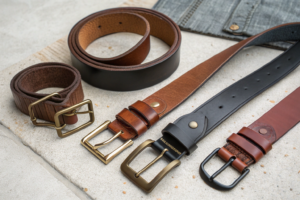
In a world of visual noise and overt branding, minimalism in fashion has evolved from a trend into a permanent philosophy. It speaks of confidence, intentionality, and a focus on essential quality. For a brand built on this ethos, every product must be a pure expression of its core values. The belt, often a secondary accessory, becomes a critical test. A poorly designed belt can shatter a minimalist aesthetic with a single loud buckle or garish stitch. So, how do you design a belt that doesn't just avoid clutter, but actively embodies and enhances a minimalist brand identity?
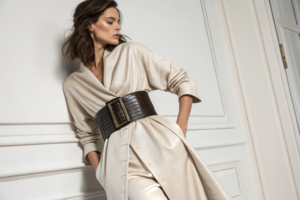
To design belts for minimalist brand aesthetics, you must adhere to a philosophy of reduction, precision, and harmony. This translates to: monochromatic or tonal color palettes that avoid contrast stitching; clean, geometric hardware with muted finishes; unobtrusive, flawless construction where seams and edges disappear; and a silent branding approach where the logo is either absent, subtly embossed, or integrated into the buckle's form. The belt should feel inevitable, not decorative.
This is design as editing. For manufacturers and brands, it requires a level of restraint and attention to detail that is often more challenging than creating something ornate. The goal is to achieve quiet impact—a product that is noticed for its absence of flaw, not its presence of features. Let's explore the principles and execution of this disciplined design approach.
What Defines the Core Principles of Minimalist Belt Design?
Minimalism in design is not merely "simple." It is a rigorous discipline rooted in movements like Bauhaus and Japanese wabi-sabi, focusing on the essence of an object. For a belt, this means stripping away every non-essential element until only the fundamental purpose and form remain. The resulting product should feel calm, intentional, and timeless.
Core principles include: Monochromatic Unity—the leather, thread, buckle, and edge finish exist in a tightly controlled, harmonious color family; Geometric Precision—every line, curve, and angle is deliberate and clean; Material Honesty—high-quality materials are left to speak for themselves without embellishment; Functional Purity—the design serves its purpose (to secure and define the waist) with maximum efficiency and zero superfluous detail. The belt becomes a study in proportion and material.
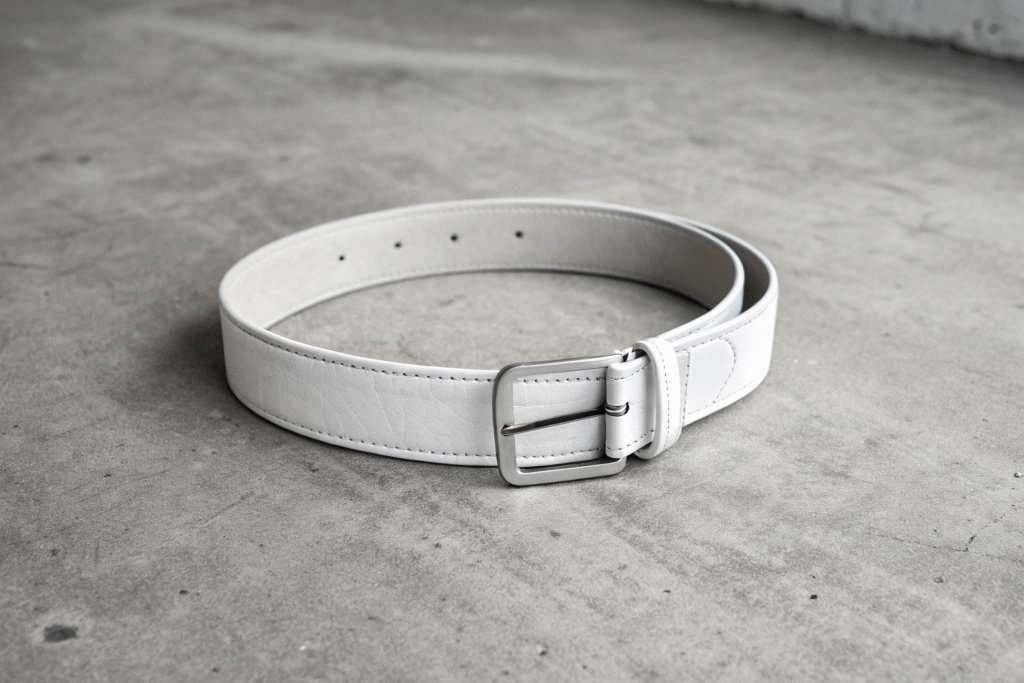
How is "Quiet Luxury" Expressed Through These Principles?
The current "quiet luxury" trend is a commercial manifestation of minimalism. It rejects logos and flash in favor of impeccable materials and cut. For a belt, this means:
- The "Weight" of Quality: A minimalist belt feels substantial. The leather is dense and supple (e.g., full-grain calfskin or shell cordovan), the buckle has a satisfying heft (solid brass, stainless steel), and the stitching, if visible at all, is perfectly spaced and recessed.
- The "Hand" of the Material: The sensory experience is paramount. The leather must feel exceptional to the touch—buttery, waxy, or ruggedly dry, depending on the brand's character. The buckle should be cool and smooth.
- The Absence of Markers: There is no date stamp, no seasonal color, no trend-driven shape. The design is intended to be seasonless and ageless.
Why is Restraint More Difficult Than Ornamentation?
Adding decorative elements can often hide flaws in construction or material. A minimalist design has nowhere to hide. A slightly wobbly stitch, a mismatched edge dye, or a buckle with a poorly finished back becomes glaringly obvious. This places immense pressure on the manufacturing process, demanding near-perfect execution. The factory must have exceptional skill in precision cutting, edge finishing, and flawless hardware attachment. The cost of quality is inherently high because the margin for error is virtually zero.
What Are the Critical Elements of Hardware and Color?
In a minimalist belt, the buckle is not an accent; it is the architectural centerpiece. The color palette is not a selection of shades but a deliberate restriction to a family of tones that communicate the brand's mood—whether cool and industrial or warm and organic. These choices are profoundly communicative.
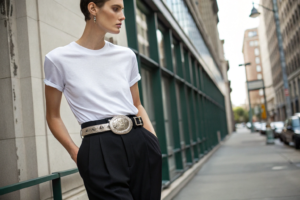
Hardware must be geometrically fundamental (bars, rectangles, ovals, circles), finished in muted, non-reflective surfaces (brushed, sandblasted, matte PVD, oxidized), and scaled to be proportionally discreet relative to the belt width. The color strategy employs monochromatic or tonal schemes, often leveraging natural leather tones (tan, black, brown, grey) and limiting the palette to 2-3 core colors that define the entire brand ecosystem.
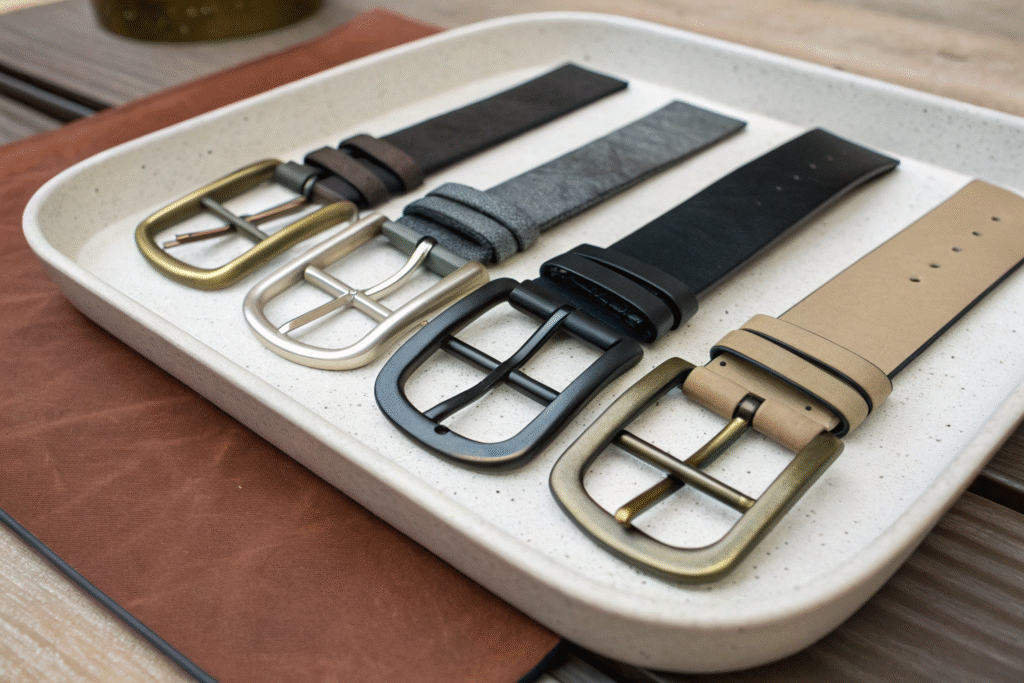
What Buckle Finishes and Forms Align with Minimalism?
- Finishes: High-polish chrome or gold is typically avoided as it is too decorative. Instead:
- Brushed/Satin: Creates a soft, diffuse light reflection.
- Bead-Blasted/Matte: Provides a completely non-reflective, tactile surface.
- Oxidized/Darkened: For brass or silver, a controlled patina or black oxide treatment adds depth without shine.
- Raw/Unfinished: For metals like titanium or aluminum, the natural mill finish is honest and modern.
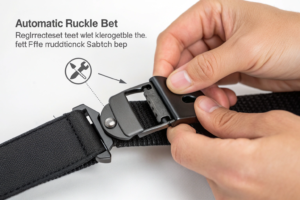
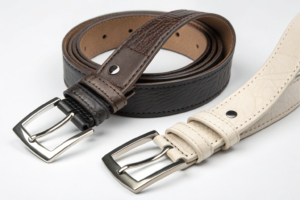
- Forms: The buckle should integrate seamlessly. A frame-less buckle (where the belt tip slides behind a simple bar) creates a clean, uninterrupted line. A minimalist pin buckle uses a slender pin and discreet keepers. The goal is to avoid visual complexity.
How to Curate a Truly Minimalist Color Palette?
Color is used with surgical precision.
- Anchor in Neutrals: The foundation is black, white, grey, tan, and navy. These are non-colors that provide maximum versatility.
- Tonal Variation: Instead of introducing a contrasting color, explore depth within a single hue. For example, a belt in "Stone" might range from a pale oatmeal leather to a putty-grey edge stain, all tied together with a lightly brushed steel buckle.
- Natural Material Expression: For leather, this often means using vegetable-tanned leather in its natural state, allowing it to develop its own patina over time, which becomes part of the product's story. The color is alive and changing, yet always within its original tonal family.
This approach ensures the belt effortlessly integrates into a minimalist wardrobe, acting as a cohesive element rather than a statement piece.
How to Achieve "Invisible" Construction and Branding?
The hallmark of expert minimalist design is that it appears effortless. The construction—the stitching, the edge work, the attachment of the buckle—should be so flawless that it becomes invisible to the eye. The branding should be so integrated that it feels like an inherent property of the object, not an applied label. This is where manufacturing excellence becomes the primary design tool.
"Invisible" construction involves: hand-dyed and burnished edges that match the leather surface perfectly, creating a monolithic appearance; recessed or hidden stitching using thread colored identically to the leather; flush-mounted hardware that integrates seamlessly with the leather plane, eliminating shadows and gaps; and laser-cut precision for absolute consistency in shape and hole placement. Branding is limited to discrete stamping on the inner lining, a subtle emboss on the leather back, or is expressed solely through the buckle's unique, proprietary shape.
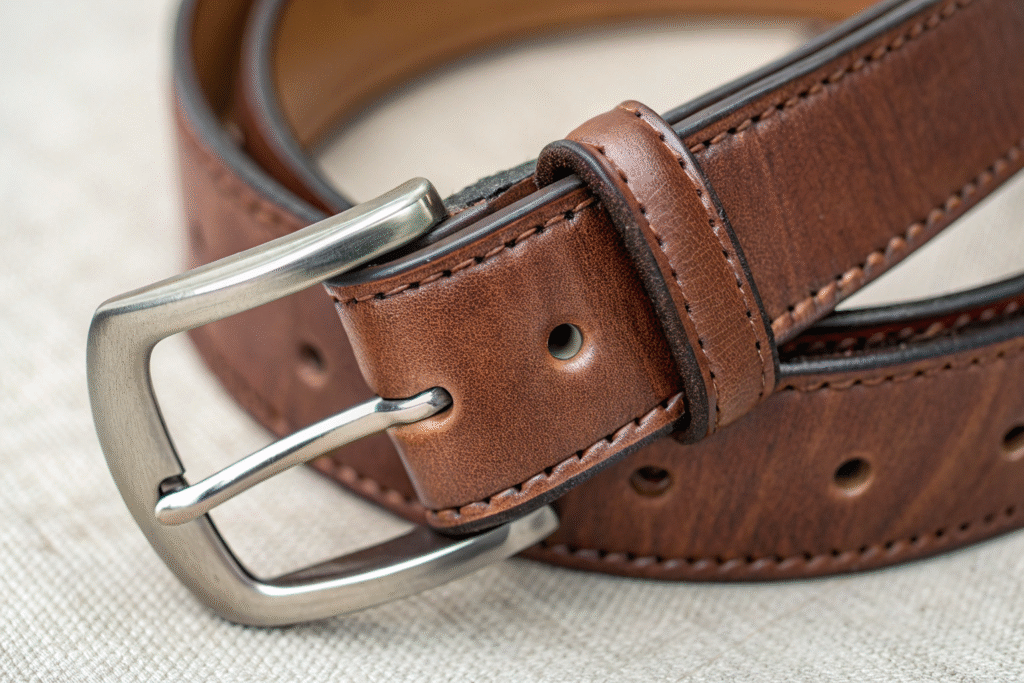
What Manufacturing Techniques Enable This Seamlessness?
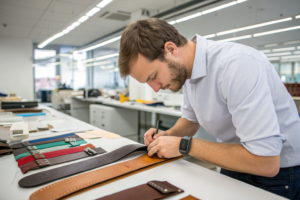
- Edge Finishing Artistry: This is the most telling detail. The process involves: Skiving the edge to a consistent thinness, Applying Edge Paint in multiple thin layers that are sanded between coats, and finally Burnishing with a wooden tool and wax to create a hard, glossy, rounded edge that appears fused. The color must be custom-mixed to match the leather.
- Stitching as Structure, Not Decoration: Stitching is often saddle-stitched by hand for durability and a subtle, recessed look. The thread is waxed and pulled taut so it sinks slightly into the leather. The stitch per inch (SPI) count is high (e.g., 10-12 SPI) for a refined appearance.
- Buckle Integration: The belt end is skived to a feather edge before being folded and secured under the buckle plate. The attachment is then finished with a perfectly aligned and painted edge, making the transition from leather to metal feel like a single, continuous material.
These techniques require artisans, not just assembly line workers. The factory must prioritize craftsmanship over speed.
How is Branding Expressed Without a Logo?
A minimalist brand's identity is conveyed through its total design language, not a symbol.
- The "Silent Logo": This could be a specific, patented buckle mechanism, a unique buckle shape that becomes synonymous with the brand (like the Bottega Veneta intrecciato weave), or a signature color that is always the same precise shade.
- Tactile and Olfactory Branding: The feel of the leather and its natural, un-perfumed smell become brand signatures.
- Packaging as Expression: The unboxing experience—using recycled, unbleached paper, minimalist typography—extends the brand aesthetic.
This approach builds a cult following among discerning customers who value subtlety and recognize quality through these nuanced cues.
What Are the Sourcing and Production Imperatives?
Sourcing for minimalist belts is an exercise in extreme curation and quality control. You cannot source commodity materials from a bulk catalog. Every component must be specified, tested, and approved to meet the exacting standards of the aesthetic. The production partner must share the philosophical commitment to reduction and perfection.
Key imperatives include: sourcing the highest grade, most consistent leather with minimal natural markings; procuring custom-finished hardware from specialized metal shops; establishing rigorous quality control protocols that reject items for microscopic flaws; and maintaining low volume, high-attention production runs that allow for artisanal techniques. The relationship with the manufacturer must be collaborative and based on shared values, not just cost negotiation.

How to Vet a Leather Supplier for Minimalist Needs?
Standard leather grading allows for natural scars and insect bites. For minimalism, you need "clean" hides.
- Specify "Clear" or "Prime" Cuts: Demand the sections of the hide with the most uniform grain and no defects. This can increase material cost by 50-100%.
- Consistency is King: The supplier must be able to provide hides with nearly identical texture, temper (softness), and color batch-to-batch. This often means working with a single, high-end tannery like Horween or Walpier on an exclusive basis.
- Finish Matters: Request samples of the exact finish—whether it's a pull-up aniline, a smooth crust, or a waxed flesh. The surface must be uniform.
What Should the Factory Audit Focus On?
When auditing a potential manufacturing partner, look beyond capacity to capability and culture.
- Ask to See Their Edge Work: The single most revealing detail. Examine finished belts under bright light.
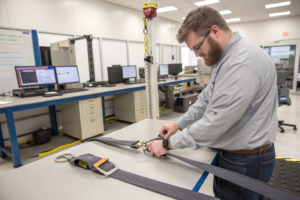
- Review Their Reject Rate: A factory producing true minimalist goods will have a significantly higher reject rate for cosmetic flaws than a standard belt factory. This should be seen as a positive.
- Assess Their Sample-Making Process: Do they engage in iterative prototyping to get the proportions and details exactly right? Or do they just execute a provided tech pack?
- Evaluate Their Handling of Materials: Is the workshop clean? Are leathers stored properly? Is there respect for the material?
The factory should function more like an atelier than a plant. They need to understand that they are not just making a belt; they are executing a design philosophy where every millimeter and every shadow counts.
Conclusion
Designing belts for a minimalist brand aesthetic is a profound exercise in discipline, clarity, and uncompromising quality. It requires the designer and manufacturer to become editors, removing anything that does not serve the core function and essence of the product. The result is an object of quiet power—a belt that doesn't shout for attention but earns deep respect through its material integrity, precise proportions, and flawless execution.
For brands, this path is not the easiest or cheapest, but it is the one that builds lasting equity and a loyal community of customers who share the values of intentionality and quality over quantity. In a saturated market, a truly minimalist belt becomes a signature, a totem of the brand's entire worldview.
If your brand is built on the principles of minimalism and you seek a manufacturing partner that understands the sacred importance of a perfect edge, a silent buckle, and a monochromatic harmony, we specialize in this exacting discipline. Our processes are built for precision, not volume. Contact our Business Director, Elaine, to discuss translating your minimalist vision into a tangible, flawless product: elaine@fumaoclothing.com. Let's create less, better.