In the competitive world of fashion accessories, acquiring a new customer is significantly more expensive than retaining an existing one. For a belt brand—whether a direct-to-consumer label, a heritage manufacturer, or a private label supplier—a well-designed loyalty program can be the engine for sustainable growth. But why do some programs foster fierce brand devotion while others become mere discount databases that erode margins? The difference lies not in the points, but in the psychology and strategic architecture behind them.
Success in belt loyalty programs is determined by a value proposition that transcends transactions, focusing on emotional connection, exclusive access, and community building. Key factors include: personalized recognition that makes members feel uniquely valued; tiered rewards that incentivize higher engagement; seamless integration with the customer's journey; and data-driven personalization that makes every interaction relevant. A successful program turns occasional buyers into brand advocates.
For manufacturers working with brands or for brands themselves, a loyalty program is not a marketing cost center but a strategic asset for customer lifetime value (CLV) optimization. Let's dissect the components that separate thriving programs from forgettable ones.
How to Design a Value Proposition Beyond Points?
The most common mistake is equating loyalty with "spend X, get Y% off." For a product like a belt—often a considered purchase with emotional and aesthetic weight—the program must deliver value that money can't easily buy elsewhere. The goal is to build affiliation, not just repeat transactions.
A successful value proposition offers privileged access (to new collections, limited-run colors/materials), personalized services (complimentary monogramming, belt hole punching, style consultations), experiential rewards (invitations to trunk shows, factory tours, virtual Q&As with designers), and practical perks that reinforce quality (free minor repairs, leather care kits, extended warranties). This transforms the relationship from buyer-seller to member-benefactor.
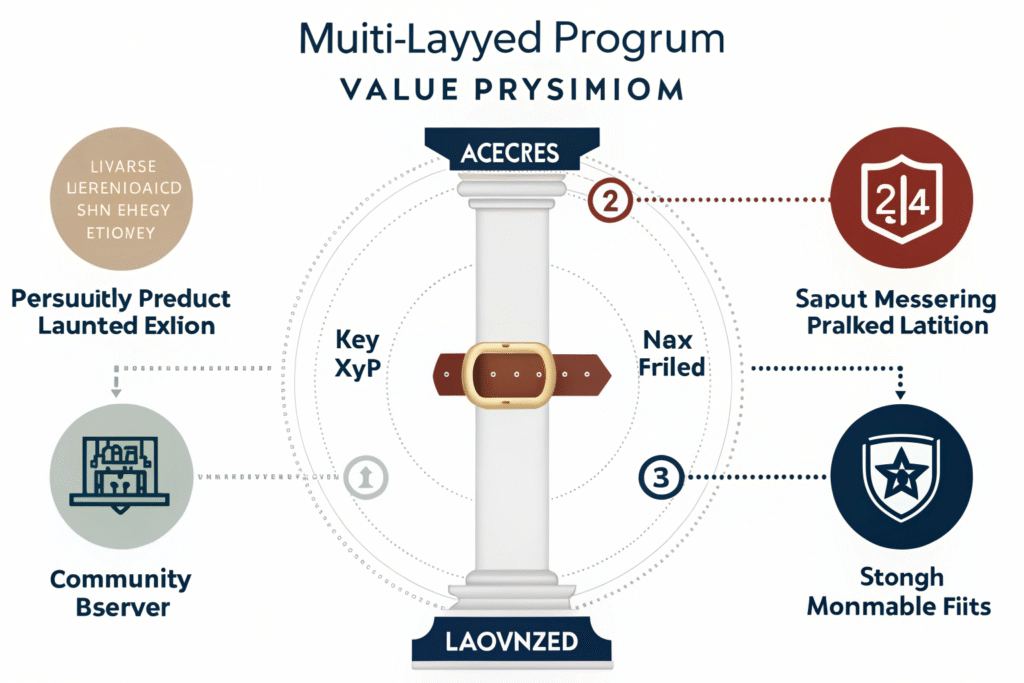
Why is Exclusive Access More Powerful Than Discounts?
Discounts train customers to wait for a sale and devalue the brand. Exclusive access, however, creates scarcity and insider status.
- Early/Exclusive Product Launches: Allow loyalty members to purchase new collections 48-72 hours before the general public. For a belt brand, this could be a new line of vegetable-tanned leathers or a collaboration buckle.
- Members-Only Products: Create belt styles, colors, or materials (e.g., a special shell cordovan run) available only to program members. This turns the belt into a badge of membership.
- Customization Options: Offer members exclusive access to custom monogramming, unique buckle engravings, or bespoke length adjustments beyond the standard offering.
These tactics leverage the psychological principles of scarcity and exclusivity, driving desire through belonging rather than price reduction.
How Do Personalized Services Deepen Engagement?
A belt is personal. The program should reflect that.
- Birthday Perks: A genuine, non-transactional touchpoint. Offer a complimentary leather conditioner or a gift-wrapping service on their birthday month.
- Anniversary Recognition: Acknowledge the anniversary of their first purchase with a thank-you note and a small credit toward their next belt, reinforcing the longevity of the relationship.
- Replenishment Reminders: For styles that may wear out (like elastic or fabric belts), offer a gentle, helpful reminder and a streamlined reorder path.
This level of personal attention makes the customer feel known and valued as an individual, not just a data point.
What Role Does Tiered Structure and Gamification Play?
Human psychology responds to goals, status, and progress. A flat points-for-discounts program lacks aspiration. A tiered structure with clear, escalating benefits creates a game-like journey that motivates continued engagement and higher spending to reach and maintain the next status level.
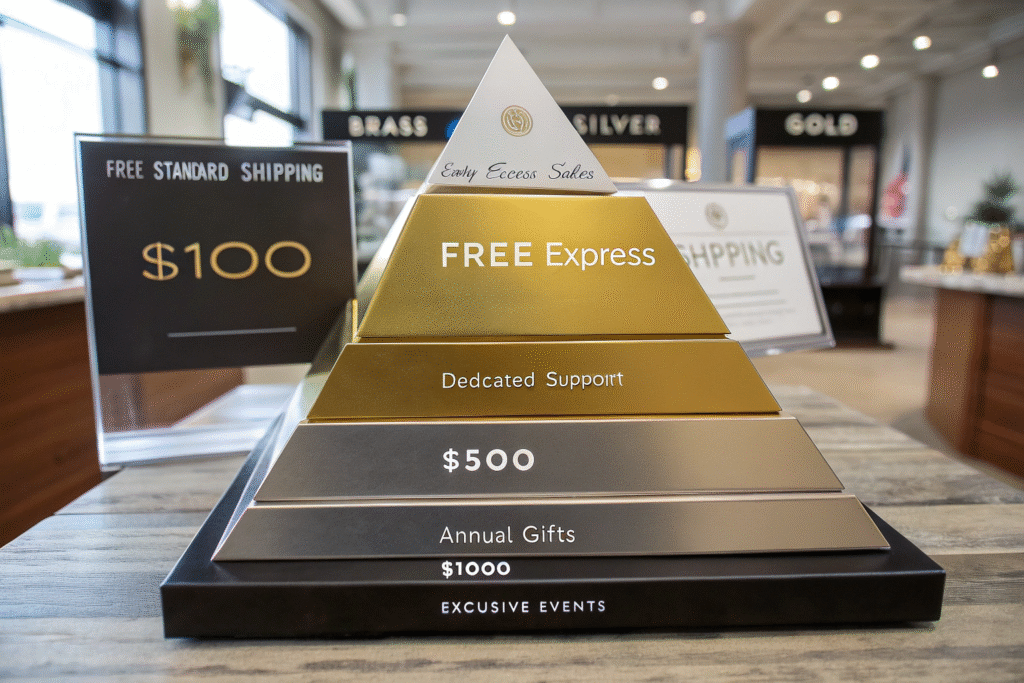
An effective tiered structure has clearly named, aspirational tiers (e.g., Apprentice, Artisan, Maestro); transparent progression metrics based on spend, frequency, or engagement; meaningfully differentiated benefits at each level that justify the climb; and soft benefits (status, recognition) that complement hard benefits (financial rewards). The program should feel like an investment in a higher-quality relationship, not a punch card.
How to Design Tiers That Drive Desired Behaviors?
Tiers should reward not just spending, but behaviors that align with brand health.
- Entry Tier (Welcome): Reward the first purchase with instant benefits (free shipping on next order, access to a members-only content hub). Goal: Onboard and deliver immediate value.
- Mid Tier (Engaged): Require a combination of spend ($250+) and actions (writing a review, sharing on social). Benefits: Free monogramming, exclusive previews. Goal: Increase engagement and advocacy.
- Top Tier (Advocate): For the top 5-10% of customers. Benefits: Annual complimentary accessory (a belt keeper, a care kit), dedicated customer service line, invitation to an exclusive annual event. Goal: Create ultra-loyal advocates who generate word-of-mouth.
This structure uses the goal-gradient effect, where people accelerate efforts as they near a reward.
What is the Strategic Use of Gamification Elements?
Beyond tiers, subtle gamification can boost engagement:
- Badges/Achievements: Reward non-purchase actions. "Explorer Badge" for reviewing three different belt materials. "Storyteller Badge" for sharing a photo wearing the belt.
- Progress Visualizations: A clear dashboard showing points to next tier or a progress bar for a welcome bonus.
- Challenges: "Complete your collection" challenge—purchase a dress belt, casual belt, and reversible belt to earn a bonus reward.
These elements make participation fun and interactive, increasing the program's "stickiness" in the customer's mind.
How to Leverage Data for Personalization and Retention?
The true power of a loyalty program lies in the data it generates. Each interaction reveals preferences, behaviors, and potential pain points. A successful program uses this data not intrusively, but helpfully, to deliver hyper-relevant communications, product recommendations, and support, transforming generic marketing into a personalized concierge service.
Data-driven success requires integrating the loyalty program with a robust CRM; tracking detailed purchase and preference data (material type, buckle style, color, width); using predictive analytics to identify at-risk members or upsell opportunities; and deploying triggered, behavior-based communications (abandoned cart reminders, post-purchase care tips, replenishment alerts). Personalization is the key to making members feel understood on an individual level.
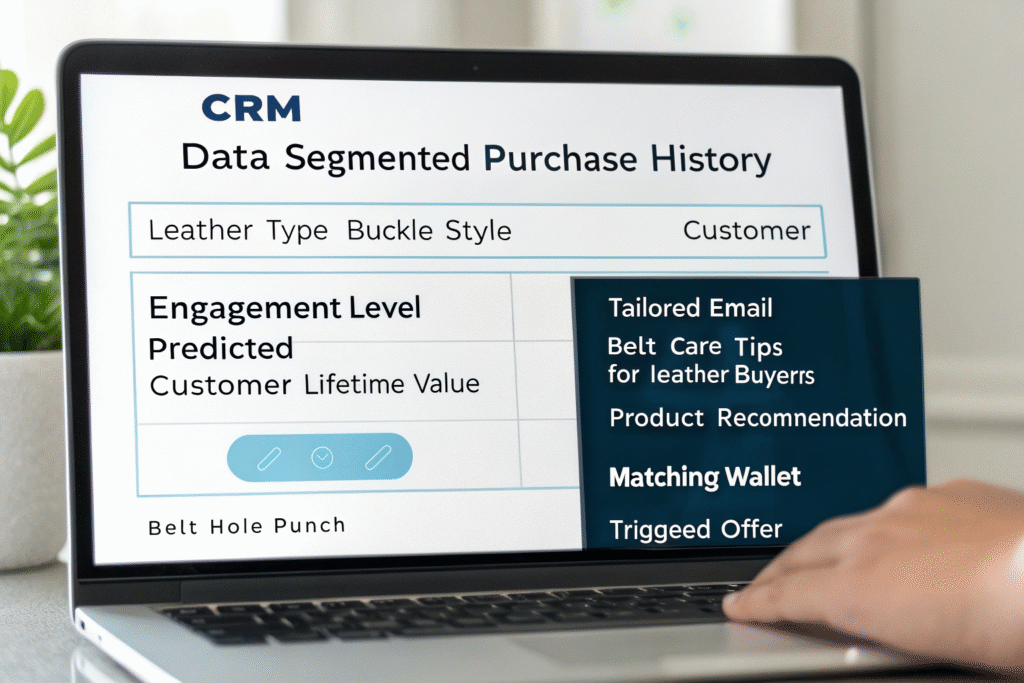
What Are Key Data Points for a Belt Program?
Beyond basic demographics, track:
- Product Affinity: Does the customer buy mostly dress belts or casual belts? Leather or fabric? This informs product recommendations.
- Purchase Cadence: How often do they buy? Is it seasonal? This informs communication timing.
- Service Usage: Do they use monogramming? Have they contacted customer service for sizing help?
- Channel Preference: Do they shop primarily on mobile, desktop, or in-store (if applicable)?
With this data, you can segment communications. For example, send a customer who buys a lot of suede belts a tutorial on suede care, not a generic leather care guide.
How to Use Data for Proactive Retention?
Use data to identify and intervene before churn:
- Win-back Campaigns: For members who haven't purchased in 12+ months, send a personalized "We miss you" offer with a compelling incentive to re-engage.
- Feedback Loops: After a customer uses a loyalty benefit (like a free repair), survey them about the experience. This data improves the service and shows you care about their opinion.
- CLV Prediction: Identify high-potential members in lower tiers and nurture them with exclusive offers to accelerate their progression.
This approach shifts the program from reactive to proactive, constantly working to deepen the relationship. Tools like RFM analysis (Recency, Frequency, Monetary) are fundamental here.
What Are the Operational and Partnership Considerations?
A loyalty program is not a marketing campaign; it's a core business operation. Its success depends on seamless execution across technology, customer service, finance, and fulfillment. For a manufacturer enabling brands or a brand itself, this requires careful planning of the operational backbone and clear alignment with any retail or wholesale partners.
Operational success hinges on choosing the right technology platform that scales and integrates; defining clear rules and policies (point expiration, tier downgrades) that are communicated transparently; training all customer-facing teams (sales, support) on the program; establishing a partnership strategy for wholesale accounts (e.g., should points be earned at partner retailers?); and continuously measuring ROI through specific metrics like member vs. non-member AOV, repeat purchase rate, and program engagement rates.
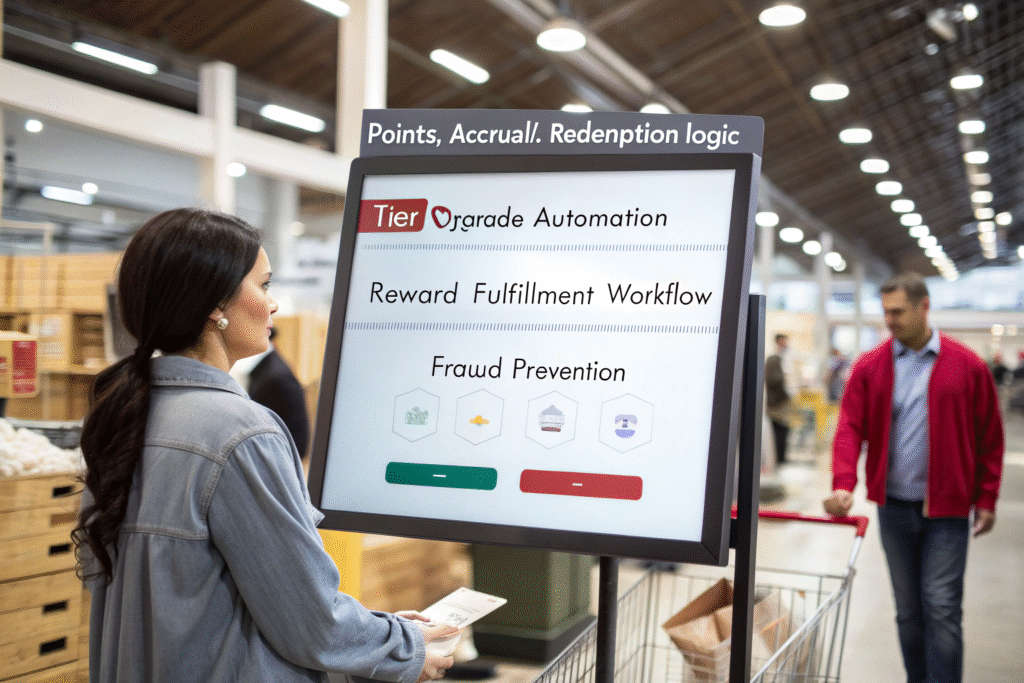
How to Select and Implement the Right Technology?
The platform is the foundation. Key considerations:
- Integration Capability: Must seamlessly integrate with your e-commerce platform (Shopify, Magento), POS system (if applicable), and email marketing software.
- Flexibility: Can it support your desired tier structure, reward types (points, perks, experiences), and complex earning rules (bonus points for social shares)?
- Data Portability: You own the customer data. Ensure you can export and analyze it independently.
- User Experience: The member's portal must be intuitive and mobile-friendly. Clunky redemption processes will kill engagement.
Platforms like LoyaltyLion, Smile.io, or enterprise solutions like Salesforce Loyalty Management are common choices, each with different strengths.
What is the Partnership Strategy for Wholesale/B2B?
If your belts are sold through other retailers, the program strategy becomes complex.
- Brand-Direct Only: The simplest model. Loyalty benefits (points, perks) are only earned on purchases made directly from your website or flagship stores. This drives valuable direct traffic and data capture.
- Integrated Partner Program: Work with key retail partners to allow points earning on purchases in their stores. This requires technological integration and revenue sharing agreements but can significantly expand reach. Be cautious, as it dilutes data control.
- B2B Partner Program: For a manufacturer, create a loyalty program for your brand clients (not end consumers). Reward them for volume, timely payments, or collaborative marketing, strengthening your B2B relationships.
The choice depends on your brand's channel strategy and control priorities.
Conclusion
Success in belt loyalty programs is determined by a strategic shift in perspective: viewing customers not as transactions, but as members of a valued community. It requires moving beyond mechanical points systems to build emotional equity through exclusive access, personalized recognition, and tiered aspirations. The most successful programs are those that are seamlessly integrated into the customer experience, powered by data-driven insights, and backed by robust operational execution.
For belt brands and manufacturers, a well-crafted loyalty program is a long-term investment in customer equity. It defends against competitive discounting, generates invaluable first-party data, and turns satisfied customers into vocal brand advocates. In a market where product differentiation can be subtle, the loyalty experience itself can become the most powerful and defensible differentiator of all.
If you are looking to build or refine a loyalty strategy that turns belt buyers into brand loyalists, a partnership with a team that understands both the emotional drivers of fashion accessories and the mechanics of modern loyalty marketing is essential. We can help design and operationalize a program that reflects your brand's unique value. Contact our Business Director, Elaine, to start the conversation: elaine@fumaoclothing.com. Let's build loyalty that lasts longer than the belt itself.