When you’re deep in the wilderness or navigating challenging terrain, your gear must do more than just function—it must be a lifeline. While adventurers meticulously plan for food, water, and navigation, one critical safety component is often overlooked: the humble belt buckle. But not just any buckle. An emergency signal buckle is a purpose-built tool that transforms an everyday item into a vital survival asset. For outdoor enthusiasts, hikers, and survivalists, this innovation addresses a core pain point: how to call for help when you’re isolated, injured, and without cell service.
Emergency signal buckles are essential for adventure because they integrate a reliable, always-on-your-person signaling device into a mandatory piece of gear—your belt. They typically feature a highly polished, mirror-like surface or integrated components that can reflect sunlight to create a visible distress signal over long distances, aiding search and rescue teams. In a crisis, this can mean the difference between a swift rescue and a prolonged, dangerous situation.
Think about your last adventure belt. It likely held up your pants and maybe carried a few tools. Now, imagine if that same belt buckle could also help save your life. This isn't speculative fiction; it's a practical, innovative application of design thinking to solve a real-world safety gap. Let's explore why this gear deserves a place in every serious adventurer's kit.
How does an emergency signal buckle work in a real survival scenario?
The principle is brilliantly simple: using sunlight to create a visible signal. In a real survival scenario where batteries can die and electronics can fail, a passive, durable tool that requires no power is invaluable. The effectiveness hinges on design and user knowledge.
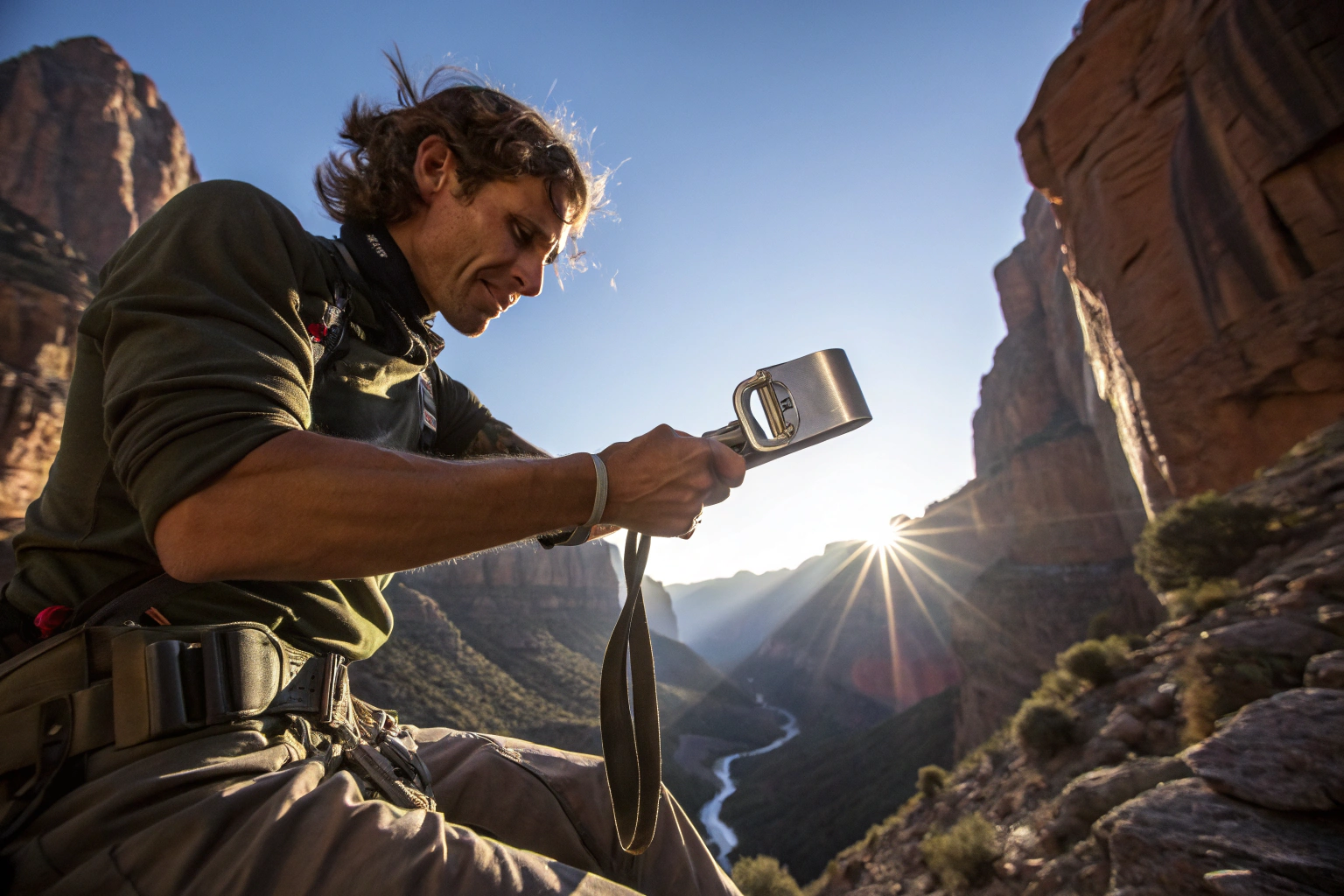
In a real survival scenario, an emergency signal buckle works by utilizing its polished, concave surface to reflect and focus sunlight into a bright beam that can be seen for miles by search planes, helicopters, or ground teams. The universal distress signal is three of anything: three flashes of light, three whistle blasts. A user can aim the buckle's reflection toward a potential rescuer and flash it in a pattern of three short, three long, three short (the Morse code for SOS).
This method is not a replacement for a PLB (Personal Locator Beacon) but a crucial complement. When every second counts, and your primary device is unavailable, this tool on your waist becomes your voice to the outside world.

What is the effective signaling range of a polished buckle?
The effective range of a polished buckle used as a signal mirror is surprisingly long. Under ideal clear-sky conditions, a well-made signal mirror can be seen up to 10 miles or more by ground observers and for over 50 miles by aircraft. The key factors are the buckle's mirror quality, the sun's intensity, and the contrast between the signal flash and the background.
The buckle must have a truly optical-quality, non-textured finish. Many adventure belts feature buckles with a decorative polish, but a dedicated emergency signal buckle is engineered for this purpose. Its curvature helps focus the light into a tighter, brighter beam. For adventurers in open terrain like deserts, mountains, or on water, this tool dramatically increases their visibility to search and rescue (SAR) teams, making it an indispensable part of any safety gear checklist.
Can it function in low-light or overcast conditions?
While its primary function requires sunlight, a quality emergency signal buckle is often designed as a multi-tool to cover various scenarios. In low-light or overcast conditions, the buckle itself may incorporate other survival aids. For instance, some models include a built-in whistle, a ferrocerium rod striker for fire-starting, or a small compass.
Even without direct sun, the highly polished metal can be used as an improvised mirror for personal care, first-aid (to look at injuries), or to visually signal across shorter distances by catching any ambient light. Furthermore, the belt strap itself, often made from durable nylon or webbed material, can be used for first-aid applications or gear repair. This multi-functionality aligns with the core outdoor principle of carrying gear that serves multiple purposes, maximizing utility and minimizing weight.
What design features make a buckle an effective signaling tool?
Not every metal buckle can be an effective signal device. Specific, intentional design features elevate a simple fastener into a life-saving instrument. For manufacturers and buyers focused on quality control, these features are non-negotiable benchmarks.
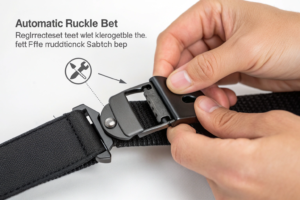
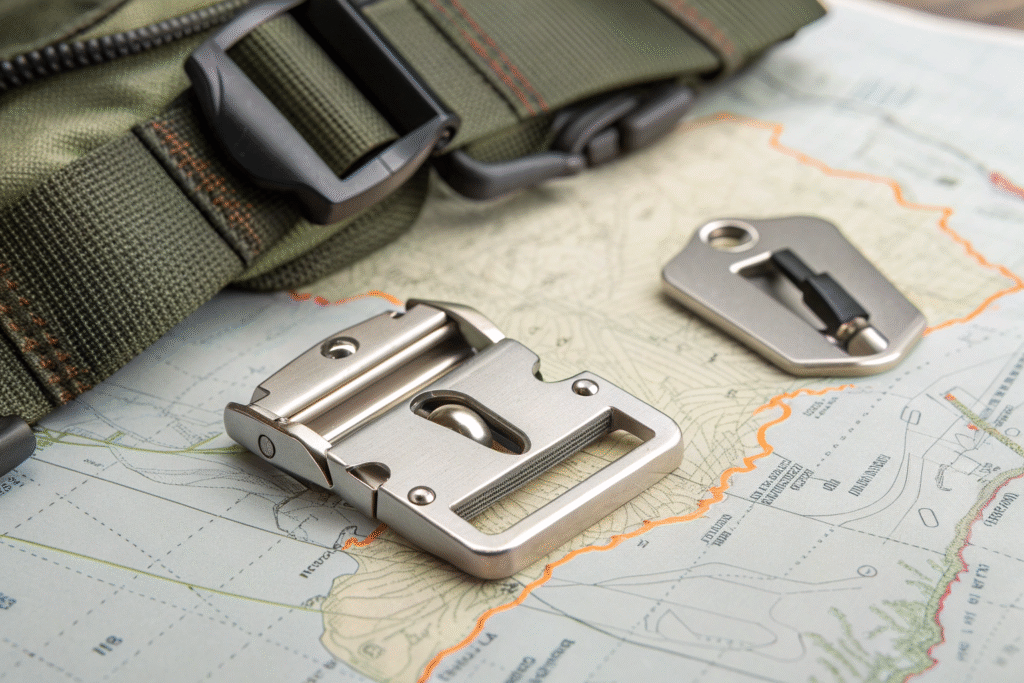
An effective emergency signal buckle must have a consistently smooth, non-textured, and highly polished reflective surface, often made from stainless steel or aluminum. It should feature a precise sighting hole or targeting mechanism to help the user accurately aim the reflected sunlight. The design must also ensure the reflective surface is protected from scratches during normal use, often via a reversible design or a protective cover.
Durability is paramount. The buckle must withstand the rigors of adventure without compromising its signaling capability. It's a tool that must work flawlessly on day 500, not just day one.
Why is a sighting hole critical for accurate targeting?
A sighting hole is the feature that transforms a simple mirror into an aimable signaling device. Without it, aiming a reflected beam accurately at a distant aircraft or rescue team is extremely difficult—like trying to shoot a rifle without sights.
Here’s how it works: The user holds the buckle close to their eye, looks through the sighting hole, and aligns the target (e.g., a plane) so it appears in the hole. A bright spot of light (the "sunball") will appear on the buckle's face. The user then simply tilts the buckle until this sunball covers the target seen through the hole. The reflected beam is now precisely aimed. This simple, intuitive technique, often part of wilderness survival training, allows even an untrained person to send a distress signal effectively within minutes, making it a crucial development capacity for any serious outdoor gear maker.
How do materials and finish impact signal clarity and durability?
The choice of materials directly dictates performance and longevity. For signal clarity, the finish must be mirror-perfect. Stainless steel is a top choice for its excellent polishability, corrosion resistance, and scratch resistance. Aluminum can be polished very brightly but is softer and may scratch more easily, which would diffuse the light beam.
The manufacturing process is key. The buckle must undergo a multi-stage polishing process to achieve an optical-grade finish, followed by a clear protective coating that does not diminish reflectivity. This level of quality control goes far beyond standard belt buckle production. For the adventurer, this means a tool that remains effective after being scraped against rocks, exposed to saltwater, or subjected to temperature extremes—a true testament to high quality manufacturing.
How to integrate this buckle into your adventure gear system?
Purchasing the tool is only the first step. Its life-saving potential is only realized when it is properly integrated into your gear system and your mental preparedness plan. It should become as automatic as checking your water supply.
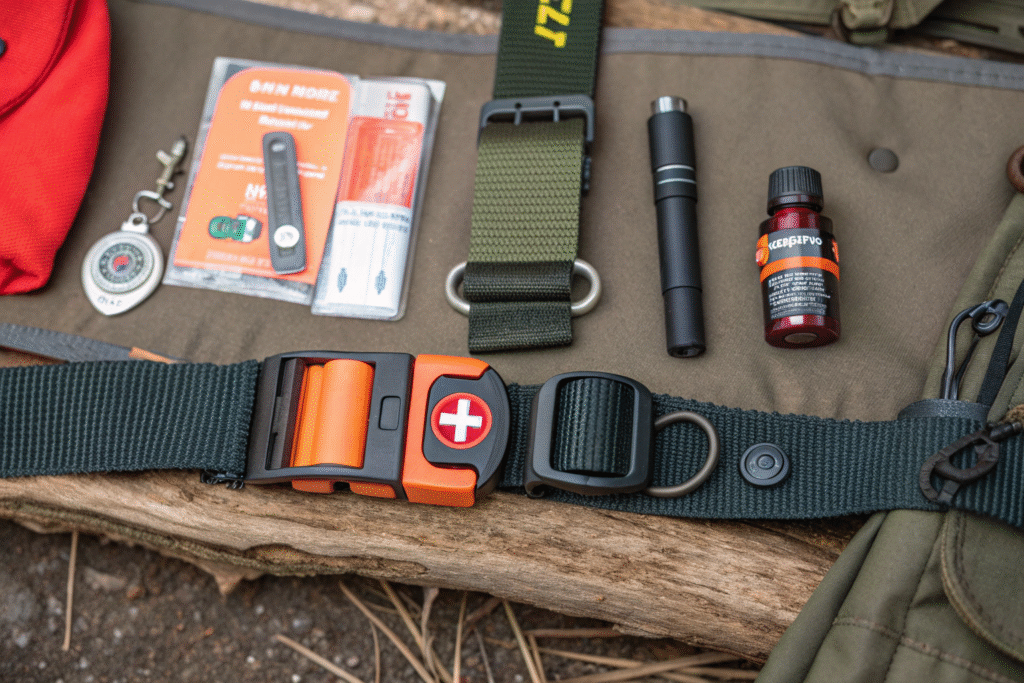
To integrate an emergency signal buckle into your adventure gear system, first, ensure it is on your person at all times by wearing it on your primary belt. Second, practice using it in a safe environment before you need it. Third, pair it with other mandatory signal devices (whistle, PLB, flashlight) as part of a layered signaling strategy. Finally, inform your trip partners that you have it and where it is located.
This integration turns an isolated piece of gear into a synergistic component of your overall safety protocol. It embodies the "always ready" philosophy of seasoned adventurers.
What are the best practices for practicing signaling techniques?
Practicing is non-optional. Best practices include:
- Learn the Theory: Understand the basic principles of aiming using the sighting hole.
- Daytime Practice: On a sunny day, practice aiming the beam at a specific, stationary target 50-100 feet away (like a tree trunk). This builds muscle memory.
- Simulate Distress Signals: Practice flashing the beam in the SOS pattern (··· --- ···).
- Practice with Your Gear: Wear the exact belt and clothing you would on an adventure to ensure no straps or layers obstruct the buckle's use.
Regular, brief practice sessions ensure that in a high-stress, potentially injured state, you can operate the tool effectively. This practice is as important as knowing how to use your water purification system. Manufacturers who provide quick-start guides or links to tutorial videos from organizations like the Wilderness Medical Society add tremendous value to their product.
Why is a layered signaling strategy the most reliable approach?
Relying on a single device for rescue is a strategic risk. A layered signaling strategy employs multiple tools with different strengths and power sources. An emergency signal buckle is a core layer in this strategy:
- Primary Layer (Electronic): A PLB or satellite messenger (e.g., Garmin inReach) for immediate GPS alerting.
- Secondary Layer (Audible): A loud whistle (which can be integrated into the buckle) to signal over shorter distances and through obstacles.
- Tertiary Layer (Visual - Active): A bright LED flashlight or strobe for night signaling.
- Quaternary Layer (Visual - Passive): The emergency signal buckle, which requires no batteries and works indefinitely as long as there is sunlight.
This approach ensures that if one system fails (e.g., electronics get wet or batteries die), you have immediate backups. The belt buckle represents the ultimate backup—a simple, elegant, and permanent solution. For brands and importers, offering a belt that contributes to this layered system meets a deep market need for reliable, innovative adventure accessories.
Conclusion
The emergency signal buckle is far more than a novelty; it is a paradigm shift in how we view essential adventure gear. By embedding a powerful, passive rescue tool into an item you’re already wearing, it closes a critical safety gap with elegant efficiency. Its effectiveness is rooted in proven signaling physics, durable design, and intelligent integration into a broader safety mindset. For the adventurer, it provides priceless peace of mind. For the outdoor industry, it represents a meaningful innovation that prioritizes user safety above all else.
As a manufacturer dedicated to creating high-performance, life-ready gear, we see this as the future of functional fashion. If you are a brand looking to develop or source adventure belts with integrated, genuinely effective safety features like emergency signal buckles, we have the design expertise and fast production capacity to make it happen. For a professional discussion on developing your own line of life-saving adventure belts, contact our Business Director, Elaine. Let's build gear that protects. Email: elaine@fumaoclothing.com.