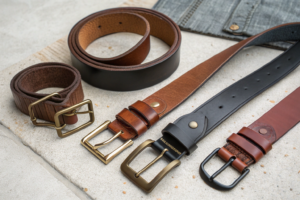
For millions of adults and children, sensory sensitivity isn't a preference—it's a daily reality. Tags feel like sandpaper, seams cause distraction, and pressure from clothing can be overwhelming or even painful. In this context, a traditional belt, with its rigid structure, hard buckle, and constricting feel, can be a source of significant discomfort. As a manufacturer, we've learned that designing for sensory sensitivity isn't about creating a niche product; it's about practicing universal design that prioritizes comfort, adaptability, and gentle touch. The right belt can provide security and style without the sensory overload.
The best belt styles for sensory sensitivity are those that eliminate common irritants: they are seamless or have flat seams, feature soft, non-abrasive materials, offer adjustable pressure without traditional holes, and use smooth, snag-free closures. Key styles include no-hole slide buckle belts, wide soft fabric belts, seamless elastic waistbands, and hook-and-loop fastener belts, all designed to provide gentle, even compression without points of high pressure.
Moving beyond the standard leather and pin buckle opens up a world of comfort. It’s about re-engineering every component, from the textile backing to the clasp mechanism, with a neuro-inclusive mindset. Let's explore the specific styles and features that make a belt not just wearable, but comfortably forgettable.
Which belt materials are most comfortable for sensitive skin?
The material is the first point of contact and the foundation of comfort. Traditional belt materials like stiff leather or rough-edged synthetic webbing can be immediate triggers. The goal is to find textiles that are forgiving, breathable, and consistent in texture.
The most comfortable belt materials for sensitive skin are those with a soft, brushed, or plush finish. This includes ultra-soft microfiber, lined or backed with cotton fleece or velour, smooth and high-thread-count cotton canvas, supple and garment-washed genuine leather (like lambskin), and seamless, wide elastic bands. These materials avoid scratchy textures, reduce friction, and provide a gentle, predictable feel against the skin.
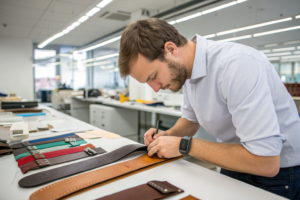
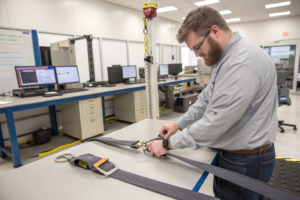
It's not just about the top layer. The backing that touches the skin is critical. A belt can have a stylish exterior but must have a supremely soft interior to be truly sensory-friendly. This requires dedicated quality control to ensure no rough edges or inconsistencies are present.
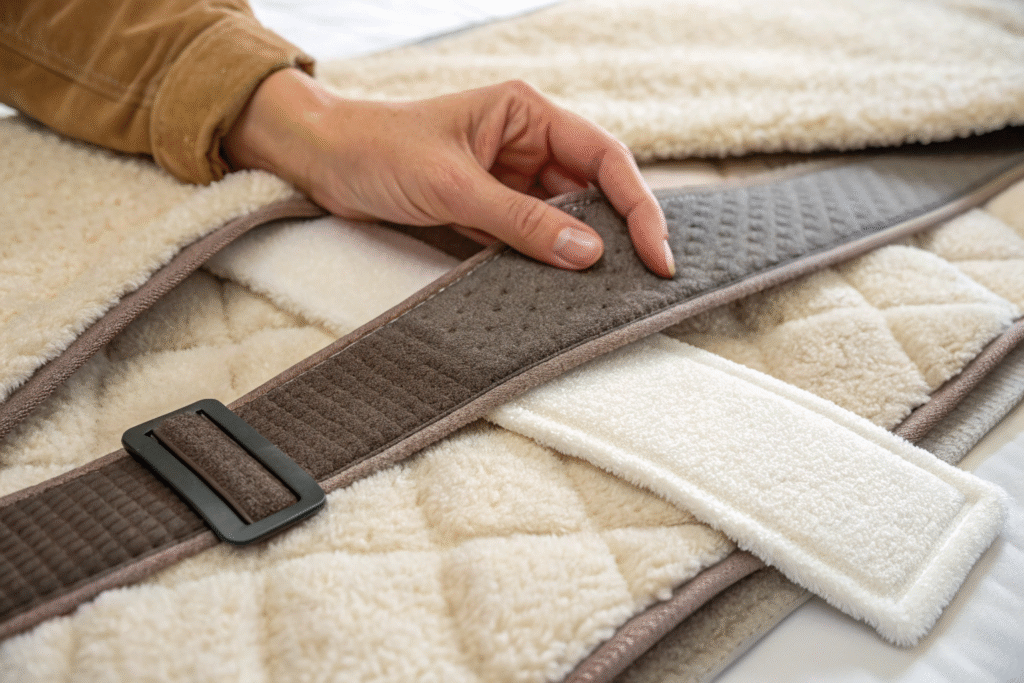
Why is brushed microfiber a superior choice for inner linings?
Brushed microfiber is a standout choice for inner linings because its ultra-fine fibers create an exceptionally smooth, plush, and non-abrasive surface. The brushing process raises these fibers, creating a cushioning effect that minimizes direct pressure points and distributes the belt's tension evenly across the skin. Unlike cotton, which can pill or become rough, high-quality microfiber maintains its softness through repeated wear and washing.
For a children's belt or an all-day casual belt for an adult with sensitivity, this lining acts as a protective barrier. It also wicks moisture away from the skin, reducing the clammy feeling that can be another sensory trigger. From a manufacturing standpoint, sourcing and consistently applying this specialized material is a key part of our development capacity, ensuring the promised comfort is delivered in every unit.
How does garment-washed leather differ from standard leather?
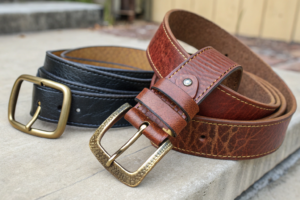
Standard belt leather is often stiff, coated with a firm finish, and can have a chemical smell—all potential sensory stressors. Garment-washed leather, however, undergoes a specialized tanning and softening process similar to that used in premium leather jackets or soft gloves. The result is a genuine leather belt that is remarkably supple, flexible, and has a broken-in feel from the first wear.
This process reduces the leather's rigidity, eliminating the "breaking-in" period that can be painful. The surface becomes more matte and less likely to cause friction. For someone who prefers natural materials but needs comfort, a garment-washed lambskin leather belt offers a dignified, sensory-aware solution. It represents a shift in belt manufacturing from purely structural to adaptive and human-centric.
What buckle mechanisms minimize discomfort and frustration?
The buckle is often the main culprit of discomfort—digging into the abdomen, feeling cold against the skin, or requiring frustrating fine-motor manipulation. The ideal sensory-friendly buckle is smooth, flat, easy to operate with minimal dexterity, and allows for micro-adjustments.
Buckle mechanisms that minimize discomfort include ratchet/slide buckles (no-hole systems), magnetic clasps, wide flat plastic clasps, and flexible hook-and-loop (Velcro) closures. These designs eliminate the pressure point of a traditional prong, avoid the need for precise hole alignment, and often operate with a simple push-pull or magnetic action, reducing anxiety and frustration.
The goal is to create a closure that is secure yet effortlessly adjustable, empowering the wearer to find their perfect pressure without struggle. This is especially crucial for teen belts and youth belts, where independence in dressing is key.
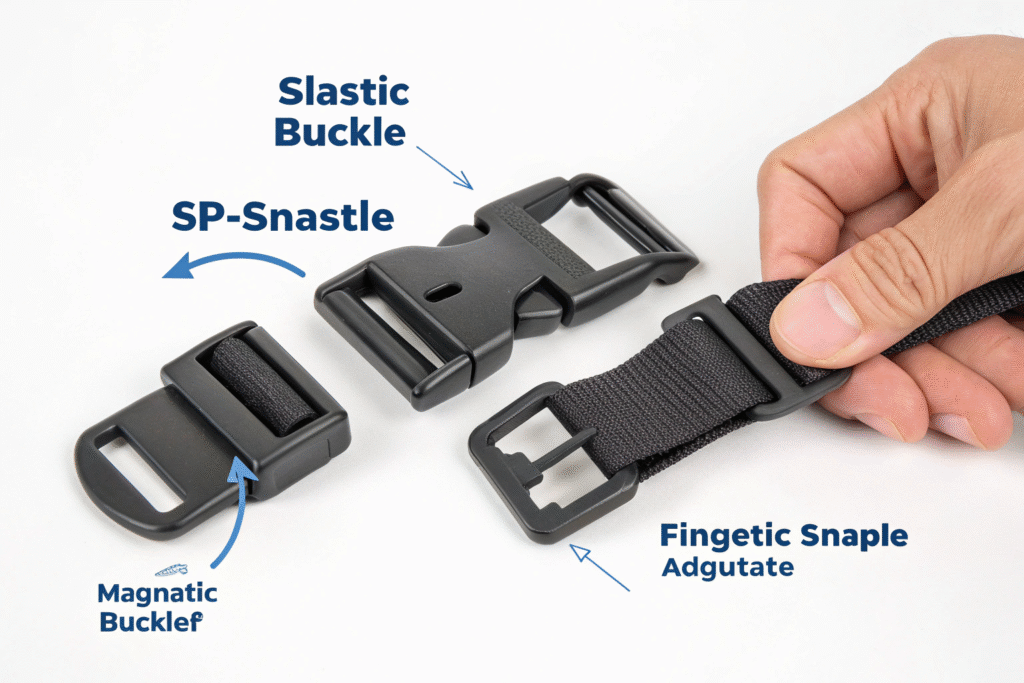
How do no-hole ratchet belts provide even pressure distribution?
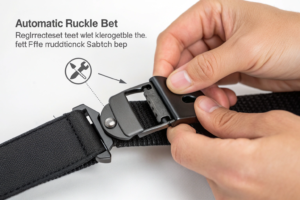
No-hole ratchet belts, also known as slide buckle or automatic adjustment belts, are revolutionary for sensory needs. They replace a line of discrete holes with a continuous track of fine teeth. The buckle clicks into place at any point along this track, allowing for millimeter-perfect adjustment. This eliminates the "in-between" feeling where one hole is too tight and the next is too loose—a common sensory distress.
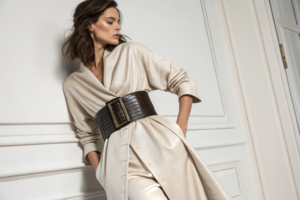
The buckle itself is typically a smooth, flat plate that sits flush against the body, distributing pressure over a wider area rather than concentrating it on a single prong. The mechanism is also easy to release, often with a simple lever or button. This design, popularized by brands in the adaptive clothing space, directly addresses the core pain points of traditional hole belts. It provides a sense of control and consistent, even comfort that is highly valued.
Why are magnetic clasps gaining popularity in adaptive wear?
Magnetic clasps are gaining rapid popularity because they represent the ultimate in simplicity and predictability. They require no pinching, pulling, or threading—the two ends simply guide themselves together with a satisfying, secure snap. This is invaluable for individuals with limited fine motor skills, arthritis, or those who experience anxiety with complex closures.
For sensory sensitivity, the benefits are multiple: the clasp surfaces are usually smooth and flat, there are no moving parts to pinch skin, and the engagement is consistent and reliable. When integrated into a soft fabric belt or a leather belt tip, they create a closure that is both secure and completely free of frustration. As a manufacturer, incorporating reliable, high-strength neodymium magnets is a technical challenge that results in profoundly user-friendly products.
How to design belt fit for adjustable, gentle compression?
Fit is not just about size; it's about how the belt interacts with the body dynamically. A sensory-friendly belt must accommodate fluctuations in comfort levels and physical state throughout the day, providing gentle compression without constriction.
Designing belt fit for adjustable, gentle compression involves using stretch materials like elastic, creating wide bands to spread force, and implementing adjustment systems that allow micro-changes without removing the belt. The ideal fit should feel like a secure hug rather than a tight squeeze, providing proprioceptive input that is calming without being restrictive.
This approach moves away from the "one tightness setting" model. It acknowledges that the wearer's needs may change, and the product should adapt seamlessly. This is a core philosophy in modern fashion accessory design for inclusivity.
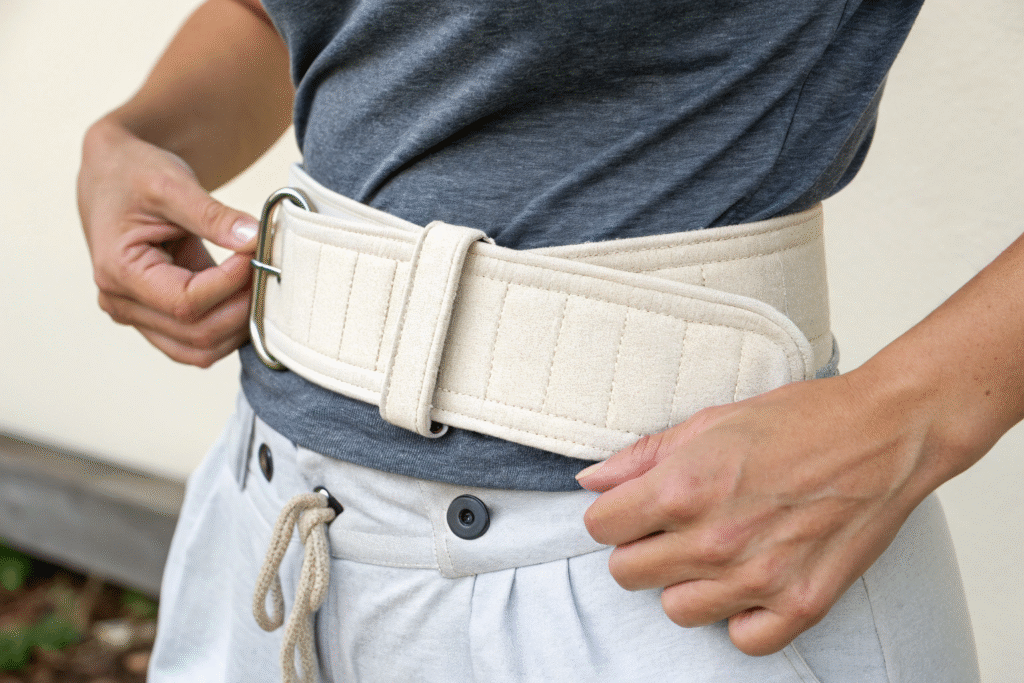
What are the benefits of wide, soft waistbands over narrow belts?
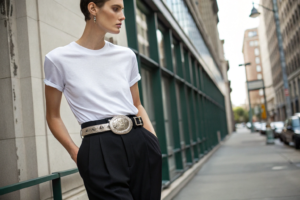
A wide belt or waistband (often 2 to 3 inches or more) is fundamentally more sensory-friendly than a narrow one. Physics is the reason: pressure is defined as force per unit area. A wide band distributes the same holding force over a much larger surface area of the abdomen and back, significantly reducing the pounds-per-square-inch feeling that can become painful or overwhelming.
Furthermore, a wide band made from a soft fabric like brushed canvas or jersey provides more stable, enveloping compression. This deep-pressure touch can have a regulating, calming effect for many individuals with sensory processing differences. It prevents the "digging in" feeling of a narrow leather belt and creates a more uniform, predictable sensory experience. This principle is well-understood in occupational therapy circles and is now being applied to mainstream fashion.
How can elastic and stretch fabrics accommodate sensory needs?
Elastic and stretch fabrics are game-changers because they introduce forgiveness into the system. A belt with a core of wide elastic or made entirely from a stretch woven fabric moves with the body during sitting, bending, and breathing. It maintains light tension without ever becoming rigidly tight.
This dynamic fit accommodates sensory needs in two ways: First, it avoids the sudden, uncomfortable pressure spike that occurs when sitting down in a non-stretch belt. Second, it provides constant, gentle proprioceptive feedback, which can be organizing for the nervous system. When combined with a no-hole buckle for gross adjustment, the wearer gets both macro-adjustability and micro-flexibility. For unisex belt designs aiming for universal comfort, this combination is often the gold standard.
Conclusion
Identifying the best belt styles for sensory sensitivity is an exercise in empathy and innovation. It requires looking beyond aesthetics to the subtle interactions between material, mechanism, and the human body. The solutions—soft, seamless materials; intuitive, pressure-free buckles; and adjustable, wide-fit designs—offer profound comfort not just for those with diagnosed sensitivities, but for anyone who values ease and well-being in their clothing. This is the future of thoughtful design: inclusive, adaptive, and deeply comfortable.
As a factory with our own design team and a commitment to quality, we are passionate about turning these insights into tangible products. If you are a brand, retailer, or therapist looking to develop a line of sensory-friendly belts, suspenders, or other belt accessories, we have the expertise to guide you from concept to production. Let's create wearables that welcome everyone. For a professional consultation, please contact our Business Director, Elaine, at elaine@fumaoclothing.com.