The intersection of fashion and personal audio is evolving beyond headphones and earbuds, moving into the very fabric of what we wear. Belts with customized sound profiles represent a frontier in wearable tech, offering a unique value proposition: a personal audio experience that is context-aware, shareable, and seamlessly integrated into daily attire. For brands targeting tech enthusiasts, gamers, fitness communities, and the experience-driven consumer, this isn't just a product—it's an immersive platform. However, sourcing such an innovation requires navigating a complex ecosystem that blends acoustics engineering, software development, and apparel manufacturing.
To successfully source belts with customized sound profiles, you must identify and partner with a manufacturer that possesses integrated expertise in flexible electronics, acoustic design for non-traditional surfaces, and firmware/APP development. The core process involves defining the audio application (private listening, ambient augmentation, or haptic communication), selecting the appropriate transducer technology, and establishing a robust software backend that allows end-users to create, save, and switch between personalized audio signatures via a companion application.
The challenge moves far beyond attaching a Bluetooth speaker to a strap. It's about embedding intelligence and sound into a flexible, durable accessory, ensuring the customization is both powerful and intuitive for the user.
What hardware components enable sound customization in a belt?
The physical foundation of a smart audio belt is its hardware. These components must be miniaturized, flexible, and robust enough to withstand the bending and pressure of being worn while delivering clear, customizable audio. The hardware suite dictates the basic capabilities and limits of the sound profiles.
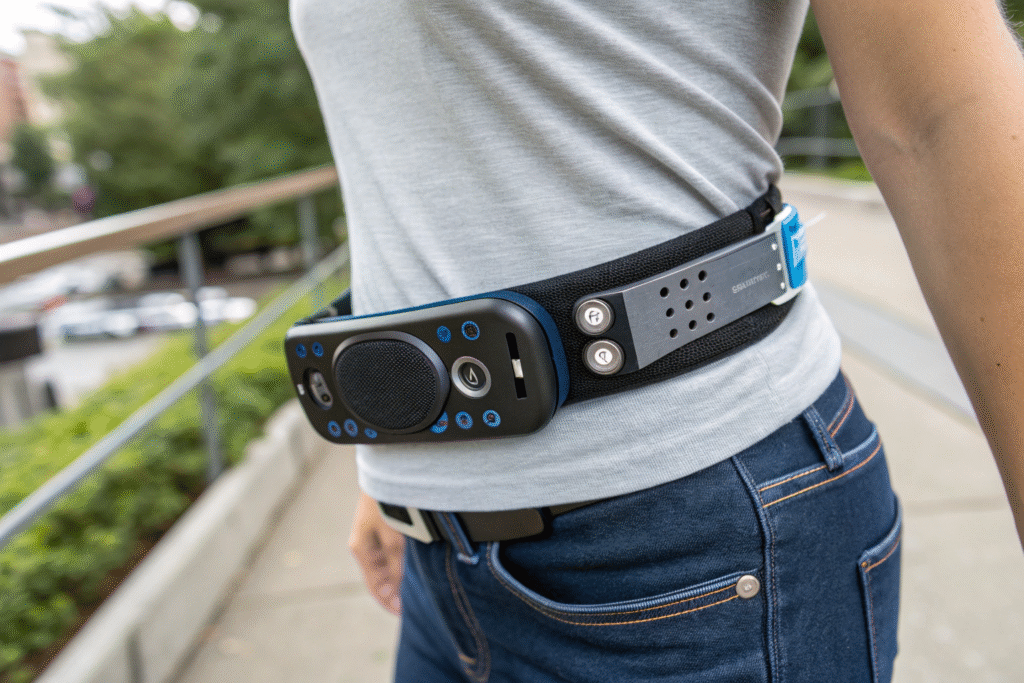
Hardware enabling sound customization includes a Digital Signal Processor (DSP) chip for real-time audio processing and profile storage, one or more transducers (such as piezoelectric exciters, micro-speakers, or bone conduction units), a high-quality Bluetooth audio module with low-latency codec support, a multi-axis motion sensor for contextual awareness, and a high-density lithium-polymer battery. This assembly allows the belt to execute complex audio algorithms, switch between user-defined profiles, and adapt sound based on activity.
The integration of these components into a slim, flexible form factor is the first major sourcing hurdle. The manufacturer must have experience in designing rigid-flex PCBs and housing electronics in apparel without creating uncomfortable bulges.
How do piezoelectric panels differ from traditional micro-speakers?
The choice of sound transducer is critical and defines the user experience.
- Traditional Micro-Speakers (Dynamic Drivers): These are miniature versions of cone speakers. They require an enclosed air volume (a baffle) to produce sound effectively, particularly bass. Integrating these into a thin belt often results in a bulky module or compromised audio quality.
- Piezoelectric Panels/Exciters: These are flat, disc-like devices that vibrate when an electrical signal is applied. They are attached to a surface (like the leather or a stiff panel of the belt), which then acts as the vibrating diaphragm to produce sound. They are extremely thin, energy-efficient, and can create a broad, immersive sound field ideal for ambient audio. However, they typically lack deep bass response.
For a belt prioritizing discreet, shared or ambient sound (like creating a personal audio bubble during a picnic), piezoelectric exciters are often superior. For applications requiring private, full-range audio, a manufacturer might use advanced bone conduction technology near the buckle. Sourcing requires clear communication of the primary use case to select the right transducer.
Why is a dedicated DSP chip non-negotiable for profile management?
A Digital Signal Processor is the brain behind the "customized" aspect. It's a specialized microprocessor optimized for manipulating audio signals in real time. Without it, the belt would only be capable of playing audio as received from the source device.
The DSP enables:
- Profile Storage & Switching: It holds the parameters for multiple EQ curves, compression settings, and audio effects, allowing instant switching between, for example, a "Bass Boost" profile and a "Voice Clarify" profile.
- Active Sound Shaping: It can apply user-created or pre-set equalization to tailor the audio output to personal preference or compensate for the belt's acoustic limitations.
- Contextual Adaptation: Paired with a motion sensor, the DSP can automatically adjust volume or profile based on activity (e.g., reducing bass and enhancing ambient sound awareness when the sensor detects running).
Sourcing a manufacturer that understands DSP programming and integrates chips from reputable suppliers like CEVA or Analog Devices is crucial for a product that delivers on its promise of true customization.
How does the companion app drive the user customization experience?
The hardware provides the capability, but the software provides the interface for personalization. A well-designed companion app transforms the belt from a simple audio device into a personalized entertainment and utility platform. It is the primary touchpoint for the user's creative input.
The companion app drives customization by providing an intuitive interface for creating, managing, and sharing sound profiles. Key features include a multi-band graphic equalizer or parametric EQ for fine-tuning, a library of pre-designed profiles for various activities (Gaming, Meditation, Commute), the ability to save personal mixes under custom names, and social features to share profiles with friends. Advanced apps may include soundscape builders or integration with health data to influence audio profiles.
The app's stability, connectivity, and user experience are as important as the belt's build quality. A buggy app will render the best hardware useless and lead to negative reviews.

What are the essential features of an intuitive profile creation interface?
An intuitive interface lowers the barrier to entry for customization. It should empower users, not confuse them with technical jargon. Essential features include:
- Visual Sound Shaping: A drag-and-touch interface where users can morph a sound wave graphic to boost or cut frequencies intuitively.
- Smart Presets: One-tap profiles designed by audio engineers for specific scenarios (e.g., "Podcast," "Sound Leakage Minimization," "3D Immersion").
- Simple Naming and Organization: Easy ways to label, categorize, and retrieve user-created profiles.
- Real-time Preview: The ability to hear changes applied to the music currently playing.
This requires skilled UI/UX design, often necessitating that the manufacturer has a dedicated software team or a strong partnership with a mobile app development agency. This is a critical part of the development capacity to vet during sourcing.
Can profiles be synchronized or triggered by other smart devices?
Yes, and this interoperability significantly enhances the product's value within a smart ecosystem. Through the app and cloud services, profiles can be:
- Cloud-Synced: A user's custom profiles are stored in their account and can be downloaded to a replacement belt or a second device.
- IoT-Triggered: Using platforms like IFTTT or proprietary APIs, the belt's audio profile could automatically switch to "Movie Night" when the user's smart TV turns on, or to a "Focus" mode when their smart desk light activates.
- Biometrically Informed: With user permission, heart rate data from a fitness tracker could trigger a calming soundscape profile if stress is detected.
When sourcing, inquire about the manufacturer's experience with IoT integration and their roadmap for API development. This forward-thinking capability can future-proof your product line.
What are the critical manufacturing challenges for audio belts?
Producing a belt with reliable, high-quality audio involves a set of challenges distinct from both standard belt manufacturing and typical consumer electronics assembly. The product exists at the intersection of these two worlds, requiring a hybrid production approach.
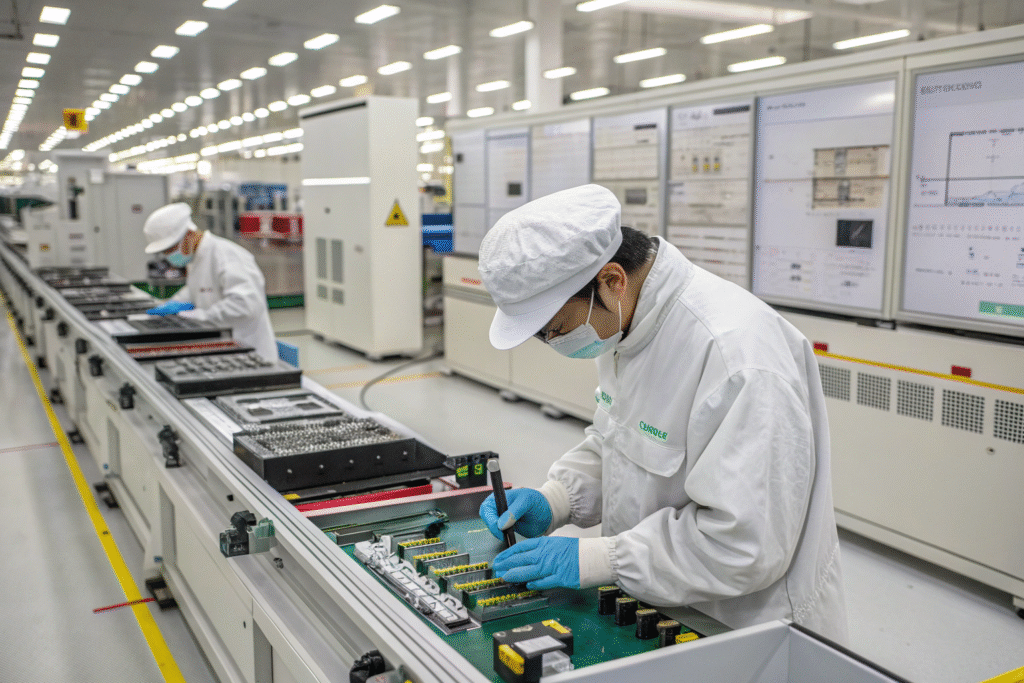
Critical manufacturing challenges include: ensuring consistent acoustic performance across thousands of units despite natural variations in materials like leather or woven fabric; achieving a high level of water and dust resistance (at least IPX4) for the electronic module; managing heat dissipation from the amplifier and battery within a confined, worn space; and designing a charging solution that is convenient and doesn't compromise the belt's waterproof seal. Additionally, the assembly process must be precise to avoid damaging delicate transducers and flexible circuits.
A factory experienced only in cut-and-sew operations will be ill-equipped. You need a partner with a clean and modern electronics assembly line and rigorous testing protocols.
How is consistent audio quality maintained in mass production?
Consistency is the hallmark of professional manufacturing. For audio, tiny variances can alter the sound. Key strategies include:
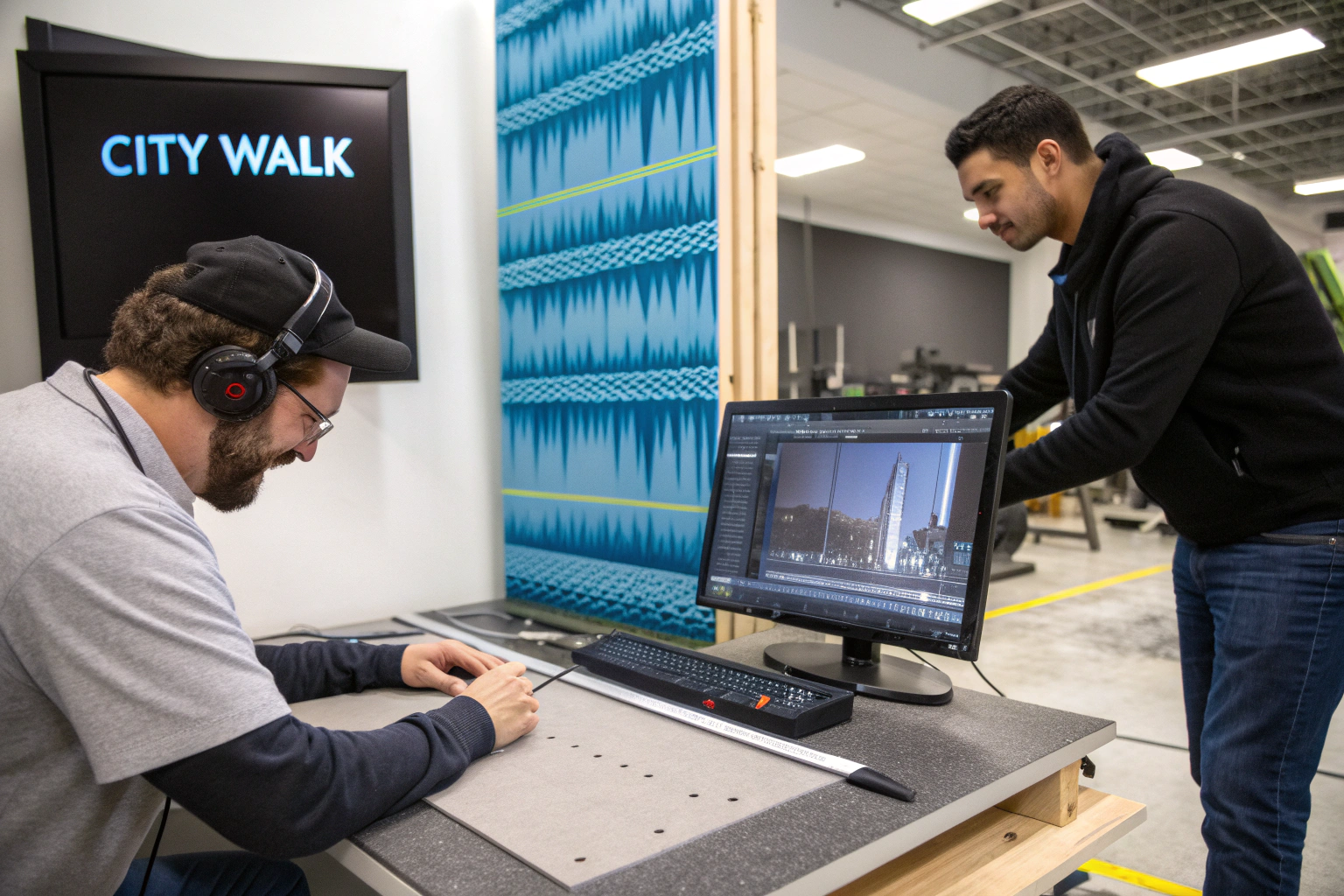
- Automated Acoustic Testing: Every finished belt should pass through a test station in a semi-anechoic chamber. A calibrated microphone measures the frequency response while a standard test signal is played, automatically rejecting units that fall outside strict tolerances.
- Component-Level Burn-in: Critical electronic components, especially the amplifier and battery, undergo pre-screening and burn-in before assembly to catch early failures.
- Controlled Material Sourcing: The physical properties of the belt material that acts as a speaker diaphragm (e.g., the stiffness of a leather panel) must be specified and controlled. Variations here will change the sound.
Your supplier should provide detailed quality control reports that include acoustic test data for production batches, not just pass/fail checks for basic functionality.
What certifications are mandatory for wearable audio products?
Navigating global certifications is non-negotiable for market access and safety. Mandatory certifications include:
- FCC (USA) & CE (Europe): For electromagnetic compatibility and radio frequency emissions from the Bluetooth module.
- Bluetooth SIG Qualification: The product must be listed with the Bluetooth Special Interest Group to legally use the Bluetooth trademark and ensure interoperability.
- RoHS & REACH: Compliance for restriction of hazardous substances in electronics and chemicals.
- UN38.3: For the safe transportation of the lithium-ion battery.
- Battery Safety Standards: Such as IEC 62133 for the battery cell itself.
A competent manufacturer will have a clear certification roadmap and experience working with accredited testing labs. They should handle this process as part of their package transportation and customs clearance service, ensuring a smooth path to your market.
How to structure a sourcing partnership for tech-integrated apparel?
Sourcing a product this complex is not a simple vendor transaction; it's a strategic partnership. The relationship must be structured for collaboration, transparency, and shared problem-solving across multiple domains—electronics, software, and fashion design.
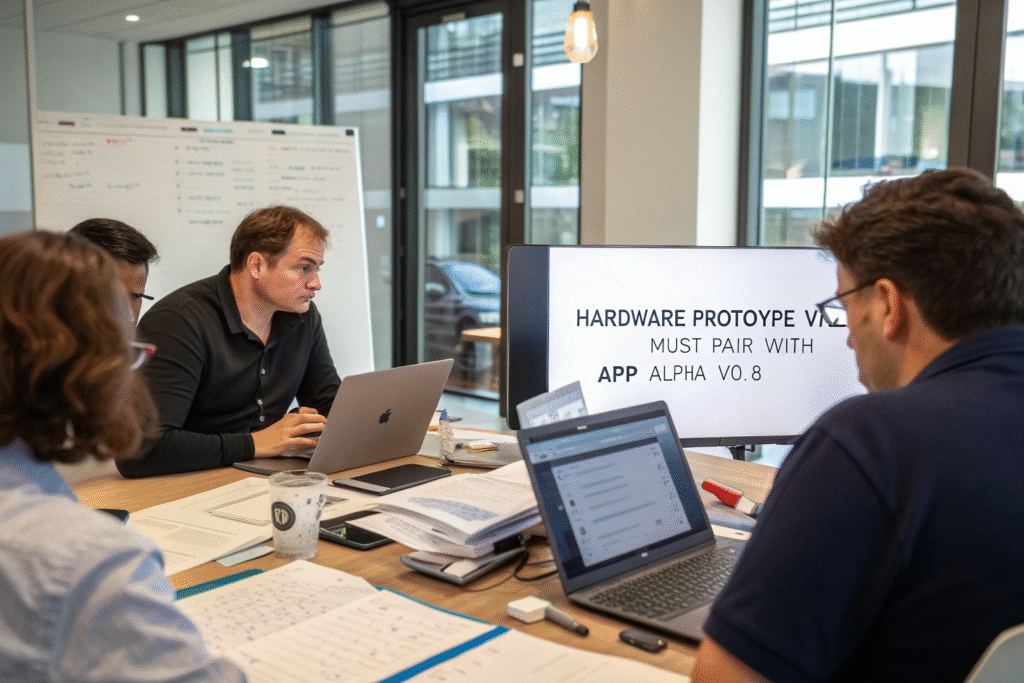
To structure a successful sourcing partnership, start with a comprehensive Product Requirements Document co-created with the manufacturer. Establish clear milestones with integrated deliverables (e.g., "Hardware Prototype V1.2 must pair with App Alpha v0.8"). Define intellectual property ownership upfront. Choose a manufacturer offering full-spectrum services from industrial design and prototyping to certification management and drop-shipping. Finally, insist on transparent communication channels with their project management, hardware, and software teams.
This collaborative approach de-risks the development process and aligns both parties toward launching a successful, high-quality product.
Why is a joint Product Requirements Document crucial for development?
A Product Requirements Document created in isolation by the buyer often misses critical technical feasibility details. A joint PRD, developed with the manufacturer's engineering team, ensures that:
- Specifications are Realistic: Desired battery life is balanced with speaker power and device size.
- Cost Drivers are Understood: The impact of choosing a specific DSP or higher water resistance rating is modeled early.
- Timelines are Accurate: Dependencies between hardware tooling, PCB layout, and app development are mapped.
This document becomes the single source of truth, preventing costly mid-development changes and misunderstandings. It reflects a manufacturer's professional customer energy and systematic approach.
What post-launch support should a manufacturer provide?
The launch is just the beginning. A reliable partner provides comprehensive post-launch support, including:
- Firmware & App Updates: To fix bugs, improve performance, and add new features based on user feedback.
- Technical Support Training: Providing your customer service team with deep-dive product knowledge and troubleshooting guides.
- RMA (Return Merchandise Authorization) Process: A clear system for handling defective units, including diagnosis, repair, or replacement.
- Component Longevity Planning: A plan for securing ongoing supplies of key electronic components to support future production runs and spare parts.
This long-term view is essential for building a sustainable brand. It demonstrates the manufacturer's commitment to being a true partner, not just a factory.
Conclusion
Sourcing belts with customized sound profiles is a venture into the sophisticated world of integrated wearable technology. It demands a partner with convergent expertise in acoustics, flexible electronics, software development, and apparel manufacturing. Success hinges on meticulous hardware selection, a user-centric software experience, rigorous production quality control, and a strategic, collaborative partnership model. For brands ready to lead in the experiential wearables market, this product category offers a powerful way to engage consumers through personalized, immersive audio.
Navigating this complexity requires a guide. If you are looking to develop a line of smart audio belts that offer genuine customization and robust performance, partnering with a factory that has navigated this intersection is critical. We combine our experience in fashion accessory manufacturing with a network of trusted tech partners to bring such innovative concepts to life. For a detailed consultation on your smart belt project, please contact our Business Director, Elaine, at elaine@fumaoclothing.com. Let's design the sound of the future, together.