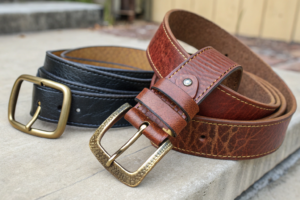
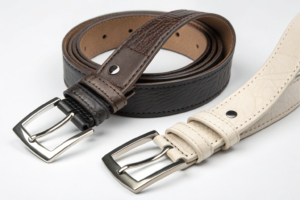
As we move into 2025, the men's leather belt is evolving from a simple functional necessity to a key pillar of personal style and conscious consumption. The trends are no longer just about color or buckle shape; they reflect deeper shifts in how men approach fashion, sustainability, and technology. For brands, retailers, and fashion-forward consumers, understanding these styles is crucial for staying ahead. The most sought-after belts will seamlessly blend timeless craftsmanship with modern ethics and innovative functionality, offering more than just a way to hold up trousers.
The most popular leather belt styles for men in 2025 are defined by a focus on artisanal texture, sustainable and traceable materials, versatile hybrid designs, and integrated smart features. Key styles include vegetable-tanned full-grain belts with natural finishes, upcycled and regenerated leather belts, the "one-belt wardrobe" multi-buckle system, and minimalist tech-integrated belts with discreet functionality. These trends move beyond fast fashion, emphasizing longevity, story, and adaptability.
This year, the narrative is about intentionality. It's not just about buying a belt; it's about investing in a piece that aligns with personal values and a multifaceted lifestyle. Let's explore the defining styles that will dominate wardrobes and store shelves.
Why are artisanal and vegetable-tanned belts dominating?
In reaction to the impersonal nature of mass production, there is a powerful swing towards items that show the hand of the maker and the uniqueness of the material. Artisanal vegetable-tanned belts are at the forefront of this movement, prized for their character, environmental profile, and evolving beauty.
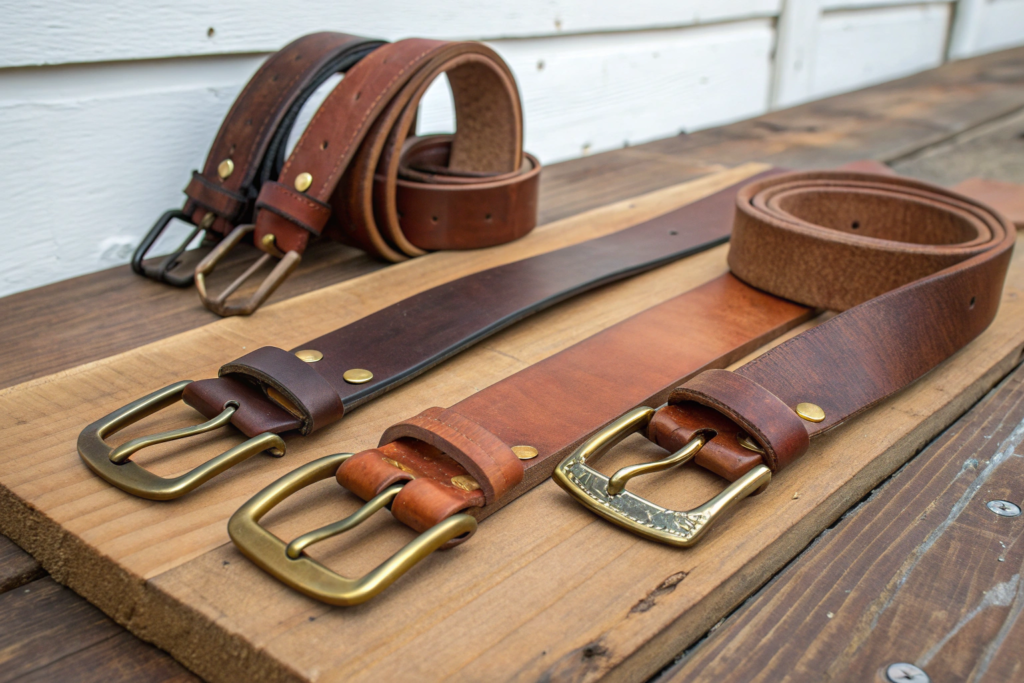
Artisanal vegetable-tanned belts are dominating because they offer a tangible connection to traditional craftsmanship. The vegetable tanning process uses natural tannins from tree bark, resulting in leather that develops a rich, unique patina over time—a record of the wearer's life. This style champions imperfections, natural grain, and earthy tones. It aligns perfectly with the "buy less, buy better" philosophy, appealing to consumers who value authenticity, sustainability, and a narrative behind their accessories.
These belts are not merely products; they are heirlooms in the making. The buckle often complements this with unlaquered brass or antique-finished hardware that ages alongside the leather.
What defines the "natural patina" trend and its appeal?
The "natural patina" is the hallmark of quality full-grain vegetable-tanned leather. Unlike painted or corrected leather that stays static, this leather darkens and gains character with exposure to light, oils, and time. Each scratch, water spot, and bend becomes part of its unique story.
The appeal is multifaceted: it signifies authenticity (no two belts will age exactly alike), demonstrates quality (only good leather develops a beautiful patina), and fosters a personal connection. The wearer is not just using an item but cultivating it. For brands, marketing this evolving characteristic turns a sale into the beginning of a long-term relationship. Resources like the Leather Working Group provide benchmarks for environmentally responsible tanning that underpin this trend.
How does artisanal detailing elevate a basic belt?
Artisanal detailing transforms a basic strap into a statement of craft. This includes:
- Hand-Stitched Edges: Contrasting or tonal saddle stitching that is visibly done by hand, showcasing durability and care.
- Burnished Edges: Rounded and polished belt edges that feel smooth and look refined, a sign of extended finishing time.
- Custom Tooling or Branding: Subtle, hand-pressed motifs or maker's marks, often on the back of the belt.
- Natural Edge Finishes: Some styles celebrate the "rough-out" or suede side of the leather, emphasizing its raw, untamed texture.
These details signal a departure from machine-perfect, soulless production. They cater to the consumer who examines the underside of a belt and appreciates the work that went into it. This level of detail is a direct reflection of a manufacturer's quality control and commitment to craft over speed.
How is sustainable leather redefining classic styles?
Sustainability is no longer a niche concern but a core driver of design and material innovation in 2025. "Sustainable leather" is pushing classic belt styles into new territory, using material stories as a key part of the product's appeal.
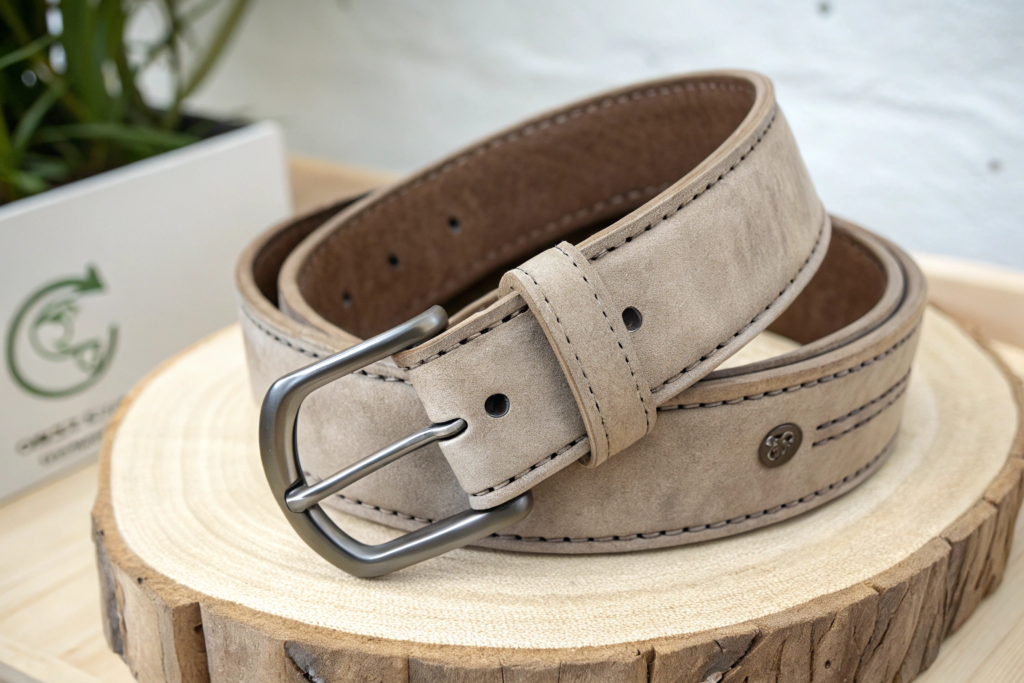
Sustainable leather is redefining classics through three main avenues: upcycled leather (made from scraps from the furniture or automotive industries), recycled leather (reconstituted from post-industrial waste), and regenerative agriculture leather (sourced from farms that actively improve soil health and biodiversity). These materials allow for the classic dress belt or casual belt silhouette but carry a deeply modern, responsible ethos. The colors often lean into natural, muted tones that reflect the material's origin.
This trend allows men to wear a sophisticated leather dress belt with the knowledge that it supports a circular economy or positive environmental practices, adding an ethical dimension to their style.
What is the difference between upcycled and recycled leather?
Understanding this distinction is important for branding and consumer communication.
- Upcycled Leather: This involves using pre-consumer waste leather—large, high-quality off-cuts from manufacturing other goods (like car seats or sofas). These pieces are selected and crafted into new products, like belts, often with the original edges or unique markings kept visible. It’s about giving premium material a second, purposeful life without breaking it down.
- Recycled/Reconstituted Leather: This process involves shredding leather scraps and fibers and binding them together with latex or polyurethane to create a new sheet material. While it incorporates waste, it is a more transformative process. The resulting belt may have a more uniform appearance but should be marketed transparently as a composite material.
For the conscious consumer, both are valid sustainable choices. Transparency about the source and process is paramount to maintaining trust. Brands can leverage certifications or partnerships with material innovators like ECCO Leather’s DriTan® technology, which saves water in tanning.
Can a sustainable belt still be considered a luxury item?
Absolutely. In fact, sustainability is becoming a new pillar of luxury. The luxury definition is shifting from mere opulence to responsible excellence. A sustainable belt achieves luxury status through:
- Material Innovation: Using rare, responsibly sourced leathers (e.g., from regenerative farms) or pioneering new material blends.
- Exceptional Craftsmanship: Pairing sustainable leather with impeccable, durable construction and artisanal details.
- Design Integrity: Timeless, versatile designs that defy seasonal trends.
- Transparent Storytelling: Providing clear, verifiable information about the supply chain, from farm to finished product.
This creates a product that feels luxurious not just in look and feel, but in conscience. It appeals to the modern man who views his purchases as extensions of his values.
What is driving the trend towards modular and convertible belts?
The modern man’s life is multifaceted—switching from the office to the gym to a weekend outing. His wardrobe, and by extension his accessories, need to be adaptable. This has given rise to the modular belt, a style designed for maximum versatility with minimal clutter.
The trend towards modular and convertible belts is driven by the desire for a streamlined, versatile wardrobe and a rejection of single-use items. These systems typically feature a single, high-quality leather strap that can be paired with multiple interchangeable buckles—from a polished automatic buckle for business to a rugged pin buckle for weekends. Some designs even offer reversible straps (e.g., black on one side, brown on the other) or convertible ends to fit different loop sizes.
This is the ultimate expression of practical, sustainable fashion. It reduces the need to own multiple belts, saving money and space while ensuring the wearer always has the right style for the occasion.
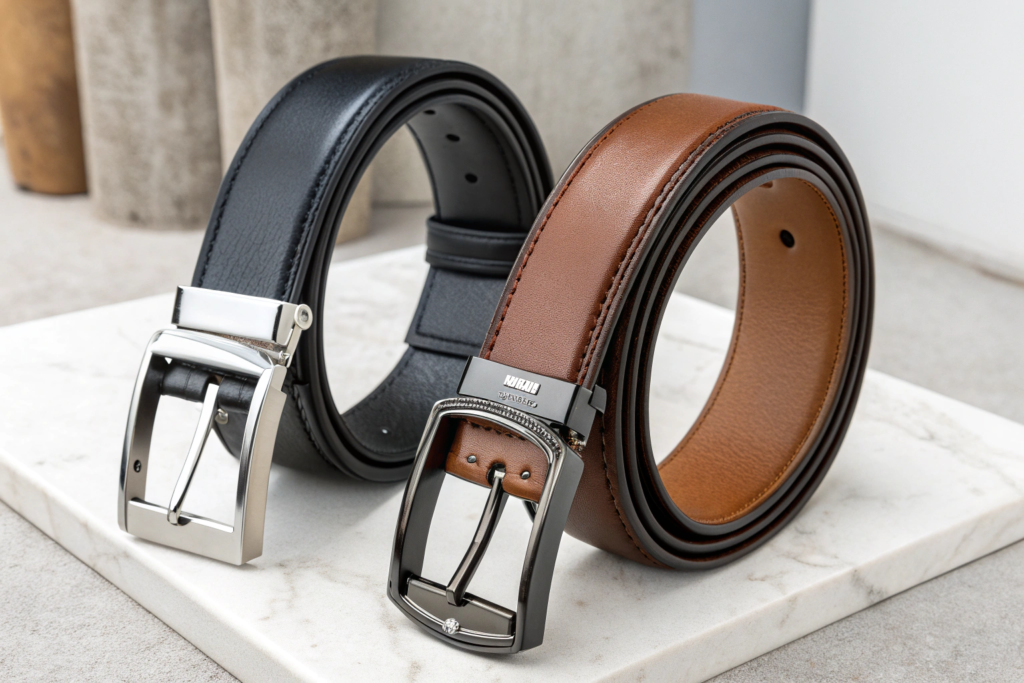
How does a multi-buckle system work in practice?
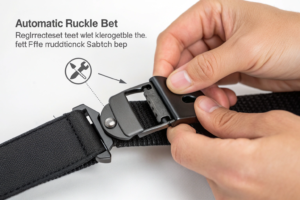
A well-designed multi-buckle system is intuitive and secure. The core innovation is in the attachment mechanism. Instead of a traditional prong, the strap end features a standardized, robust connector—often a hidden magnetic clasp, a secure snap, or a slide-and-lock mechanism.
The buckles have the corresponding receiver on their back. To switch, the user simply detaches one buckle and clicks another into place in seconds. The strap itself is a classic full-grain leather piece, ensuring durability and a premium look. The value proposition is clear: invest in one great strap and a collection of buckles to cover every dress code. This trend speaks directly to the development capacity of a factory to engineer precise, reliable hardware.
Are convertible belts a viable alternative to a full wardrobe?
For many men, yes. A high-quality convertible belt with 2-3 buckles and a reversible strap can effectively replace 4-6 traditional belts. It covers the core scenarios:
- Business Formal: A slim, polished silver or brushed steel buckle on the black side of the strap.
- Business Casual: A brass or gold-tone buckle on the brown side.
- Weekend Casual: A thicker, matte-finish buckle (like a D-ring or oval pin) on the brown side.
- Travel: The entire compact system takes up less space than two traditional belts.
It’s a minimalist’s dream and a pragmatic choice for the modern traveler. For brands, it’s an opportunity to sell a higher-ticket "system" and foster repeat business through additional buckle sales.
How is smart technology being integrated discreetly?
Technology in men's belts is maturing. The focus for 2025 is not on bulky gadgets, but on seamless, almost invisible integration that adds genuine utility without compromising style. The smart belt is becoming sleeker, more focused, and more refined.
Smart technology is being integrated discreetly through three main approaches: 1) Ultra-thin trackers or RFID chips embedded between leather layers for finding keys or wallets. 2) Buckles with integrated fitness or posture sensors that sync to an app. 3) Magnetic quick-release mechanisms for safety (e.g., for cyclists or industrial workers) disguised as a standard buckle. The aesthetic is minimalist and premium, with charging done via concealed wireless pads or removable battery cores.
The goal is "tech you can't see." The belt must first and foremost be a handsome accessory; the tech is a valuable bonus, not the defining feature.

What are the most practical smart features for everyday use?
In 2025, practical smart features solve specific, small problems rather than trying to be a smartphone on your waist. These include:
- Tile® or Chipolo Integration: A hidden slot in the leather layers holds a thin Bluetooth tracker, allowing the belt itself to be a "finder" for your phone, or more commonly, allowing your phone to find your belt (and the keys/wallet attached to it).
- Contactless Payment: An NFC chip embedded in the buckle allows for tap-to-pay. This is incredibly discreet and useful during activities like running or when hands are full.
- Battery-Powered Tension Adjustment: Micro-motors in the buckle allow for automatic micro-adjustments throughout the day for perfect comfort, controlled via a smartphone app.
These features align with the everyday carry (EDC) mentality and the demand for functional minimalism. They add convenience without adding visual clutter or requiring a major behavioral change from the wearer.
Can a tech belt still maintain a classic, professional look?
This is the critical design challenge, and the answer in 2025 is a resounding yes. The successful tech-integrated belt for professionals will have:
- A Standard Buckle Silhouette: The tech is inside a buckle that looks like a classic plate buckle or ardillon buckle.
- Premium Materials: The casing is made of brushed stainless steel, ceramic, or matte titanium—materials associated with fine watches, not gadgets.
- Hidden Indicators: Any LED lights or charging ports are concealed behind a veneer or are so subtle as to be unnoticeable.
- Wireless Charging: The belt charges on a pad overnight, with no visible ports to collect lint or break.
A brand like Mikolo has pioneered this look, demonstrating that tech belts can sit comfortably alongside traditional luxury accessories in a professional setting. This requires sophisticated engineering and a close collaboration between hardware developers and leather craftsmen—a synergy that forward-thinking manufacturers are now offering.
Conclusion
The most popular men's leather belt styles for 2025 are united by a theme of intelligent intentionality. Whether through the artisanal soul of vegetable-tanned leather, the ethical narrative of sustainable materials, the pragmatic genius of modular design, or the seamless convenience of integrated tech, these belts offer more than function—they offer a point of view. They cater to a consumer who is thoughtful about his purchases, values versatility and longevity, and seeks products that enhance his life in subtle, meaningful ways.
For brands and buyers, success lies in recognizing that the belt category is evolving into a space where material innovation, craftsmanship, and smart design converge. Partnering with a manufacturer that understands these multifaceted trends—from sourcing rare sustainable leathers to engineering reliable modular hardware—is essential. If you are looking to develop a forward-thinking line of men's leather belts that capture the spirit of 2025, we have the expertise to guide you. Contact our Business Director, Elaine, at elaine@fumaoclothing.com to begin crafting the next generation of essential accessories.