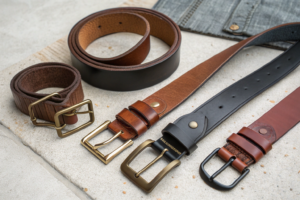
A retail buyer walks into your showroom or browses your catalog. They love your belts, but in their mind, they're visualizing how these products will fit on their store floor or website. Will they be easy to stock? Simple to display? A nightmare to manage with dozens of SKUs? A belt that is difficult to merchandise is often a belt that gets passed over, no matter how beautiful it is.
Designing belts for easy retail merchandising means creating products and systems that simplify the retail process from the stockroom to the sales floor. It involves strategic decisions about packaging, display options, SKU rationalization, and branding that make the belts effortless to stock, attractive to display, and simple for customers to self-select. The goal is to remove friction for both the retailer and the end-consumer.
This guide will break down the key design and packaging strategies that make belts retail-friendly. We will explore how to master packaging for peg walls and flat displays, create cohesive collections that tell a story, implement smart sizing and branding for easy selection, and design for versatile in-store presentation.
How to Master Packaging for Retail Efficiency?
The moment a shipment arrives at a store, the clock starts ticking on how long it takes to get products to the floor. Bulky, difficult-to-open packaging or items that can't be hung creates labor-intensive bottlenecks. The first touchpoint of merchandising is the package itself.
The most retail-friendly packaging is secure, compact, and designed for multiple display options. It must protect the product while making it highly visible and easy to handle. The ideal solution balances protection with minimal material use and maximizes the number of units that can be stored in a limited backroom and on the sales floor.
What are the Pros and Cons of Different Packaging Types?
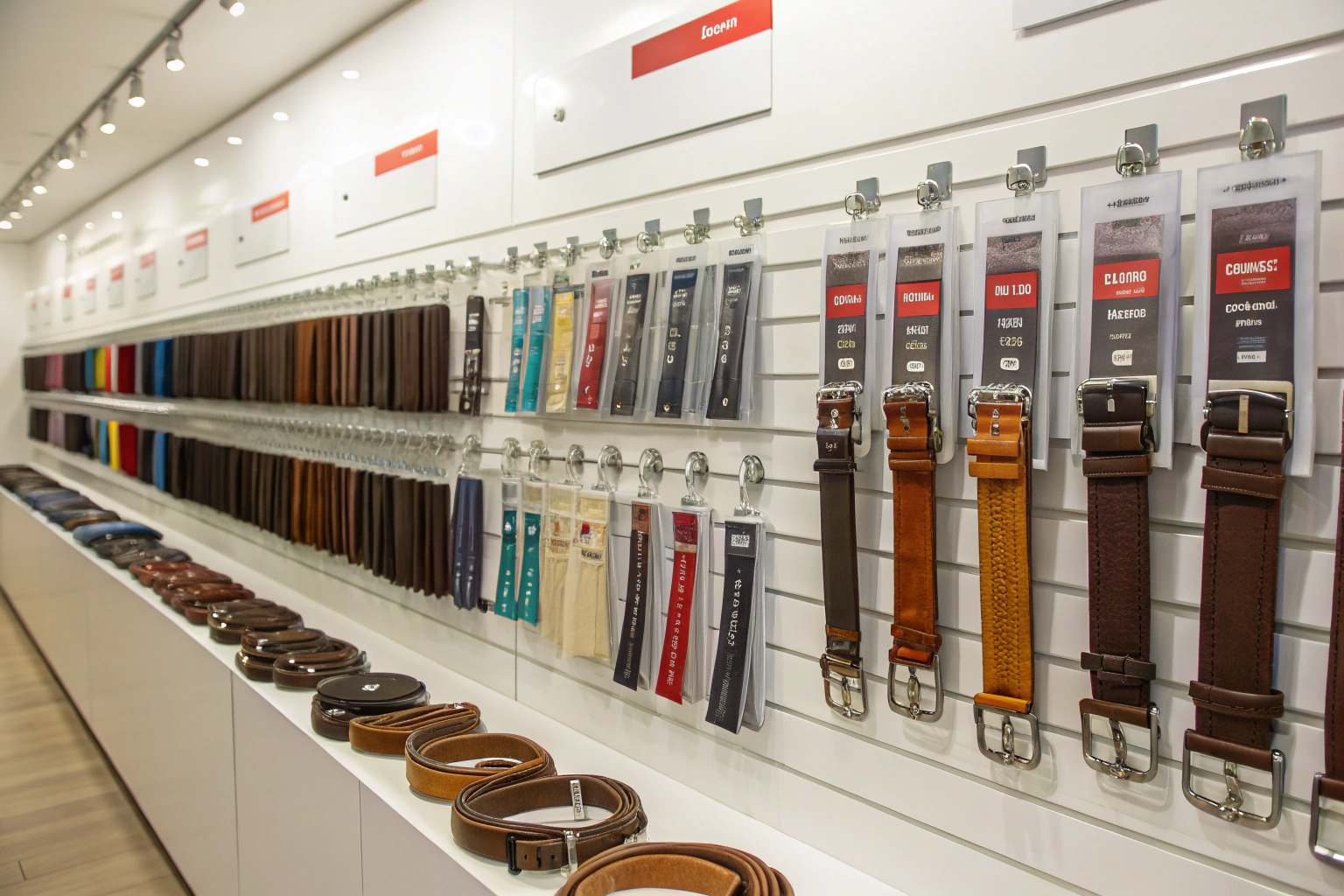
Retailers typically have two primary display methods: peg hooks and flat displays (shelves or cases). Your packaging must work for one or, ideally, both.
| Packaging Type | Best For | Retail Advantage | Design Consideration |
|---|---|---|---|
| Slim, Rigid Hang Card | Peg Walls, Feature Displays | High visibility, easy to stock and count, theft-deterrent | Must have a cleanly punched hole and lie flat. Graphics should work vertically. |
| Magnetic Closure Box | Mid to High-End, Glass Counters | Premium unboxing experience, encourages purchase as a gift | Takes up more shelf space, slower to restock. Ideal for dress belts. |
| Die-Cut Plastic Clamshell | Mass Merchants, High-Theft Areas | Maximum security, product is fully visible | Can be difficult to open, perceived as less eco-friendly. |
| Simple Tag & Band | Boutiques, Eco-Conscious Brands | Minimalist, low-cost, reduces environmental impact | Offers less protection, requires careful in-store handling. |
The slim hang card is often the most versatile choice for the broadest retail distribution, as it fits seamlessly into the standard merchandising systems of major stores.
How Does Packaging Impact Stockroom Logistics?
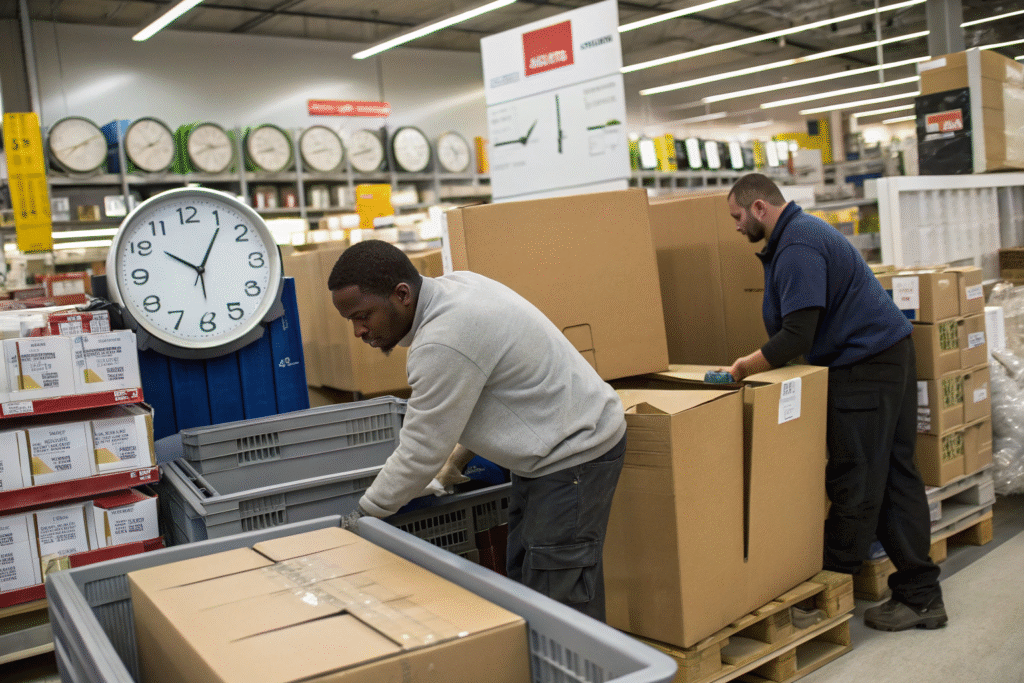
A retailer's backroom is often cramped. Packaging that is compact and uniform in size allows for more efficient storage. If your belt boxes are all the same dimensions, they can be stacked neatly, making inventory management and restocking far easier for store staff.
Furthermore, packaging that clearly displays the SKU, barcode, and key product details (like size and color) on the outside without needing to be opened saves significant time during receiving and cycle counts. This operational ease makes your brand a preferred partner for busy retail buyers.
How to Create Cohesive, Story-Driven Collections?
A buyer isn't just looking for a single great belt; they're looking to build an assortment that will appeal to their customer base. Presenting a random assortment of disconnected styles forces the buyer to do the work of curating a collection for you. Instead, you should present pre-curated stories that are ready to merchandise.
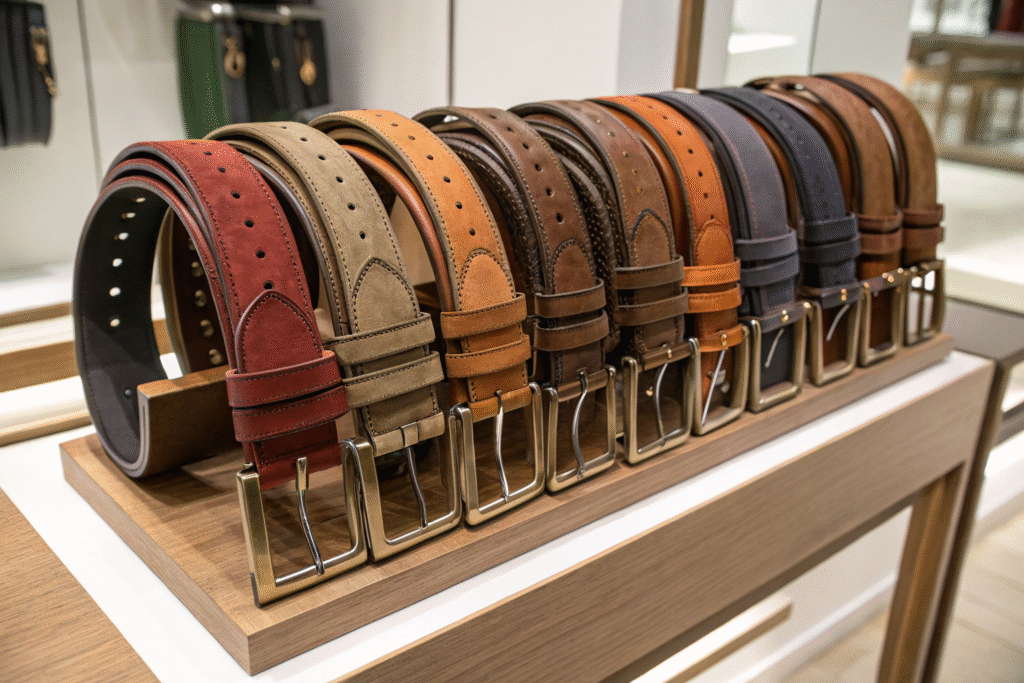
Designing belts in cohesive collections means grouping products by a unifying theme, such as material, color palette, buckle style, or target occasion. This allows retailers to create impactful, visually appealing displays that tell a clear story and make it easier for customers to find their desired style.
What are the Key Elements of a Merchandisable Collection?
A strong collection has a clear anchor and logical supporting pieces.
- The Hero Piece: A standout item, like a belt with a unique statement buckle, that draws attention to the display.
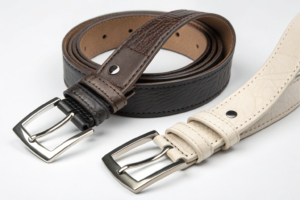
- Core Classics: Versatile, best-selling styles in neutral colors (black, brown) that form the foundation of the assortment. These are your reliable everyday belts.
- Trend Accents: A few on-trend colors or materials that add freshness and fashion relevance without overwhelming the collection.
By designing with this "Good, Better, Best" or "Core vs. Fashion" structure, you give retailers a clear framework for ordering and merchandising.
How Does Color Storying Simplify Visual Merchandising?
A cohesive color palette is one of the most powerful merchandising tools. When a retailer can create an entire display built around shades of brown and tan, or a vibrant section of summer colors, the visual impact is immediate and professional.
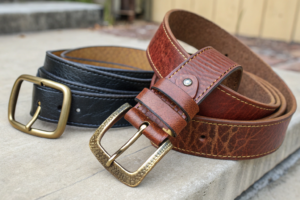
For example, a "Rustic Heritage" collection might feature oil-tanned leathers in brown, cognac, and olive, all with matching antique brass buckles. This allows the belts to be displayed together in a gradient or grouped block that is far more attractive than a random mix of colors.
How to Implement Smart Sizing and Branding for Self-Selection?
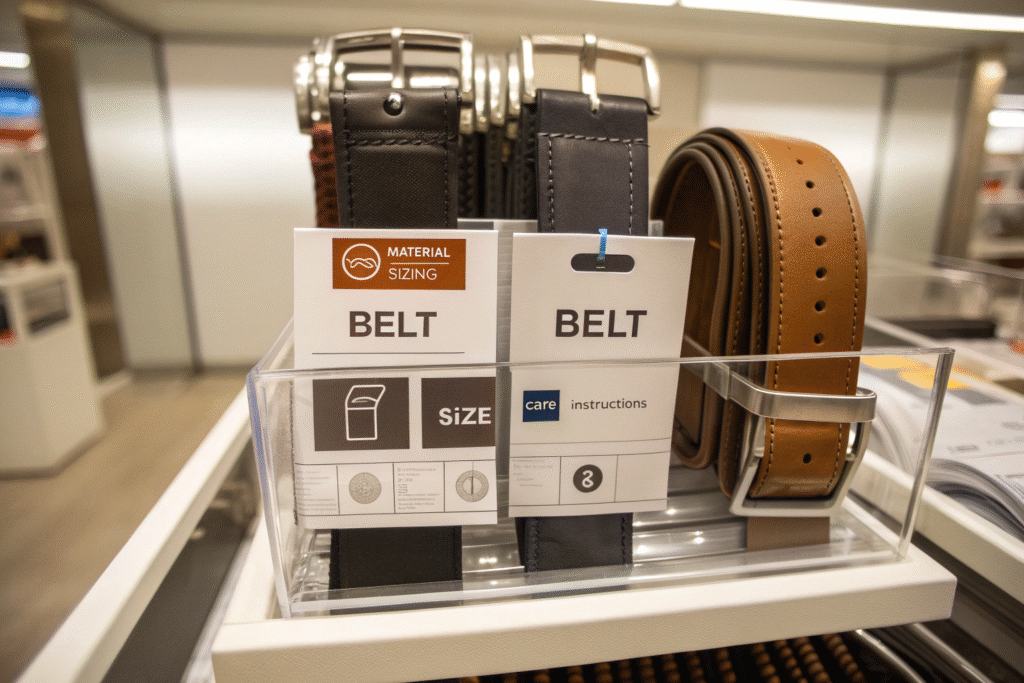
A confused customer is a lost sale. If a shopper can't easily find their size or understand the product features, they will often abandon the purchase. The design of the belt and its packaging must communicate key information instantly and clearly.
The goal is to design for self-service. This means a customer should be able to walk up to a display, understand what the belt is, know what size it is, and feel confident in their selection without needing a sales associate's help.
Why is Instant Size Identification Critical?
The biggest point of friction in belt sales is sizing. The industry standard is to size belts by the distance from the buckle to the center hole, but customers think in pant sizes.
Solutions for clear sizing:
- Prominent Labeling: The pant size (e.g., 32, 34, 36) should be the most visible number on the hang tag or packaging, with the full length details on the back.
- Color-Coding: Using a small color-coded dot or stripe on the packaging to indicate size ranges (e.g., blue for 30-34, red for 36-40) allows for quick visual sorting by both staff and customers.
- Integrated Sizing: For reversible belts, this is even more crucial, as the packaging must clearly communicate the two colors and the unified size.
How Does Strategic Branding Aid in Recognition?
Consistent and clear branding builds trust and aids navigation. The brand name and logo should be visible from a short distance, but not so large that it overwhelms the product.
On the product itself, a discreet brand stamp on the leather or a tastefully engraved logo on the buckle reinforces quality without being tacky. This subtle branding assures customers of authenticity and quality when they handle the product, which is especially important in a self-service environment.
How to Design for Versatile In-Store Presentation?
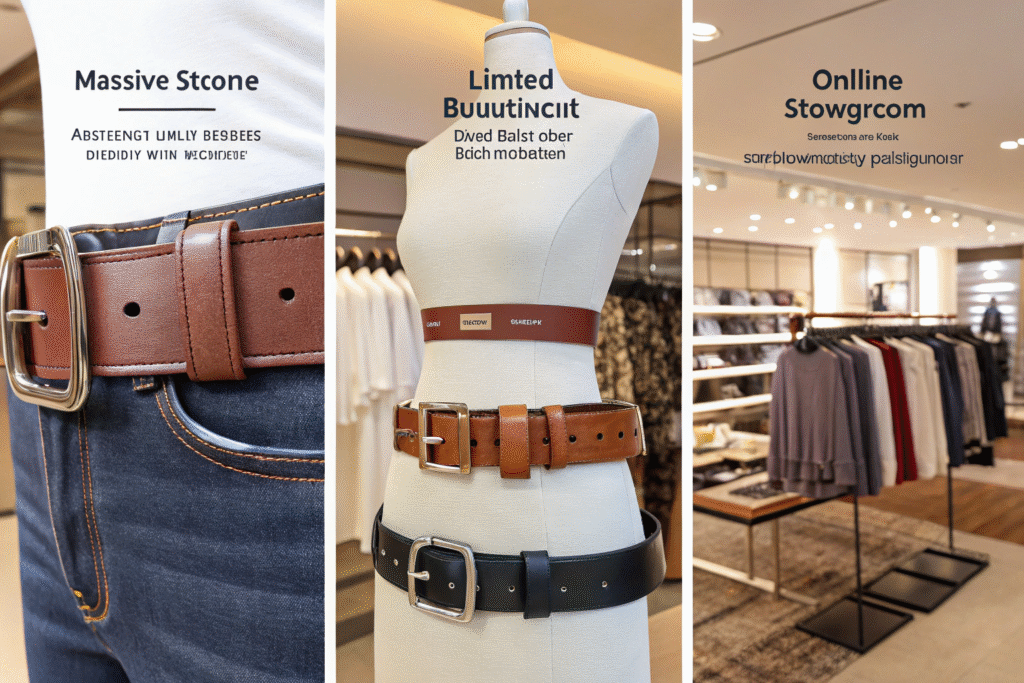
Not all retail spaces are the same. A belt might be sold in a massive department store, a boutique with limited space, or an online showroom. A design that only works in one context limits your sales potential. The most merchandisable belts are "display agnostic."
Designing for versatility means creating products that look good from multiple angles and can be presented in various ways without losing their appeal. It also involves providing retailers with the tools they need to showcase your products effectively.
What Product Design Features Enhance Display Flexibility?
Certain physical attributes make a belt easier to merchandise well.
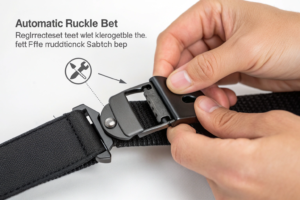
- Lay-Flat Buckles: Buckles that don't protrude excessively allow belts to be stacked or laid flat in a display case without rocking or tipping over.
- Coil-Friendly Straps: For displays that involve coiling the belt, a strap that coils neatly without kinking maintains a tidy appearance. This is a key feature for braided belts and other casual styles.
- Uniform Buckle Placement: If all belts in a collection have the buckle attached in the same way, they will hang uniformly on a peg wall, creating a clean, organized look.
How Can You Support Retailers with Display Solutions?
Going the extra mile can secure prime retail real estate. Consider providing retailers with branded display units.
- Countertop Displays: Small, elegant units that hold a curated selection of 6-12 belts, perfect for checkout counters.
- Branded Peg Hooks: Simple custom hooks that make your section of the wall look cohesive.
- Digital Assets: High-quality product images and "lifestyle shots" that online retailers can use to create compelling web pages.
Providing these tools demonstrates partnership and makes it effortless for the retailer to make your products look their best, directly impacting sell-through rates.
Conclusion
Designing belts for easy retail merchandising is a strategic process that extends far beyond the product's aesthetic. It requires a holistic approach that incorporates compact and versatile packaging, the creation of cohesive and story-driven collections, clear sizing and branding for customer self-selection, and product features that allow for flexible in-store presentation. By reducing friction for the retailer and simplifying the choice for the customer, you transform your belts from mere products into efficient, high-turnover assets for any retail environment.
If you are looking for a manufacturing partner that understands the nuances of retail-ready design and can help you create belts that are as easy to sell as they are to wear, we have the expertise and resources to support you. Contact our Business Director, Elaine, at elaine@fumaoclothing.com to discuss developing a collection designed for retail success.