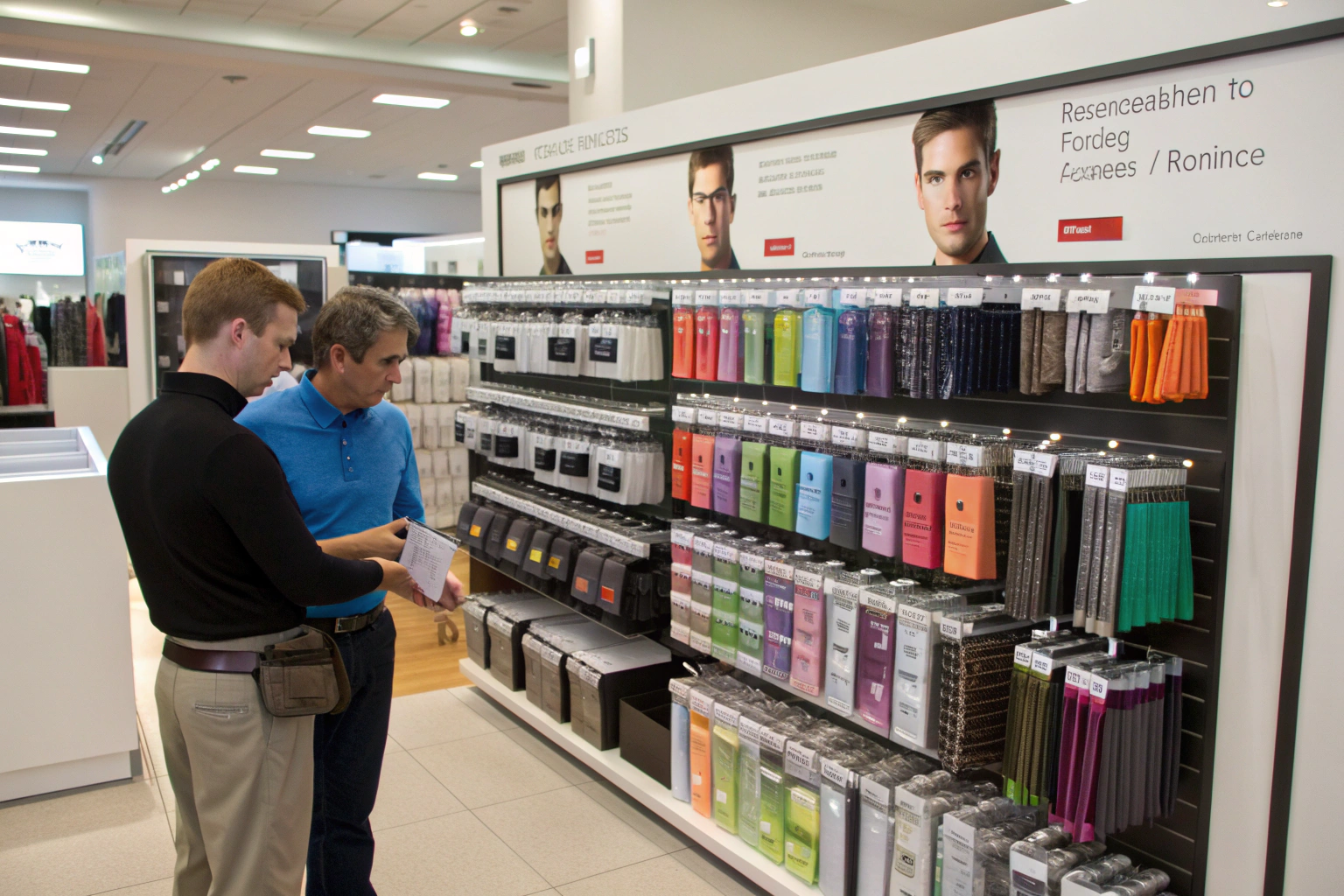
Retailers face constant challenges in belt merchandising: poor visibility, confusing organization, low sell-through rates, and high handling costs. The typical retail belt wall generates only 2-3% of total accessory sales despite occupying 8-12% of floor space. The fundamental problem often lies in belt design that fails to consider retail realities from the initial concept phase.
Designing belts for optimal retail merchandising requires creating products that maximize visibility, simplify organization, encourage self-selection, and minimize handling costs. The most successful designs incorporate standardized sizing systems, intuitive color coding, packaging that doubles as display, and visual features that communicate value without sales assistance. These elements work together to transform belts from difficult-to-merchandise items into high-performing retail categories.
The global belt market exceeds $10 billion annually, yet retail productivity varies dramatically between brands that design for merchandising and those that don't. Understanding how design decisions impact retail performance helps manufacturers create products that retailers prioritize and consumers can easily discover, understand, and purchase.
What Packaging Designs Maximize Retail Efficiency?
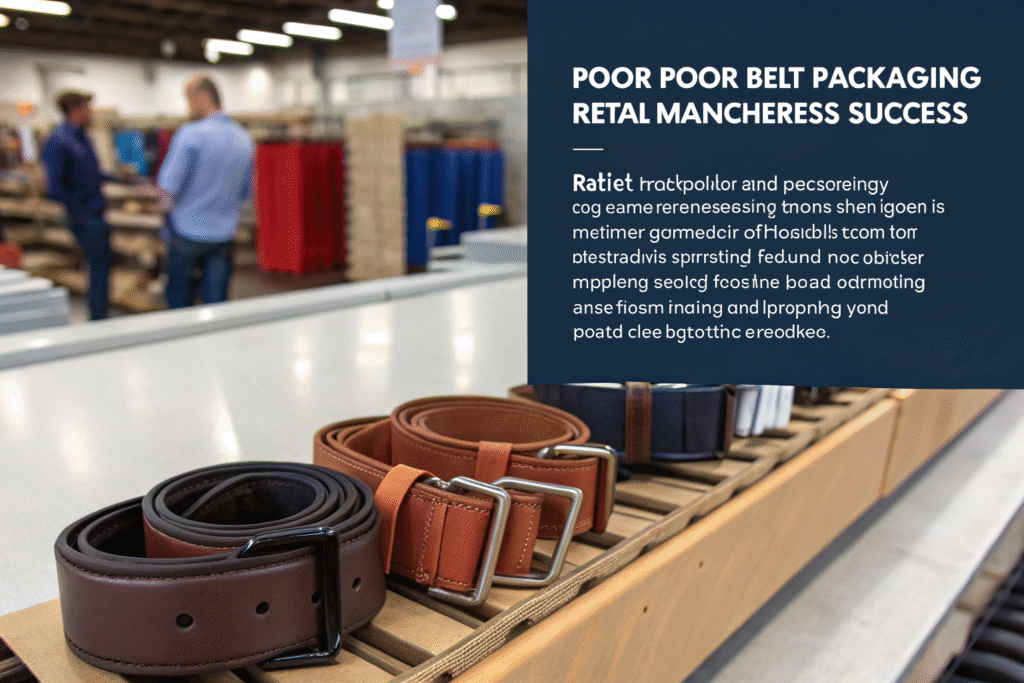
Belt packaging represents the first and most critical element of retail merchandising success. Poor packaging creates operational inefficiencies, visual clutter, and customer frustration that directly impact sales performance. The most effective packaging designs serve multiple functions: protection during shipping, efficient storage, attractive display, and seamless purchase experience.
The evolution from basic polybags to structured packaging has transformed belt retail performance. Modern solutions balance cost considerations with functional requirements, creating packaging systems that enhance rather than complicate the retail environment. The optimal approach depends on retail channel, price point, and brand positioning.
How Do Unified Packaging Systems Improve Merchandising?
Standardized packaging dimensions allow retailers to create clean, organized displays that maximize space utilization. When all belts in a collection share identical packaging sizes, retailers can implement grid-based merchandising systems that create visual harmony and simplify restocking. This consistency reduces the "visual noise" that often plagues accessory walls and improves the shopping experience.
The planogram optimization principles used by major retailers demonstrate that standardized packaging can increase sales density by 15-25%. By designing packaging to fit standard retail fixtures (typically 2-inch, 3-inch, or 4-inch increments), manufacturers ensure their products merchandise effectively alongside competitive offerings. This strategic approach to packaging dimensions often determines which brands receive premium placement.
What Role Does Transparency Play in Purchase Decisions?
Packaging that allows direct product inspection addresses the fundamental consumer need to assess quality, materials, and details before purchase. Strategic window placement showcases key selling features like buckle craftsmanship, leather quality, or unique design elements. The most effective transparent elements balance visibility with structural integrity.
Consumer research from the Point of Purchase Advertising International indicates that packaging with product visibility generates 30-40% higher engagement than fully opaque alternatives. For belts specifically, allowing customers to feel materials through strategic openings or examining stitching details without opening packages significantly reduces the "barrier to touch" that often prevents belt purchases. This accessibility is particularly crucial for self-service retail environments.
How Can Color Systems Streamline Retail Organization?
Color represents one of the most powerful yet frequently mismanaged elements in belt merchandising. Disorganized color presentation creates visual chaos that overwhelms customers and obscures product selection. Strategic color systems transform random assortments into coherent collections that guide purchasing decisions and enhance brand perception.
The most effective color strategies consider both aesthetic appeal and practical merchandising requirements. This involves planning color distribution across collections, creating logical progression on displays, and using color to communicate product categorization. These systems reduce decision fatigue while making assortment depth immediately apparent to shoppers.
What Color Grouping Strategies Enhance Visual Impact?
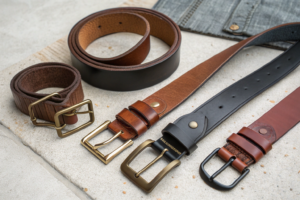
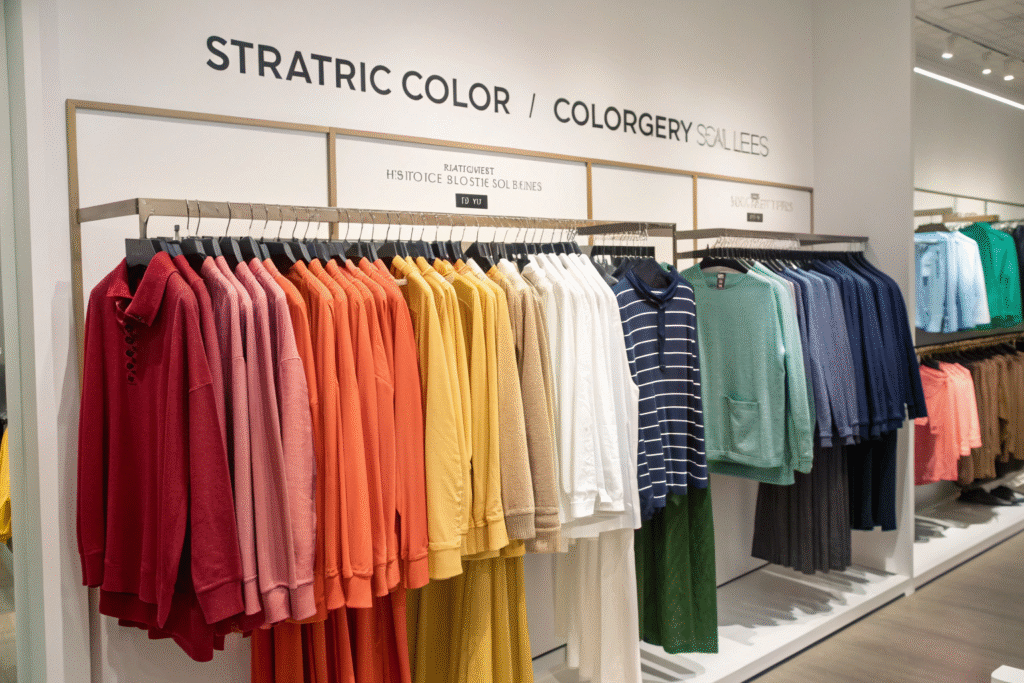
Gradient-based organization creates intuitive visual flow that helps customers navigate selections efficiently. Arranging belts from light to dark tones or grouping by color family (blues together, browns together, blacks together) creates organized appearances that suggest careful curation rather than random accumulation. This approach signals quality and attention to detail that influences perceived value.
The visual merchandising principles developed for fashion retail demonstrate that organized color presentation can increase sales conversion by 20-30%. For belts, this typically means organizing by base color first, then by shade variation within color families. This logical progression helps customers quickly locate their preferred colors while discovering coordinated options they might otherwise overlook in disorganized displays.
How Should Seasonal Colors Be Integrated into Assortments?
Seasonal color introductions should complement rather than disrupt core color systems. The most successful implementations maintain consistent organization while strategically placing seasonal shades to create visual interest without compromising navigability. This approach maintains the familiar organization regular customers expect while highlighting newness that attracts attention.
The color marketing group's seasonal forecasts provide guidance on integrating trend colors without overwhelming core selections. For belt collections, this typically means dedicating 20-30% of display space to seasonal colors while maintaining 70-80% for perennial favorites. This balance ensures displays feel fresh and current without alienating customers seeking basic colors.
What Design Features Facilitate Self-Selection?
The retail landscape has shifted dramatically toward self-service models, even in traditional department stores where sales assistance has decreased by 40-60% over the past decade. Belt designs that communicate key information without sales intervention dramatically outperform those requiring explanation. Successful designs incorporate visual cues that answer common customer questions before they're asked.
Size confusion represents the most significant barrier to belt purchases, with approximately 35% of potential purchases abandoned due to sizing uncertainty. Designs that simplify size selection through intuitive systems, clear marking, or adjustable features remove this critical obstacle and significantly improve conversion rates.
How Can Size Communication Be Optimized?
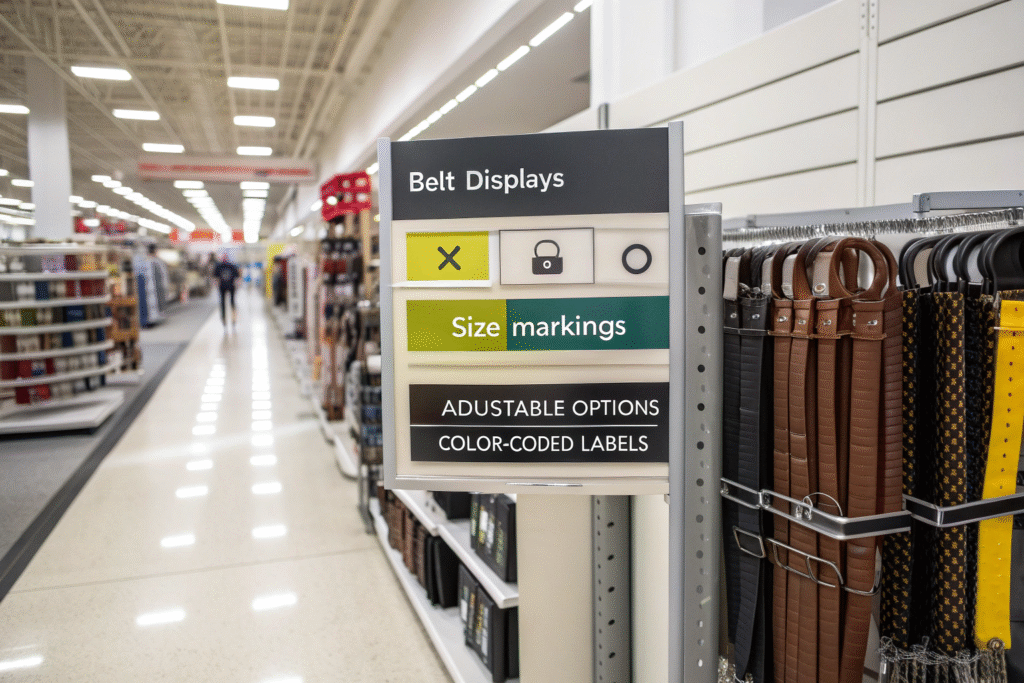
Traditional numbered sizing (32, 34, 36) creates confusion because customers rarely know their belt size and hesitate to guess. Simplified sizing systems (S, M, L, XL) aligned with pants sizing reduce this uncertainty while accommodating the reality that most customers purchase belts to match existing pants. Clear size charts printed on packaging or displays further reduce hesitation.
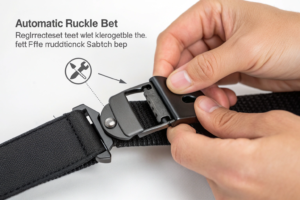
The most innovative approaches incorporate universal design principles that eliminate sizing decisions entirely. Adjustable belts with visible adjustment mechanisms allow customers to confirm fit range before purchase. These designs typically achieve 25-40% higher sell-through rates in self-service environments by removing the sizing anxiety that prevents many belt purchases.
What Visual Cues Communicate Quality and Value?
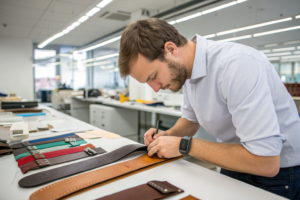
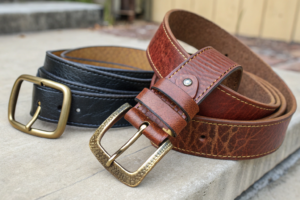
Strategic design elements that signal quality without sales assistance include visible stitching density, edge painting or burnishing, and buckle weight/construction. These features communicate craftsmanship that justifies price points and differentiates from lower-quality alternatives. When customers can assess these quality markers independently, they develop confidence in their selection.
Research from the Journal of Retailing indicates that products with self-evident quality cues convert at 50-70% higher rates than those requiring explanation. For belts, this means designing with visible craftsmanship elements: tightly spaced stitching, smoothly finished edges, and substantial buckles with precise mechanisms. These details answer quality questions before customers need to ask them.
How Does Buckle Design Impact Merchandising Performance?
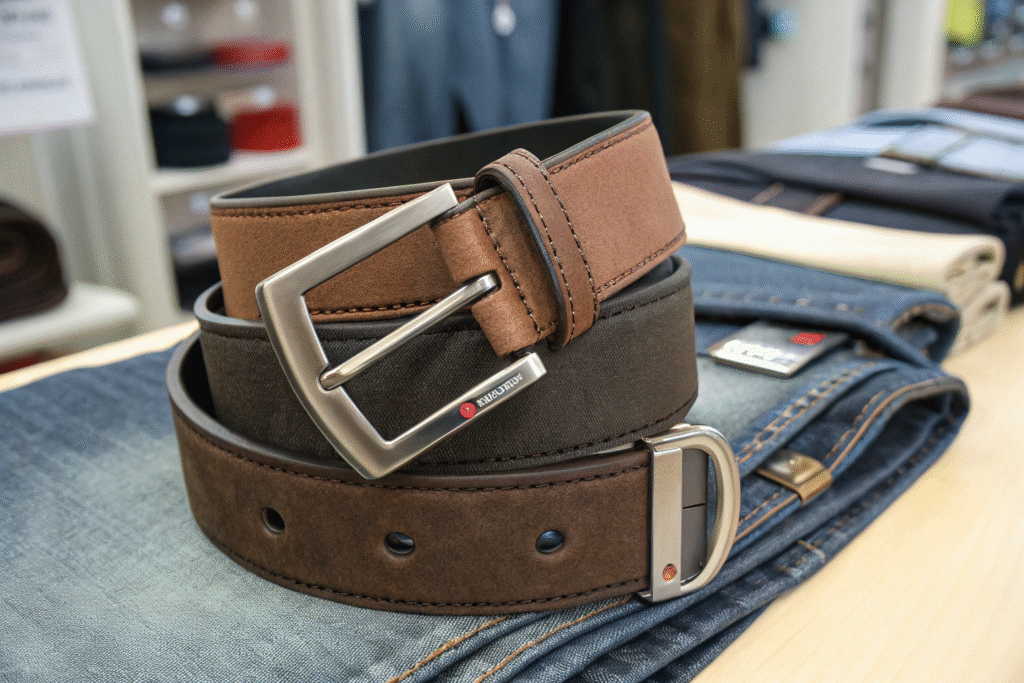
Buckle design significantly influences both visual merchandising and customer selection processes. Poorly designed buckles create merchandising challenges through awkward protrusion, reflection issues, or difficulty in maintaining organized presentation. Strategic buckle design considers both aesthetic appeal and practical retail requirements.
The most merchandisable buckles feature profiles that allow compact hanging or stacking, surfaces that photograph well for e-commerce, and details that communicate quality at a glance. These characteristics ensure products present effectively across multiple retail channels while minimizing handling and display challenges.
What Buckle Profiles Work Best for Various Merchandising Systems?
Low-profile buckles (under 15mm thickness) allow compact hanging on standard peg hooks without excessive protrusion into aisles. Rounded edges prevent snagging on adjacent products and packaging. These practical considerations often determine whether retailers can merchandise belts in high-traffic locations where space is limited and safety concerns exist.
The retail space planning metrics used by store designers emphasize product density and safety considerations. Buckles designed within these parameters typically receive 30-50% more facing opportunities than those with protruding or irregular shapes. This increased visibility directly translates to higher sales potential through improved discoverability.
How Can Buckle Finish Affect Visual Merchandising?
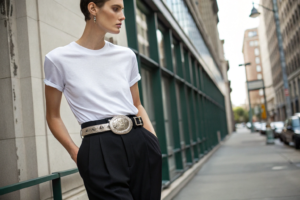
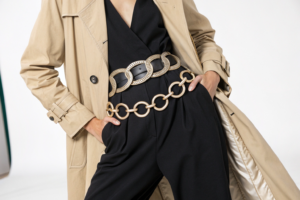
Consistent buckle finishing within collections creates cohesive displays that reinforce brand identity. Mixed metal finishes within the same product line often create visual chaos that undermines merchandising impact. Strategic finish selection considers both aesthetic appeal and practical concerns like fingerprint visibility, scratch resistance, and photographic reproduction.
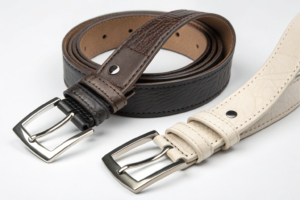
The most successful buckle finishes maintain their appearance through handling while photographing accurately for e-commerce. Brushed and matte finishes typically perform better than high-polish alternatives in both contexts, showing less fingerprint accumulation while reproducing consistently in product photography. This cross-channel consistency ensures merchandising effectiveness regardless of shopping environment.
Conclusion
Designing belts for optimal retail merchandising requires a holistic approach that considers packaging, color systems, self-selection features, and buckle design as integrated elements of the retail experience. The most successful implementations create products that merchandise effectively with minimal labor, communicate value without explanation, and organize intuitively for easy customer navigation.
The investment in merchandising-conscious design delivers measurable returns through increased sell-through rates, premium placement opportunities, reduced handling costs, and stronger retail partnerships. As retail environments continue evolving toward self-service models, designs that facilitate independent customer decision-making will increasingly dominate market share.
Ready to develop belts optimized for retail merchandising success? Contact our Business Director, Elaine, at elaine@fumaoclothing.com to discuss our design approach that balances aesthetic appeal with commercial performance across retail environments.