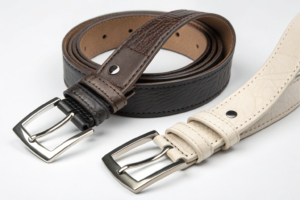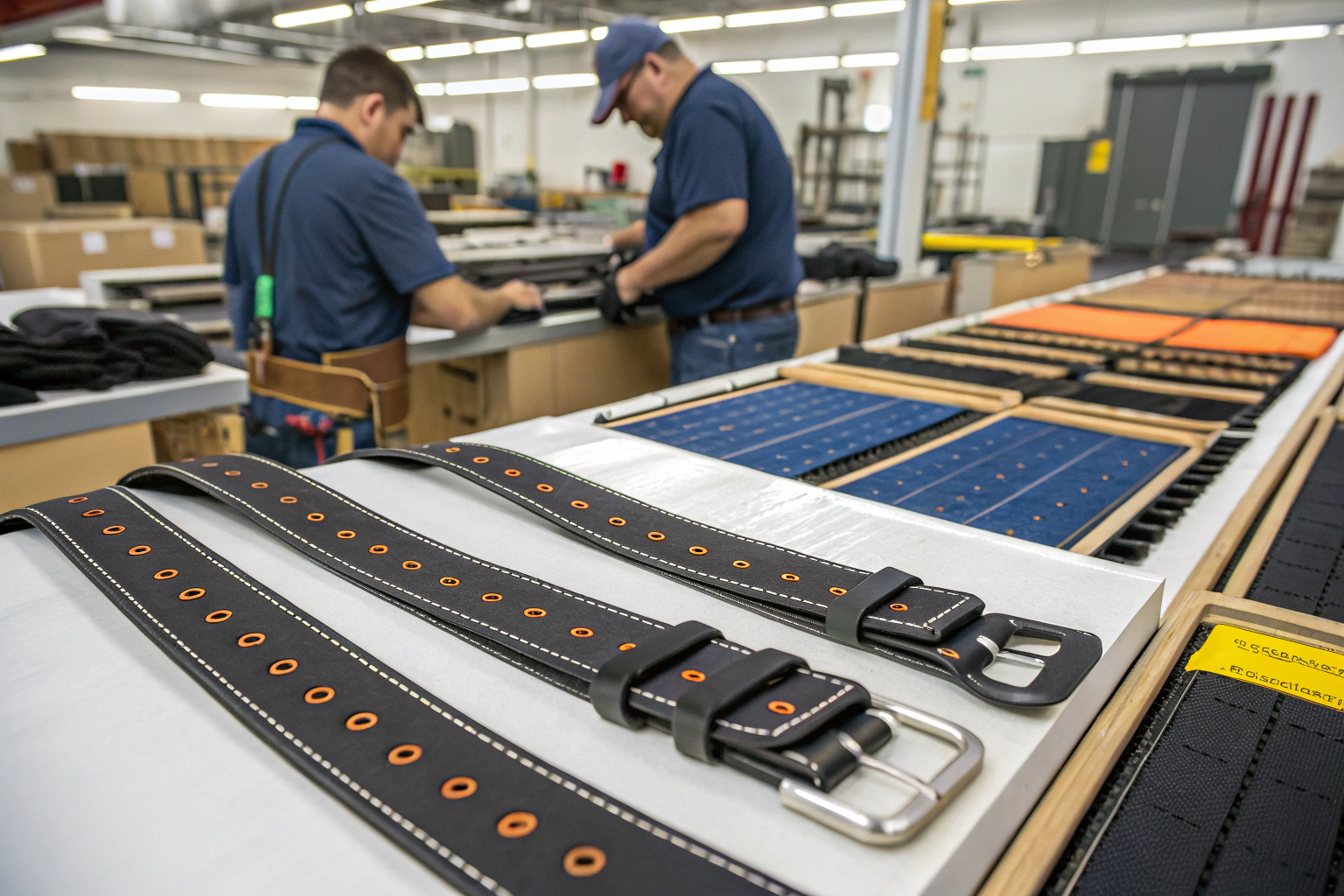
In today's global marketplace, shipping costs have become a significant factor in product pricing and profitability. For belt manufacturers and retailers, the design phase presents crucial opportunities to optimize products for cost-effective shipping without compromising quality or customer satisfaction. Smart design decisions can dramatically reduce dimensional weight charges, minimize packaging materials, and streamline logistics operations.
Designing belts for reduced shipping costs requires strategic material selection, space-efficient construction, modular packaging approaches, and weight optimization throughout the product development process. By addressing shipping considerations during design rather than as an afterthought, manufacturers can create products that maintain their market appeal while significantly lowering logistics expenses.
The relationship between product design and shipping economics is complex but manageable with careful planning. Let's explore the specific design strategies that can transform belt shipping from a cost center to a competitive advantage.
What Material Choices Impact Shipping Economics?
Material selection influences shipping costs through both weight and protective requirements, making it a primary consideration in cost-effective belt design.
How Can Lightweight Materials Reduce Costs?
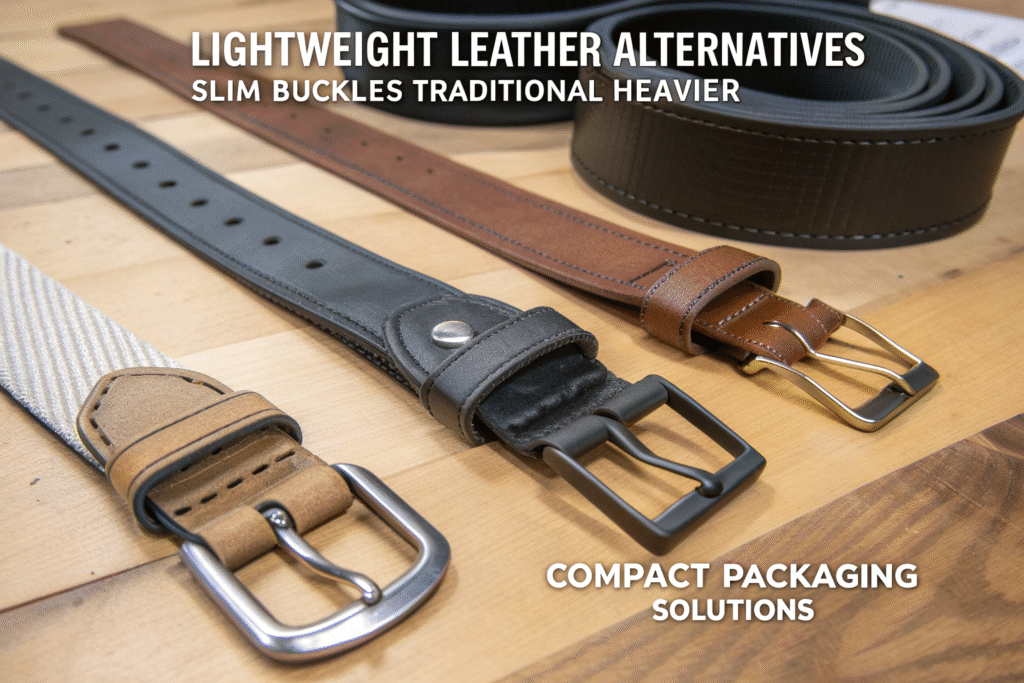
The choice of materials directly affects shipping weight, which is a key factor in cost calculation. Using lightweight leather alternatives such as high-quality synthetic materials or thinner leather grades can reduce product weight by 30-50% compared to traditional full-grain leather. Similarly, selecting aluminum or composite buckles instead of solid brass or zinc alloy can cut hardware weight by up to 60%. These reductions translate directly to lower shipping costs, especially for air freight where weight charges are particularly significant. The material density optimization must balance weight savings with durability requirements to ensure customer satisfaction isn't compromised.
What Role Do Material Properties Play in Packaging?
Certain materials require less protective packaging, enabling more compact shipping solutions. Flexible belt materials that resist creasing and damage can be shipped without rigid packaging supports. Materials with inherent scratch and impact resistance reduce the need for excessive cushioning materials. By selecting materials that are naturally durable and flexible, designers can minimize the packaging volume required for safe transport, significantly reducing dimensional weight charges that are based on package size rather than actual weight.
How Does Product Architecture Affect Shipping Dimensions?
The physical construction and configuration of belts create opportunities for space optimization that directly impact shipping efficiency.
What Construction Methods Minimize Shipping Volume?
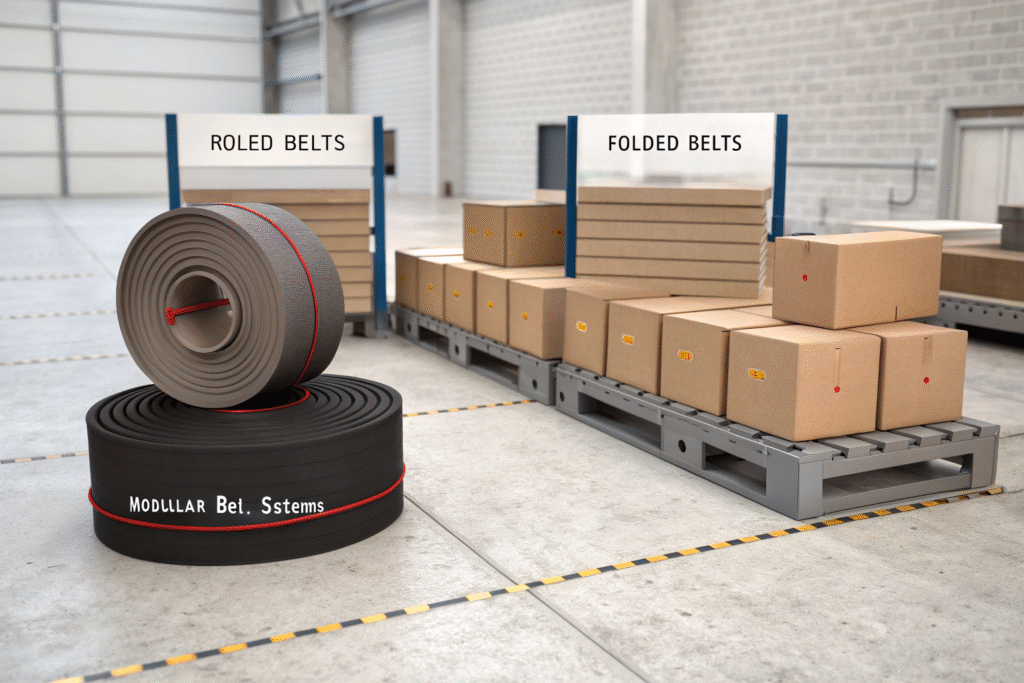
Belt construction significantly influences the minimum achievable shipping dimensions. Designing belts that can be efficiently rolled or folded without damage reduces their longest dimension, allowing for smaller shipping boxes. Seamless construction methods eliminate bulky overlapping sections, while slim-profile buckles that don't protrude excessively enable tighter packing. The goal is to create products with minimal packed dimensions while maintaining the product's integrity and presentation value when unpacked by the end customer.
How Can Modular Design Reduce Shipping Costs?
Modular belt systems, where buckles and straps ship separately, can dramatically optimize shipping efficiency. By packaging components nested together, manufacturers can achieve significantly higher packing densities than with pre-assembled belts. This approach also enables inventory optimization, as replacement straps can ship in flat packaging while buckles inventory remains constant. The modular strategy works particularly well for custom belt programs where customers mix and match components, as the separate elements pack more efficiently than complete assembled units.
What Packaging Innovations Support Cost Reduction?
Packaging design represents a critical intersection of product protection, customer experience, and shipping economics.

How Can Minimalist Packaging Strategies Help?
Adopting minimalist packaging approaches can substantially reduce shipping costs while aligning with sustainable practices. Using slim-profile packaging that contours to the product's shape rather than standard rectangular boxes decreases dimensional weight charges. Replacing traditional plastic blisters with paper-based retention systems or simple cardboard sleeves eliminates bulk while maintaining product visibility and protection. These approaches can reduce packaging volume by 40-60% compared to conventional belt packaging, creating dramatic savings in storage and shipping costs.
What Role Does Multi-Unit Packaging Play?
For B2B customers or retail shipments, multi-unit packaging offers significant shipping efficiencies. Designing bulk packaging systems that securely hold multiple belts in an optimized configuration can reduce per-unit shipping costs by 25-40% compared to individual packaging. This approach works particularly well for e-commerce fulfillment centers or store deliveries where individual consumer packaging isn't required until point of sale. The key is designing products that stack or nest efficiently while ensuring they arrive in perfect condition.
How Can Design Choices Optimize Logistics Handling?
Design decisions that improve handling efficiency at various logistics stages contribute to overall cost reduction throughout the supply chain.
What Standardization Benefits Shipping Efficiency?
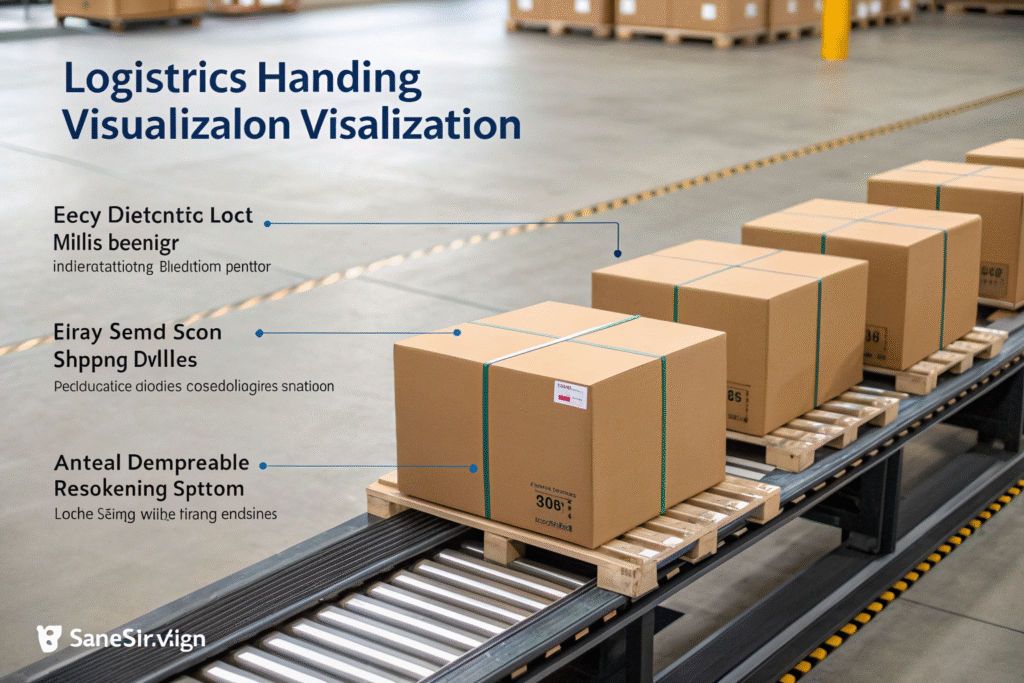
Designing belts and their packaging to fit standard shipping modules creates significant handling and storage efficiencies. Creating products that conform to standard pallet dimensions maximizes container utilization and simplifies warehouse storage. Standardized package sizes reduce the complexity of sorting and handling operations, while consistent weight profiles improve load planning accuracy. These standardization efforts can reduce handling costs by 15-25% by minimizing exceptions and special handling requirements throughout the logistics chain.
How Do Design Features Impact Automated Handling?
As logistics operations become increasingly automated, designing for compatibility with automated systems becomes crucial. Products with consistent package dimensions and stable stacking characteristics work efficiently with automated sorting and handling equipment. Including machine-readable labels in accessible locations and designing packaging that won't jam in conveyor systems reduces processing errors and delays. These considerations are particularly important for high-volume e-commerce operations where manual handling would be prohibitively expensive.
Conclusion
Designing belts for reduced shipping costs requires a holistic approach that considers materials, construction, packaging, and logistics compatibility from the earliest stages of product development. By prioritizing shipping efficiency alongside aesthetic and functional requirements, manufacturers can create products that deliver value throughout the supply chain while maintaining their market appeal.
The cumulative impact of these design optimizations can reduce shipping costs by 30-50% while potentially enhancing the customer experience through smarter, more sustainable packaging. If you're looking to develop belt designs that optimize shipping economics without compromising quality, contact our Business Director, Elaine, at elaine@fumaoclothing.com to discuss how our design and manufacturing expertise can create products that excel in both the marketplace and the logistics network.