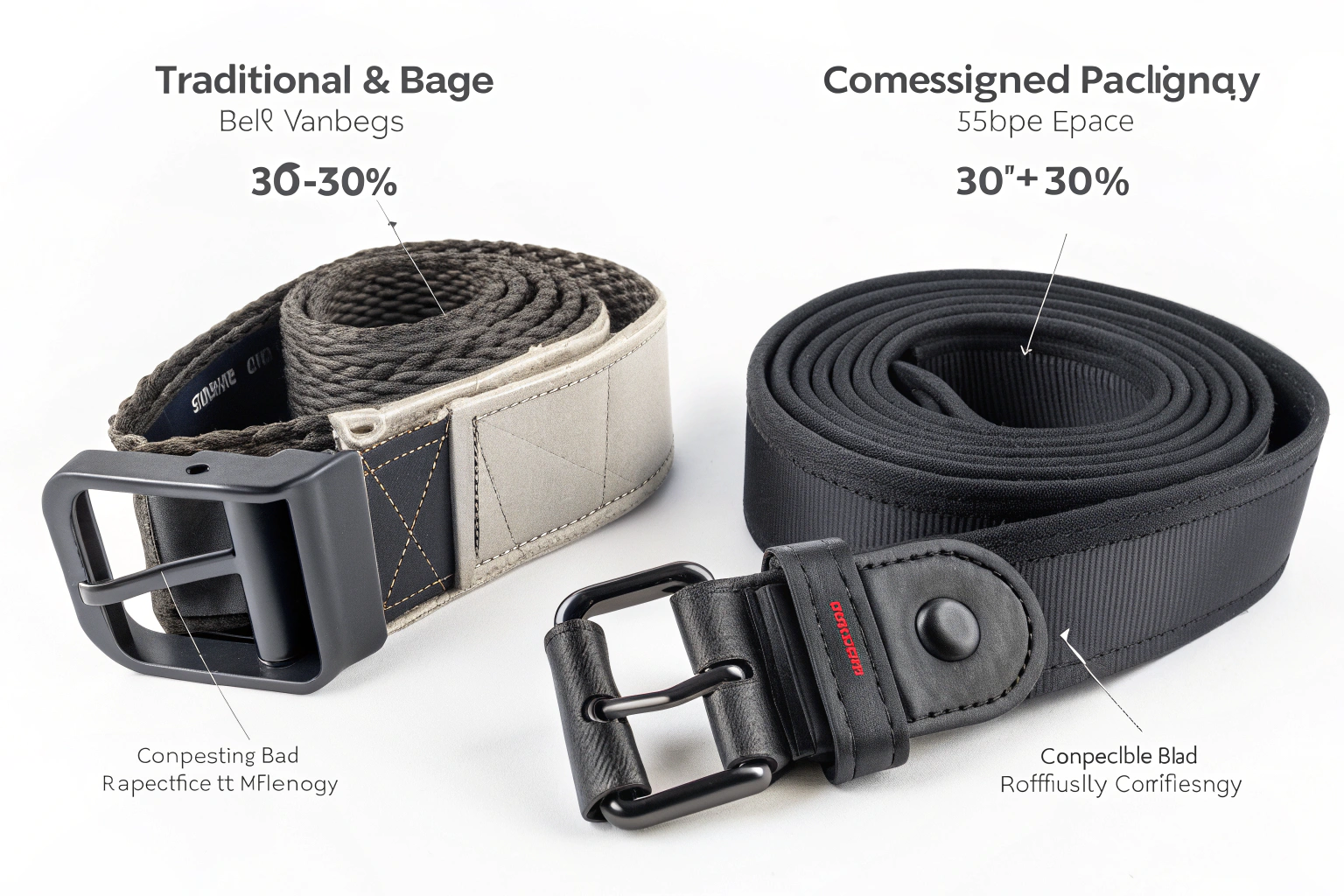
Your shipping costs are escalating as belt orders increase, eating into your profit margins. The bulky packaging and inefficient product design mean you're essentially shipping air, paying for space that doesn't add value. This common challenge affects both manufacturers and retailers in the belt industry.
Designing belts for reduced shipping volume involves creating collapsible or modular components, implementing space-efficient packaging, selecting compressible materials, and optimizing product dimensions. Successful volume reduction combines innovative belt construction with strategic packaging design to minimize dimensional weight charges while maintaining product quality and presentation. The most effective approaches can reduce shipping volume by 30-60% without compromising customer experience.
Shipping costs are increasingly determined by dimensional weight rather than actual weight, making product volume a critical factor in profitability. Smart design decisions implemented before production can dramatically reduce these costs while offering additional benefits throughout the supply chain.
What Belt Construction Methods Minimize Package Size?
Traditional belt construction often prioritizes immediate presentation over shipping efficiency. Rethinking fundamental design elements can create products that maintain aesthetic appeal while occupying significantly less space during transport.
Space-efficient construction methods include rollable core structures, modular buckle systems, flexible interior materials, and designs that eliminate rigid components. These approaches allow belts to be compressed or reconfigured into compact forms without damage.

How Do Rollable Designs Reduce Shipping Dimensions?
Unlike traditional belts with stiffening layers that maintain a flat shape, rollable belt designs incorporate flexible cores that allow tight rolling without creasing or damage. By using flexible polymer cores instead of rigid leather or heavy interfacing, these belts can be rolled to diameters as small as 2 inches. This approach can reduce packaged volume by up to 70% compared to traditional belt presentation boxes. The rolling technique works particularly well with fabric belts and certain leather types that recover their shape after unrolling.
What Modular Systems Decrease Overall Volume?
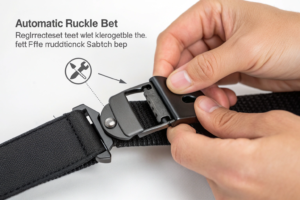
Modular belt systems separate buckles from belts, allowing flat packing of strap components and efficient stacking of hardware. This approach utilizes interchangeable buckle mechanisms that customers can easily attach themselves. By shipping buckles separately in small pouches and belts in flat configurations, the overall package dimensions can be reduced by 40-50% compared to pre-assembled products. This method also offers marketing advantages through customization opportunities that appeal to contemporary consumers who value personalization.
How Can Packaging Innovation Complement Product Design?
Even the most compact belt design can be undermined by inefficient packaging. Strategic packaging solutions work synergistically with product design to minimize total shipped volume while protecting products during transit.
Effective packaging innovations include flat-pack systems, vacuum-sealed options, minimalist structures, and multi-product consolidation approaches. These solutions reduce both material usage and dimensional weight while maintaining product protection.

What Flat-Pack Systems Maximize Space Efficiency?
Flat-pack packaging eliminates traditional bulky boxes in favor of slim cardboard sleeves or sealed pouches that conform to the belt's compressed dimensions. These systems can reduce package thickness from 3-4 inches (traditional boxes) to 0.5-0.75 inches. The reduced material usage also aligns with sustainability goals that resonate with modern consumers. For premium products, rigid mailers with custom inserts provide protection similar to traditional boxes while maintaining slim profiles that optimize shipping efficiency.
How Does Vacuum Sealing Reduce Volume?
Vacuum sealing technology compresses flexible belt materials to their minimum practical volume by removing air from packaging. This approach works particularly well with fabric, nylon, and certain leather belts that can withstand compression without permanent damage. Vacuum-sealed belts can achieve volume reductions of 60-80% compared to traditional packaging. The process also provides secondary benefits including moisture protection and reduced exposure to atmospheric elements during extended storage or international shipping.
What Material Choices Enable Compression Without Damage?
Material selection fundamentally determines how much a belt can be compressed during shipping without sustaining damage. Certain materials withstand compression and return to their original shape, while others develop permanent creases or structural weaknesses.
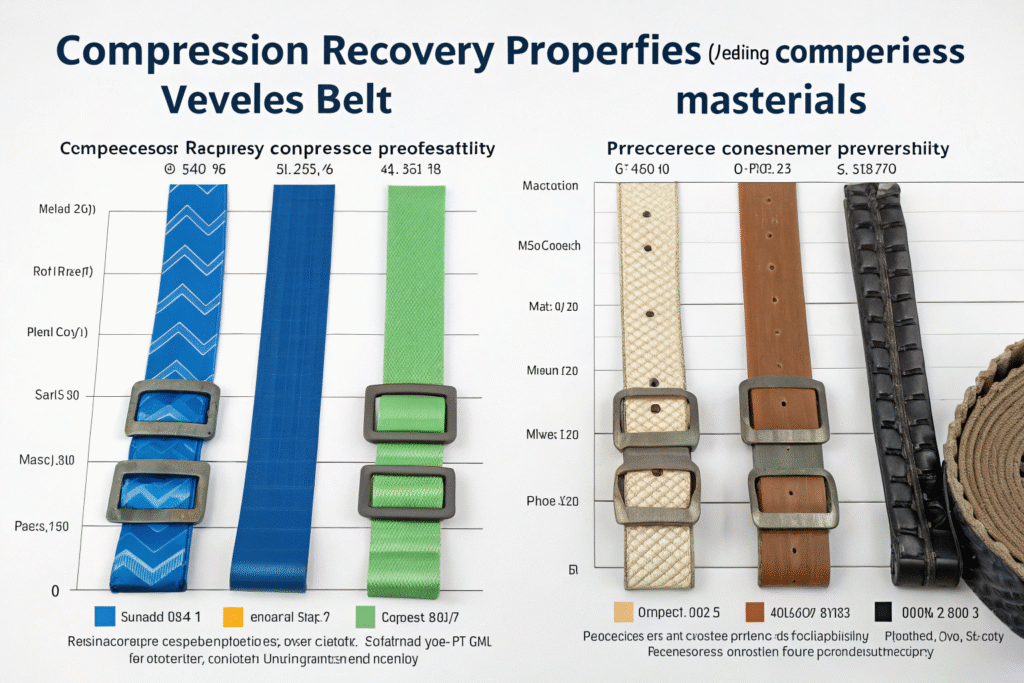
Compression-friendly materials include specific leather types, technical fabrics, flexible polymers, and materials with memory characteristics. Understanding these material properties allows designers to create products that ship compactly while maintaining their intended appearance upon arrival.
Which Leather Types Best Withstand Compression?
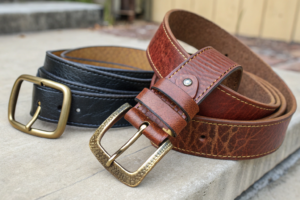
While traditional vegetable-tanned leather develops permanent creases when compressed, certain chrome-tanned leathers and finished splits demonstrate better recovery from temporary compression. Specifically, leathers with specific finishing treatments including plasticizers and conditioners maintain flexibility without cracking. For rolled shipping, leathers with specific grain characteristics that resist permanent creasing are essential. Material testing should include compression recovery assessments as part of the selection process for space-efficient designs.
How Do Technical Fabrics Offer Compression Advantages?
Technical fabrics including ballistic nylon, polypropylene webbing, and certain knitted constructions inherently resist permanent deformation from compression. These materials can be tightly rolled or folded without developing permanent creases, making them ideal for space-efficient shipping. Their recovery properties allow them to return to their original shape after unpacking, maintaining the product's aesthetic integrity despite compact shipping configurations.
How Does Volume Reduction Impact Overall Supply Chain Efficiency?
Reducing belt shipping volume creates ripple effects throughout the supply chain beyond just lower shipping costs. These systemic benefits compound to create significant competitive advantages and environmental improvements.
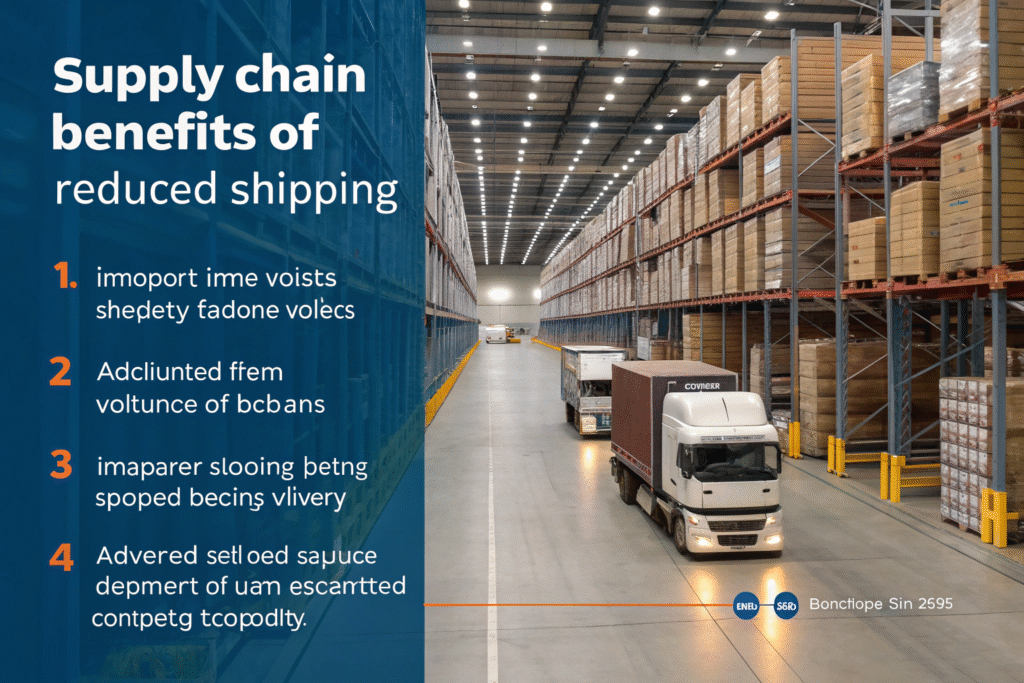
Supply chain benefits include increased warehouse storage density, reduced transportation requirements, lower material costs, and decreased environmental impact. These advantages make volume reduction strategically valuable rather than merely a cost-cutting measure.
What Warehouse Efficiency Gains Can Be Achieved?
Reducing belt package volume by 50% effectively doubles warehouse storage capacity without expanding physical space. This allows businesses to maintain broader inventory variety or reduce storage facility costs. The improved cube utilization also streamlines picking and packing operations by creating more accessible inventory in smaller footprints. For e-commerce operations, these space savings can justify automated storage systems that further improve efficiency, creating a virtuous cycle of operational improvement.
How Significant Are Transportation Cost Reductions?
With dimensional weight pricing now standard for major carriers, volume reduction directly decreases shipping costs. A 50% volume reduction typically translates to 30-40% lower shipping costs for equivalent weights. These savings compound throughout the distribution chain from manufacturer to distributor to retailer. Additionally, smaller packages allow increased load density in transportation vehicles, reducing the number of trips required and creating both economic and environmental benefits through reduced carbon emissions.
Conclusion
Designing belts for reduced shipping volume requires integrating product design, material selection, and packaging innovation to create comprehensive solutions. The most successful approaches combine collapsible product construction with space-efficient packaging to dramatically decrease dimensional weight while maintaining product quality and customer experience. Beyond immediate shipping cost reduction, these strategies create systemic benefits throughout the supply chain, including increased storage efficiency, reduced environmental impact, and improved operational flexibility.
If you're interested in developing belt designs optimized for shipping efficiency, contact our Business Director, Elaine. Our expertise in space-efficient manufacturing can help reduce your shipping costs while maintaining product quality. Reach her at elaine@fumaoclothing.com to discuss your belt design requirements.