The fashion industry's delayed production cycles create a critical challenge: deciding today which belt styles customers will want two years from now. Getting this wrong means either missed opportunities or costly excess inventory. With consumer preferences evolving faster than ever and sustainability concerns reshaping purchasing decisions, how can brands accurately predict which belt trends will dominate in 2026?
Forecasting belt trends for 2026 inventory planning requires analyzing cultural shifts, technological advancements, sustainability developments, and economic factors through a systematic approach. Successful forecasting combines data analysis from past sales, monitoring of emerging fashion runways, tracking socio-economic indicators, and understanding generational preferences to identify patterns that will mature into mainstream trends by 2026. Companies that master this process typically achieve 30-50% higher sell-through rates and reduce markdowns by 25-40%.
Accurate trend forecasting transforms inventory planning from guessing to strategic decision-making. Let's examine the cultural indicators, material innovations, design evolution, and market segmentation that will define 2026 belt trends.
What Cultural Shifts Will Influence 2026 Belt Trends?
Cultural movements provide the foundation upon which fashion trends build, making cultural analysis the starting point for accurate forecasting. Understanding evolving values and lifestyles helps predict which belt styles will resonate in 2026.
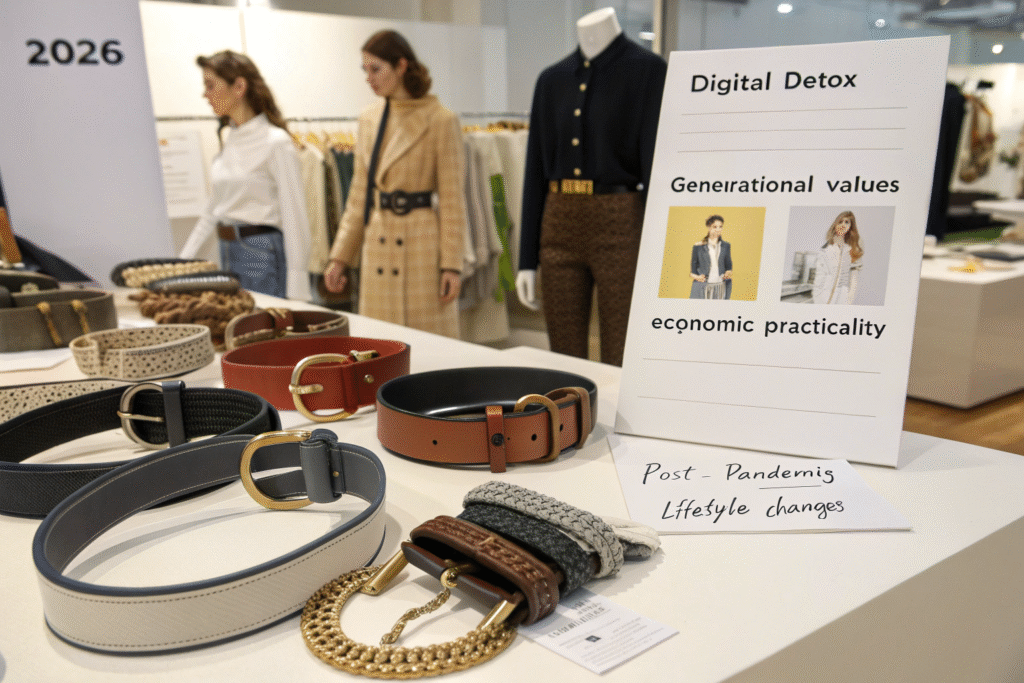
Key cultural influences for 2026 include digital detox movements, generational value shifts, economic practicality, and post-pandemic lifestyle changes. These macro-trends will shape consumer preferences for belt functionality, aesthetics, and symbolic meaning.
How Will Generational Values Shape 2026 Belt Preferences?
Generational values will significantly shape 2026 belt preferences: Gen Z's sustainability focus will drive demand for circular designs and transparent supply chains, Millennials' practicality will favor versatile convertible styles, while Gen X's quality orientation will support heritage craftsmanship and durable materials. By 2026, Gen Z will represent 40% of consumer spending, making their values particularly influential. Their preference for authenticity and experience over ownership will manifest in belts with repair services, customization options, and storytelling elements. Demographic research from Pew Research Center provides crucial insights into generational value shifts that impact product preferences.
What Role Will Digital Life Play in Physical Accessory Design?
Digital life will influence physical accessory design through "phygital" belts that bridge physical and digital worlds, featuring QR codes linking to product stories, designs optimized for video calls, and styles that complement digital avatars. As remote work continues and digital interactions remain significant, belts will need to project professionalism and personality on camera, favoring medium-width styles with subtle details that read well on screen rather than extreme proportions. The Interactive Advertising Bureau predicts continued blending of physical and digital experiences that will influence accessory design criteria.
What Material Innovations Will Define 2026 Belts?
Material development cycles mean 2026's key innovations are already in development today. Tracking emerging materials helps identify which will reach commercial viability and consumer acceptance by 2026.
Material trends for 2026 will include bio-fabricated leather alternatives, smart materials with embedded technology, circular economy composites, and heritage material revivals with sustainable improvements. These innovations will address both aesthetic desires and environmental concerns.
Which Sustainable Materials Will Reach Mainstream by 2026?
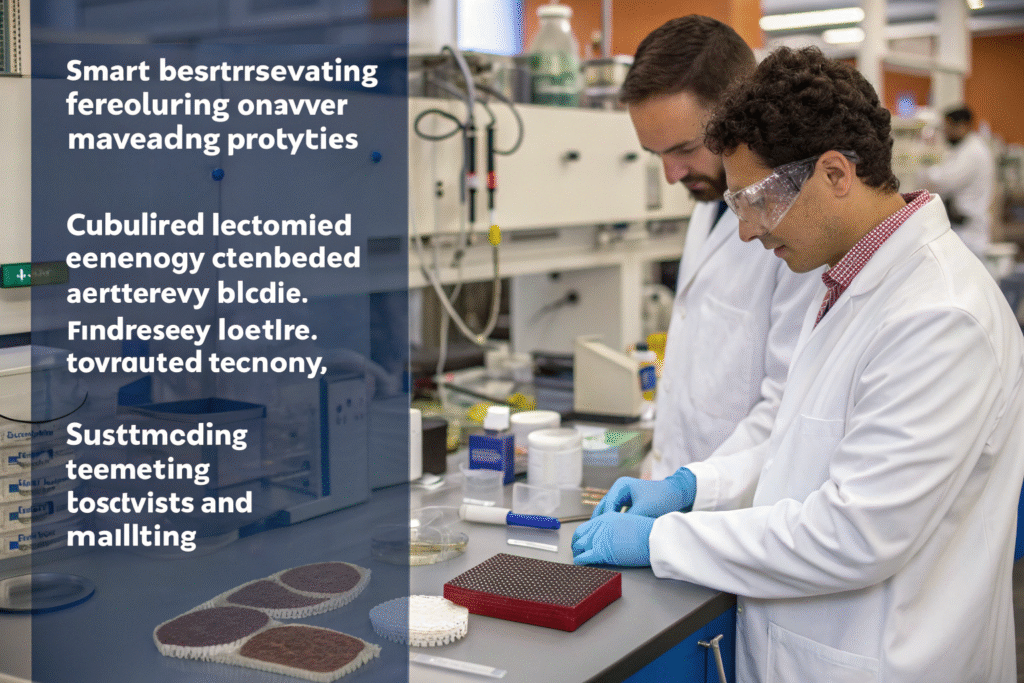
By 2026, mushroom leather (mycelium-based materials), pineapple leaf fiber (Piñatex), apple waste leather, and algae-based polymers will reach mainstream availability and consumer acceptance. These materials will evolve beyond novelty status to offer competitive durability, aesthetics, and pricing. Current limitations around scaling and performance are being addressed through significant investment in bio-material companies, with several expecting commercial viability within the next 18-24 months. The Material Innovation Initiative tracks development timelines for next-generation sustainable materials.
How Will Technical Textiles Evolve in Belt Design?
Technical textiles will evolve to incorporate temperature regulation, moisture management, and adaptive flexibility in belt designs, particularly for travel and active lifestyles. By 2026, we'll see wider adoption of phase-change materials that maintain comfortable temperatures, self-cleaning nanocoatings that reduce washing needs, and responsive materials that adjust stiffness based on movement. These advancements will be particularly relevant for belts designed for "one-bag" travelers and hybrid work lifestyles that demand both professionalism and comfort. Technical textile forecasts from Textile Exchange identify which innovations will reach price points suitable for fashion accessories by 2026.
What Design Evolution Will Characterize 2026 Belts?
Design trends follow predictable evolution patterns from avant-garde to mainstream, allowing forecasters to identify which current emerging styles will reach peak relevance in 2026.
Design evolution for 2026 will include modular systems, adaptive silhouettes, neo-minimalism, and expressive personalization. These directions reflect broader cultural movements toward flexibility, authenticity, and individual expression.
How Will Modular and Convertible Designs Develop by 2026?
Modular and convertible belt designs will evolve from basic interchangeable buckles to comprehensive systems with swappable panels, adjustable widths, and convertible functions that transform between belt, bag strap, and accessory. By 2026, these systems will incorporate standardized connection mechanisms across brands, creating ecosystems where consumers can mix components from different manufacturers. This approach supports circular economy principles by extending product life through updatable components rather than complete replacements. Design patents analysis from the United States Patent and Trademark Office reveals increasing innovation in modular fashion systems.
What Aesthetic Directions Will Emerge from Current Trends?
Aesthetic directions emerging from current trends will include organic futurism (blending natural forms with tech elements), refined utility (elevated functional details), and digital craft (patterns inspired by digital artifacts translated into physical forms). These directions represent reactions to both technology saturation and environmental concerns, creating styles that feel simultaneously forward-looking and grounded. By 2026, we'll see the mainstream adoption of designs that currently appear only in avant-garde collections, filtered for commercial appeal. Trend analysis from WGSN provides documented evolution patterns from runway to retail.
How Should Market Segmentation Guide 2026 Inventory Planning?
Effective inventory planning requires translating broad trends into specific product assortments for different consumer segments. Understanding evolving segmentation helps allocate inventory investments appropriately.
Market segmentation for 2026 inventory planning should consider lifestyle categories, price tier preferences, channel-specific demands, and geographic variations. This granular approach ensures trend interpretations resonate with specific customer groups.

What Lifestyle Segments Will Demand Distinct Belt Solutions in 2026?
Key lifestyle segments in 2026 will include digital nomads requiring compact multi-functional belts, hybrid professionals needing camera-appropriate accessories, conscious consumers prioritizing circular products, and experience-focused minimalists preferring versatile premium pieces. Each segment will have distinct criteria around materials, functionality, aesthetics, and price points. By understanding these segment-specific needs, brands can develop targeted collections rather than one-size-fits-all approaches. Market segmentation models from McKinsey & Company provide frameworks for identifying and targeting evolving consumer segments.
How Will Price Tier Strategies Evolve for 2026 Belts?
Price tier strategies will evolve to emphasize value justification through storytelling at entry-level, demonstrable durability at mid-tier, and emotional connection/artisanship at luxury levels. By 2026, the "value" equation will increasingly incorporate environmental and social factors alongside traditional quality metrics. Entry-level belts will need transparent sustainability stories, mid-tier will emphasize repair services and longevity, while luxury will focus on craft preservation and material innovation. Pricing research from Deloitte shows consumers increasingly align spending with values across price segments.
What Data Sources Improve Forecasting Accuracy?
Reliable forecasting requires triangulating insights from multiple data sources to identify patterns and validate assumptions. The most accurate forecasts combine quantitative and qualitative approaches.
Key data sources for 2026 belt forecasting include sales analytics, social media signals, search trend data, industry reports, and cultural analysis. Each source provides different perspectives that collectively build a comprehensive forecast.

How Can Past Sales Data Inform Future Trend Projections?
Past sales data can identify trend lifecycles, seasonal patterns, price elasticity, and style adoption rates that help project future trends. Analysis of 2022-2024 sales can reveal which trends are accelerating, stabilizing, or declining, providing baseline projections for 2026. Particularly valuable are sell-through rates by style attributes (width, material, buckle type) and price points, which indicate what consumers are actively choosing rather than what retailers are pushing. Sales analytics platforms like Edited provide comparative retail data that identifies market-wide patterns beyond individual company sales.
What Social Media Signals Predict Mainstream Adoption?
Social media signals that predict mainstream adoption include niche community engagement with emerging styles, influencer experimentation with new categories, and visual search increases for specific details. By monitoring platforms like TikTok, Pinterest, and Instagram, forecasters can identify styles moving from subcultures to broader awareness. The most predictive signals come from micro-influencers in adjacent categories (rather than fashion influencers) and from organic content rather than sponsored posts. Social listening tools from Brandwatch help quantify these signals and identify emerging patterns.
Conclusion
Forecasting belt trends for 2026 inventory planning requires a systematic approach that balances data analysis, cultural understanding, and material innovation tracking. The most successful forecasts will identify styles that align with evolving values around sustainability, functionality, and personal expression while delivering commercial viability.
The brands that will thrive in 2026 are those making informed inventory decisions today based on comprehensive trend analysis rather than guesswork. If you're planning 2026 belt collections and need manufacturing partners who understand trend forecasting and production timing, our expertise includes strategic planning for future trends. Contact our Business Director, Elaine, to discuss how we can develop 2026 belt collections aligned with emerging trends. Reach out to Elaine at elaine@fumaoclothing.com. Let's build future-focused inventory strategies together.