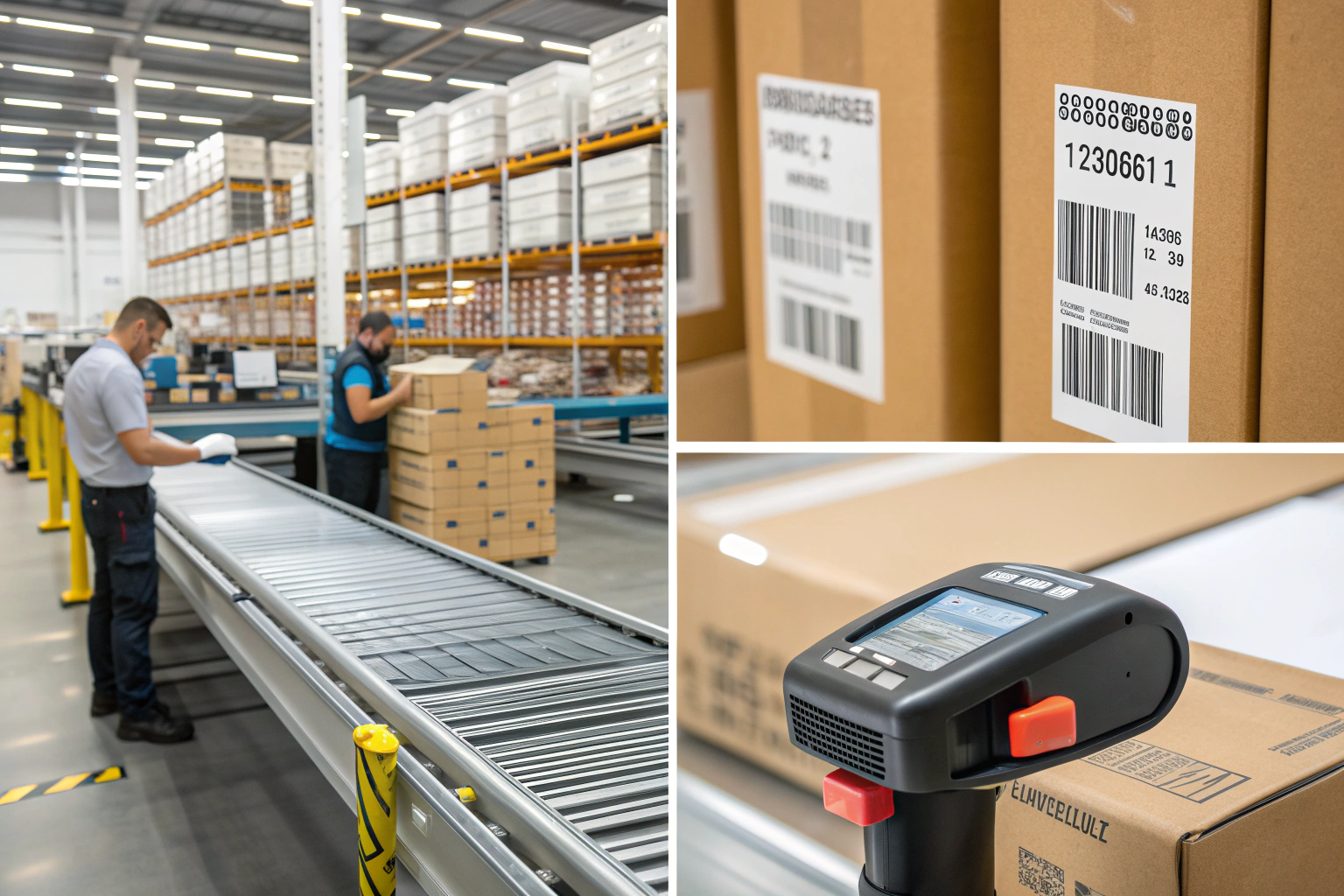
Warehouse management for fashion accessories like belts presents unique challenges due to the combination of small items, multiple SKUs, and high inventory turnover. Traditional manual systems often result in 5-8% inventory inaccuracy, leading to stockouts, overstocking, and lost sales. How can barcoding systems transform belt warehouse operations to achieve near-perfect inventory accuracy and operational efficiency?
Implementing barcoding in belt warehouse management requires strategic planning of label placement, technology integration, process redesign, and staff training to create a seamless system that tracks inventory from receiving to shipping. Successful implementations typically reduce inventory errors by 85-95%, decrease receiving time by 60-75%, and improve order accuracy to 99.8%, while providing real-time visibility into stock levels, movement patterns, and inventory aging.
The transition to barcoded warehouse management represents a fundamental shift from reactive to proactive inventory control. Let's examine the barcode technology selection, labeling strategies, process integration, and system implementation that ensure successful barcoding in belt warehouse operations.
What Barcode Technology Works Best for Belt Inventory?
Selecting the appropriate barcode technology is crucial for successful implementation, as different systems offer varying advantages for fashion accessory management.
Technology considerations include barcode type selection, scanning equipment choices, software integration requirements, and mobile implementation options. Each element must align with specific warehouse needs and belt product characteristics.

Why Are 2D Barcodes Superior for Belt Inventory Management?
2D barcodes (QR codes, Data Matrix) are superior for belt inventory management because they can store significantly more information in a smaller space—crucial for small belt tags and packaging. While traditional 1D barcodes typically hold 20-25 characters, 2D codes can store 2000+ characters, accommodating SKU numbers, manufacturing dates, material information, and destination details in a single scan. This comprehensive data capture enables real-time inventory tracking and reduces the need for multiple labels on individual products. Industry standards from GS1 provide specifications for 2D barcode implementation in fashion inventory.
How Should Scanning Equipment Be Selected for Belt Warehouses?
Scanning equipment should be selected based on warehouse layout, scanning distances, and staff mobility requirements. For belt warehouses, combination handheld and fixed-position scanners typically deliver optimal results, with handheld units for receiving and picking areas, and fixed scanners at packaging and shipping stations. Ruggedized mobile computers with built-in scanners are particularly valuable for belt inventory because they withstand the physical environment while providing real-time data access. Equipment specifications from Zebra Technologies guide appropriate scanner selection for fashion distribution.
What Labeling Strategies Ensure Successful Tracking?
Effective barcode implementation requires strategic label placement and durable labeling that withstands handling while remaining scannable throughout the product lifecycle.
Labeling strategies include placement considerations, material durability, information hierarchy, and compliance requirements. Each element ensures barcodes remain functional from receiving to final shipment.

Where Should Barcodes Be Placed on Different Belt Types?
Barcode placement should vary by belt type: hang tags for display-ready belts, adhesive labels on packaging for boxed belts, and removable tags for high-value leather belts where permanent marking is undesirable. The most effective placement ensures consistent scanning orientation while preserving product presentation. For belt boxes, labels should be positioned on the upper right corner of the narrow side, creating a consistent scanning position that speeds up processing. Operational research from the Warehouse Education and Research Council demonstrates how standardized label placement improves scanning efficiency by 40-60%.
What Label Materials Withstand Warehouse Environments?
Label materials that withstand warehouse environments include synthetic papers, polyester films, and vinyl substrates with permanent adhesive that resist moisture, abrasion, and temperature variations. For belt warehouses where products may be stored for 6-18 months, labels must maintain scannability despite dust, handling, and environmental exposure. The most durable labels feature protective overlaminates and UV-resistant inks that prevent fading. Material specifications from Avery Dennison provide guidelines for label durability in distribution environments.
How Can Processes Be Integrated with Barcoding Systems?
Successful barcoding implementation requires redesigning warehouse processes to fully leverage the technology's capabilities rather than simply automating existing manual methods.
Process integration includes receiving procedures, storage location management, picking optimization, and shipping verification. Each process must be re-engineered to maximize barcoding benefits.

How Does Barcoding Transform Receiving and Putaway Processes?
Barcoding transforms receiving and putaway by enabling instant product identification, automated data capture, and directed putaway that reduces processing time from 2-3 minutes per carton to 30-45 seconds. When belts arrive, staff scan barcodes to automatically update inventory records, generate putaway instructions, and verify purchase order compliance. This automation eliminates manual data entry errors and provides immediate inventory availability for sales. Process analysis from the Material Handling Institute shows that barcoded receiving reduces errors by 85% compared to manual systems.
What Picking Strategies Maximize Barcoding Efficiency?
Picking strategies that maximize barcoding efficiency include batch picking with scan verification, zone routing with location confirmation, and wave picking with real-time inventory updates. Scan verification at each picking location ensures order accuracy while providing data for picking performance analysis. The most effective systems use put-to-light or pick-to-cart systems integrated with barcode scanning to guide workers through optimal pick paths. Warehouse management research from Supply Chain Digest documents how scanned picking improves accuracy to 99.9% while increasing productivity by 25-35%.
What Implementation Approach Ensures Success?
Successful barcoding implementation requires careful planning, phased rollout, comprehensive training, and continuous improvement to achieve operational benefits.
Implementation approach includes system selection criteria, phased deployment strategy, change management protocols, and performance measurement. Each element contributes to smooth transition and user adoption.

What Phased Rollout Strategy Minimizes Operational Disruption?
A phased rollout strategy minimizes operational disruption by implementing barcoding in specific areas before full deployment, typically beginning with receiving operations, followed by storage location management, then picking and shipping processes. This approach allows staff to build proficiency with the technology while maintaining operational continuity. The most successful implementations run parallel systems during transition, with manual backup available until barcode system reliability is proven. Project management frameworks from PMI provide methodologies for phased technology implementation.
How Should Staff Training Ensure System Adoption?
Staff training should combine technical instruction with practical application, beginning with system overviews and progressing to hands-on scanning practice with actual belt inventory. Training must address both the "how" of system operation and the "why" of process changes, emphasizing benefits like reduced physical counting and elimination of manual paperwork. The most effective training programs include super-user development, where select staff receive advanced training to serve as internal resources. Change management principles from Prosci guide successful technology adoption in warehouse environments.
Conclusion
Implementing barcoding in belt warehouse management transforms inventory control from an error-prone manual process to a precise, efficient system that provides real-time visibility and operational intelligence. The investment in barcode technology delivers rapid returns through reduced labor costs, improved inventory accuracy, enhanced customer service, and better decision-making through accurate data.
The transition to barcoded warehouse management represents a strategic advantage in the competitive fashion accessories market. If you're seeking to implement barcoding in your belt warehouse operations and need manufacturing partners who understand these systems, our expertise includes barcode integration throughout the supply chain. Contact our Business Director, Elaine, to discuss how we can help implement barcoding solutions for your belt inventory management. Reach out to Elaine at elaine@fumaoclothing.com. Let's build warehouse systems that deliver accuracy and efficiency for your belt operations.