The leather industry faces growing scrutiny about authenticity and ethical sourcing. Consumers and retailers increasingly demand proof that leather products come from responsible sources. Traditional supply chain documentation is often unreliable, easily forged, and lacks transparency, making it difficult to verify claims about material origins and processing methods.
Implementing blockchain for leather provenance involves creating an immutable, transparent digital ledger that tracks leather from raw material to finished product. This system records every transfer and transformation, providing verifiable proof of origin, ethical sourcing, and processing history that cannot be altered or falsified.
This comprehensive guide explores practical steps for integrating blockchain technology into your leather supply chain. We'll examine the technical requirements, partnership strategies, and operational changes needed to create a trustworthy provenance system that adds real value to your leather products.
What Blockchain Architecture Works for Leather Supply Chains?
Choosing the right blockchain structure is crucial for effective leather tracking. Not all blockchain solutions are created equal, and the leather industry has specific requirements that demand particular technical approaches.
For leather provenance, a hybrid blockchain architecture combining private and public elements typically works best. This approach keeps sensitive business data private while making verification information publicly accessible. The system should support smart contracts for automated verification and be built on an energy-efficient consensus mechanism to address environmental concerns.

Why Do Smart Contracts Matter for Leather Verification?
Smart contracts automatically execute verification steps when predetermined conditions are met, eliminating human error and intentional fraud. For leather tracking, these self-executing contracts can automatically verify certificate authenticity when hides move between supply chain partners. They trigger ownership transfers and update provenance records without manual intervention, creating an efficient and trustworthy system.
How Does Hybrid Blockchain Protect Business Privacy?
A purely public blockchain exposes too much business intelligence, while a fully private system lacks credibility. Hybrid blockchain allows manufacturers to keep supplier relationships and pricing confidential while making provenance data verifiable by consumers and auditors. This balanced approach protects competitive information while delivering the transparency that modern consumers demand.
What Data Should Be Recorded at Each Supply Chain Stage?
The value of blockchain provenance depends entirely on the quality and completeness of data recorded. Determining what information to capture at each stage ensures the system provides meaningful insights without becoming overly burdensome for supply chain participants.
Essential data points include origin documentation, processing methods, chemical usage records, and transfer certifications. Each participant in the supply chain should record specific, verifiable information that adds to the leather's story while maintaining practical data entry processes that don't slow down operations.

What Origin Information Provides Meaningful Traceability?
Initial data capture should include farm location, animal welfare certifications, and raw hide characteristics. Recording geographical indications and ranch certifications establishes foundational provenance that cannot be added later in the process. This initial data layer becomes increasingly valuable as the leather moves through subsequent processing stages.
How Should Processing and Tanning Data Be Documented?
Chemical usage, environmental compliance, and artisan certifications should be systematically recorded during processing. Documenting tanning methods and chemical treatments provides crucial information for quality assessment and environmental compliance. This transparency helps manufacturers demonstrate their commitment to responsible production practices.
| Supply Chain Stage | Critical Data Points | Verification Methods |
|---|---|---|
| Raw Material Sourcing | Farm certification, animal welfare, transport records | Third-party audits, GPS data, documentary evidence |
| Tanning Process | Chemical inventory, wastewater treatment, energy usage | Laboratory tests, environmental compliance certificates |
| Manufacturing | Craftsmanship standards, quality controls, worker certifications | Quality inspection records, artisan qualification documents |
How to Integrate Blockchain with Existing Supply Chain Operations?
Successful blockchain implementation requires seamless integration with current business processes. Abrupt operational changes can disrupt production and create resistance among supply chain partners who may be unfamiliar with blockchain technology.
Integration should begin with pilot programs focusing on specific product lines or supply chain segments. This approach allows for troubleshooting and process refinement before full-scale implementation. The most successful integrations enhance existing workflows rather than replacing them entirely, adding digital verification to established quality control checkpoints.

What Training Do Supply Chain Partners Need?
Effective training should focus on practical benefits and simple technical interfaces rather than complex blockchain theory. Partners need clear guidance on data entry protocols and troubleshooting procedures. Training programs should address varying levels of technical familiarity among different supply chain participants, from farm workers to shipping logistics providers.
How Can QR Codes and NFC Tags Bridge Physical-Digital Gaps?
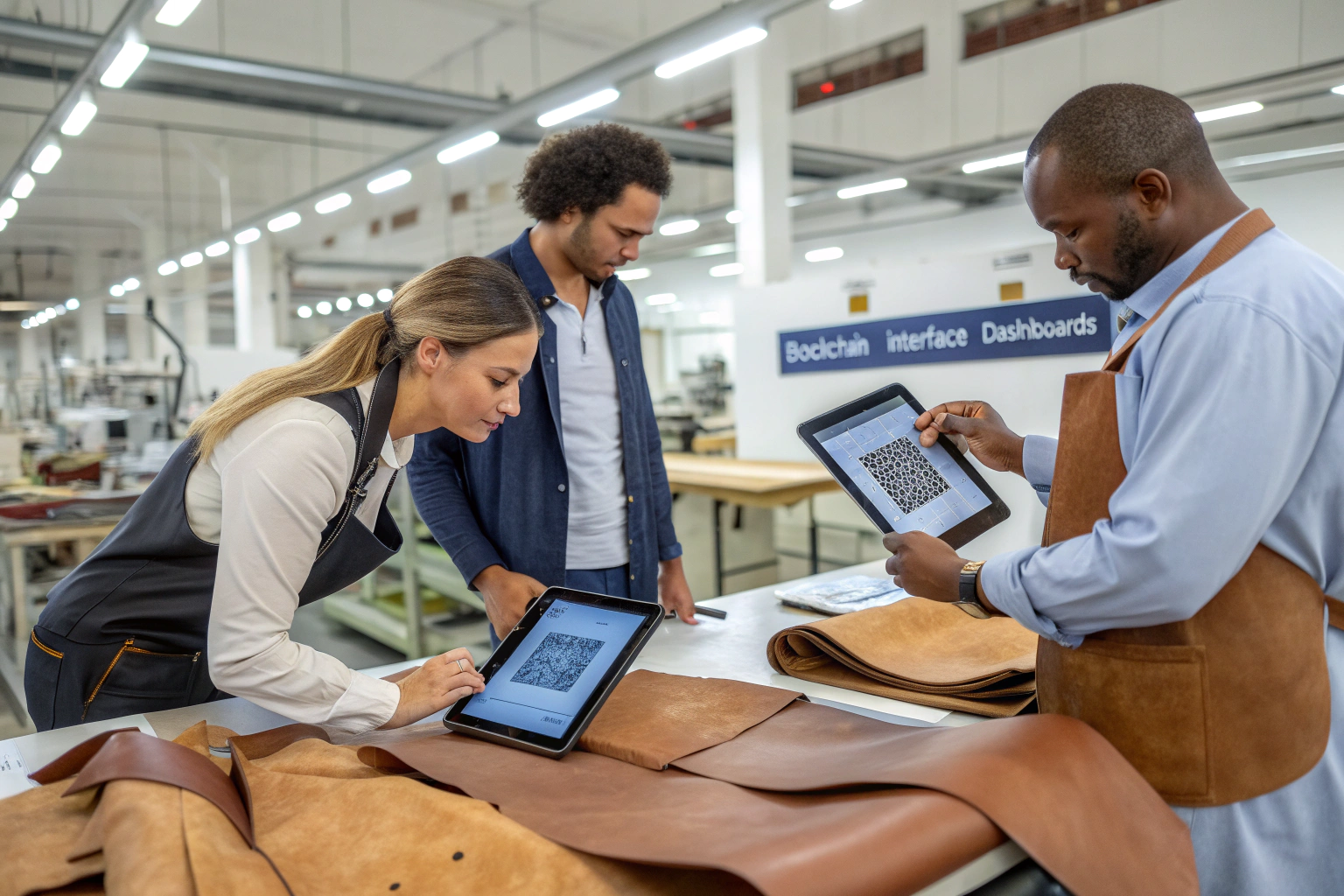
Physical-digital linking technologies create accessible entry points for blockchain verification. QR code integration allows each leather piece to carry its digital history, enabling quick verification by retailers and consumers. These technologies make the sophisticated blockchain backend accessible through simple smartphone scanning, dramatically increasing usability throughout the supply chain.
What Are the Business Benefits Beyond Transparency?
While provenance verification is the primary driver for blockchain implementation, the technology delivers additional business advantages that improve operational efficiency and create new revenue opportunities.
Beyond ethical sourcing verification, blockchain implementation reduces administrative costs, minimizes dispute resolution time, and creates premium product positioning opportunities. The system also provides valuable supply chain analytics that help optimize inventory management and production planning based on real-time material tracking.

How Does Blockchain Create Premium Market Positioning?
Verifiable provenance allows brands to command higher prices by demonstrating authentic quality and ethical production. Products with blockchain verification can be positioned in premium market segments where consumers value transparency and are willing to pay for verified quality. This differentiation becomes increasingly valuable as market competition intensifies.
What Operational Efficiencies Does Blockchain Enable?
Automated verification reduces administrative overhead and speeds up supply chain transactions. The technology streamlines compliance documentation for international shipments and quality certifications, saving significant staff time previously devoted to manual verification processes. These efficiency gains often offset implementation costs within reasonable timeframes.
Conclusion
Implementing blockchain for leather provenance requires careful planning but delivers significant competitive advantages through enhanced transparency, operational efficiency, and market differentiation. By building a system that captures meaningful data at each supply chain stage and integrates smoothly with existing operations, leather manufacturers can meet growing consumer demand for ethical sourcing verification while improving their bottom line.
Ready to implement blockchain technology for your leather belt production? At StylishBelts, we're pioneering transparent supply chain solutions that add value for our partners. Contact our Business Director Elaine today at elaine@fumaoclothing.com to discuss how blockchain provenance can enhance your product offerings.