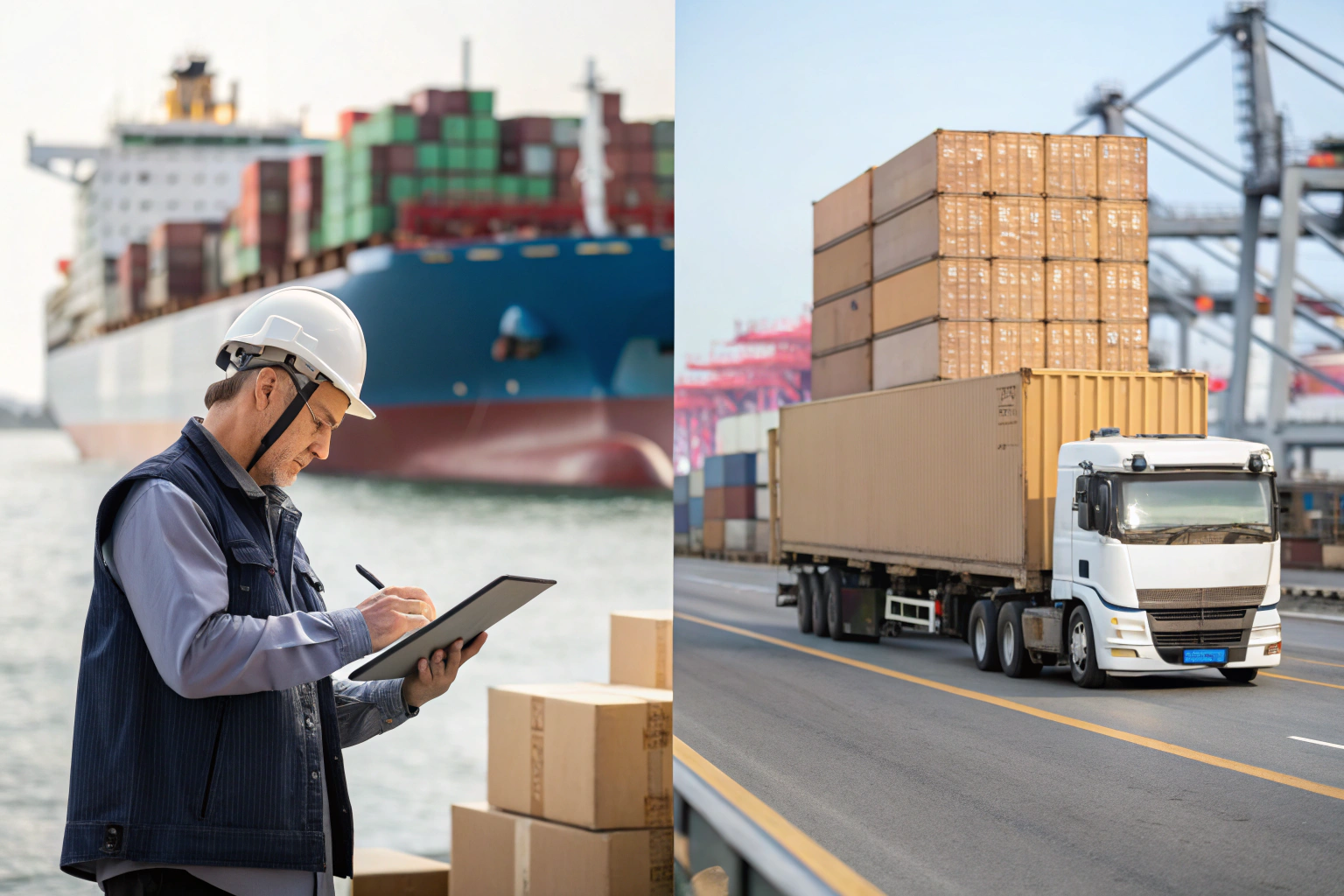
Shipping costs eat into your profits. Choosing between land and sea freight is confusing. Each mode has different costs and benefits. Getting the best rate requires knowledge and strategy.
Negotiating belt freight costs effectively requires understanding the fundamental differences between land and sea transport. For land freight, focus on truckload consolidation and route optimization. For sea freight, leverage container space and sailing schedules. Always factor in your timeline, as air freight becomes necessary for urgent shipments despite higher costs.
This guide breaks down the negotiation process for both land and sea freight. You will learn specific tactics to reduce costs for each mode. We will also show you how to work with your supplier to optimize the entire shipping process.
What Are the Core Cost Drivers for Land and Sea Freight?
Understanding what you are paying for is the first step in negotiation. Land and sea freight have very different cost structures. Ignoring these differences will lead to overpaying.
Sea freight costs are dominated by ocean charges and terminal fees. The base price is the freight rate, but you also pay for fuel (Bunker Adjustment Factor - BAF), currency changes (Currency Adjustment Factor - CAF), and port handling. Land freight, like trucking from a Chinese port to an inland city, is priced by distance, truck type, and road tolls. Knowing these components allows you to discuss them separately with your forwarder.

How Does Shipping Volume Directly Impact Your Rate?
Volume is your strongest negotiating tool. For sea freight, you pay per container. A Full Container Load (FCL) gives you a much lower cost per unit than Less than Container Load (LCL). For example, shipping one cubic meter (CBM) as LCL might cost $120, while a full 20ft container (holding 25 CBM) might cost $1,800 total—that's only $72 per CBM. We always advise clients to consolidate orders for FCL savings.
For land freight, the principle is similar. A full truckload (FTL) is cheaper per kilogram than a less-than-truckload (LTL) shipment. When you provide your supplier with a forecast of your volume, they can plan consolidation with other orders, securing you a better rate. This practice of consolidation in logistics is a key strategy for cost reduction on both land and sea.
What Hidden Fees Should You Anticipate and Challenge?
The quoted price is rarely the final price. Both sea and land freight have accessorial charges. For sea freight, expect fees like Terminal Handling Charges (THC), Bill of Lading fees, and customs documentation fees. For land freight in China, you might encounter charges for loading/unloading or special permits.
Always ask your freight forwarder or supplier for a comprehensive list of all potential fees. You can and should negotiate many of these "standard" charges. For instance, the Bill of Lading fee is often inflated. By understanding the purpose of each fee, you can question its necessity and cost, potentially saving 5-10% on your total freight bill.
How to Leverage Incoterms in Freight Negotiations?
Incoterms define who pays for what in the shipping process. Using the right Incoterm gives you control and cost visibility. A misstep here can transfer unexpected costs to you.
If you want maximum control over freight costs, choose FOB (Free On Board). With FOB, you own the goods once they are on the vessel. You hire and pay the shipping line directly, allowing you to negotiate ocean freight rates with your own forwarder. This is often cheaper than relying on your supplier's forwarder. We support our clients by preparing all necessary export documentation for FOB shipments.

When Should You Choose EXW vs. FOB for Belt Shipments?
EXW (Ex-Works) means you take responsibility at the factory gate. You pay for everything: trucking to the port, port fees, and ocean freight. EXW can be cheaper if you have a strong logistics partner in China who can get better local rates than your supplier. However, it requires more hands-on management from you.
FOB is often better for most importers. It strikes a balance between cost control and management effort. Your supplier handles the tricky domestic logistics and port procedures in China, and you take over for the main ocean leg. Understanding the difference between EXW and FOB is crucial for deciding how much logistical responsibility you are willing to bear to save on costs.
How Can CIF Terms Limit Your Negotiating Power?
CIF (Cost, Insurance, and Freight) means your supplier arranges and pays for the main carriage and insurance. While it seems convenient, it removes your power to choose the carrier or negotiate the freight rate. The supplier's forwarder may not have the best rates, and the cost might be hidden within the product price.
We generally advise against CIF for experienced importers. You lose visibility into the true shipping cost and have less control over the carrier selection. If you must use CIF, insist on knowing the shipping line and the insurance coverage details. This ensures you are not paying a premium for a slow shipping service that doesn't meet your timeline needs.
What Timing Strategies Reduce Belt Shipping Costs?
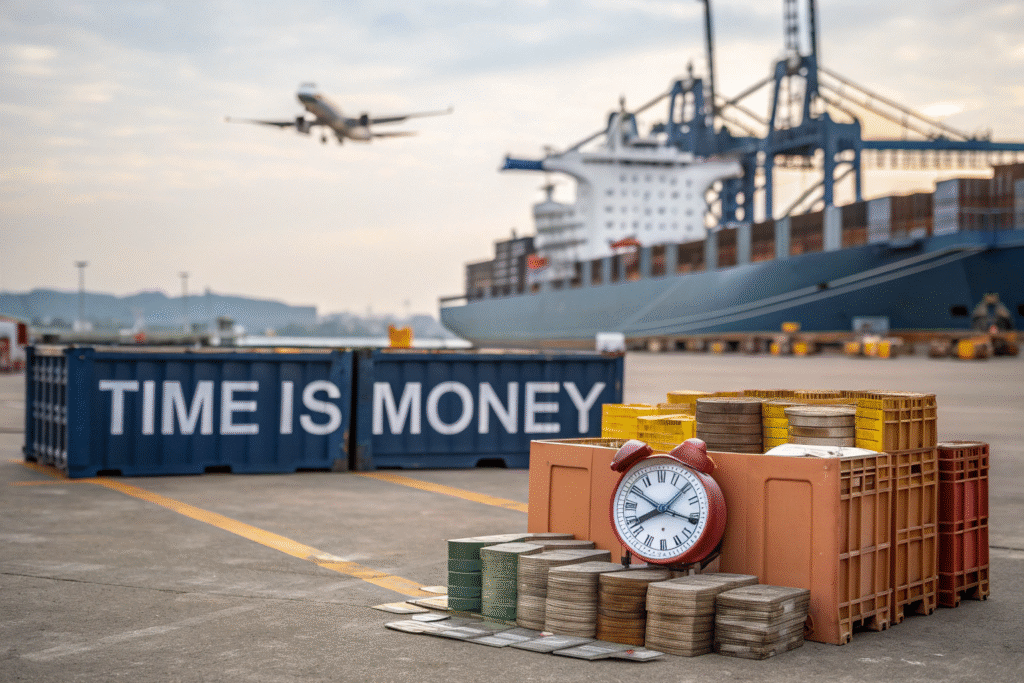
Time is money in logistics. When you need belts quickly, you pay a premium. Planning ahead is the single most effective way to reduce freight costs.
Sea freight is the cheapest but slowest option. The key to saving money is to plan your production cycle far in advance. This allows you to avoid the high cost of air freight or premium sea freight services. We work with our clients on a production forecast, so we can schedule manufacturing to catch slower, cheaper sailing dates.
How Does Lead Time Planning Affect Your Freight Options?
Longer lead times give you flexibility. You can wait for a cheaper "slow boat" instead of paying for an express shipping service. For instance, a standard sea freight service from China to the US might take 30 days and cost $2,500 per container. A premium service might take 20 days but cost $4,000. With good planning, you can save that $1,500.
A shorter lead time forces your hand. You may have to choose air freight, which can be 5-6 times more expensive than sea freight. By sharing your sales forecasts with us, we can help you create a production planning schedule that aligns with cost-effective shipping windows, protecting your profit margins.
Is Combining Shipments a Viable Cost-Saving Tactic?
Absolutely. Order consolidation is a powerful tactic. Instead of shipping multiple small LCL shipments per month, combine them into one monthly FCL shipment. The cost savings are significant. We help our clients by offering flexible warehousing in Zhejiang. You can produce different belt styles throughout the month, and we consolidate them into one full container at the end of the cycle.
This strategy also applies to land freight. Consolidating goods from different factories in the same region into one truckload for the port journey reduces costs. This approach, known as cross-docking in supply chain management, minimizes storage time and handling, getting your goods on the water faster and cheaper.
How to Build a Partnership with Your Supplier for Better Logistics?
Your belt supplier should be your logistics ally. A cooperative relationship leads to smoother and cheaper shipping. They are on the ground and have local knowledge you lack.
A good supplier will proactively suggest ways to optimize your shipping. This can include the best port to use, the most reliable forwarders, and packaging designs that maximize container space. Our project managers act as your logistics consultants, using our years of experience to guide your decisions and connect you with trusted partners.

What Logistics Value-Added Services Can a Supplier Offer?
Look for a supplier who goes beyond just making belts. Can they provide warehousing for consolidation? Do they have in-house expertise for export documentation and customs declaration? These services prevent costly errors and delays. We handle all export formalities for our clients, ensuring a smooth transition from our factory to the shipping line.
Another key service is packaging optimization. We design cartons to fit perfectly into containers, avoiding wasted space. This is called maximizing container utilization. By using every cubic inch efficiently, we reduce the number of containers you need, directly cutting your sea freight costs.
How Does Transparent Communication Prevent Costly Errors?
Miscommunication causes delays and extra fees. If shipping marks are wrong, the goods can be held at customs. If the Bill of Lading has an error, it costs $100 or more to amend it. Clear, timely communication between you, your supplier, and your forwarder is essential.
We establish a single point of contact for all logistics discussions. This person ensures that all details—from HTS codes to final destination—are accurately communicated to all parties. This level of project management in logistics prevents expensive mistakes and builds a foundation of trust, making all future negotiations, including freight costs, much easier.
Conclusion
Negotiating freight costs is a detailed process. You must understand the cost drivers of land and sea transport, use Incoterms to your advantage, plan your timing strategically, and work closely with your supplier. Mastering these areas will significantly reduce your logistics expenses and improve your supply chain's reliability.
Ready to optimize your belt shipping and reduce costs? Partner with a factory that understands global logistics. Contact our Business Director, Elaine, at elaine@fumaoclothing.com to discuss how we can streamline your supply chain from our production line to your warehouse.