Your belt imports are plagued by unexpected charges, customs delays, and logistical nightmares that eat into your profit margins and strain customer relationships. The complexity of international shipping—with its maze of duties, taxes, and documentation requirements—turns what should be straightforward belt imports into administrative burdens that distract from your core business.
Negotiating DDP (Delivered Duty Paid) terms for hassle-free belt imports involves securing comprehensive door-to-door pricing, clarifying responsibility boundaries, establishing clear communication protocols, and building cost transparency that eliminates surprise charges. Successful DDP arrangements transform belt importing from a logistical challenge into a predictable business process where suppliers manage complexity while you focus on sales and marketing.
The shift toward DDP terms represents a fundamental change in international trade relationships, particularly for fashion accessories like belts where timely delivery and cost predictability directly impact business performance. Understanding how to negotiate these terms effectively can transform your import experience.
What Exactly Should DDP Cover for Belt Imports?
Many importers mistakenly believe DDP simply means "all costs included," but truly comprehensive DDP arrangements for belts specify exact responsibilities across the entire supply chain. Vague DDP agreements often lead to disputes when unexpected costs emerge.
A proper DDP agreement for belt imports should explicitly cover factory collection, export documentation, international freight, insurance, customs clearance, import duties and taxes, terminal handling, final delivery, and all associated administrative costs. Each element requires precise definition to prevent misunderstandings.
What Transportation Components Must Be Specified?
Comprehensive DDP terms should include all freight charges from factory to your warehouse, specifying whether transport includes full container loads (FCL) or less than container loads (LCL) for belt shipments. The agreement should detail insurance coverage value and specific risks covered, particularly important for leather belts susceptible to water damage or temperature extremes. For European imports, DDP should explicitly include EU import formalities and VAT payment, while US imports must cover customs bond costs and MPF fees. These specifications prevent carriers from adding surcharges for services you assumed were included.
Which Customs Responsibilities Should Suppliers Assume?
Under proper DDP terms, suppliers must handle complete customs clearance including HS code classification for belts (typically 4203.30), value declaration documentation, and payment of all import duties and taxes. For leather belts, this includes providing materials documentation for restricted substance compliance, while synthetic belts require chemical composition declarations. The supplier should also manage country-specific requirements like Russian FCS certification for leather goods or US CPSC requirements for children's belts. These clear responsibility definitions prevent costly customs delays.
How to Negotiate Cost Transparency in DDP Agreements?
The greatest risk in DDP agreements comes from hidden costs and ambiguous charges that emerge after shipment. Negotiating true cost transparency requires specific strategies that protect importers from unexpected expenses.
Cost transparency negotiation involves securing fixed versus variable cost identification, establishing change order procedures, implementing audit rights, and creating cost benchmarking against market rates. Each element ensures you understand exactly what you're paying for and why.

What Cost Breakdown Should Suppliers Provide?
Reputable suppliers should provide a detailed cost breakdown separating fixed manufacturing costs from variable logistics components. This should include per-belt production cost, consolidation fees if shipping LCL, specific duty rates applied to your belt classification, and documentation processing charges. For leather belts, the breakdown should specify additional handling costs for temperature-controlled transport if required. This transparency allows you to verify each cost component against market rates and identify potential overcharges before finalizing agreements.
How Can You Protect Against Mid-Transit Surcharges?
Establish clear contractual language requiring supplier absorption of all cost increases except officially published duty/tax changes or force majeure events. Implement a change order process requiring written approval for any additional charges, with predetermined markup limits on pass-through costs. Secure quarterly rate reviews comparing your DDP costs against industry benchmarks for similar belt importsThese protections prevent the common practice of suppliers adding unexpected charges for services like extended terminal storage or special customs examination that should be included in comprehensive DDP pricing.
What Communication Protocols Ensure DDP Success?
Even perfectly priced DDP terms fail without effective communication protocols that keep importers informed throughout the shipping process. Poor communication turns minor delays into major disruptions.
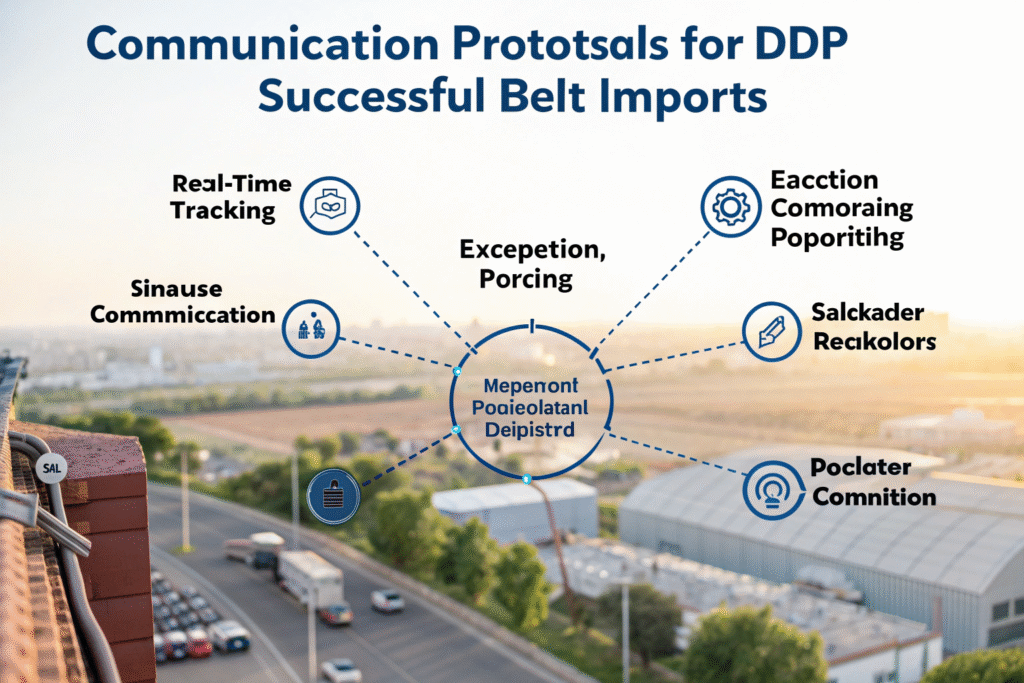
Successful DDP communication involves establishing real-time tracking access, defining exception reporting requirements, creating escalation procedures for problems, and implementing performance measurement systems. Each protocol ensures you maintain visibility and control despite transferring operational responsibility to suppliers.
What Tracking and Reporting Should DDP Include?
Comprehensive DDP agreements should provide real-time shipment tracking with GPS container monitoring for high-value belt shipments. Suppliers should deliver weekly status reports including customs clearance progress, vessel schedules, and estimated arrival updates. For leather belts requiring specific environmental conditions, monitoring should include temperature and humidity data throughout transit. This visibility allows you to manage inventory expectations and communicate accurately with customers about delivery timelines.
How Should Problem Escalation Be Structured?
Establish a clear escalation matrix defining response time requirements for various issues, from customs documentation problems (4-hour response) to transportation delays (24-hour notification). Designate specific contacts at each supply chain stage—factory, freight forwarder, customs broker, final carrier—with backup contacts for each role. Implement weekly operational reviews during your first three DDP shipments to identify and resolve process issues before they become patterns. These protocols transform potential crises into manageable operational challenges.
How to Structure DDP Agreements for Different Belt Types?
Not all belts have the same DDP requirements, and successful negotiations recognize these differences. Luxury leather belts, volume synthetic belts, and specialized technical belts each demand customized DDP approaches.
DDP structuring variations include different insurance requirements based on belt value, specialized handling for sensitive materials, compliance documentation for specific markets, and economies of scale considerations for volume shipments. Each factor influences how DDP terms should be negotiated.

How Do Luxury Belt Requirements Differ?
Luxury leather belts with values exceeding $200 per unit require enhanced insurance coverage often costing 0.5-1.5% of declared value versus 0.2-0.5% for standard belts. Their DDP terms should include white-glove delivery services with appointment scheduling and signature requirements. For exotic leather belts from protected species, DDP must include CITES certification management and special customs procedures. These specialized requirements justify premium DDP pricing while protecting valuable inventory.
What Volume Considerations Impact DDP Economics?
High-volume belt imports (10,000+ units monthly) can negotiate DDP rate structures based on annual volume commitments rather than per-shipment pricing. This approach typically reduces costs 15-25% through consolidated container utilization, simplified customs clearance through repetitive shipments, and reduced administrative overhead. Volume DDP agreements should include dedicated account management, quarterly business reviews, and performance-based rebates for exceeding service targets. These elements create partnership relationships rather than transactional arrangements.
Conclusion
Negotiating effective DDP terms for belt imports requires moving beyond simple "all-inclusive" pricing to create comprehensive agreements that specify responsibilities, ensure cost transparency, establish communication protocols, and accommodate product-specific requirements. When properly structured, DDP arrangements transform belt importing from a logistical burden into a competitive advantage, allowing you to focus on growing your business while suppliers manage supply chain complexity. The negotiation effort invested upfront pays dividends through predictable costs, reliable delivery, and reduced administrative workload throughout your import relationship.
If you're considering DDP terms for your belt imports and want to ensure hassle-free implementation, contact our Business Director, Elaine. Our expertise in international belt logistics can help you negotiate favorable DDP arrangements that protect your interests while simplifying your supply chain. Reach her at elaine@fumaoclothing.com to discuss your DDP import strategy.