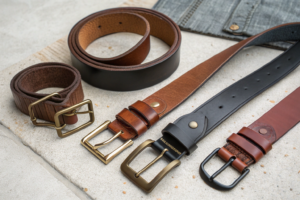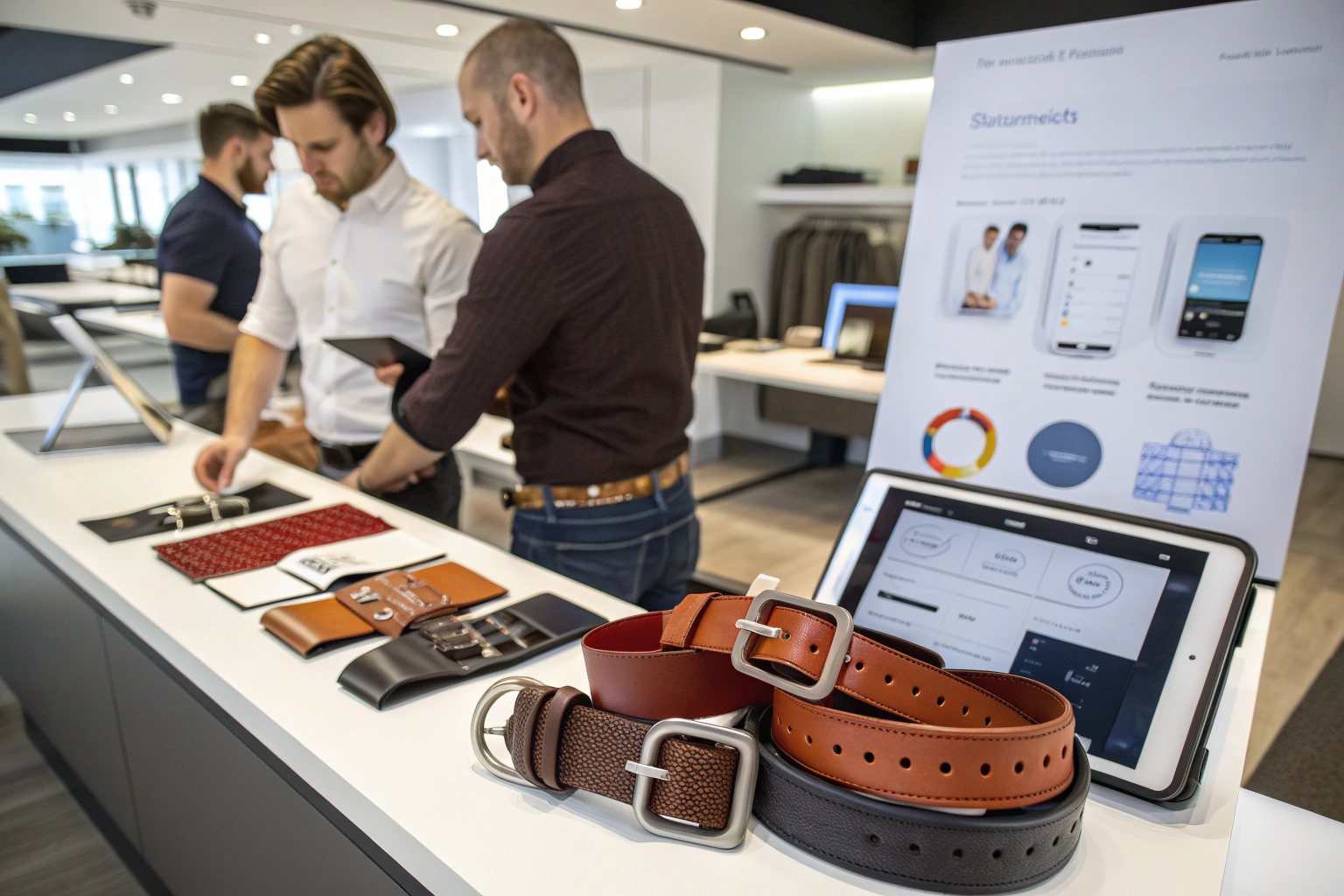
The online belt market faces a fundamental challenge: size uncertainty remains the primary barrier to conversion and the leading cause of returns. Innovative brands are addressing this through integrated sizing solutions that guide customers to perfect fit before purchase. These complimentary tools range from simple printable guides to sophisticated augmented reality applications, each offering different advantages for various market segments and price points.
Sourcing belts with complimentary sizing tools requires identifying manufacturers with technical capabilities, selecting appropriate sizing technologies, integrating these tools into e-commerce platforms, and ensuring accuracy through continuous calibration. The most successful implementations combine multiple sizing methods to accommodate different customer preferences and technical capabilities, creating a safety net that catches sizing uncertainty before it becomes a returned order.
As e-commerce competition intensifies, complimentary sizing tools have transformed from competitive advantages to customer expectations for serious belt retailers. Understanding how to source these integrated solutions reveals important insights about the future of accessories e-commerce and customer experience optimization.
What Sizing Technologies Are Most Effective?
Different sizing technologies serve various customer segments and price points, with the most comprehensive programs offering multiple options to accommodate user preferences and technical capabilities.
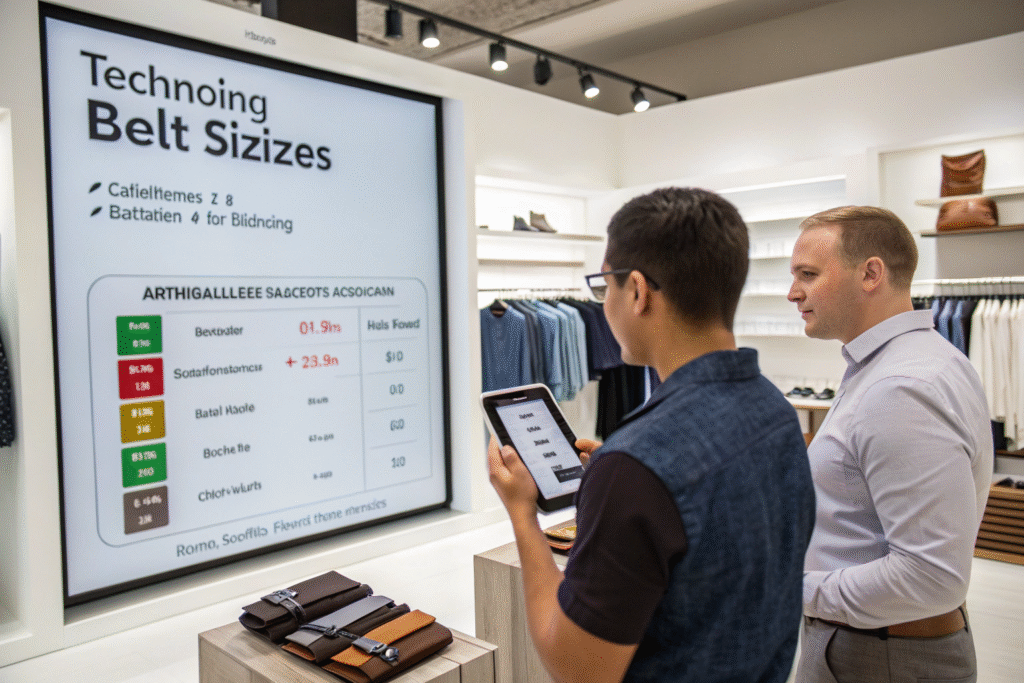
How Do Printable Sizing Guides Provide Foundation?
Printable sizing guides represent the most accessible entry point for complimentary sizing tools, requiring only basic printer capabilities from customers. These PDF tools typically include a verification scale to ensure proper printing size, followed by visual instructions for measuring existing belts or determining waist size. The most effective designs incorporate multiple measurement methods since customers may not have their perfect-fitting belt available for comparison.
The sophistication of printable guides varies significantly—from simple ruler strips to comprehensive systems that measure both belt length and width to ensure compatibility with existing loops. Advanced versions include hole-spacing guides that help customers visualize where new holes would fall on different belt sizes. While less technologically impressive than digital solutions, printable guides serve customers with privacy concerns, limited technology access, or preference for tactile measurement methods.
What Role Do AR Mobile Applications Play?
Augmented reality sizing tools utilize smartphone cameras to superimpose virtual belts onto the user's body or measure their existing belts against standardized references. The most advanced systems combine computer vision for object measurement with body tracking for waist estimation, creating multiple data points that cross-verify for accuracy. These applications typically require users to place a standard object (like a credit card) in frame for scale calibration before capturing measurements.
The advantage of AR solutions lies in their ability to measure both the customer's body and their existing ideal-fitting belts, reconciling any discrepancies through algorithmic probability. For instance, if a customer's current belt measures 42 inches but their waist measures 38 inches, the system might recommend a 40-inch belt based on the common preference for mid-hole positioning. This intelligent interpretation of conflicting data significantly outperforms simple measurement tools that lack contextual understanding.
How Should Sizing Tools Be Integrated Into E-commerce?
The implementation strategy for sizing tools determines whether customers actually use them or abandon the process due to complexity or confusion.

What Placement Strategies Maximize Tool Utilization?
Strategic placement of sizing tools within the e-commerce conversion funnel significantly impacts utilization rates. The most effective implementations introduce sizing assistance at three critical junctures: on product category pages as a general educational resource, on individual product pages near the size selection dropdown, and in the shopping cart as a final verification step before purchase. This multi-point approach catches customers at different stages of consideration.
The most successful sizing tool integrations use non-intrusive but persistent triggers—a subtle "Unsure of size?" link near the size selector, a "Find your perfect fit" button in the product image gallery, or a "We recommend size 38 based on your previous purchases" message for returning customers. These contextual placements feel helpful rather than pushy, addressing sizing anxiety precisely when it emerges in the shopping process rather than requiring proactive tool seeking.
How Can Data Collection Improve Sizing Accuracy?
Sizing tools generate valuable fit data that continuously improves recommendation accuracy when properly leveraged. Systems that track which size recommendations resulted in successful purchases (no returns or exchanges) create feedback loops that refine their algorithms. The most sophisticated implementations correlate customer-provided measurements with their eventual size selection, identifying patterns like consistent preference for longer or shorter sizing than strict measurements would suggest.
This data collection proves particularly valuable for identifying regional sizing preferences, demographic variations in fit expectations, and style-specific sizing considerations. For example, the data might reveal that customers consistently size up in woven fabric belts compared to leather options, or that European customers prefer different fit than North American customers with identical measurements. These insights enable increasingly precise recommendations that reduce returns while building customer confidence in the sizing process.
What Technical Requirements Must Suppliers Meet?
Sourcing belts with integrated sizing tools requires manufacturers with specific technical capabilities and data integration willingness.

What Production Consistency Ensures Sizing Accuracy?
Manufacturers must maintain exceptional production consistency to ensure sizing tools provide reliable recommendations. Even advanced sizing technology fails if belt lengths vary significantly within the same marked size. The most reliable suppliers implement statistical process control monitoring of critical dimensions: buckle to center hole distance, hole spacing consistency, and total length tolerance. This manufacturing precision ensures that a customer who receives multiple "size 38" belts experiences identical fit across all purchases.
Beyond basic length accuracy, premium suppliers control additional variables that affect perceived fit: belt stiffness that affects how much length is consumed in the buckle, thickness that impacts how belts feed through loops, and taper rates that influence where the belt tip falls. This comprehensive dimensional management requires specialized equipment and rigorous quality control processes that distinguish technical manufacturers from basic producers.
How Do API Integrations Support Sizing Ecosystems?
Advanced sizing implementations require API integrations between e-commerce platforms, sizing tools, and inventory management systems. These integrations ensure that sizing recommendations consider real-time stock availability—steering customers toward in-stock sizes rather than recommending backordered options. The most sophisticated systems incorporate manufacturing lead times, recommending ready-to-ship sizes for urgent needs while presenting made-to-order options for less time-sensitive purchases.
The API ecosystem extends to post-purchase feedback loops where return reasons are categorized and fed back into sizing algorithms. If multiple customers return a specific belt style for being too large despite the sizing tool's recommendation, the system automatically adjusts future recommendations for that style. This continuous learning transforms sizing from a static measurement process to a dynamic system that improves with each customer interaction.
What Business Benefits Justify the Investment?
The implementation costs of complimentary sizing tools must be weighed against significant business benefits that extend beyond simple return reduction.
| Business Benefit | Implementation Impact | ROI Timeframe |
|---|---|---|
| Return Rate Reduction | 25-40% decrease in size-related returns | 3-6 months |
| Conversion Rate Increase | 15-30% improvement for users of sizing tools | 1-3 months |
| Average Order Value Lift | 12-18% increase when customers buy multiple sizes confidently | 6-12 months |
| Customer Loyalty Improvement | 45% higher repeat purchase rate from sizing tool users | 12-18 months |
| Data Asset Creation | Valuable fit database improves product development | Ongoing |

How Do Sizing Tools Reduce Operational Costs?
The most immediate financial benefit comes from dramatically reduced return rates that lower operational costs across multiple dimensions. Fewer returns mean reduced reverse logistics expenses, less inspection and restocking labor, decreased inventory distortion, and lower loss from products that cannot be resold as new. These savings typically justify the sizing tool investment within 2-3 return cycles, with continuing benefits as the system improves.
The cost avoidance extends to customer service operations, as sizing tools answer the most common pre-purchase questions without human intervention. This deflection of routine inquiries allows service teams to focus on complex issues that truly require human expertise. The resulting improvement in both efficiency and service quality creates a virtuous cycle where satisfied customers generate positive reviews that attract new business.
How Do Sizing Tools Enhance Customer Lifetime Value?
Customers who experience successful first purchases through sizing tools demonstrate significantly higher lifetime value through multiple mechanisms. The initial confidence in fit establishes trust that translates to broader catalog exploration, while the saved time and eliminated frustration of returns creates loyalty that withstands occasional price differences. These customers also become valuable referral sources, sharing their positive sizing experiences within their networks.
The data generated through sizing interactions enables increasingly personalized marketing that further enhances lifetime value. Knowing a customer's precise size preferences, style inclinations revealed through their sizing tool usage, and purchase confidence level allows for targeted communications that feel helpful rather than intrusive. This sophisticated personalization transforms the customer relationship from transactional to consultative, with the brand increasingly understanding and anticipating the customer's needs.
Conclusion
Sourcing belts with complimentary sizing tools represents a strategic evolution in accessories e-commerce that addresses the fundamental challenge of fit uncertainty. The most successful implementations combine multiple technologies to serve diverse customer preferences while continuously improving through data collection and analysis. The resulting systems transform size selection from a guessing game into a precise science that benefits both customers and retailers.
The business case for integrated sizing tools extends beyond immediate return reduction to encompass higher conversion rates, increased average order values, enhanced customer loyalty, and valuable data assets that improve product development. As these technologies become more sophisticated and expected by consumers, they transition from competitive advantages to table stakes for serious belt retailers.
Ready to source belts with integrated sizing tools for your e-commerce business? Contact our Business Director, Elaine, at elaine@fumaoclothing.com to discuss our technical manufacturing capabilities and sizing tool partnerships that can reduce returns while increasing customer satisfaction.