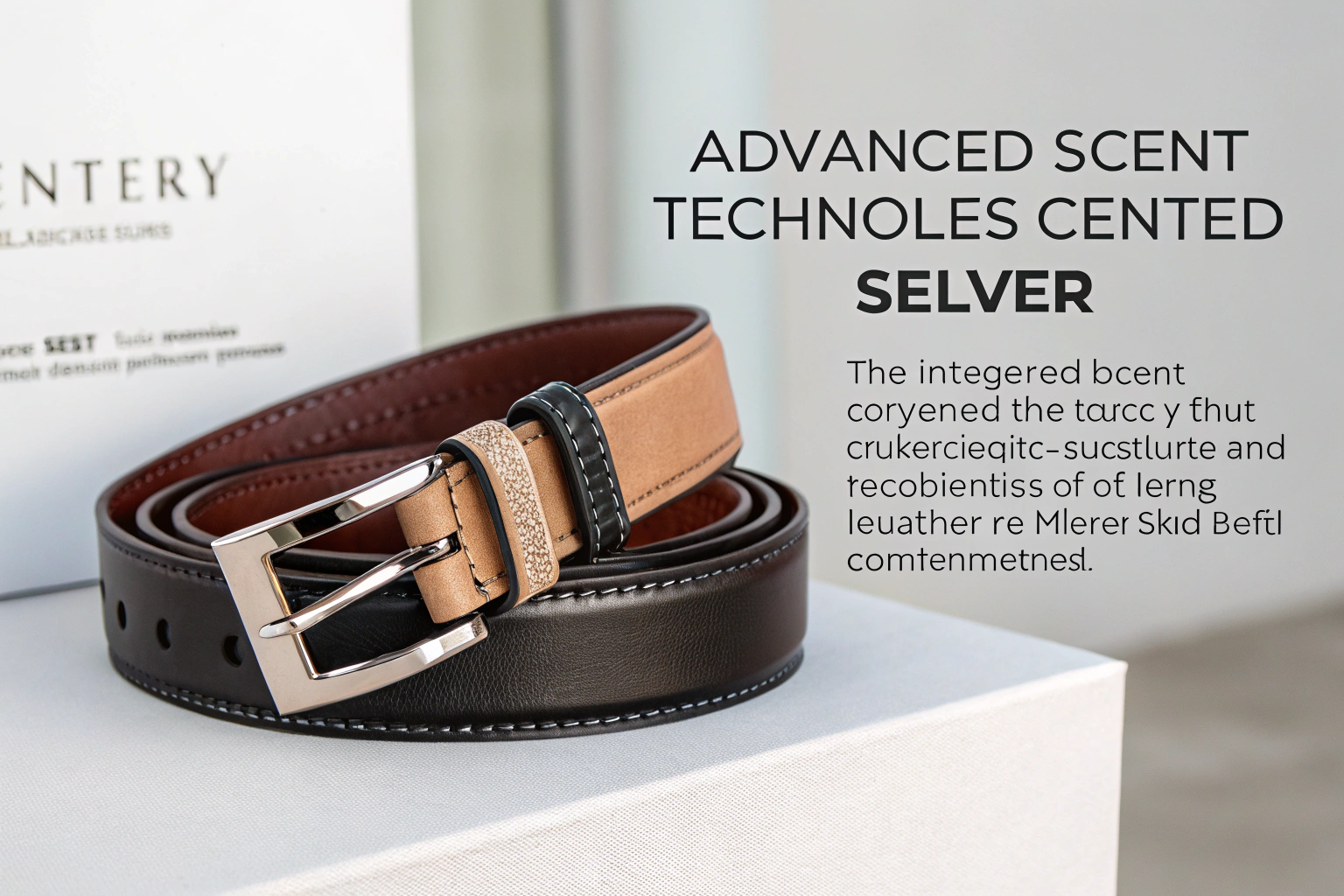
Imagine a leather belt that doesn't just look and feel premium, but carries a signature scent—whether it's the classic aroma of cedar and tobacco, a fresh coastal breeze, or even a brand's bespoke fragrance. This multi-sensory experience is moving from perfumery into personal accessories, creating a powerful new dimension in product personalization. But how do you practically source belts that can carry a custom scent effectively and lastingly? This venture sits at the intersection of fragrance chemistry, material science, and precision manufacturing, requiring specialized partners and a clear understanding of the technologies involved.
To source belts with custom scent options, you must partner with manufacturers that master scent encapsulation and infusion technologies, have access to IFRA-compliant fragrance oil suppliers, and possess the technical expertise to integrate these fragrances into leather or textiles without compromising durability. The process involves selecting a scent delivery system (micro-encapsulation, direct infusion, scent pods), developing the custom fragrance profile, and rigorously testing for longevity, stability, and skin safety.
For brands in luxury fashion, corporate gifting, or experiential retail, scented belts offer a unique avenue for differentiation, customer engagement, and creating memorable unboxing experiences. Let's navigate the olfactory journey from concept to a sustainably fragrant product.
What Are the Primary Technologies for Scent Integration?
The core challenge is making scent last. Spraying perfume on leather is temporary and can damage the material. True integration requires binding the fragrance to the material itself in a way that allows for controlled, sustained release over weeks or months. Different technologies offer varying balances of intensity, longevity, and customization.
The primary technologies are: Micro-Encapsulation, where fragrance oils are trapped in microscopic polymer shells embedded in the material, released by friction or heat; Direct Leather Infusion, where scented oils are incorporated during the tanning or fatliquoring stage; and Modular Scent Systems, where a replaceable scent cartridge or clip is attached to the belt. Each method has distinct implications for scent strength, longevity (from weeks to the life of the belt), MOQ, and cost.

How Does Micro-Encapsulation Work for Longevity?
This is the most advanced and common method for wearable scent. The process involves:
- Creating the Capsules: Fragrance oil is surrounded by a polymer shell (often melamine-formaldehyde or gelatin-gum arabic) via coacervation or spray drying. These capsules are typically 10-50 micrometers in size.
- Application: The dry microcapsules are mixed into a water-based binder and applied to the backing (flesh side) of the leather or the inner layer of a fabric belt via padding, coating, or foam finishing. They can also be added to the finishing coat.
- Release Mechanism: The capsules are designed to rupture under mechanical stress (friction from movement, flexing) or in response to body heat, releasing small bursts of fragrance throughout the day. This can provide a scent life of 3-12 months with regular wear.
The key advantage is a consistent, low-level release that renews itself with movement. Your manufacturer must work with a specialist in textile micro-encapsulation.
What is the Process of Direct Leather Infusion?
This method bakes the scent into the leather itself, potentially for its lifetime. It's more traditional and used for classic "aroma leathers."
- During Tanning/Fatliquoring: Specially formulated, leather-compatible fragrance oils are added to the fatliquor emulsion during the drumming process. The leather fibers absorb the scented oils along with the conditioning fats.
- Post-Tanning Application: Scented oils can be applied to the finished leather via a misting or tumble drum application, allowing them to penetrate the surface.
This method creates a more subtle, all-pervading scent that emerges from the leather's core, especially when warmed by the body. It's ideal for creating a signature "base note" like sandalwood, cedar, or aged leather. The challenge is ensuring the fragrance chemicals don't interfere with the leather's durability or cause discoloration.
How to Develop and Source a Custom Fragrance?
Creating a custom scent is a specialized art and science. You're not just picking a pre-made oil; you're developing a fragrance profile that aligns with your brand identity, performs well in the medium (leather/textile), and is safe for prolonged skin contact. This requires working with fragrance houses or specialized flavor & fragrance (F&F) suppliers.
The development process involves: briefing a perfumer or fragrance house with your concept (e.g., "rustic library," "alpine forest," "clean linen"); creating and iterating on scent mods (sample formulations); conducting performance testing on leather swatches for scent profile, longevity, and material compatibility; and ensuring full regulatory compliance (IFRA, REACH) for skin contact and intended use. The final custom fragrance oil will be your exclusive intellectual property.
What is the Role of a Fragrance House and Perfumer?
A fragrance house is essential. They provide:
- Creative Direction: Translating abstract brand values into a scent accord (combination of notes).
- Technical Formulation: Balancing top notes (initial impression), middle notes (heart), and base notes (long-lasting foundation) to work with your chosen delivery system. For micro-encapsulation, the formula must be optimized for stability within the capsule.
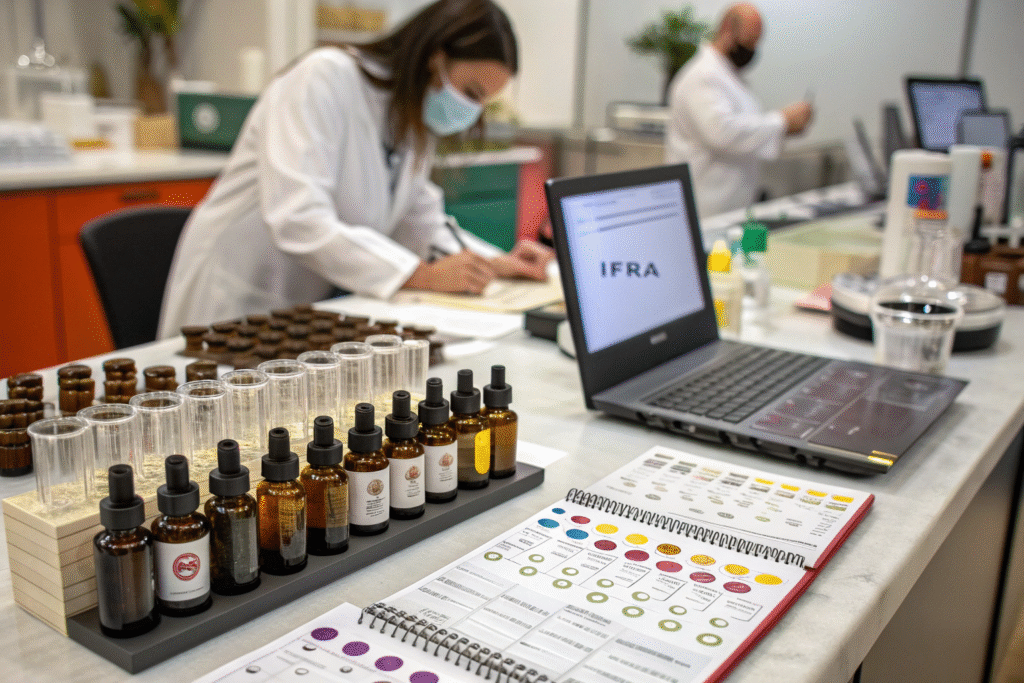
- Regulatory Expertise: Ensuring every ingredient conforms to the International Fragrance Association (IFRA) Standards and relevant regional regulations like REACH in Europe. This is non-negotiable for skin-contact products.
- Scale-up Support: Moving from a 50g lab sample to a 50kg production batch while maintaining scent fidelity.
Expect to pay significant NRE (Non-Recurring Engineering) costs for custom fragrance development, often ranging from $5,000 to $20,000+.
How to Ensure Safety and Compliance?
Skin contact for extended periods requires rigorous safety:
- IFRA Certification: Your fragrance oil must come with a Certificate of Conformity stating it meets IFRA standards for the specific application category (Category 5: "Products not intended to be applied on skin, but with occasional skin contact" or Category 4: "Body Creams/Oils" for higher exposure, depending on belt placement).
- Allergen Disclosure: Compliance with allergen labeling directives (e.g., 26 listed allergens in the EU) if any are present above threshold levels.
- Material Compatibility Testing: The fragrance must not degrade the leather (cause cracking, weaken fibers) or textile. The manufacturer should conduct accelerated aging tests.
Never skip this step. Liability for skin reactions or material failure falls on the brand.
What Are the Manufacturing and Sourcing Considerations?
Sourcing scented belts adds layers of complexity to standard manufacturing. Your belt factory may need to partner with a specialty finisher or invest in new equipment. The supply chain becomes multi-tiered: fragrance supplier -> encapsulation specialist -> belt manufacturer.
Key considerations include: finding a manufacturer with proven experience in scent application (ask for case studies); managing a multi-vendor supply chain; establishing quality control standards for scent intensity and consistency; addressing packaging requirements (sealed bags to prevent premature scent loss); and understanding the significant MOQs often required by fragrance and encapsulation suppliers, which can dictate minimum production volumes.

How to Vet a Manufacturer for Scent Application Capability?
Ask very specific questions during supplier qualification:
- "What specific scent application methods do you have in-house (coating, padding, infusion)? Can we visit the line?"
- "Who are your partners for micro-encapsulation or fragrance supply? Can you facilitate an introduction?"
- "What is your QC process for scent? How do you measure and ensure consistency of fragrance intensity across a production run?" (Answers should include olfactory panels and possibly gas chromatography for benchmarking).
- "How do you handle segregation to prevent scent cross-contamination between different batches in your factory?"
- "What is the expected scent longevity according to your wear-testing data, and what guarantees do you provide?"
A credible manufacturer will have a clear, documented process and may even offer small-batch prototyping services for scent testing.
What Are the Realistic MOQs and Cost Implications?
Be prepared for higher costs and minimums:
- Fragrance MOQ: Custom fragrance oil often has a minimum batch size of 25-50 kg. This is enough for thousands of belts.
- Encapsulation MOQ: The company that encapsulates your fragrance may have minimums of 100+ kg of encapsulated slurry.
- Belt Production MOQ: The belt factory's MOQ will apply on top of this.
- Cost Structure: The custom fragrance development (NRE) is a one-time cost. The fragrance oil itself adds $X per belt. The application process (encapsulation + coating) adds further cost per unit. A scented belt can easily cost 30-100% more to produce than an identical non-scented version.
This makes the product suitable for mid-to-high-volume runs or very high-margin luxury items.
How to Market and Position Scented Belts?
A scented belt is an experience product. Its marketing must tell a story that engages the imagination and justifies the premium. It's not about saying "it smells good"; it's about creating an emotional and mnemonic connection between the scent, the product, and the brand.
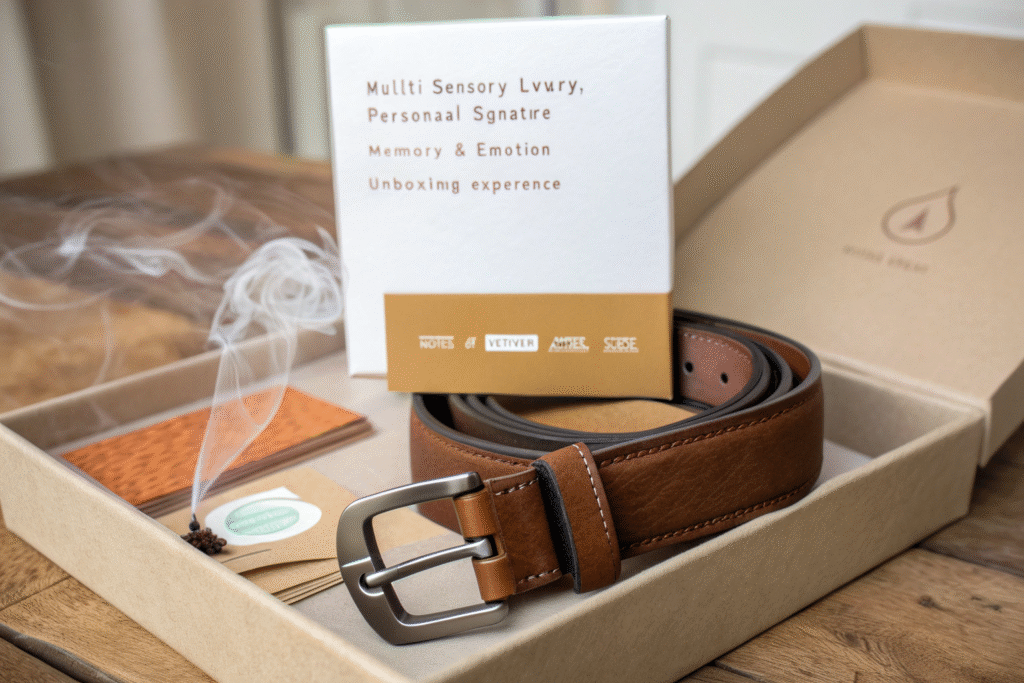
Effective marketing focuses on storytelling around the scent inspiration (heritage, place, emotion); positioning the belt as a personal signature or sensory accessory; highlighting the technical achievement of lasting scent integration; and leveraging the unboxing moment as a peak sensory experience. The scent should be an authentic extension of the brand's world, not a gimmick.
How to Craft a Compelling Scent Narrative?
The story is everything. For example:
- Heritage Narrative: "Our 'Archivist' scent captures the aroma of old libraries and supple bindings, infused into full-grain leather for a timeless experience."
- Place-Based Narrative: "Infused with the essence of the Pacific Northwest—cedar, rain-soaked earth, and coastal fir."
- Emotional Narrative: "A scent of confidence: crisp bergamot, smooth leather, and grounding vetiver."
Provide customers with a "scent profile" card, much like a perfume, listing top, heart, and base notes. This educates and elevates the purchase.
What Channels Are Best for This Product?
Given its experiential nature, certain channels excel:
- Direct-to-Consumer (DTC) E-commerce: Allows you to control the narrative and create immersive online content (video, descriptive copy). The unboxing is a key moment.
- High-End Retail/Boutiques: Where sales staff can explain the feature and let customers experience it firsthand.
- Corporate Gifting & Branding: A uniquely memorable gift. Companies can create a custom scent that embodies their brand values for executive gifts.
- Subscription/Scent Clubs: Partnering with fragrance subscription services to introduce the product to an already-engaged audience.
Avoid purely transactional marketplaces where the scent story cannot be effectively communicated.
Conclusion
Sourcing belts with custom scent options is a sophisticated endeavor that blends olfactory art with material science and precision manufacturing. Success requires navigating a specialized supply chain, investing in safe and compliant fragrance development, and partnering with manufacturers who understand the nuances of scent integration. The result, however, is a product with extraordinary depth—a belt that engages the often-neglected sense of smell to create stronger brand recall, emotional connection, and perceived value.
For brands willing to undertake this complex process, the reward is a significant point of differentiation in a crowded market. A well-executed scented belt transcends being an accessory; it becomes a personal artifact, a carrier of memory and identity, and a testament to a brand's commitment to multi-sensory innovation.
If you are ready to explore creating a signature scented collection that captivates customers on a deeper level, partnering with a manufacturer experienced in fragrance integration is crucial. We have established partnerships with leading encapsulation specialists and fragrance houses and can guide you through the entire development process. Contact our Business Director, Elaine, to begin the conversation about bringing your brand's scent story to life: elaine@fumaoclothing.com. Let's craft an experience that lingers.