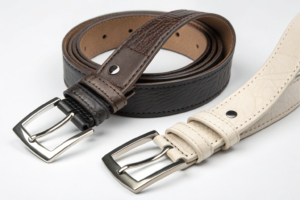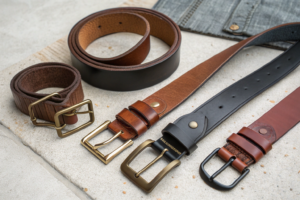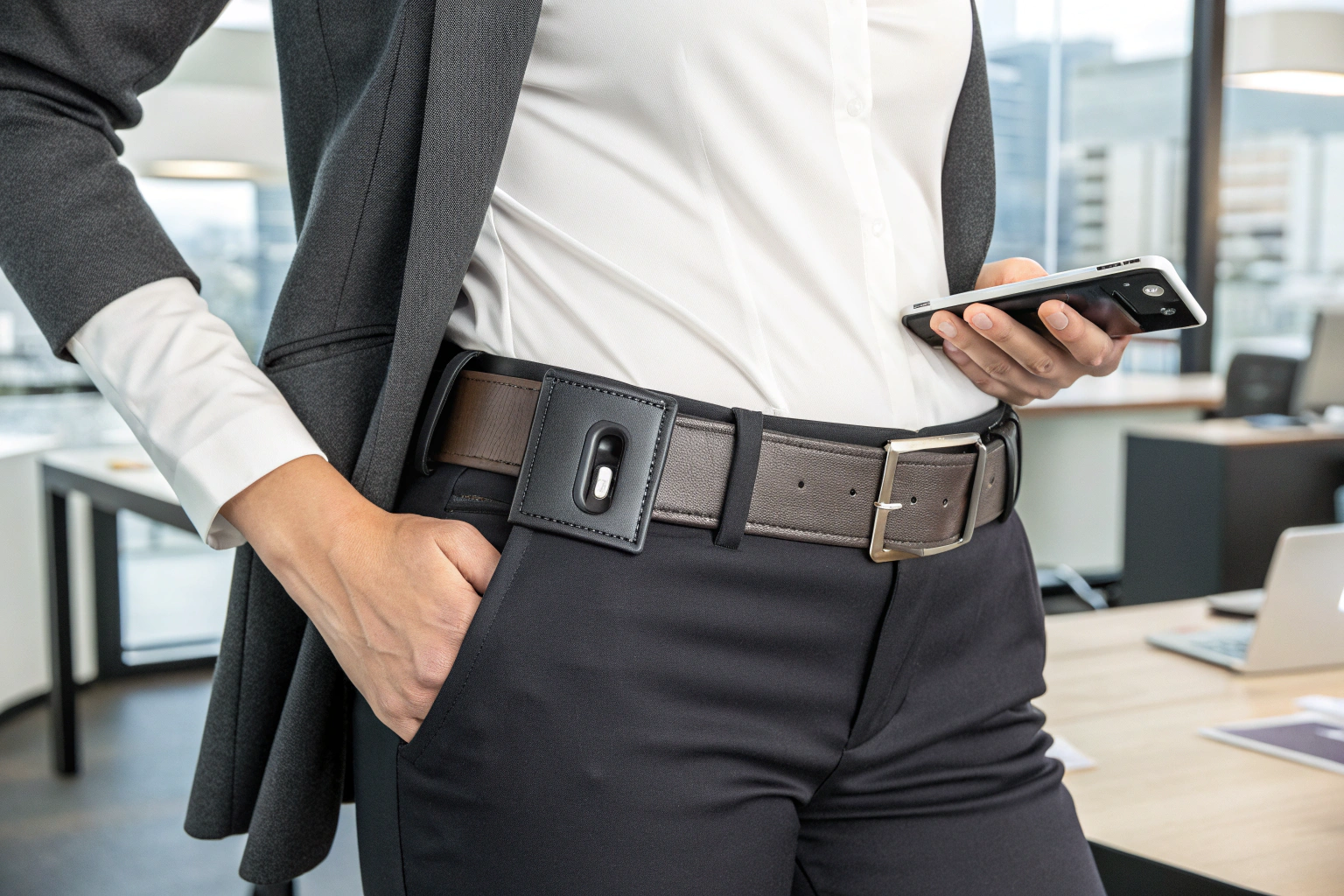
Your customers increasingly demand both style and security in their accessories. They want to discreetly carry essentials without bulky bags or obvious storage solutions. The market for belts with hidden compartments is growing, but sourcing them involves unique considerations beyond standard belt manufacturing.
Sourcing belts with hidden compartment features requires identifying specialized manufacturers with security-accessory experience, evaluating concealment mechanisms for both effectiveness and comfort, ensuring compartment accessibility balances security with practicality, and verifying that hidden storage doesn't compromise the belt's primary function or aesthetic. Successful sourcing involves balancing concealment quality, storage capacity, and everyday wearability while maintaining the belt's appearance as a normal fashion accessory.
The hidden compartment belt market serves diverse needs from travel security to discreet medical carry. Understanding the sourcing nuances helps buyers navigate this specialized category effectively while avoiding common pitfalls that compromise either security or style.
What Manufacturing Capabilities Support Quality Hidden Compartments?
Not all belt manufacturers possess the specialized equipment and expertise required for hidden compartment integration. The manufacturing process demands precision handling of multiple material layers and specialized construction techniques.
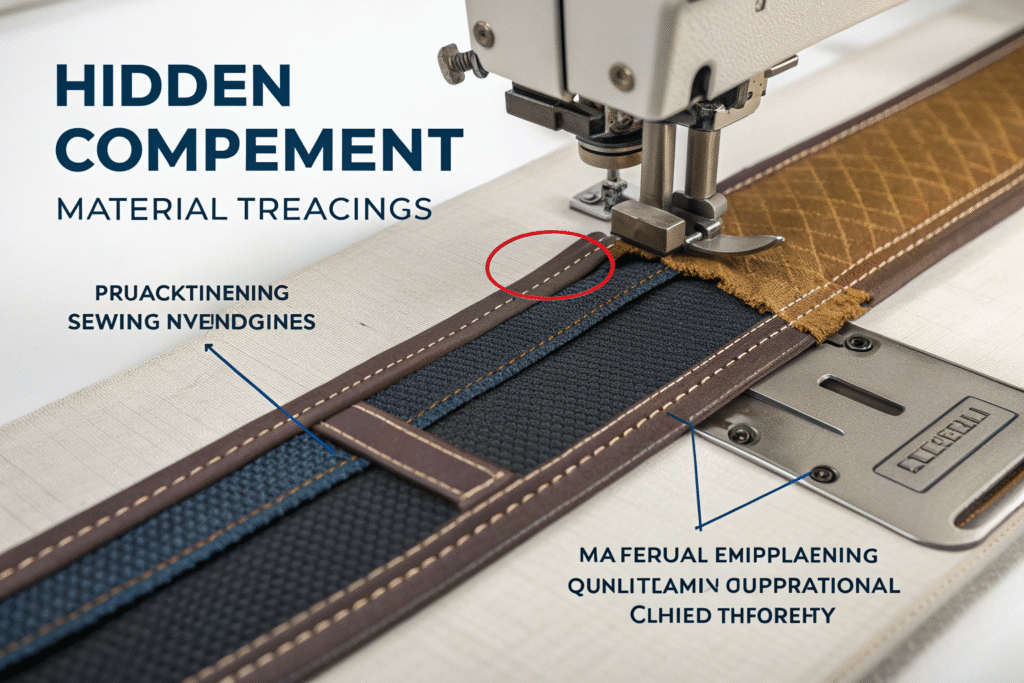
Quality hidden compartment belts require advanced pattern making, precision cutting of multiple material layers, specialized sewing equipment that handles thickened sections, and rigorous quality control to ensure compartments function reliably while remaining undetectable during normal wear.
What Specialized Equipment Is Essential?
Manufacturers need industrial walking-foot sewing machines capable of stitching through multiple layers of leather, fabric, and zipper tape without puckering. Laser cutting equipment ensures precise compartment openings with clean edges that won't fray or weaken over time. For RFID-blocking compartments, manufacturers require capability to integrate specialized materials without compromising flexibility. These equipment requirements typically separate specialized security accessory manufacturers from standard belt producers.
How Do Material Selection Differences Impact Performance?
Hidden compartment belts require specific material combinations not found in standard belts. The exterior needs quality leather or fabric that maintains appearance while concealing internal structures. Internally, compartment materials range from waterproof fabrics for moisture protection to flexible polymers that maintain shape without bulging. The interface between materials—particularly around openings—requires reinforced construction to prevent premature wear at stress points. These material considerations significantly impact both concealment effectiveness and product lifespan.
What Compartment Designs Balance Security and Accessibility?
The most effective hidden compartment designs make contents secure yet reasonably accessible when needed. Poor designs either compromise security through obvious access points or make retrieval so difficult that the compartment goes unused.
Successful compartment designs consider what users typically carry, how quickly they need access, and what security level their situation requires. The best designs appear completely seamless during normal wear while allowing discreet access without removing the belt.
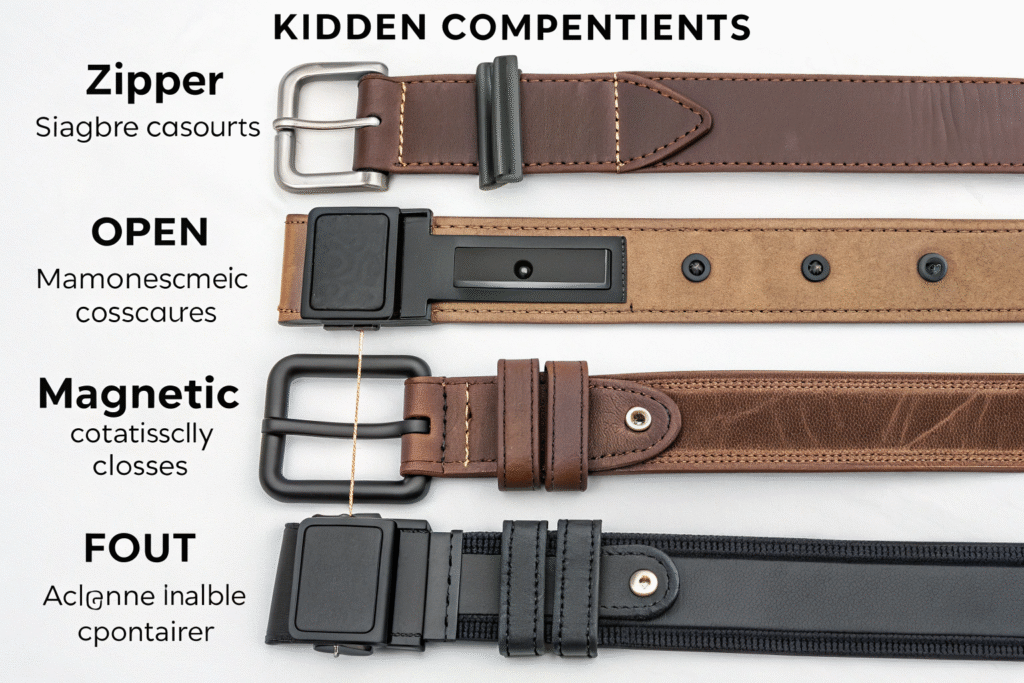
What Opening Mechanisms Work Best for Different Uses?
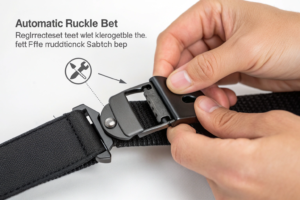
Concealed zippers hidden behind belt loops or under folds provide excellent security for valuables but require two-handed operation. Magnetic closures allow quicker one-handed access but may be detectable by security screening. Sliding panels that open with specific pressure points offer good compromise between security and accessibility. For frequent access needs, fold-out compartments with magnetic clasps work well, while zippered compartments better suit items carried all day but rarely accessed.
How Much Storage Capacity Is Practical Without Detection?
The most effective hidden compartments maintain a profile thickness under 0.5 inches when empty and under 0.75 inches when carrying typical contents like folded currency or emergency medication. Capacity between 2-4 standard credit cards or equivalent volume represents the practical maximum before concealment becomes challenging. Multiple smaller compartments often work better than one large space, distributing contents to prevent bulging. These capacity guidelines ensure the belt remains comfortable for all-day wear while providing meaningful storage.
How Can You Verify Concealment Effectiveness During Sourcing?
Concealment effectiveness separates quality hidden compartment belts from poorly executed versions. Verification requires specific testing protocols that assess both immediate detectability and performance over time.
Effective verification involves visual inspection from multiple angles, tactile examination, wear simulation, and practical testing of access mechanisms under realistic conditions. These processes ensure the hidden features remain undetectable during normal social and professional interactions.
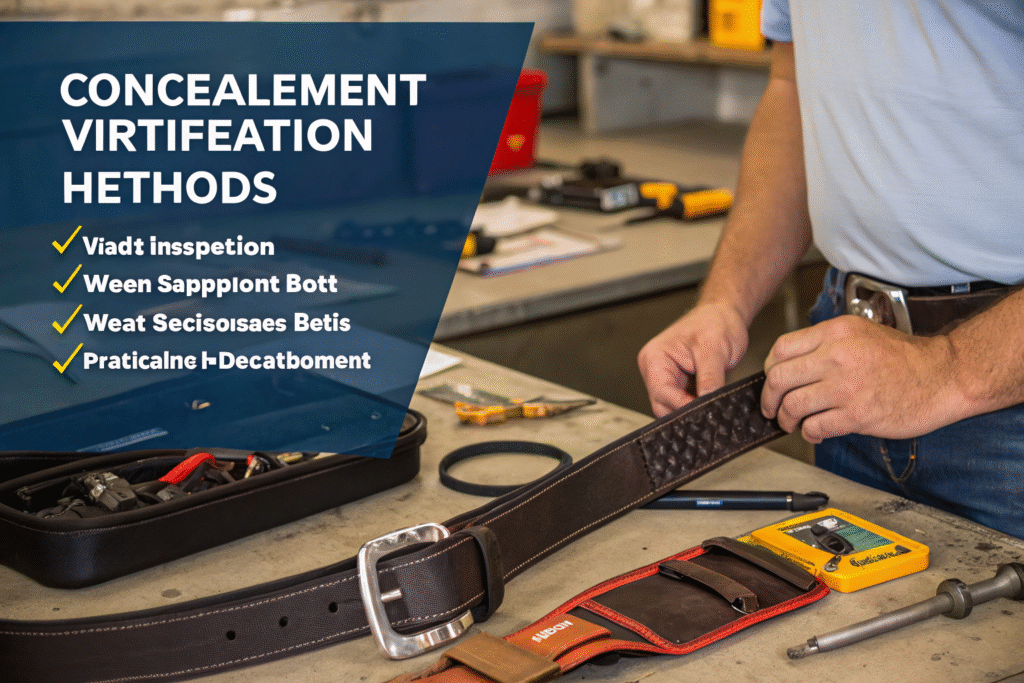
What Inspection Methods Identify Poor Concealment?
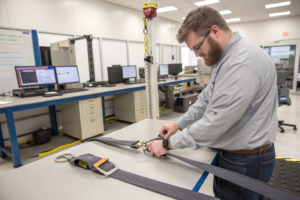
Quality inspectors should examine belts from multiple viewing angles under different lighting conditions, looking for stitching irregularities, slight color variations at seam lines, or inconsistent thickness. Tactile inspection should identify unusual stiffness or rustling sounds during movement. The drag test—pulling a finger across the belt surface—should not catch on concealed openings. These methods identify manufacturing flaws that compromise the hidden function before products reach customers.
How Does Wear Testing Predict Long-Term Concealment?
Accelerated wear testing involving repeated flexing simulates months of normal use, revealing whether compartments become more visible over time. Testing should include multiple opening/closing cycles to ensure mechanisms maintain smooth operation without loosening. Exposure to environmental factors like humidity and temperature changes verifies materials maintain integrity without warping or separating. These predictive tests prevent field failures that would compromise the product's primary security function.
What Market Applications Drive Hidden Compartment Demand?
Hidden compartment belts serve multiple market segments with distinct requirements. Understanding these applications helps source appropriate designs for specific customer needs rather than taking a one-size-fits-all approach.
Primary market applications include travel security, discreet medical carry, emergency preparedness, and professional environments where traditional storage options are impractical. Each application dictates different compartment designs, security levels, and accessibility requirements.
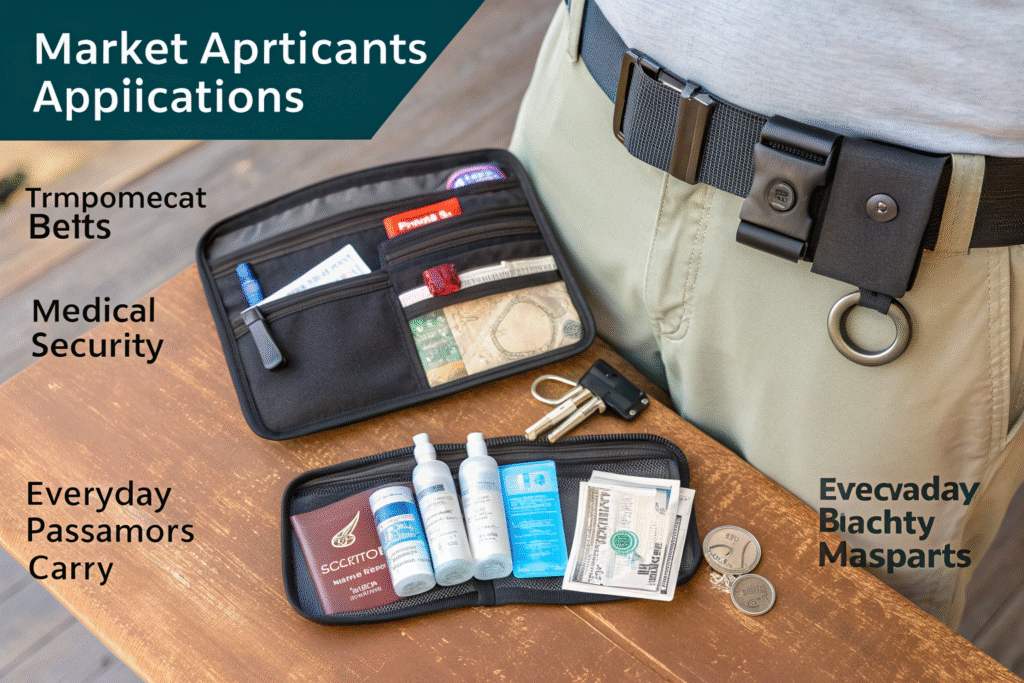
What Features Matter Most for Travel Security Applications?
Travelers need compartments secure enough for emergency cash and documents but accessible without completely undressing. RFID blocking becomes essential for digital security, while water resistance protects against accidental spills or weather. Quick-access mechanisms that don't require bathroom stalls or complete privacy align with real-world travel scenarios. These features address the practical challenges travelers face while moving through airports, hotels, and unfamiliar environments.
How Do Medical Carry Requirements Differ?
Medical users need compartments that protect medication integrity from moisture, light, and physical damage while allowing discreet access whenever needed. Larger capacity may be necessary for multiple doses or medical alert information. Easy-open mechanisms accommodate users with limited dexterity during medical episodes. These specialized requirements demonstrate why medical-focused hidden compartment belts constitute a distinct category within the broader security accessories market.
Conclusion
Sourcing belts with hidden compartment features requires specialized knowledge beyond traditional accessory manufacturing. Success depends on identifying partners with specific technical capabilities, thoroughly evaluating concealment effectiveness through rigorous testing, understanding the balance between security and accessibility, and matching compartment designs to specific use cases. The growing demand for discreet carry solutions makes this category increasingly important for retailers and brands serving security-conscious consumers.
If you're interested in sourcing or developing hidden compartment belts, contact our Business Director, Elaine. Our manufacturing expertise includes specialized security accessories that balance concealment, capacity, and comfort. Reach her at elaine@fumaoclothing.com to discuss your hidden compartment belt requirements.