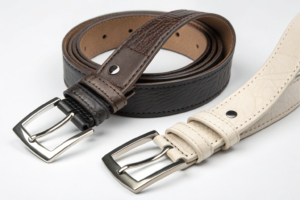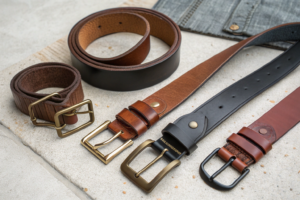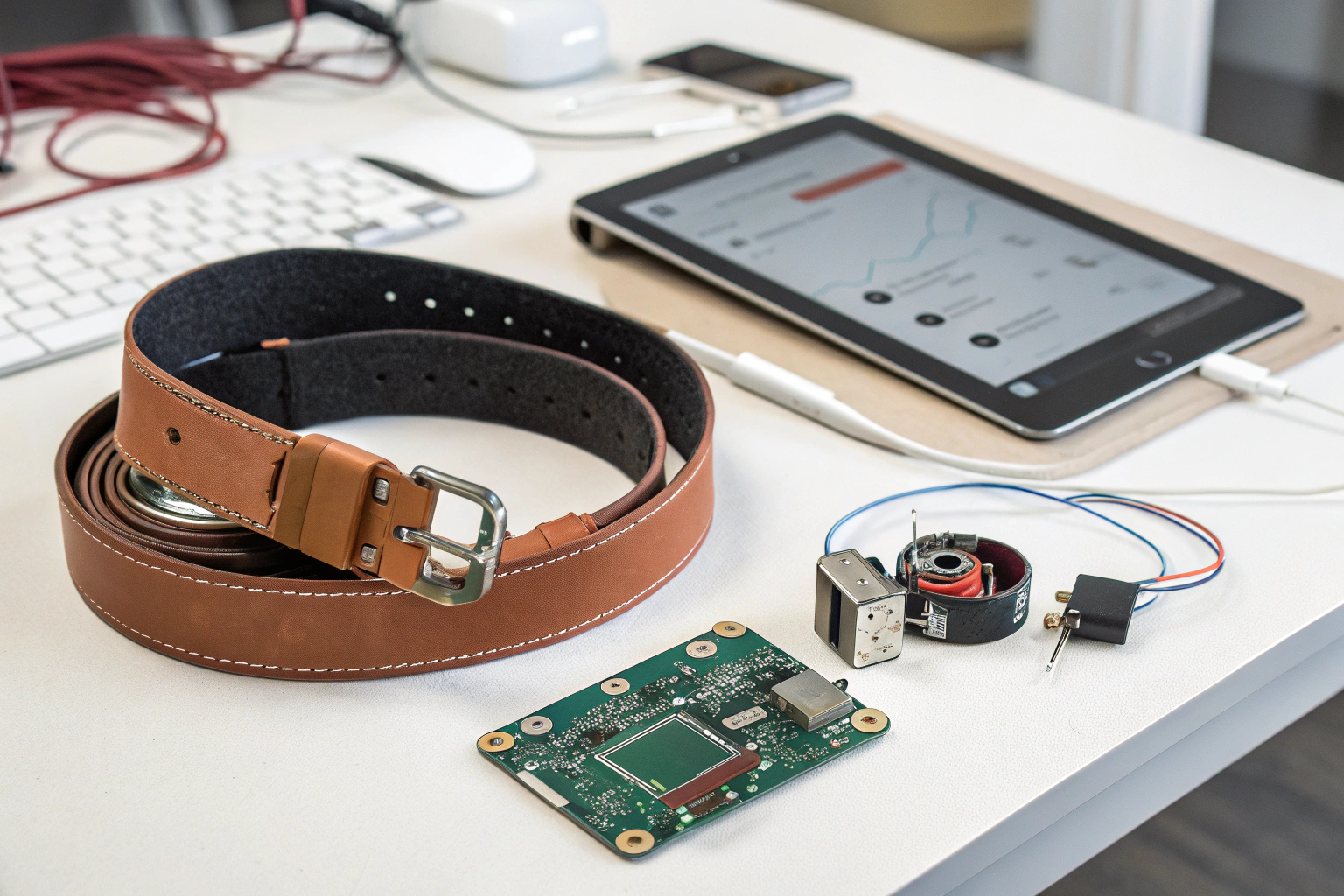
In today's world, where sedentary lifestyles and poor posture contribute to widespread back pain and musculoskeletal issues, the fusion of fashion and health tech is no longer a novelty—it’s a necessity. For brand owners and importers, this creates a compelling new product category: smart belts that monitor and correct posture. Sourcing a belt with posture vibration alerts isn't like ordering standard leather belts; it involves navigating a complex intersection of apparel manufacturing, wearable electronics, software, and quality assurance. For a buyer focused on value and innovation, understanding this ecosystem is key to finding a reliable partner and avoiding costly pitfalls with malfunctioning tech.
To source belts with posture vibration alerts, you must identify a manufacturer with integrated capabilities in soft goods construction, electronics assembly, and firmware/APP development. The process requires evaluating their technical specifications (sensor type, battery life, connectivity), compliance certifications (FCC, CE, RoHS), and their approach to prototyping, data security, and post-sales support for the electronic components.
This is a product where quality control extends far beyond stitching and leather grain. It’s about the reliability of a gyroscope sensor, the comfort of a vibrating motor, and the user experience of a companion app. Let's break down the critical path to successfully sourcing this advanced wearable.
What are the core electronic components in a posture alert belt?
Before you can assess a manufacturer, you need to understand the basic anatomy of the product. A posture alert belt is a wearable device first and a belt second. Its functionality hinges on a small set of core electronic components that must be seamlessly integrated into a flexible, comfortable form factor.
The core electronic components in a posture alert belt are: 1) a motion sensor (typically a 9-axis IMU combining an accelerometer, gyroscope, and magnetometer) to detect spine angle, 2) a haptic feedback motor (vibration motor) to provide discreet alerts, 3) a rechargeable lithium-polymer battery, 4) a low-energy Bluetooth module for smartphone connectivity, and 5) a microcontroller unit (MCU) that processes sensor data and manages the device logic.
The challenge for the manufacturer is to source these components for reliability and longevity, then miniaturize and package them to survive the flexing, pressure, and environmental exposure of daily wear. This requires a different kind of development capacity than traditional belt making.
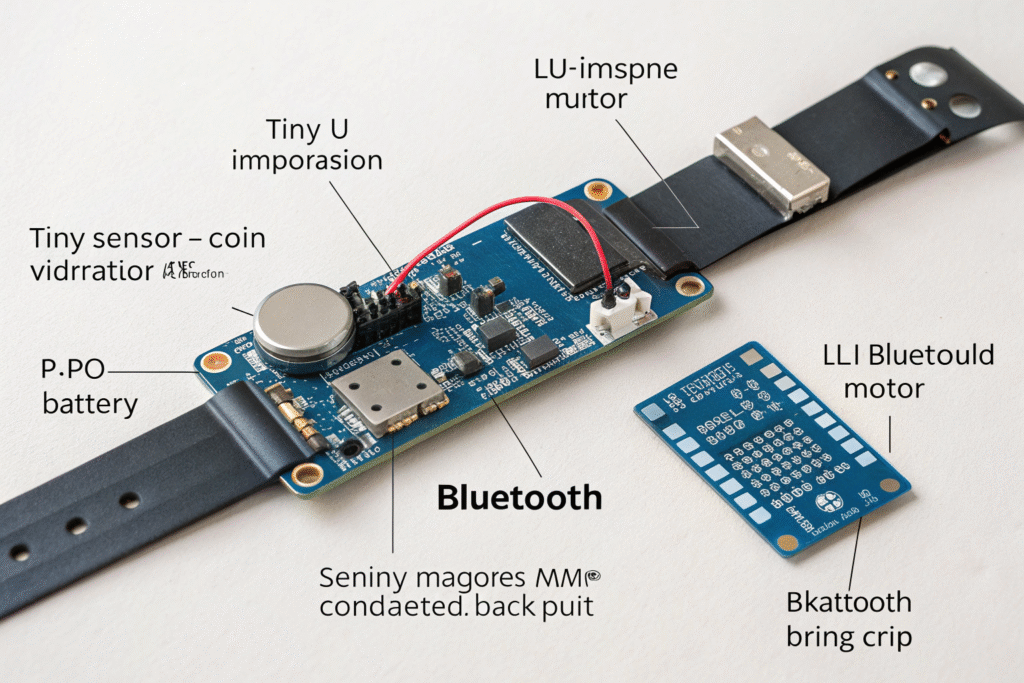
Why is a 9-axis IMU sensor critical for accurate posture detection?
Accuracy is everything. A simple tilt switch or basic accelerometer can't distinguish between bending over to tie a shoe (acceptable) and slumping at a desk (unhealthy). A 9-axis Inertial Measurement Unit (IMU) is critical because it fuses data from three different sensors to understand the body's orientation in three-dimensional space with high precision.
The accelerometer measures linear movement, the gyroscope measures rotational rate, and the magnetometer acts as a digital compass relative to Earth's magnetic field. By combining this data through sensor fusion algorithms, the belt can differentiate between various postures and movements, reducing false alarms. Sourcing a manufacturer that understands this and uses quality sensor modules from reputable suppliers like Bosch Sensortec or TDK InvenSense is a strong indicator of technical competence. It ensures the core promise of "posture correction" is based on solid data, not just a marketing gimmick.
What determines battery life and charging convenience for users?
User adoption hinges on practicality. A belt that needs charging every 12 hours is a failed product. Key factors determining battery life are: the capacity of the Li-Po battery (measured in mAh), the efficiency of the MCU and Bluetooth chip, and the software's power management (e.g., how often it samples the sensor).
For everyday belt use, a minimum of 3-5 days of battery life on a single charge is a viable benchmark. Charging convenience is equally important. The best designs feature a removable, slim battery pack that charges via USB-C or wireless charging, allowing the belt strap itself to be washed or used passively. You must ask potential suppliers for their test data on battery cycles and their strategy for package transportation of devices containing lithium batteries (requiring UN38.3 certification). This reflects a mature approach to logistics and safety.
How to vet a manufacturer’s tech integration and software capabilities?
The belt's physical construction is only half the product. The software—the firmware on the device and the companion smartphone app—defines the user experience. Vetting this requires looking beyond the factory floor to the manufacturer's R&D and digital partnerships.
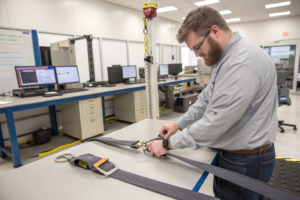
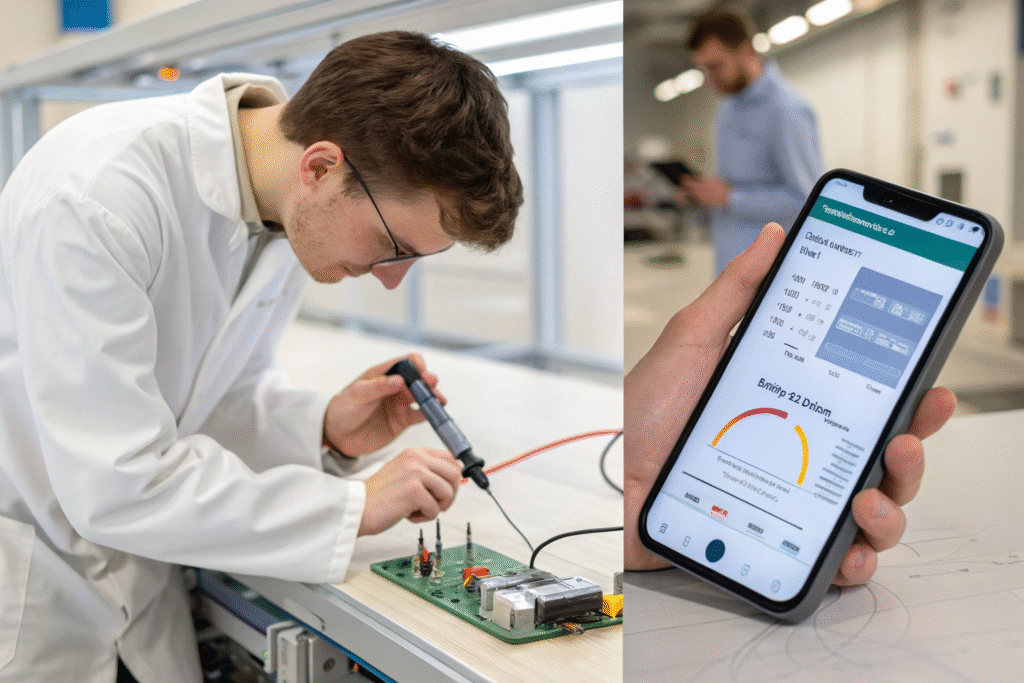
To vet a manufacturer’s tech integration, request a functional prototype and examine the build quality: are the electronics rigid or flexibly embedded? Is the vibration noticeable but not harsh? For software, demand to see (or experience) the companion app. Assess its ease of connectivity, data dashboard clarity, alert customization options, and privacy policy. A credible partner will have a software team or a proven third-party development partner.
The integration must be seamless. A poorly made app that constantly disconnects will render even the best hardware useless. This is a key differentiator between a simple contract manufacturer and a true innovation partner.
What should a functional prototype demonstrate before bulk order?
A functional prototype is your most important due diligence tool. It must demonstrate:
- Core Functionality: Reliable posture detection and timely, appropriate vibration alerts in different positions (sitting, standing, walking).
- Comfort & Design: The electronics should be undetectable during wear. The vibration should be effective but not uncomfortable. The belt should look and feel like a high-quality fashion belt or dress belt, not a medical device.
- Build Quality: Check for any bulges, rough edges around the electronic module, and the security of seams enclosing the tech.
- Software Stability: The app should pair easily, maintain a stable connection, and log data without crashing.
Before placing a bulk order, you should conduct a small-scale wear trial with this prototype. This test will reveal real-world issues like Bluetooth interference, battery drain accuracy, and material durability that are not apparent in a factory demo. A manufacturer confident in their fast development process will encourage and support this trial phase.
How important is data privacy and app security for wearable tech?
Extremely important. The belt and app collect sensitive health-related biomechanical data. For markets like Europe (GDPR) and North America, demonstrating a robust commitment to data privacy is not optional; it's a legal and brand trust imperative.
When vetting a supplier, ask direct questions: Where is the user data stored (on the phone, on their servers)? Is it anonymized and encrypted? What is their data sharing policy? Do they have a clear, accessible privacy policy for the app? Manufacturers who have considered these questions will have ready answers and may comply with frameworks like ISO/IEC 27001 for information security. For brands and importers, partnering with a factory that prioritizes security protects you from future liability and builds consumer confidence.
What compliance certifications are non-negotiable for smart wearables?
When you add electronics and batteries to a garment, you enter a new world of regulatory compliance. These certifications are your shield against legal issues, customs seizures, and product recalls. They are non-negotiable cost items that must be factored into the sourcing budget from day one.
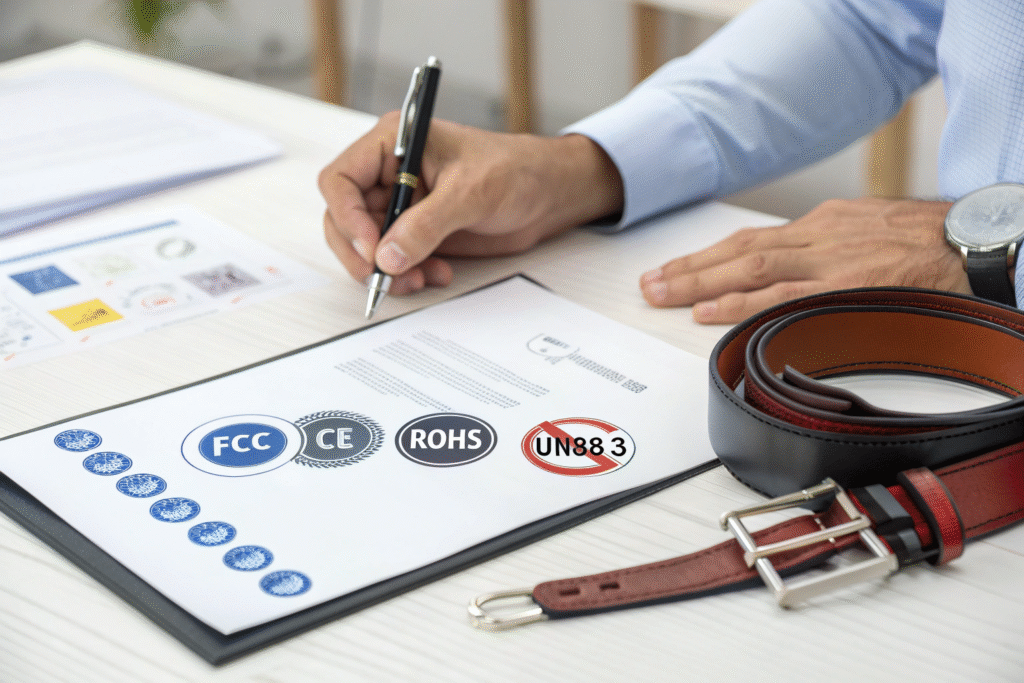
Non-negotiable compliance certifications for smart posture belts include: FCC (USA) and CE (Europe) for electromagnetic compatibility and radio equipment, RoHS for restriction of hazardous substances in electronics, and UN38.3 for safe transportation of lithium batteries. Depending on the market, medical device registration (like FDA Class I) may be required if therapeutic claims are made.
A professional manufacturer will have a clear roadmap for obtaining these certifications and will provide test reports from accredited laboratories. This is a critical part of their professional and reliable service, ensuring your path to market is smooth and secure.
What is the difference between FCC ID and FCC SDoC for this product?
Understanding this distinction is crucial for the U.S. market. An FCC SDoC (Supplier’s Declaration of Conformity) is a self-certification process for devices that are not intentionally radiators. However, a posture belt with a Bluetooth module is an intentional radiator.
Therefore, it requires a more stringent FCC ID certification. This involves the manufacturer submitting the device to an accredited lab for comprehensive testing. Upon passing, the FCC grants a unique ID that must be displayed on the product. Sourcing from a factory that has gone through this formal process for a similar device proves they understand the rigorous U.S. regulatory environment. It’s a strong signal that they manage quality control at the electronic systems level, not just the assembly level.
How do RoHS and REACH impact material sourcing for smart belts?
RoHS (Restriction of Hazardous Substances) and REACH are European Union regulations that have a direct impact on global material sourcing. RoHS restricts specific hazardous materials (like lead, mercury, cadmium) in electrical and electronic equipment. REACH addresses chemical substances in all products.
For a smart belt, this means every component—from the solder on the PCB to the plastic in the buckle, the PU leather strap, and the dyes used—must be compliant. Your manufacturer must have a system to collect Material Declarations or Compliance Certificates from their entire supply chain. This adds a layer of complexity but is essential for selling in environmentally conscious markets and avoiding tariff costs or penalties related to non-compliant goods.
Conclusion
Sourcing belts with posture vibration alerts successfully requires a paradigm shift. You are not just buying a fashion accessory; you are procuring a delicate, connected health-tech device. The journey demands a supplier with hybrid expertise, a rigorous approach to prototyping and certification, and a steadfast commitment to data security and user experience. By thoroughly vetting the electronic components, software ecosystem, and regulatory readiness of your manufacturing partner, you can unlock a high-value product that meets a growing market need for wellness-driven wearables.
This is where specialized manufacturing makes the difference. If you are a brand looking to develop a smart posture belt line, partnering with a factory that has the technical integration capabilities and a track record in wearables is essential. We combine our expertise in belt manufacturing with a network of trusted tech partners to bring such innovative products to life. For a detailed discussion on your smart belt project, contact our Business Director, Elaine, at elaine@fumaoclothing.com. Let's build the future of functional fashion, together.