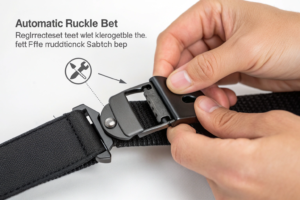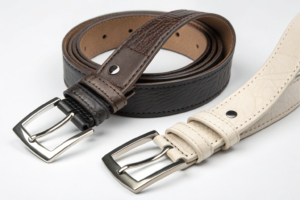
You walk into your warehouse, and your entire belt inventory is instantly accounted for. No manual counting, no human error, and real-time data on stock levels for every style, color, and size. This isn't a vision of the future; it's the operational reality that RFID (Radio-Frequency Identification) technology delivers. For brands and retailers struggling with inventory inaccuracy, stockouts, and high labor costs, sourcing belts with integrated RFID is a transformative solution.
Sourcing belts with RFID inventory tracking involves partnering with manufacturers who can embed or attach UHF RFID tags during the production process. This requires upfront collaboration on tag placement, data encoding, and system integration to create a seamless flow from the factory floor to your warehouse and retail shelves. The result is a "smart" product that enables automated, highly accurate inventory management.
This guide will walk you through the practical steps of sourcing RFID-enabled belts. We'll cover how to initiate the conversation with your manufacturer, evaluate different tag integration methods, navigate data and compliance requirements, and ultimately calculate the return on investment for this powerful technology.
How to Initiate the RFID Conversation With Your Manufacturer?
The first step is often the most daunting. Many brands assume their current manufacturer in China won't be equipped for RFID, or that the conversation will be too technical. However, with the rise of smart logistics, forward-thinking factories are increasingly familiar with this technology. The key is to approach the discussion with clear business objectives.
Begin the conversation by focusing on mutual benefits: improved supply chain visibility, reduced shipping errors, and enhanced sell-through data for both parties. Frame RFID not as an exotic add-on, but as a standard logistical enhancement for modern fashion accessories. This shifts the discussion from "if" it can be done to "how" it will be implemented.

What Are the Key Questions to Ask a Potential Supplier?
To assess a manufacturer's RFID capability, you need to go beyond a simple "yes" or "no." Your qualifying questions should cover their experience, technical capacity, and process.
Start with these essential questions:
- "Do you have experience embedding or attaching RFID tags to leather goods or belts?"
- "What type of UHF RFID tags do you recommend for our belt materials (leather, canvas, etc.)?"
- "Can you show us examples of tag placement on previous projects?"
- "What is your process for encoding and verifying each tag?"
- "Do you have an on-site RFID printer/encoder for quality control?"
A manufacturer with a dedicated quality control team will understand the importance of these questions and have a systematic answer. Their response will tell you if they are a true partner or just a basic producer.
How to Structure the Initial RFID Sourcing Request?
Be specific in your request for quotation (RFQ). Don't just ask for "belts with RFID." Provide a clear, actionable description.
A well-structured RFQ should include:
- Tag Specification: Request UHF Gen 2 RFID tags, which are the global standard for supply chain management.
- Placement: Specify your preferred location (e.g., sewn into a leather loop, embedded under a brand label).
- Data: Outline what information should be encoded (e.g., unique Serialized Global Trade Item Number - SGTIN).
- Testing: Require that 100% of tags are scanned and verified for functionality before shipment.
This level of detail in your sourcing process demonstrates that you are a serious buyer and sets clear expectations from the start.
What Are the Best Methods for RFID Tag Integration?
The physical integration of the tag is critical to both functionality and aesthetics. A poorly placed tag can be easily damaged, detach, or interfere with the product's design. The goal is to make the technology invisible to the consumer while ensuring it remains fully operational throughout the product's lifecycle.
The best integration method depends on your belt's design, material, and price point. The main options are embedding the tag during production or attaching it as a separate, discreet component post-production. Each approach has distinct advantages and trade-offs in terms of cost, durability, and visibility.

How is an RFID Tag Embedded During Production?
Embedding offers the most permanent and discreet solution. This involves placing the tag between layers of the belt during manufacturing.
Common embedding techniques include:
- Laminated within a Leather Patch: A thin RFID tag is placed between the belt's main leather and a top layer of leather that carries your brand's logo. This is common for men's dress belts.
- Sewn into a Fabric Lining: For belts with a fabric backing, the tag can be sewn between the outer material and the inner lining.
- Encapsulated in the Belt Tip: For some automatic buckle belts, the tag can be placed inside the plastic or metal tip during molding.
Embedding protects the tag from wear and tear and makes it virtually undetectable. However, it requires more sophisticated production planning and can be more difficult to replace if a tag fails.
What Are the Options for Attachable RFID Tags?
If embedding is not feasible, several reliable attachment methods exist. These are often easier to implement and can be applied post-production.
The most effective attachable solutions are:
- Sewn-In Fabric Loop: A small, durable fabric loop is sewn onto the inner side of the belt, and a tag is inserted inside. This is a robust solution for canvas belts and nylon belts.
- RFID Hang Tag: Using a durable plastic tag that is attached with a secure fastener. This is the easiest to implement but runs the risk of being removed by the end consumer.
- Adhesive Tag: A specialty tag with a strong adhesive backing can be applied to a flat, clean surface on the belt. This requires testing to ensure it adheres properly to your specific material.
How to Navigate Data Standards and Global Compliance?
An RFID tag is useless without correctly encoded data. Inconsistent or incorrect data formatting will lead to system failures, making the entire investment worthless. Furthermore, global supply chains require tags that operate reliably across different regions with varying radio frequency regulations.
Success in this area hinges on standardizing your data model and ensuring your tags are certified for use in your target markets. This involves collaborating with your manufacturer on the technical specifics of data encoding and tag performance.
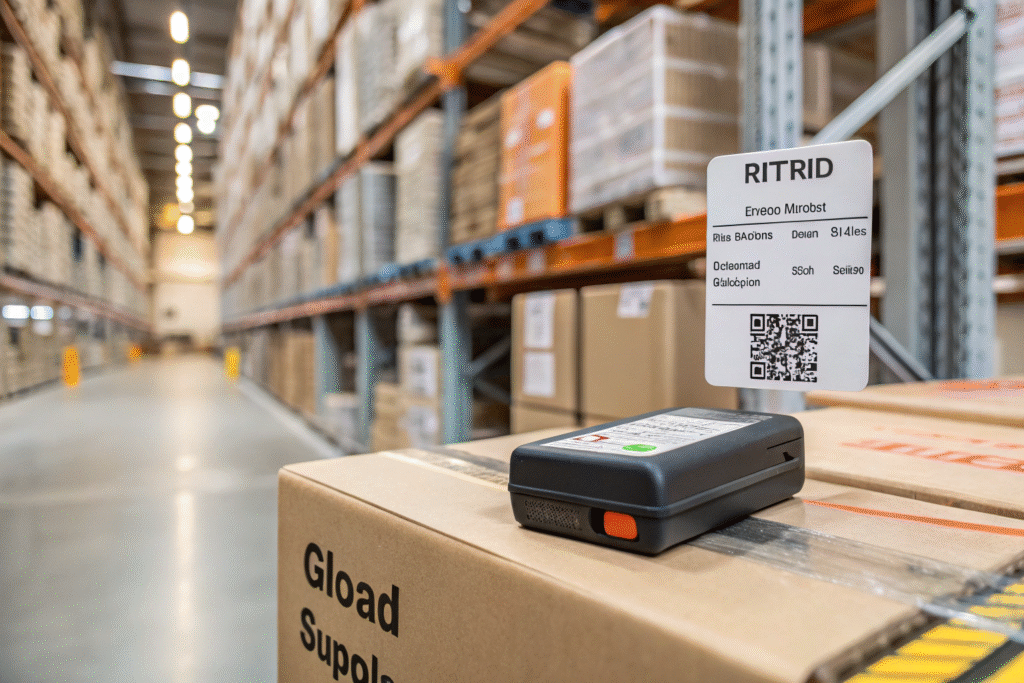
What Data Should Be Encoded on Each Tag?
To enable seamless integration with your Inventory Management System (IMS) and partner with large retailers, you must use a standardized data structure. The most widely adopted standard is the GS1 system.
The core data encoded on each tag should be a Serialized GTIN (SGTIN). This creates a unique digital identity for every single belt you produce, comprising:
- GS1 Company Prefix: Your unique identifier.
- Item Reference Number: The specific product SKU (e.g., "Men's Brown Leather Belt, Size 38").
- Serial Number: A unique number for each individual belt.
This level of serialization allows you to track specific units, which is powerful for combating counterfeiting and managing warranties. Providing this data structure to your manufacturing partner is a critical step.
How to Ensure Global RFID Frequency Compliance?
RFID operates on different radio frequencies in different parts of the world. The most common standard for supply chain use is UHF (Ultra-High Frequency), but even within UHF, there are regional variations.
The key is to specify the required frequency range for your tags based on your primary market:
- North America: FCC compliant, 902-928 MHz
- European Union: ETSI compliant, 865-868 MHz
- China: SRRC compliant, 920-925 MHz
A professional manufacturer will source tags that are certified for your target region. For global distribution, you may need to source different batches with region-specific tags, or use a "global" tag designed to work across a wider frequency band.
What is the Real ROI of RFID-Enabled Belt Sourcing?
The upfront costs of RFID—tags, integration labor, and system setup—can be a barrier. However, the return on investment should be calculated based on operational savings and increased revenue, not just the unit cost of the tag. For most businesses, the ROI is compelling and rapid.
The true value of RFID is realized through near-perfect inventory accuracy, which cascades into multiple areas of business improvement. It transforms inventory from a cost center into a strategic asset.

How Does RFID Drive Down Operational Costs?
The labor savings alone are often enough to justify the investment. RFID enables inventory counts that are up to 25 times faster than manual barcode scanning and are significantly more accurate.
Key cost savings include:
- Reduced Labor Hours: Drastically less time spent on physical inventory counts and cycle counting.
- Fewer Stockouts: Real-time visibility prevents lost sales from out-of-stock bestsellers.
- Lower Shrinkage: Precise tracking reduces internal and external theft.
- Efficient Receiving: Incoming shipments can be verified in seconds, not hours.
How Does RFID Unlock New Revenue Opportunities?
Beyond cost savings, RFID creates tangible top-line growth by ensuring the right product is in the right place at the right time.
Revenue-generating benefits include:
- Improved Omnichannel Fulfillment: Accurate store-level inventory enables reliable BOPIS (Buy Online, Pick Up In Store) and ship-from-store programs.
- Enhanced Sell-Through Data: Understand exactly which belt styles and buckle types are moving in which locations.
- Reduced Discounting: Less overstock of slow-moving items means less need for profit-eroding clearance sales.
For brands supplying major retail partners, providing RFID-enabled products can also be a requirement, opening doors to new and lucrative sales channels.
Conclusion
Sourcing belts with RFID inventory tracking is a strategic decision that modernizes your supply chain and provides a significant competitive advantage. It requires a collaborative partnership with your manufacturer to successfully integrate the technology, standardize data, and ensure global compliance. The initial investment is quickly offset by substantial operational savings from reduced labor and shrinkage, while simultaneously driving revenue growth through perfect inventory accuracy and new omnichannel capabilities.
If you are ready to explore sourcing RFID-enabled belts to transform your inventory management, our factory is equipped with the technology and expertise to guide you through the process. Contact our Business Director, Elaine, at elaine@fumaoclothing.com to discuss implementing a smart, efficient supply chain for your belt line.