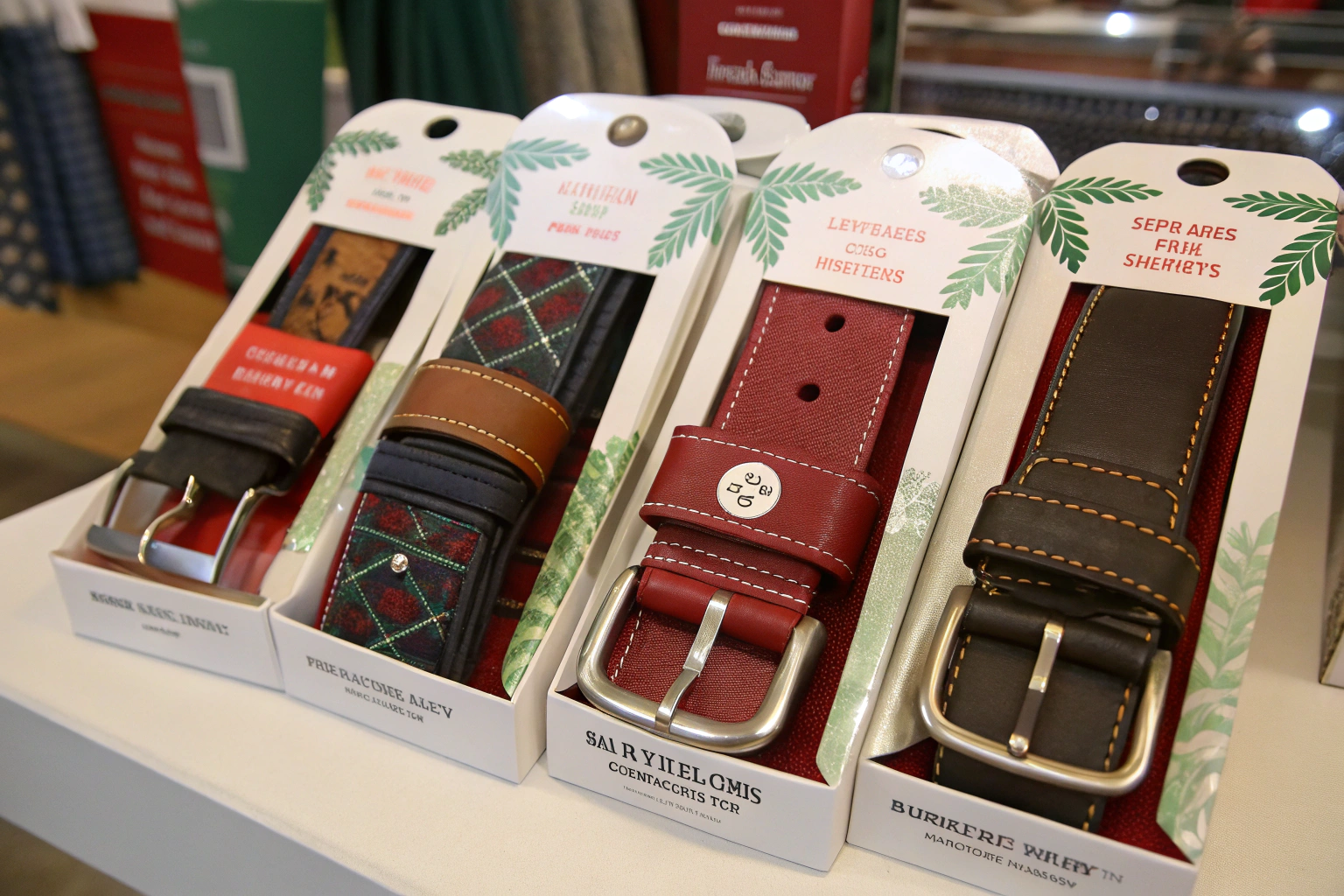
The holiday shopping season accounts for approximately 20-30% of annual belt sales, with gift sets representing one of the fastest-growing segments within this period. However, sourcing festive belt gift sets presents unique challenges that differ significantly from regular belt procurement. How can retailers and brands effectively source gift sets that capture holiday spending while managing the complexities of coordinated packaging, component sourcing, and compressed timelines?
Sourcing festive belt gift sets for holiday sales requires coordinating multiple suppliers, implementing aggressive production timelines, designing holiday-specific packaging, and creating compelling value propositions that justify gift pricing. Successful holiday gift set sourcing typically begins 6-8 months before the selling season, with production completed by August to accommodate October retail floor dates and early November e-commerce launches. The most successful sets combine 2-3 complementary belt styles with festive packaging at price points between $45-125 that deliver perceived values of $65-175.
Navigating holiday gift set sourcing demands strategic planning and supplier coordination. Let's examine the timeline requirements, component coordination, packaging considerations, and value engineering that ensure successful festive belt gift sets.
What Timeline Considerations Impact Holiday Sourcing?
The compressed holiday production schedule creates unique timing challenges that require careful planning and supplier coordination to meet critical retail deadlines.
Timeline considerations include design finalization dates, production slot reservations, shipping cutoff points, and distribution center receiving deadlines. Each milestone must be carefully managed to ensure holiday availability.

Why Must Design Be Finalized by March-April for Holiday Sets?
Design must be finalized by March-April because component sourcing, tooling creation, and production scheduling for holiday gift sets require 4-6 months lead time. This timing accommodates sample development and approval (4-6 weeks), raw material procurement (8-10 weeks), production (6-8 weeks), and ocean shipping (4-5 weeks). Sets requiring custom packaging or specialty components need even longer lead times. Industry data from the National Retail Federation shows that 68% of successful holiday products complete design before April.
How Do Shipping Cutoffs Impact Sourcing Decisions?
Shipping cutoffs dramatically impact sourcing decisions because missing container shipping deadlines typically forces expensive air freight that can erase 15-25% of profit margins. The last practical ocean shipping dates for holiday goods are typically late August for West Coast ports and early September for East Coast ports. Savvy sourcers build buffer time into schedules and maintain relationships with multiple freight forwarders to ensure flexibility. Logistics analysis from Flexport provides updated shipping timelines for holiday goods.
How Should Gift Set Components Be Coordinated?
Successful gift sets require careful coordination of multiple components that must arrive simultaneously for assembly, creating complex logistics that single-product sourcing avoids.
Component coordination includes belt selection complementarity, packaging material timing, accessory integration, and assembly logistics. Each element must be carefully synchronized.
What Belt Combinations Create the Most Compelling Gift Sets?
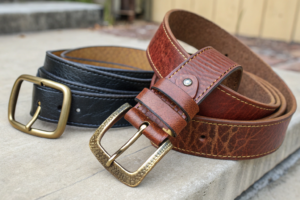
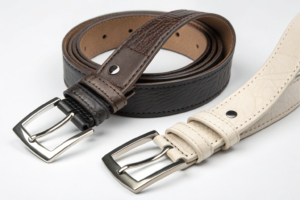
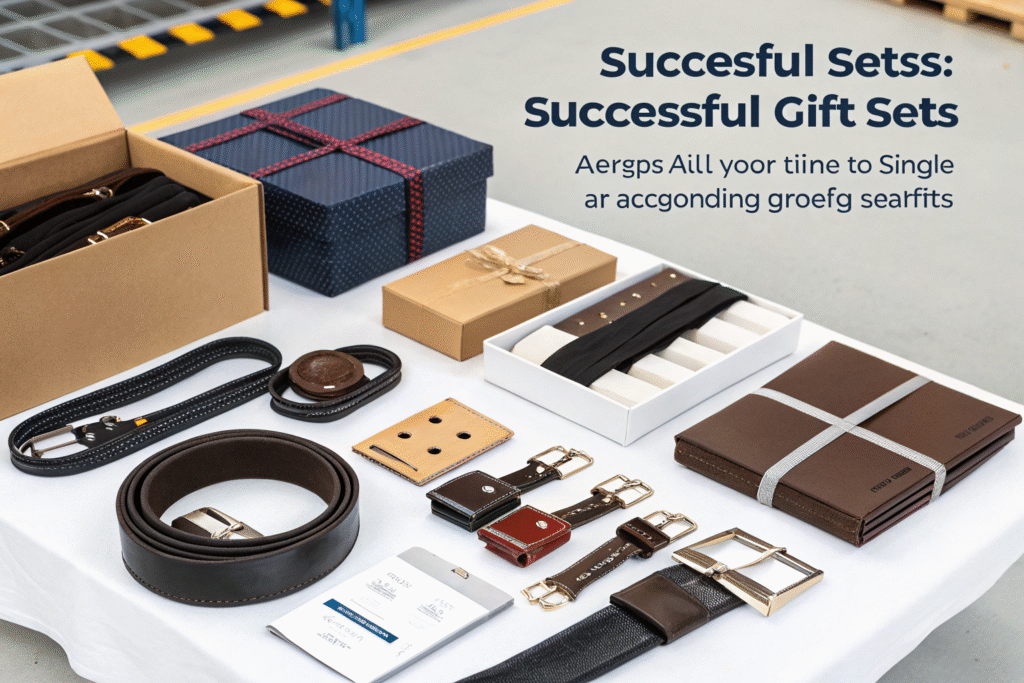
The most compelling gift set combinations typically include one dress belt, one casual belt, and one fashion-forward piece that together cover multiple gifting scenarios. Successful combinations might pair a classic leather dress belt with a reversible casual option and a trendy woven style, creating a "complete collection" feel that justifies premium pricing. The combination should target specific recipient profiles (professionals, fashion enthusiasts, practical gift recipients) with clear value propositions. Market research from The NPD Group shows that 3-piece sets outperform 2-piece sets in both sales volume and price realization.
How Can Packaging and Component Sourcing Be Synchronized?
Packaging and component sourcing can be synchronized by working with suppliers who manage both elements or implementing rigorous tracking systems that monitor all component production timelines simultaneously. The most efficient approach uses packaging suppliers located near belt manufacturers to reduce logistics complexity and enable quality checks before final assembly. Some manufacturers offer turnkey gift set services that handle all component coordination, simplifying the process for retailers. Supply chain management frameworks from APICS provide methodologies for multi-component synchronization.
What Packaging Considerations Define Holiday Gift Sets?
Packaging transforms ordinary belt combinations into special gifts, with holiday-specific packaging commanding 20-40% price premiums over identical products in standard packaging.
Packaging considerations include unboxing experience design, holiday aesthetic alignment, practical shipping durability, and cost allocation balance. Each element contributes to perceived gift value.
What Elements Create Memorable Unboxing Experiences?
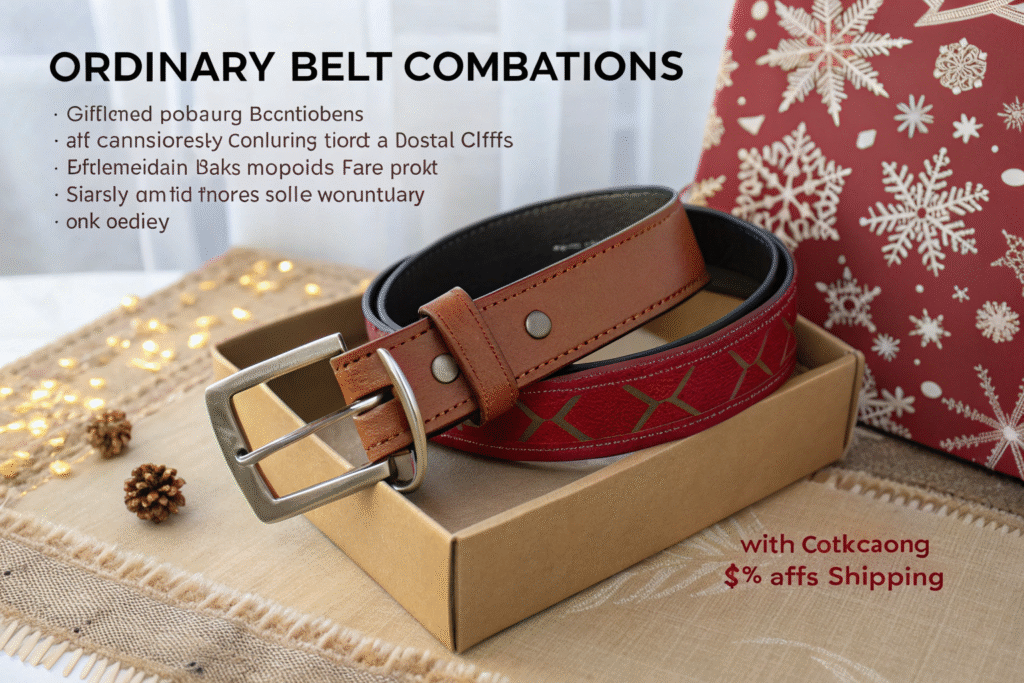
Memorable unboxing experiences typically include layered reveals, premium materials, seasonal colors and motifs, and personalized elements that feel special to recipients. Successful holiday gift sets often feature magnetic closure boxes, tissue paper in seasonal colors, gift message cards, and interior packaging that showcases each belt individually before revealing the full set. These elements encourage social media sharing and increase the likelihood of repeat gift purchases. Consumer research from Dotcom Distribution shows that 40% of consumers are more likely to share well-packaged products on social media.
How Should Packaging Costs Be Balanced Against Product Value?
Packaging costs should represent 15-25% of total product cost for gift sets, with higher percentages justified when packaging enhances perceived value significantly. A $75 retail gift set might allocate $8-12 to packaging compared to $2-4 for individual belt packaging. This investment typically delivers 3-5x return through increased sell-through and reduced price sensitivity. The most effective packaging uses strategic material choices—premium paper stocks instead of expensive printing techniques, clever structural design instead of excessive material—to maximize impact within budget. Packaging industry data from The Packaging School provides cost-to-value benchmarks.
What Value Engineering Maximizes Holiday Price Points?
Holiday gift sets must deliver compelling value propositions that justify their premium pricing while maintaining healthy profit margins for retailers and manufacturers.
Value engineering strategies include strategic component selection, perceived value enhancement, cost-sensitive design choices, and tiered pricing structures. Each approach helps maximize holiday price realization.

How Can Strategic Component Selection Enhance Perceived Value?
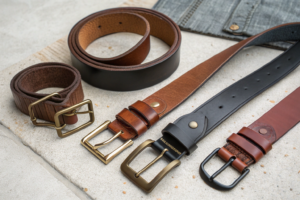
Strategic component selection enhances perceived value by including one hero product that would retail well individually, combined with complementary pieces that have lower production costs but high perceived value. For example, a set might feature one premium full-grain leather belt with two synthetic belts that share expensive-looking hardware and packaging. This approach creates sets that feel luxurious while maintaining achievable price points. Consumer psychology research from Journal of Consumer Research shows that anchor products significantly influence perceived set value.
What Tiered Pricing Strategies Work Best for Holiday Sets?
Tiered pricing strategies that work best for holiday sets include good-better-best options at $45-65, $75-95, and $115-145 price points that target different gift-giving budgets and relationships. Each tier should deliver clear value progression through material upgrades, additional pieces, or enhanced packaging. The middle tier typically generates the highest sales volume, while the premium tier attracts corporate gifting and luxury shoppers. Pricing research from ProfitWell provides data-driven frameworks for tiered pricing optimization.
How Can Supply Chain Risks Be Mitigated for Holiday Sourcing?
Holiday sourcing carries significant risks due to compressed timelines and the seasonal nature of the business, requiring proactive risk management strategies.
Risk mitigation approaches include supplier diversification, inventory buffer strategies, quality control protocols, and contingency planning. Each element helps ensure holiday availability despite potential disruptions.

Why Is Supplier Diversification Crucial for Holiday Success?
Supplier diversification is crucial because single-source dependencies create vulnerability to production delays, quality issues, or shipping problems that can derail entire holiday programs. Successful sourcers typically maintain 2-3 qualified suppliers for key components and final assembly, allowing quick pivots when issues arise. This approach may carry slightly higher development costs but provides invaluable flexibility during the critical holiday production period. Supply chain resilience research from Gartner shows that diversified suppliers reduce holiday disruption risks by 60-75%.
What Inventory Buffer Strategies Protect Against Timing Issues?
Inventory buffer strategies that protect against timing issues include safety stock of key components, pre-production of generic packaging elements, and strategic placement of finished goods in regional distribution centers before peak season. The most effective approaches maintain 15-25% buffer inventory for critical components and complete best-selling sets early to accommodate unexpected demand or supply chain delays. Inventory management principles from the Council of Supply Chain Management Professionals guide buffer strategy implementation.
Conclusion
Sourcing festive belt gift sets for holiday sales requires meticulous planning, coordinated execution, and strategic risk management to capitalize on the season's significant revenue potential. The most successful programs balance compelling product combinations, festive packaging, strategic pricing, and supply chain resilience to deliver sets that become holiday favorites.
The holiday season represents both tremendous opportunity and significant risk for belt retailers and brands. If you're planning holiday gift sets and need manufacturing partners who understand the unique demands of seasonal production, our expertise includes specialized experience with holiday coordination and gift set assembly. Contact our Business Director, Elaine, to discuss how we can develop successful festive belt gift sets for your holiday sales. Reach out to Elaine at elaine@fumaoclothing.com. Let's create gift sets that become holiday traditions for your customers.