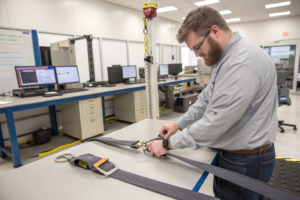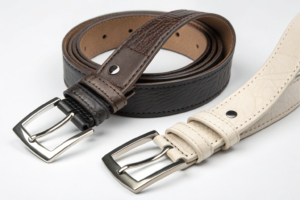
You walk through your warehouse trying to conduct a physical inventory count. Employees are scanning barcodes one by one, the process takes days, and you know the final count will still have errors. Meanwhile, your competitor across town completed their inventory in hours with 99.9% accuracy using RFID technology. This growing efficiency gap is why forward-thinking companies are turning to RFID-enabled belts.
Sourcing RFID-enabled belts requires finding manufacturers who can integrate UHF RFID tags during production, ensuring proper tag placement and encoding, verifying read reliability, and managing the complete implementation from factory to warehouse. The process involves technical specifications, quality validation, and system integration that go far beyond traditional belt sourcing.
This guide will walk you through the complete RFID belt sourcing process. We'll explore how to identify qualified manufacturers, specify technical requirements, validate tag performance, and implement a complete inventory management system.
How to Identify Manufacturers with RFID Capability?
Most traditional belt manufacturers don't have RFID experience. They may claim they can add tags, but without proper expertise, you'll receive belts with poorly placed or non-functional tags that undermine your entire inventory system.
True RFID capability requires specific equipment, technical knowledge, and production processes. Manufacturers need UHF RFID printers/encoders, testing equipment, and understanding of how different materials affect tag performance. They should also have experience with tag placement that ensures both functionality and aesthetic quality.

What Questions Reveal Real RFID Expertise?
When evaluating potential suppliers, ask these specific questions:
- "What type of UHF RFID tags do you recommend for leather/fabric belts?"
- "Can you show me examples of previous RFID projects and your tag placement methods?"
- "What is your process for encoding and verifying each tag?"
- "How do you handle tag failures during production?"
- "What read range can you guarantee for your tagged belts?"
A qualified manufacturer will provide detailed answers and examples. They'll understand terms like "epc code," "read range," and "tag orientation." They should also discuss how different belt materials affect RFID performance.
What Evidence Demonstrates Proven Experience?
Look for these concrete indicators of RFID capability:
- Case Studies: Examples of previous RFID implementations
- Testing Equipment: Photos or descriptions of RFID validation tools
- Technical Specifications: Detailed docs about tag types and performance
- Quality Control Processes: Specific steps for verifying tag functionality
Manufacturers with strong quality systems will have documented processes for RFID implementation rather than treating it as an afterthought.
What Technical Specifications Ensure Reliable Performance?
Simply attaching any RFID tag won't deliver results. The tag must be matched to your environment, read distance requirements, and the specific materials used in your belts. Poor specification leads to failed reads and frustrated warehouse staff.
Technical specifications cover tag type, frequency, placement, and encoding standards. These elements determine whether your RFID system will work reliably in real-world conditions rather than just in theory.

How to Choose the Right RFID Tag Type?
Different tag designs work better in different applications:
| Tag Type | Best For | Read Range | Durability |
|---|---|---|---|
| Sewn-In Fabric Tag | Canvas Belts, Nylon Belts | Medium | Excellent |
| Embedded Leather Tag | Genuine Leather Belts | Short-Medium | Good |
| Adhesive Back Tag | Various Materials | Variable | Fair |
| Hang Tag | Temporary Solutions | Long | Poor |
The tag must survive your specific use environment. For belts that will be worn and handled frequently, embedded or sewn-in tags provide the best durability.
What Encoding Standards Ensure System Compatibility?
Proper data encoding is crucial for system integration:
- EPC Encoding: The electronic product code must follow your numbering system
- Memory Banks: User memory can store additional information like style or color
- Data Standards: Following GS1 standards ensures compatibility with most systems
- Unique Serialization: Each tag must have a truly unique identifier
Work with your manufacturer to establish encoding protocols before production begins. This prevents the headache of retagging entire shipments later.
How to Validate Tag Performance Before Full Production?
Assuming tags will work without testing is a recipe for disaster. Metal buckles, certain leather treatments, and even the belt's curvature can affect read performance. Validation ensures your investment actually delivers the promised benefits.
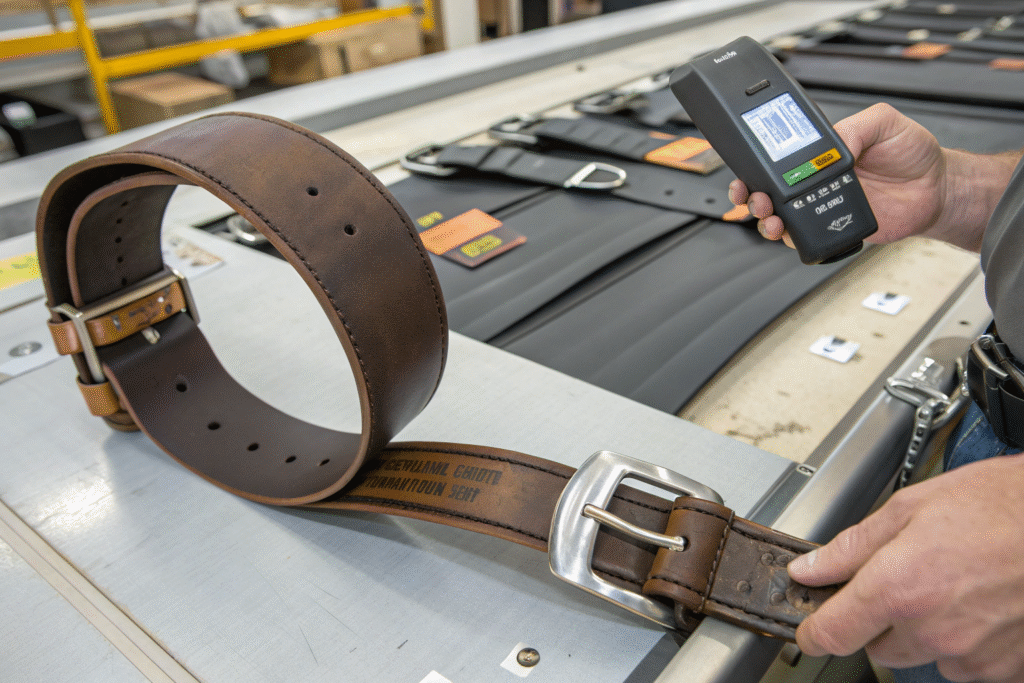
Performance validation should happen at multiple stages: sample testing, production sampling, and final quality control. Each stage confirms that tags meet your read distance and reliability requirements.
What Constitutes a Proper RFID Validation Test?
Comprehensive testing should include:
- Read Range Testing: Multiple distances and angles
- Bulk Reading: Simulating warehouse portal reading
- Material Impact: Testing with different buckle types and materials
- Environmental Factors: Accounting for metal shelves and other interference
A proper test protocol might involve reading 100 tags simultaneously from various distances to ensure 99%+ read rates.
How Can You Conduct Factory Audits for RFID Quality?
When possible, visit the factory to observe their RFID processes:
- Encoding Verification: How they ensure each tag is properly encoded
- Placement Consistency: How they maintain exact tag placement
- Testing Equipment: What tools they use to validate performance
- Failure Handling: How they address defective tags
Factories with comprehensive quality systems will have standardized processes rather than ad-hoc approaches.
How to Implement Complete Inventory Management Systems?
RFID-enabled belts are useless without the proper reading infrastructure and software. The physical product is just one component of a complete inventory management solution. Implementation requires careful planning and coordination.
A complete system includes RFID readers, antennas, middleware, and integration with your existing inventory management software. Each component must work together seamlessly to deliver the efficiency benefits you're seeking.
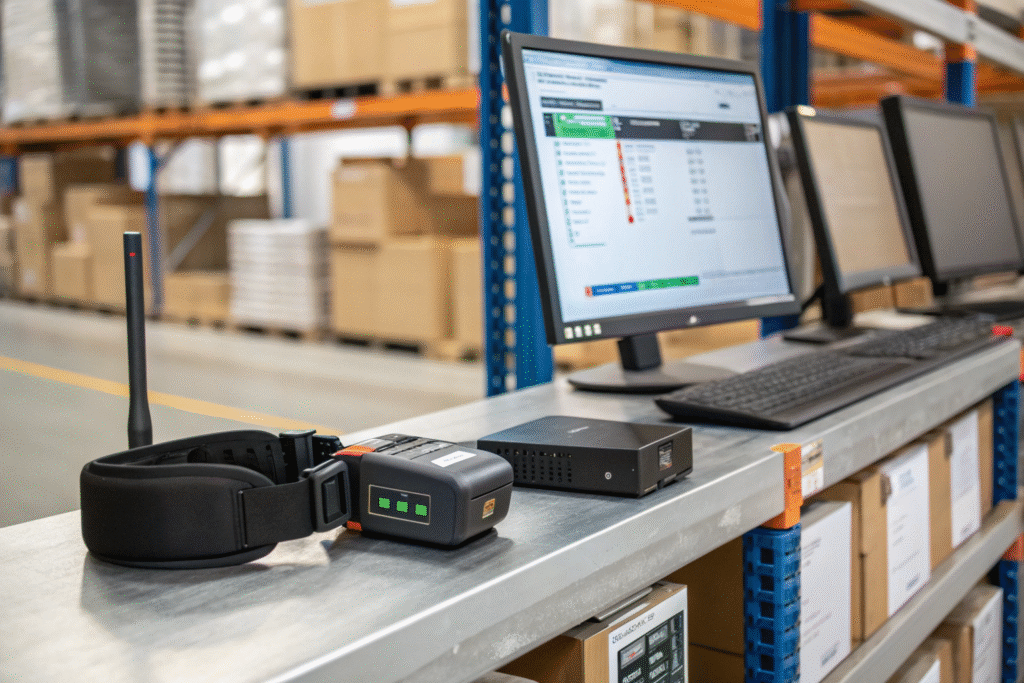
What Infrastructure is Needed for Different Applications?
The required hardware depends on your specific use case:
- Warehouse Portals: Fixed readers at receiving/shipping doors
- Handheld Scanners: For cycle counts and location audits
- Mobile Computers: For receiving and picking operations
- Shelf Antennas: For real-time inventory tracking
Consider your workflow and where RFID reading will occur to determine the right hardware mix.
How to Ensure Software Integration Success?
Technical integration is often the most challenging part:
- API Compatibility: Ensure your software can communicate with RFID middleware
- Data Mapping: Plan how RFID data translates to your inventory records
- Process Redesign: Update workflows to leverage RFID capabilities
- Staff Training: Ensure employees understand the new system
Successful implementation often requires working with both your belt manufacturer and your software providers to ensure all components work together seamlessly.
Conclusion
Sourcing RFID-enabled belts for inventory management requires finding technically capable manufacturers, specifying the right tags and encoding, rigorously testing performance, and implementing complete reading systems. The process demands more technical expertise than traditional sourcing but delivers transformative efficiency gains through accurate, rapid inventory tracking. By following a systematic approach to manufacturer qualification, technical specification, performance validation, and system integration, you can successfully implement RFID technology that revolutionizes your inventory management.
If you're looking for a belt manufacturer with proven RFID implementation experience and the technical capability to ensure reliable performance, our factory has successfully integrated RFID technology across multiple product lines. Contact our Business Director, Elaine, at elaine@fumaoclothing.com to discuss your specific RFID requirements and implementation timeline.