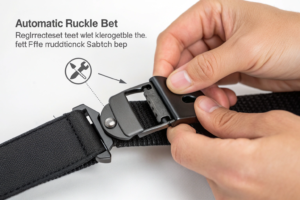
The retail and industrial sectors are increasingly adopting RFID technology to revolutionize inventory management, with RFID-enabled belts representing a sophisticated solution that combines everyday products with advanced tracking capabilities. These specialized belts embed radio-frequency identification technology directly into their structure, creating items that can be automatically identified and tracked throughout supply chains, retail environments, and industrial settings without manual scanning.
Sourcing RFID-enabled belts for inventory tracking requires identifying manufacturers with RFID integration expertise, selecting appropriate RFID technologies for specific applications, ensuring durability of embedded components, establishing data management protocols, and verifying compliance with international RFID standards. The most successful sourcing approaches treat these products as integrated systems rather than simply belts with added tags, recognizing that both the physical product and technological components must meet rigorous standards to deliver reliable inventory tracking.
As inventory accuracy becomes increasingly critical for retail profitability and supply chain efficiency, understanding how to source effective RFID-enabled belts provides businesses with significant operational advantages while creating new data streams that enhance decision-making across organizations.
What RFID Technologies Are Suitable for Belt Integration?
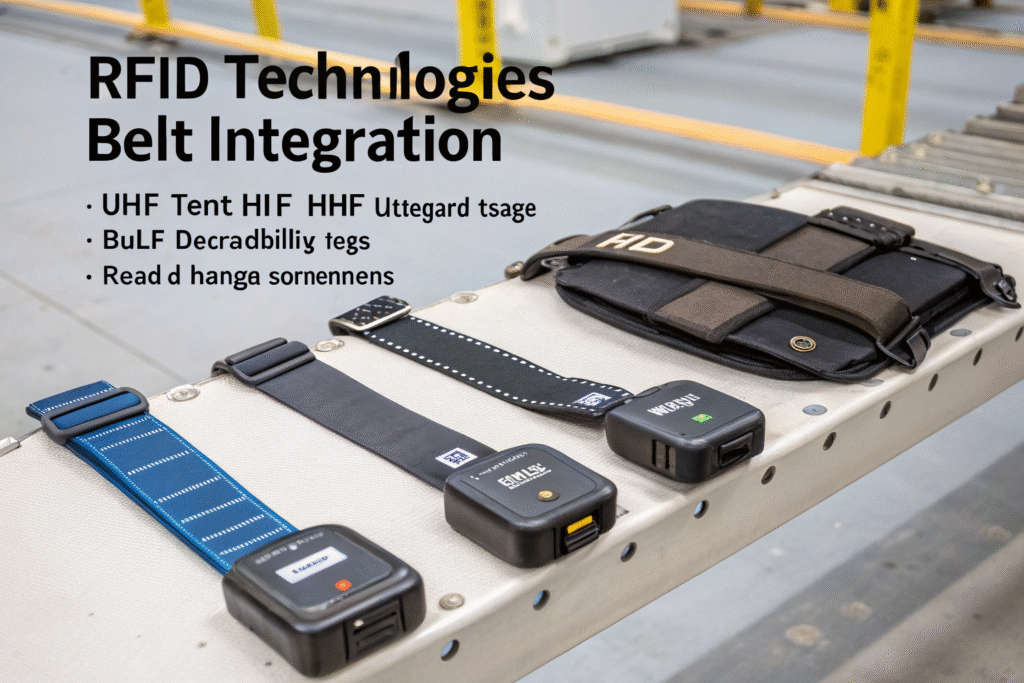
Different RFID technologies offer varying advantages for belt applications, with selection depending on specific tracking requirements and operational environments.
How Do UHF RFID Systems Enhance Inventory Management?
Ultra-High Frequency (UHF) RFID systems provide the extended read ranges (typically 5-10 meters) that make them ideal for warehouse and retail inventory applications. UHF tags embedded in belts can be rapidly scanned in bulk without line-of-sight requirements, enabling entire racks of merchandise to be inventoried in seconds rather than hours. The most effective implementations use EPC Gen2 tags that store unique identification numbers compatible with global standards, ensuring interoperability across different reading systems and supply chain partners.
The inventory advantage extends to loss prevention, where UHF systems can monitor belt movement throughout stores, identifying patterns that indicate potential theft. Retailers can establish choke points with RFID readers that track merchandise flow between departments or exits, creating automated alert systems without the visible security measures that might discourage legitimate shoppers. This dual-purpose application—inventory management and loss prevention—creates compelling ROI that justifies the additional cost of RFID-enabled products.
What Role Does NFC Technology Play in Consumer Engagement?
Near Field Communication (NFC) technology offers shorter read ranges (typically 1-10 centimeters) that make it ideal for customer-facing applications alongside inventory management. While less suited for bulk scanning than UHF systems, NFC-enabled belts create engagement opportunities at point-of-sale, in fitting rooms, or through interactive displays. Customers can tap smartphones to belt tags to access product information, styling suggestions, or authentication verification, enhancing the shopping experience while providing valuable consumer behavior data.
The consumer engagement advantage complements inventory functionality when implemented as part of a dual-frequency system. Some advanced implementations embed both UHF tags for inventory purposes and NFC chips for customer interaction, creating products that serve operational and marketing needs simultaneously. This approach maximizes the value of RFID integration while providing natural transition points between back-of-house and front-of-house functionality that justifies the technology investment.
What Manufacturing Capabilities Ensure Reliable RFID Belts?
Sourcing RFID-enabled belts requires manufacturers with specific technical competencies beyond traditional belt production.
| Manufacturing Capability | RFID Integration Requirement | Impact on Tracking Reliability |
|---|---|---|
| Embedding Expertise | Protection of delicate components during production | Prevents tag damage that would create inventory gaps |
| Material Compatibility | Selection of materials that don't interfere with RF signals | Ensures consistent read rates across product variations |
| Quality Assurance | Testing of both physical durability and technological function | Maintains system integrity throughout product lifespan |
| Standard Compliance | Implementation of global RFID standards | Enables interoperability across supply chain partners |
| Data Management | Encoding and association with product information | Creates accurate digital twins of physical products |

How Is RFID Technology Physically Integrated?
Successful RFID integration requires specialized embedding techniques that protect delicate electronic components while maintaining product aesthetics and comfort. The most common approaches include laminating RFID inlays between leather or fabric layers, encapsulating tags within plastic buckle components, or sewing tags into specially designed pockets within belt constructions. Each method balances protection against mechanical stress, environmental exposure, and signal interference while preserving the belt's appearance and wearability.
The integration quality directly impacts read reliability—poorly positioned tags may have reduced read ranges or directional sensitivity that creates inventory blind spots. The most sophisticated manufacturers conduct RF testing throughout production to verify signal strength and pattern consistency, ensuring tags perform reliably regardless of how belts are oriented relative to readers. This attention to electromagnetic performance is crucial for inventory systems where missed reads translate directly to inaccurate stock counts and potential operational disruptions.
What Durability Standards Should RFID Belts Meet?
RFID-enabled belts must withstand real-world conditions that would destroy conventional RFID tags, requiring enhanced durability testing specific to wearable applications. Flex testing simulates years of bending around waists, abrasion testing ensures tags survive friction against clothing and equipment, and environmental testing verifies performance despite moisture, temperature variations, and chemical exposure from cleaning or perspiration. Manufacturers should provide test data demonstrating tag survival through these conditions rather than relying on generic RFID specifications.
The durability requirements extend to the complete product lifecycle, with the most reliable implementations ensuring tags remain functional throughout the belt's usable life rather than just initial sale. This longevity is particularly important for inventory systems that assume continuous tracking from manufacturing through point-of-sale and potentially beyond. Manufacturers who understand these lifecycle requirements typically implement more robust integration methods and higher-grade RFID components that justify their potentially higher costs through reduced failure rates.
How Should Data Management Be Structured?
Effective RFID implementation requires sophisticated data management systems that transform raw tag reads into actionable inventory intelligence.
What Information Should Be Encoded on RFID Tags?
RFID tags for inventory tracking typically store standardized identification numbers rather than extensive product information, with detailed data maintained in associated databases. The Serialized Global Trade Item Number (SGTIN) provides unique identification of individual belt units, while the Global Individual Asset Identifier (GIAI) may be used for reusable tracking in industrial applications. This separation of minimal on-tag data from comprehensive backend information balances read speed with detailed tracking capabilities.
The encoding process should include association with product attributes that enhance inventory accuracy—size, color, style, manufacturing date, and composition all help automate inventory categorization beyond simple unit counts. The most sophisticated implementations include production batch information that enables tracking of quality issues or recall management, transforming inventory systems from simple counting tools to comprehensive product lifecycle management platforms. This expanded data association creates operational benefits that extend far beyond basic stock level monitoring.
How Can RFID Data Be Integrated with Existing Systems?
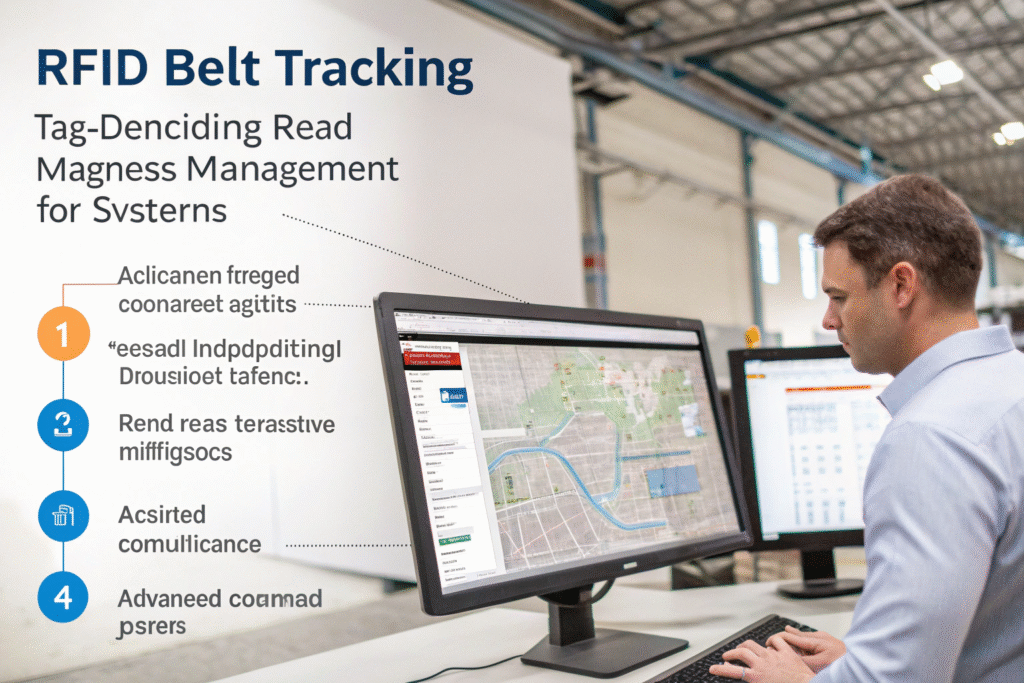
Successful RFID implementation requires seamless integration with existing inventory management, ERP, and point-of-sale systems rather than operating as separate siloed solutions. Middleware that filters and processes raw RFID reads—converting them into inventory transactions, stock alerts, or reordering triggers—forms the crucial bridge between physical tracking and business systems. This integration ensures RFID data enhances rather than complicates existing operational workflows.
The most effective integrations use standardized APIs that connect RFID systems with common retail and inventory platforms, reducing custom development requirements while ensuring compatibility with future system updates. Data synchronization should maintain consistency between physical inventory (what RFID systems detect) and systemic inventory (what business systems record), with automated reconciliation processes that identify and investigate discrepancies. This closed-loop approach prevents the data integrity issues that can undermine confidence in RFID systems despite their technical accuracy.
What Sourcing Strategies Mitigate Implementation Risks?
Sourcing RFID-enabled belts involves unique risks that require specific mitigation approaches throughout the procurement process.

How Should Supplier Capabilities Be Evaluated?
Evaluating potential suppliers requires specific assessment criteria beyond traditional manufacturing capabilities. Technical qualifications should include RFID integration experience, understanding of RF principles, quality control processes for electronic components, and data management capabilities. Operational qualifications should address production scalability, lead time consistency despite technology components, and experience with similar implementations for other clients. The most thorough evaluations include site visits that observe integration processes firsthand rather than relying on documentation alone.
The supplier assessment should extend to their technology partnerships and component sourcing. Manufacturers with established relationships with reputable RFID inlay producers typically deliver more consistent results than those sourcing generic components based primarily on cost. Similarly, suppliers who maintain testing equipment to verify tag performance throughout production demonstrate commitment to quality that transcends basic compliance with specifications. These technical competencies often prove more valuable than marginal cost differences when considering the total cost of RFID implementation failures.
What Phased Implementation Approach Reduces Risk?
A phased implementation approach minimizes risk by validating technology and processes before full-scale deployment. Pilot programs with limited product categories or specific locations identify integration challenges while limiting exposure. These pilots should test the complete ecosystem—manufacturing, distribution, store operations, and system integration—rather than just tag performance in isolation. The lessons learned inform process adjustments before scaling across entire product lines or organizational locations.
The phased approach should include clear success metrics that determine progression criteria rather than arbitrary timelines. Read accuracy rates, inventory count variance reductions, process time savings, and return-on-investment calculations all provide objective measures of pilot success. The most successful implementations also include contingency planning for scenarios where RFID technology underperforms expectations, ensuring that temporary setbacks don't derail the overall inventory improvement initiative. This measured approach builds organizational confidence while delivering incremental benefits throughout implementation rather than only after complete deployment.
Conclusion
Sourcing RFID-enabled belts for inventory tracking requires a comprehensive approach that addresses technical integration, data management, and operational implementation alongside traditional manufacturing considerations. The most successful sourcing strategies treat these products as integrated systems that deliver value through enhanced visibility rather than simply as physical products with added technology components.
As RFID technology continues evolving toward lower costs and higher performance, and inventory accuracy becomes increasingly critical for retail and supply chain success, RFID-enabled belts will transition from specialized solutions to standard offerings across multiple market segments. The sourcing expertise developed today will provide significant competitive advantages as these technologies become mainstream expectations rather than innovative differentiators.
Ready to source RFID-enabled belts for your inventory tracking needs? Contact our Business Director, Elaine, at elaine@fumaoclothing.com to discuss our RFID integration capabilities and implementation experience that can transform your inventory management through technologically enhanced products.