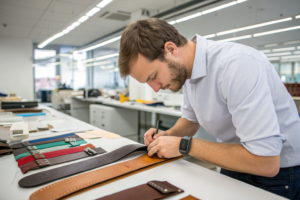
When customers choose a belt, they expect it to last. For faux leather belts, the biggest concern is often surface wear - that unsightly peeling or scuffing that can make a belt look old before its time. As a manufacturer, we understand that proving abrasion resistance is crucial for building trust with brands and consumers who are increasingly demanding both sustainability and durability from synthetic materials.
Verifying abrasion resistance in faux leather belts involves standardized laboratory testing, practical real-world simulations, and careful material specification. The Martindale and Taber abrasion tests are the industry standards, providing quantifiable data on how many cycles a material can endure before showing wear. For belt-specific applications, testing should focus on high-friction areas like buckle contact points and where the belt loops through pants, providing a complete picture of durability for everyday use.
The question of durability is no longer just about passing basic tests. Today's consumers want authentic, reliable information about how products will perform in their daily lives. Let's examine the specific methods that manufacturers and brands can use to verify and demonstrate the abrasion resistance of synthetic leather belts.
What Laboratory Tests Measure Abrasion Resistance?
Standardized laboratory testing provides the foundation for any credible abrasion resistance claim. These tests create controlled, repeatable conditions that allow for direct comparison between different materials and finishes, giving buyers objective data to inform their purchasing decisions.
The two primary laboratory tests for measuring abrasion resistance in faux leather are the Martindale test (for general wear) and the Taber Abraser test (for heavier abrasion). The Martindale test measures the number of cycles until fabric breakdown, with quality faux leather typically exceeding 20,000 cycles for mid-range belts and 40,000+ for premium products. The Taber test measures weight loss after a set number of cycles using standardized abrasive wheels, providing a different but equally valuable durability metric.

How Does the Martindale Test Work for Faux Leather?
The Martindale test is widely used in the textile and leather industries. In this test, a circular sample of the faux leather is mounted under a specified pressure and rubbed against a standard abradant (typically wool fabric) in a continuous Lissajous figure pattern. The machine counts the number of cycles until either two threads break (for coated fabrics) or a noticeable change in appearance occurs. For belt manufacturers, this test is particularly valuable for comparing different PU coatings and understanding how the surface will withstand the constant rubbing against clothing and chairs.
What Does the Taber Abraser Test Reveal?
While the Martindale test simulates general wear, the Taber Abraser provides a more aggressive assessment. It uses two rotating abrasive wheels that press against a rotating sample, creating a cross-hatched abrasion pattern. The result is measured in weight loss (milligrams) after a fixed number of cycles - typically 1,000, 5,000, or 10,000. This test is excellent for evaluating the durability of the material's coating and base fabric layers. A high-quality faux leather for belts will show minimal weight loss, indicating that the material will resist scuffing and peeling at the buckle contact point and other high-stress areas.
How to Conduct Real-World Durability Simulations?
Laboratory tests provide essential baseline data, but they cannot fully replicate the complex ways a belt experiences wear during daily use. Implementing practical simulations bridges this gap, providing visual and functional evidence of how a belt will perform over time.
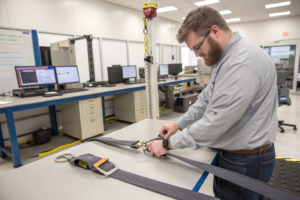
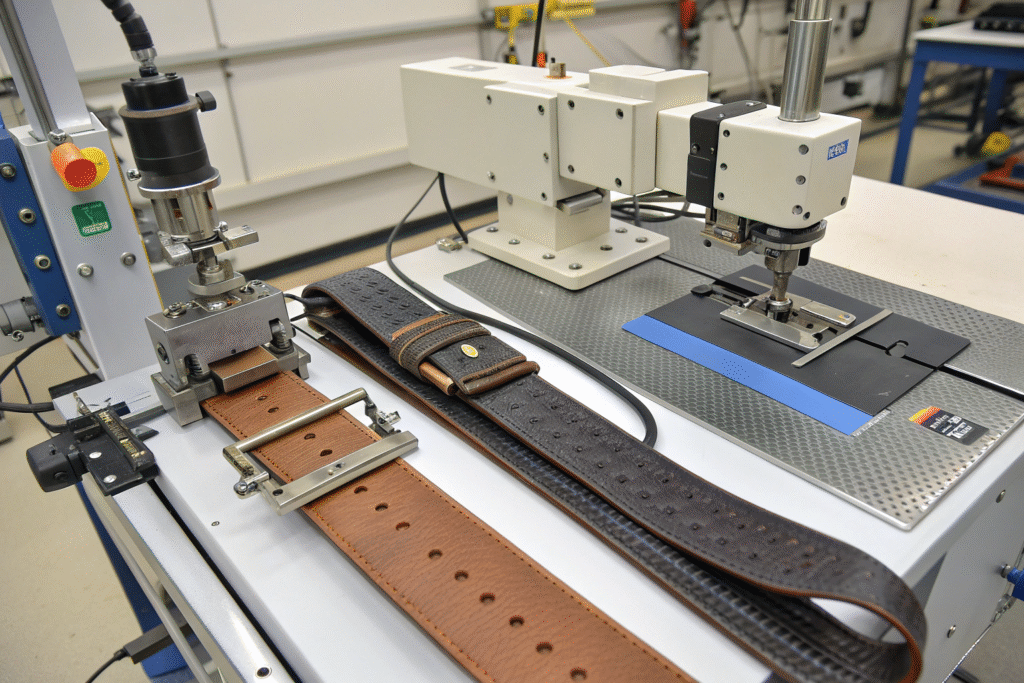
Real-world durability simulations for faux leather belts should replicate three key wear scenarios: buckle friction, flex fatigue, and surface scuffing. These can be conducted using custom jigs that simulate the repeated motion of threading and unthreading the belt, automated machines that repeatedly flex the material, and controlled abrasion against common surfaces like desk edges and car seats to predict real-life wear patterns.
Can You Simulate Buckle Friction Accurately?
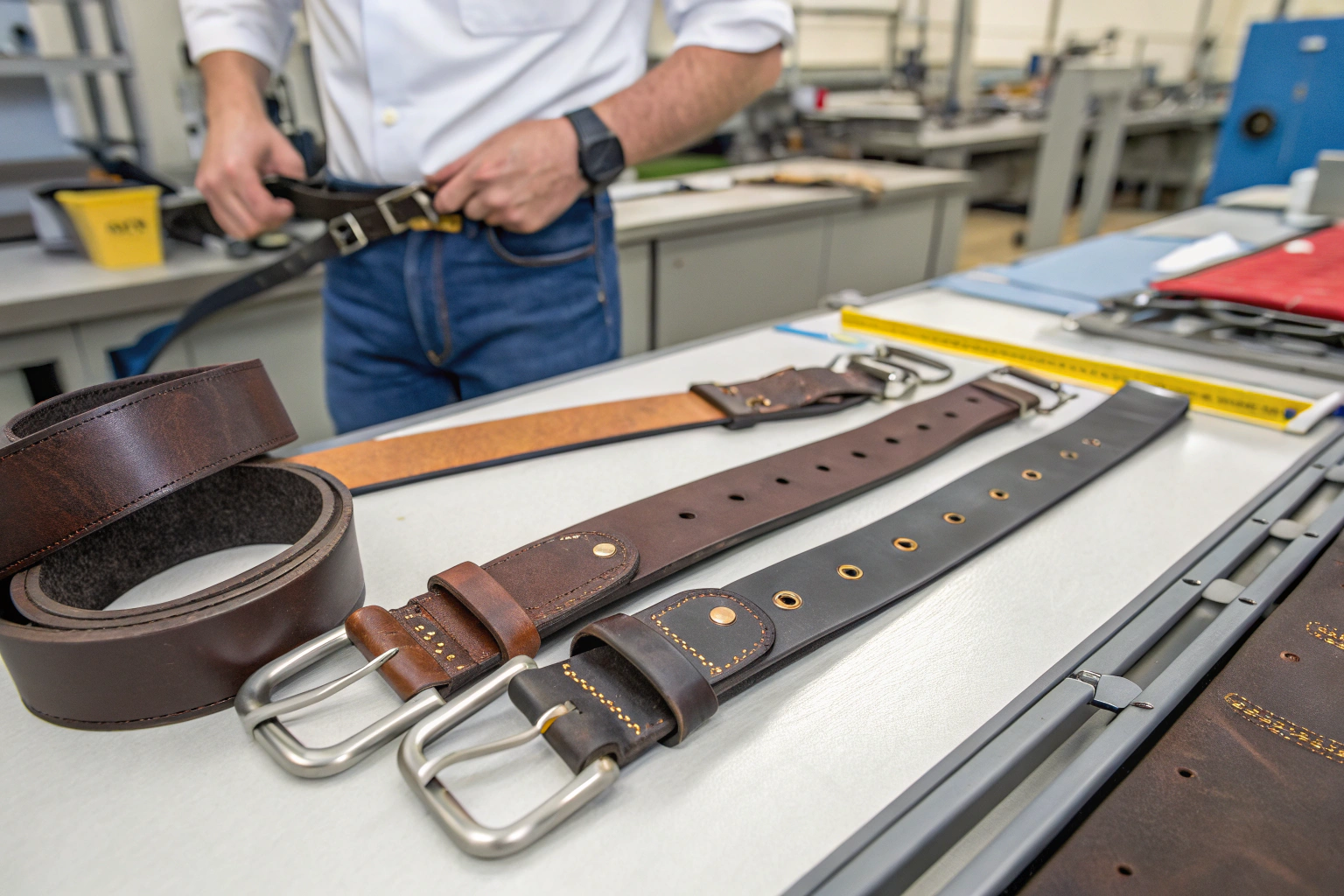
The area around the buckle holes receives the most concentrated abrasion. To simulate this, we've developed a simple but effective test: a machine that repeatedly pulls the belt strap through a standard buckle at a consistent angle and tension. This test runs for thousands of cycles—simulating years of use in days. We then examine the test sample for:
- Coating wear-through to the base fabric
- Cracking along the hole edges
- Color transfer to the buckle
This provides direct visual evidence of how the belt construction will age at its most vulnerable point.
What About Flex Resistance and Surface Scuffing?
Beyond buckle friction, belts fail from repeated bending and surface abrasion. The ISO 5402 Flexometer test mechanically folds the material repeatedly to check for cracking. For surface scuffing, we drag weighted belt samples across various textiles and surfaces that mimic common contact points: denim (from jeans), office chair fabric, and car seat material. These practical tests help answer the critical question: "Will this belt show wear after six months of regular use?" The results directly inform both material selection and design improvements.
What Material Properties Determine Abrasion Resistance?
Understanding the fundamental material science behind abrasion resistance empowers brands to make better sourcing decisions. The durability of faux leather isn't accidental—it's the result of specific chemical formulations and structural designs that can be specified and verified.
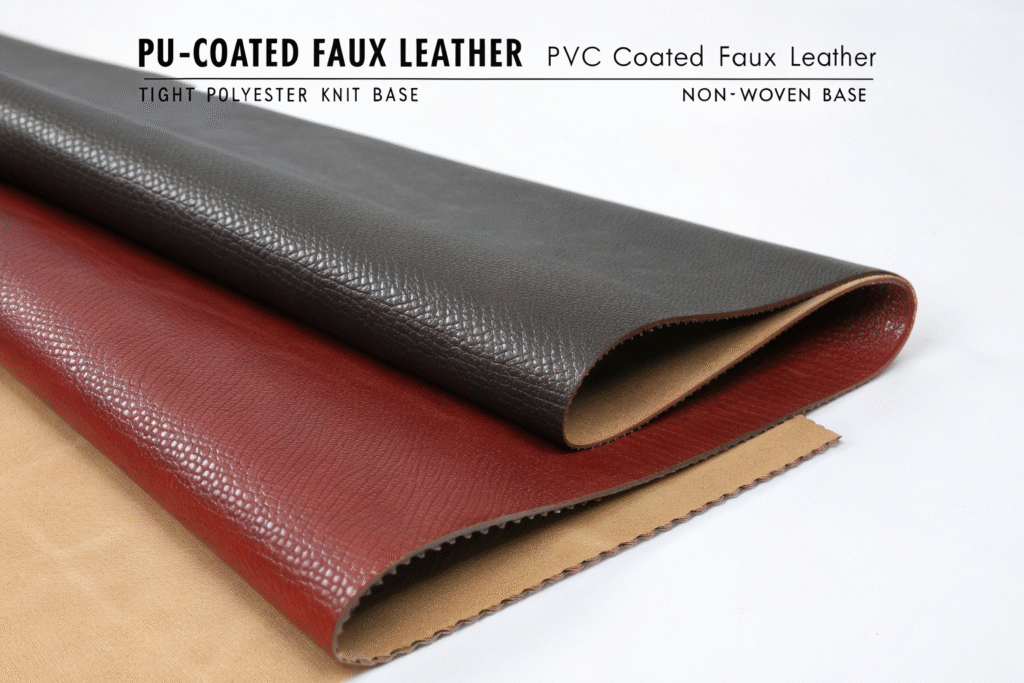
The abrasion resistance of faux leather is primarily determined by the quality and thickness of the top coating, the strength and weave density of the base fabric, and the adhesion between these layers. Polyurethane (PU) coatings generally offer superior abrasion resistance and flexibility compared to PVC, while a tight, strong polyester knit base provides better tear resistance and dimensional stability than non-woven or woven bases.
Why Does the Top Coating Matter Most?
The surface coating is the first line of defense against abrasion. Key factors include:
| Coating Property | Impact on Abrasion Resistance |
|---|---|
| Polymer Type | PU is more flexible and abrasion-resistant than PVC, which can become brittle |
| Coating Thickness | Thicker coatings (0.15mm+) generally last longer but affect hand feel |
| Additives | Ceramic or silicone additives can significantly enhance surface durability |
| Finish Type | Matte finishes often hide minor scuffs better than high-gloss finishes |
The choice of polyurethane formulation is particularly crucial, as high-quality PU can withstand repeated bending without cracking—a common failure point in cheaper alternatives.
How Does Base Fabric Affect Long-Term Durability?
The base fabric provides the structural integrity for the entire material. When the top coating eventually wears through—as it will in high-friction areas—the base fabric becomes visible. A high-density polyester knit maintains a clean appearance even when the top layer is compromised, while a cheap non-woven substrate can fray and disintegrate. Furthermore, a stable base prevents the elongation that causes a belt to stretch out of shape over time, ensuring consistent fit and appearance. This layered approach to material quality is what separates premium synthetic leather from disposable alternatives.
Why is Third-Party Certification Important for Verification?
While in-house testing is valuable for quality control, independent verification provides the credibility that serious buyers require. Third-party certifications transform subjective claims into objective, trusted assurances of quality that can be used in marketing and product specifications.
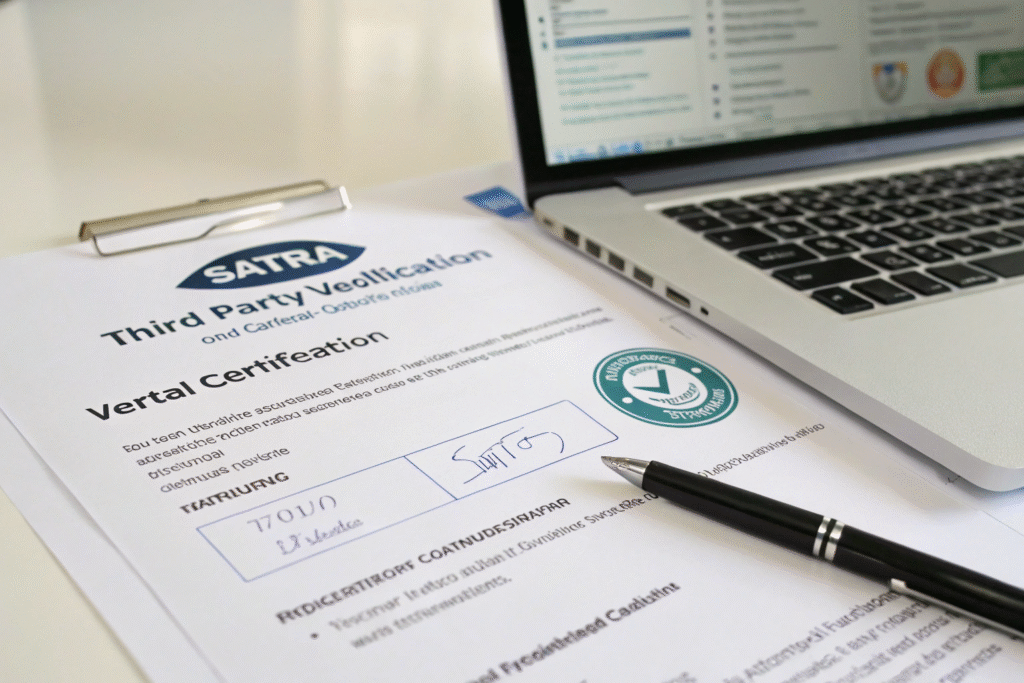
Third-party certification is crucial because it provides unbiased verification of abrasion resistance claims, conducted according to internationally recognized standards. Certificates from accredited laboratories like SATRA, ITS, or SGS give buyers confidence that the product has been tested rigorously and impartially, reducing their risk and simplifying their due diligence process. This independent validation is especially important for brands selling to major retailers or in regulated markets.
What Do Reputable Certification Bodies Test?
Organizations like SATRA and SGS conduct comprehensive testing that goes beyond basic abrasion resistance. Their typical test package for synthetic leather might include:
- Martindale abrasion resistance (ASTM D4966)
- Colorfastness to rubbing (ISO 105-X12)
- Flex resistance (ISO 5402)
- Tensile strength and elongation (ASTM D5034)
- Resistance to water spotting
This holistic approach ensures that the material performs well across all relevant parameters, not just one specific test. For brands targeting the European market or major US retailers, having these certifications readily available can significantly streamline the approval process.
How Can Brands Use Certifications in Marketing?
Third-party certifications provide powerful, legally defensible claims that resonate with quality-conscious consumers. Brands can reference specific test standards and results in their product descriptions, such as "Tested to withstand over 30,000 cycles on the Martindale abrasion test" or "Certified by SATRA for heavy-duty use." This transparent approach to product claims builds consumer trust and differentiates products in a crowded marketplace. For retailers, these certifications reduce returns and complaints related to premature wear, protecting brand reputation and bottom lines.
Conclusion
Verifying abrasion resistance in faux leather belts requires a multi-faceted approach that combines standardized laboratory testing, practical real-world simulations, understanding of material science, and independent third-party validation. By implementing these verification methods, manufacturers can provide credible durability assurances, and brands can make informed sourcing decisions that result in products that truly satisfy customer expectations for longevity and performance.
If you are looking to develop a line of high-quality faux leather belts with verified abrasion resistance and reliable performance, we have the testing expertise and manufacturing capabilities to help. Contact our Business Director, Elaine, at elaine@fumaoclothing.com to discuss how we can create durable, market-ready products for your brand.