You're developing a new "sustainable" belt line. Your supplier has sent you leather labeled "eco-friendly" and polyester webbing they call "recycled." But how can you be sure? In an era of rampant greenwashing, unverified claims can lead to public backlash, legal challenges, and a destroyed brand reputation. Trust, but verify—this is the non-negotiable rule for sourcing truly sustainable materials.
Verifying eco-certifications for sustainable belt materials is a rigorous process that goes beyond accepting a supplier's word. It requires actively checking for specific, reputable certifications from third-party organizations, understanding the scope of what each certification actually covers, and auditing the supporting documentation through the supply chain. True verification means confirming the story from raw material origin to the finished product in your hands.
This guide will provide a concrete framework for authenticating the green claims of your materials. We will explore how to identify the most credible certifications for leather and textiles, the critical steps to audit your supplier's documentation, practical methods for on-site and lab verification, and how to transparently communicate your verified claims to your customers.
What Are the Key Certifications for Leather and Textiles?
Not all eco-labels are created equal. Some are rigorous, independent standards, while others are less meaningful marketing creations. Relying on the wrong certification is as bad as having none at all. The first step is knowing which certifications hold weight in the industry for different material types.
The most credible certifications are issued by independent, non-profit organizations and cover the entire production chain. They have transparent standards, regular audits, and chain-of-custody tracking. For belts, the key certifications fall into two categories: those for leather and those for textiles (both natural and synthetic).
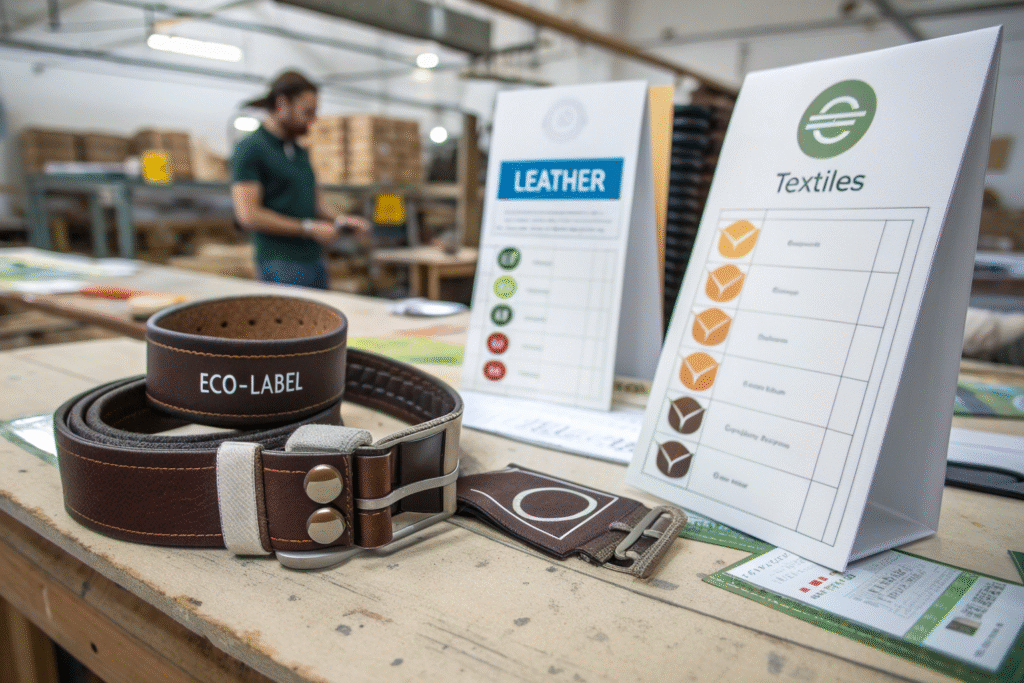
Which Leather Certifications Are Most Respected?
When a tannery claims its leather is "sustainable," you need proof of its environmental and ethical performance. The most robust certification for leather is the Leather Working Group (LWG).
The LWG protocol audits tanneries on a range of criteria, including:
- Energy and Water Usage: Tracking consumption and efficiency.
- Waste Management: How solid waste and wastewater are treated.
- Chemical Management: Restricting the use of hazardous substances.
- Traceability: The ability to trace hides back to the source.
An LWG rating (Gold, Silver, or Bronze) is a strong indicator of a tannery's environmental stewardship. Always ask your supplier for the specific LWG certificate for the leather you are purchasing. This is a cornerstone of verified sustainable leather sourcing.
What Certifications Validate Recycled and Organic Textiles?
For belt materials like cotton, polyester, or nylon, different certifications apply.
- Global Recycled Standard (GRS): This is the leading certification for recycled materials. It verifies the recycled content in a product (e.g., recycled PET belts) and tracks it through the supply chain. It also includes environmental and social criteria.
- OEKO-TEX Standard 100: This certifies that a textile has been tested for a list of harmful substances and is safe for human health. It's crucial for ensuring that dyes and finishes are non-toxic.
- Global Organic Textile Standard (GOTS): For organic cotton or other natural fibers, GOTS is the gold standard. It covers the entire production process, from harvesting to labeling, ensuring organic status and social responsibility.
How to Conduct a Supplier Documentation Audit?
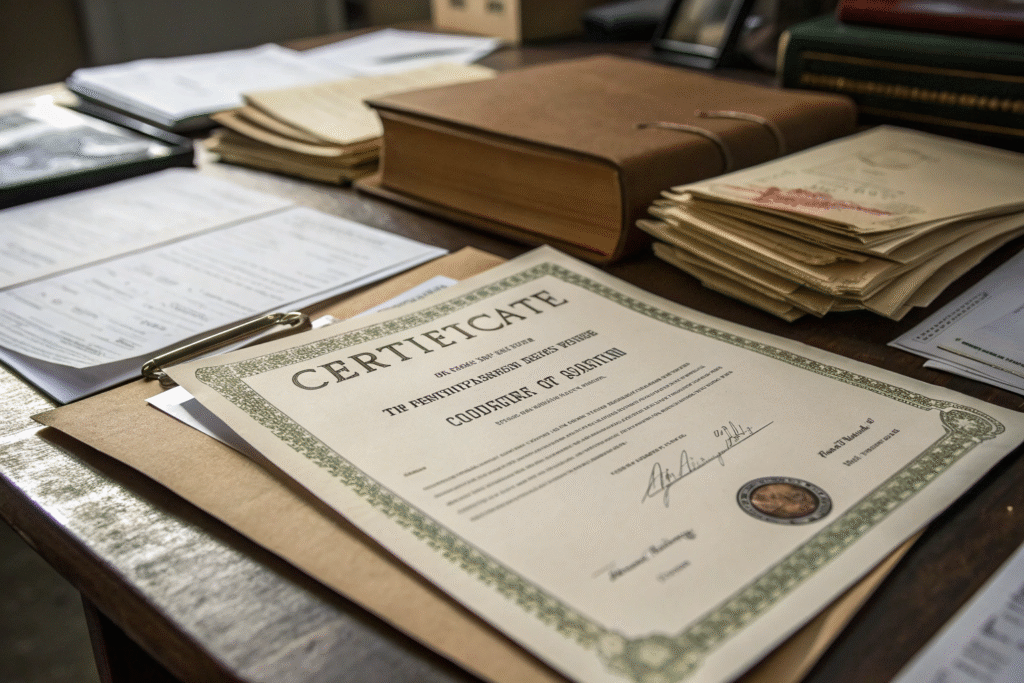
A certificate is just a piece of paper if it doesn't correspond to the exact material batch you are buying. The next critical step is to conduct a thorough audit of the documentation provided by your supplier. This creates a verifiable paper trail.
A proper documentation audit involves collecting and cross-referencing specific documents that prove the certified material you paid for is the material being used in your production. This is your primary defense against accidental misrepresentation or intentional fraud.
What is the "Certification Package" You Must Request?
Do not settle for a generic certificate from a tannery or mill. For each production order, you should request a complete package that includes:
- The Material Supplier's Certificate: The LWG or GRS certificate from the tannery or fabric mill.
- The Transaction Certificate (TC): This is the most important document. A TC is issued for each specific shipment of certified material and traces it from the certified supplier to your manufacturer. It includes the volume, description, and unique certification number.
- Invoices and Packing Lists: These should align with the information on the Transaction Certificate.
If your manufacturer cannot provide a Transaction Certificate that matches their invoice for the certified material, the claim is unverified.
How to Spot Red Flags in Documentation?
Be wary of suppliers who:
- Provide only a generic, undated sustainability policy instead of a specific certificate.
- Show you a certificate for a different company or a different material.
- Are unable or unwilling to provide Transaction Certificates.
- Use vague, unverifiable terms like "eco-leather" or "green material" without a certification to back it up.
These are strong indicators of greenwashing and should prompt you to seek a new responsible supplier.
What Are Practical Methods for On-Site and Lab Verification?
Documentation can be falsified. For high-stakes claims or new supplier relationships, physical verification adds an essential layer of security. This involves inspecting the material itself for markers of its certified status.
While not always feasible for every order, on-site checks and laboratory testing provide the highest level of assurance that your materials meet their claimed standards.

Can You Perform Simple On-Site Checks?
During a factory visit, you can perform several checks:
- Check Material Markings: GRS-certified yarns, for example, are often delivered on spools with specific labels or tags that include the certification code and recycled content percentage.
- Review Incoming Material Logs: Ask to see the factory's records for receiving the certified materials. These should align with the TCs.
- Interview Production Managers: Speak directly with the people handling the materials. Their understanding of the segregation process for certified vs. non-certified materials is a good test of the system's integrity.
This hands-on due diligence is a key part of a comprehensive quality control protocol.
When is Laboratory Testing Necessary?
For certain claims, scientific analysis is the only way to be certain.
- Recycled Content Verification: Isotope testing can scientifically determine the percentage of recycled versus virgin material in a polymer like polyester. This is the ultimate verification for recycled fabric belts.
- Chemical Testing: To verify a "toxin-free" claim, you can send a sample to a lab for testing against the OEKO-TEX Standard 100 banned substances list.
This level of verification is costly and time-consuming but may be justified for large orders or flagship product lines where your brand's credibility is paramount.
How to Transparently Communicate Verified Claims?
Once you have diligently verified your certifications, the final step is to communicate this to your customers accurately and transparently. Misleading marketing, even if unintentional, can be just as damaging as never having verified the claim in the first place.
Your marketing language should be precise, truthful, and backed by the evidence you have collected. This builds consumer trust and protects your brand from accusations of greenwashing.

What is the Difference Between a Claim and a Lie?
Use specific, certified language instead of vague, feel-good terms.
- Instead of: "Our belts are made from eco-friendly leather."
- Say: "The leather in this belt is sourced from a tannery rated Gold by the Leather Working Group for its environmental practices." (And provide a link to the LWG website or your evidence).
- Instead of: "Made from recycled plastic."
- Say: "This belt strap is made from 100% GRS-certified recycled post-consumer PET plastic. View our Transaction Certificate on our sustainability page."
This specificity shows you have done the work and are proud to show it.
Why is Supply Chain Transparency the Ultimate Goal?
The most powerful communication is full transparency. Consider publishing a "Sustainability Facts" label for your key products, similar to a nutritional label.
This label could list:
- Material Composition: e.g., 95% LWG-rated leather, 5% stainless steel.
- Certifications: e.g., GRS 4.0, OEKO-TEX Standard 100.
- Origin of Key Materials: e.g., Leather tanned in Italy, Recycled PET from Taiwan.
This level of honesty resonates deeply with conscious consumers and firmly establishes your brand's commitment to authentic sustainability.
Conclusion
Verifying eco-certifications for sustainable belt materials is a multi-layered process of due diligence. It begins with knowledge of the most respected certifications like LWG for leather and GRS for recycled textiles, followed by a rigorous audit of supplier documentation, particularly Transaction Certificates. For maximum assurance, practical on-site checks and laboratory testing can be employed. Finally, communicating these verified claims with precision and transparency to your customers solidifies your brand's integrity and builds lasting trust. In the fight against greenwashing, this systematic approach to verification is your most powerful tool.
If you are seeking a manufacturing partner that prioritizes verifiable sustainability and can provide transparent documentation for certified materials, we are committed to responsible production. Contact our Business Director, Elaine, at elaine@fumaoclothing.com to discuss how we can help you build a truly sustainable belt collection.