The demand for eco-friendly leather is surging, but the proliferation of green claims has made verification challenging. Many manufacturers face difficulties distinguishing genuine sustainable practices from marketing hype, risking their credibility and compliance.
Verifying eco-tanning certifications requires checking accredited certification bodies, understanding specific environmental criteria, conducting supply chain audits, and confirming traceability systems. Proper verification ensures leather products meet genuine ecological standards rather than superficial greenwashing claims.
Navigating the complex landscape of leather certifications demands a systematic approach. Let's explore the key steps to authenticate eco-tanning credentials effectively.
Which Certification Bodies Hold Global Recognition?
Not all certification bodies carry equal weight in the leather industry. Understanding which organizations set the standards helps manufacturers and buyers make informed decisions about sustainable leather sourcing.
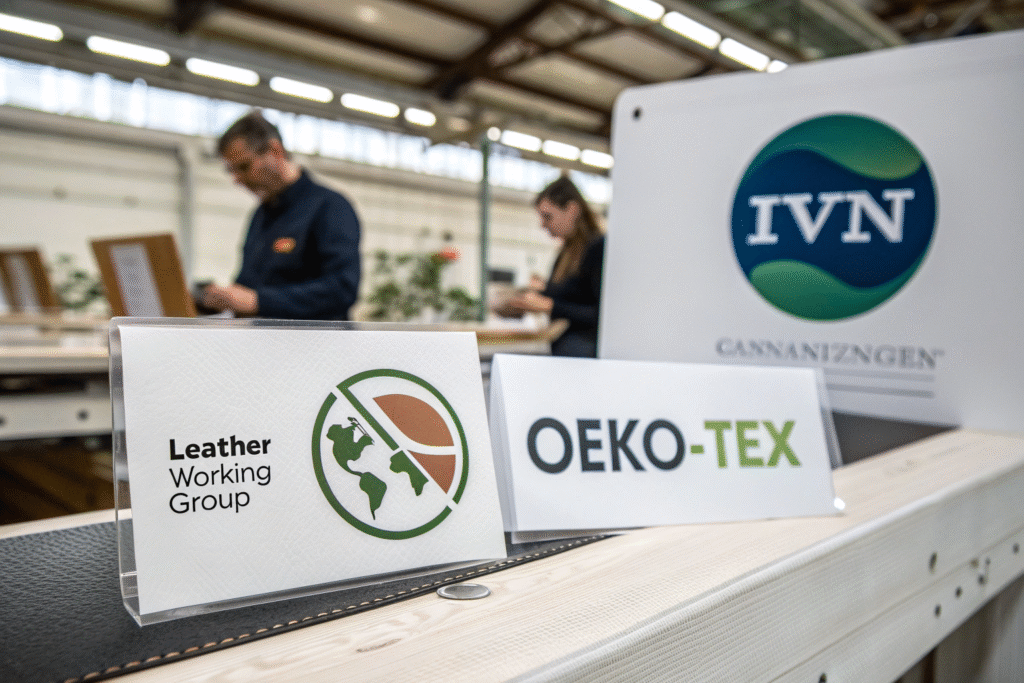
Globally recognized certification bodies include the Leather Working Group (LWG), OEKO-TEX, and the Institute for Applied Ecology (IVN). These organizations maintain rigorous standards for environmental compliance, chemical management, and manufacturing transparency. Their certifications are widely accepted across international markets.
What are the key differences between LWG and OEKO-TEX?
The Leather Working Group (LWG) focuses on environmental performance throughout the leather manufacturing process, auditing energy consumption, waste management, and chemical usage. Conversely, OEKO-TEX certification primarily concerns product safety, testing for harmful substances in final leather products. While LWG certifies manufacturing facilities, OEKO-TEX certifies end products, making them complementary rather than competing certifications.
How do regional certifications compare to international standards?
Regional certifications like Europe's Ecolabel maintain strong environmental standards but may lack global recognition. International standards typically offer broader supply chain oversight and more frequent audit requirements. When sourcing leather globally, prioritizing internationally recognized certifications ensures consistent environmental standards across different manufacturing locations and simplifies compliance verification for international buyers.
What Documentation Proves Genuine Eco-Certification?
Proper documentation serves as the foundation for verifying eco-tanning certifications. Understanding what paperwork constitutes valid proof helps prevent fraudulent claims and ensures supply chain transparency.
Authentic certification requires current certificates from accredited bodies, detailed audit reports, and chain-of-custody documentation. These documents should display issue dates, validity periods, and specific scope matching the purchased materials. Regular renewal and surveillance audit records indicate maintained compliance.

Which documents demonstrate ongoing compliance?
Current certification certificates with valid dates, surveillance audit reports, and chemical management records demonstrate ongoing compliance. Manufacturers should provide test reports from accredited laboratories verifying restricted substance limits. Additionally, environmental performance data covering water consumption, energy use, and waste management shows continuous monitoring rather than one-time certification achievement.
How can buyers verify document authenticity?
Buyers can verify document authenticity by cross-referencing certificate numbers directly with certification bodies through online databases. Contacting certification organizations to confirm current status prevents reliance on potentially outdated or falsified documents. Physical audits of supplier facilities provide the most reliable verification, though third-party verification services offer practical alternatives for frequent international purchases.
How to Audit Chemical Management in Tanneries?
Chemical management represents a crucial aspect of eco-tanning verification. Proper auditing ensures compliance with environmental standards and identifies potential risks in the leather production process.
Comprehensive chemical audits examine inventory records, safety data sheets, and disposal methods. They verify that tanneries use approved chemicals and implement proper wastewater treatment systems. Understanding these processes helps buyers assess genuine environmental commitment.

What chemical tracking systems do certified tanneries use?
Certified tanneries implement chemical inventory management systems that track usage, storage, and disposal. They maintain updated safety data sheets for all chemicals and use manufacturing resource planning software to monitor consumption patterns. These systems help ensure compliance with ZDHC (Zero Discharge of Hazardous Chemicals) standards and facilitate transparent reporting to certification bodies and clients.
Which hazardous substances must be monitored?
Tanneries must monitor chromium VI formation, azo dyes, pentachlorophenol, and heavy metals like cadmium and lead. Regular testing ensures these substances remain within certification limits. Monitoring also extends to volatile organic compounds emissions and wastewater parameters including pH levels, biological oxygen demand, and total dissolved solids to ensure comprehensive environmental protection.
What Supply Chain Transparency Measures Exist?
Supply chain transparency forms the backbone of credible eco-certification verification. Understanding the journey from raw material to finished product ensures genuine sustainable practices throughout production.
Effective transparency measures include traceability systems, supplier disclosure requirements, and regular third-party audits. These elements work together to create accountability at each production stage, from raw hide sourcing to final leather finishing.

How do blockchain systems enhance traceability?
Blockchain technology creates immutable records of each production step, providing transparent documentation of the leather's journey. This technology enables real-time tracking of raw materials, processing methods, and transportation routes. By creating accessible, tamper-proof records, blockchain systems significantly reduce opportunities for fraudulent claims and enable buyers to verify sustainable practices at every production stage.
What information should suppliers disclose?
Suppliers should disclose raw material origins, tanning locations, chemical usage data, and energy sources. Comprehensive disclosure includes water recycling rates, waste management methods, and workforce compliance with labor standards. This level of transparency demonstrates commitment to genuine sustainability rather than superficial environmental claims, building trust with discerning buyers and certification bodies.
Conclusion
Verifying eco-tanning certifications requires diligent examination of certification bodies, proper documentation, chemical management systems, and supply chain transparency. Implementing thorough verification processes ensures leather products meet genuine environmental standards and provides buyers with confidence in their sustainable sourcing decisions.
If you need assistance sourcing verified eco-tanned leather for your belt production, our factory maintains comprehensive certification documentation and transparent supply chain records. Contact our Business Director, Elaine, at elaine@fumaoclothing.com to discuss your sustainable leather requirements.