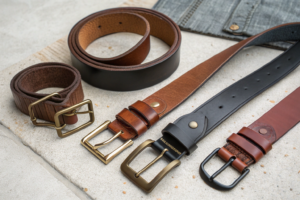
Outdoor belts face constant abuse from environmental elements, accidental impacts, and demanding activities that can compromise their integrity. Traditional belt testing often focuses on tensile strength and abrasion resistance while overlooking the critical factor of impact resistance—the ability to withstand sudden forces without cracking, breaking, or losing functionality. This gap in verification leaves outdoor enthusiasts vulnerable to equipment failure when it matters most.
Verifying impact resistance for outdoor belts requires specialized testing protocols that simulate real-world impacts, standardized measurement systems for consistent evaluation, material-specific assessment criteria, and performance thresholds aligned with outdoor activity demands. This comprehensive approach ensures belts can withstand the sudden forces encountered during hiking, climbing, fieldwork, and adventure activities without compromising safety or functionality.
The demanding nature of outdoor activities requires a more rigorous approach to impact verification than conventional belt testing provides. This guide explores the methodologies, standards, and practical approaches for properly assessing impact resistance in outdoor belt applications.
What Standardized Tests Measure Impact Resistance Effectively?
Laboratory testing provides controlled, reproducible data that predicts how belt materials and components will perform under impact conditions. Several established methodologies have been adapted specifically for outdoor gear verification.
Impact resistance testing should evaluate both the belt materials and critical components like buckles, rivets, and adjustment mechanisms. Each element contributes to overall impact performance and requires specific assessment approaches.

How Does the Charpy Impact Test Apply to Belt Materials?
The Charpy impact test (ASTM D6110) measures the amount of energy absorbed by a material during fracture by striking a notched sample with a pendulum hammer. For belt applications, this test helps evaluate:
- Material toughness: Ability to deform without fracturing
- Notch sensitivity: Resistance to crack propagation from stress points
- Temperature performance: Impact resistance across outdoor temperature ranges
Materials absorbing higher impact energy (measured in joules) typically perform better in outdoor applications where sudden forces are common.
Why Should Buckle Impact Testing Simulate Real-World Scenarios?
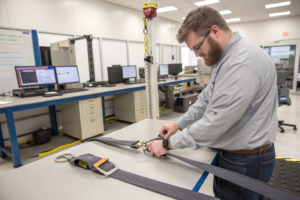
Buckle impact resistance requires specialized testing that simulates how buckles strike rocks, equipment, or hard surfaces during falls or accidents. Effective testing should include:
- Multi-directional impact: Striking from various angles representing different accident scenarios
- Edge impact: Hitting buckle edges where stress concentrates
- Repeated impact: Assessing damage accumulation from multiple minor impacts
Buckles maintaining functionality after standardized impact tests provide reliable performance in field conditions.
What Field Testing Methods Provide Real-World Validation?
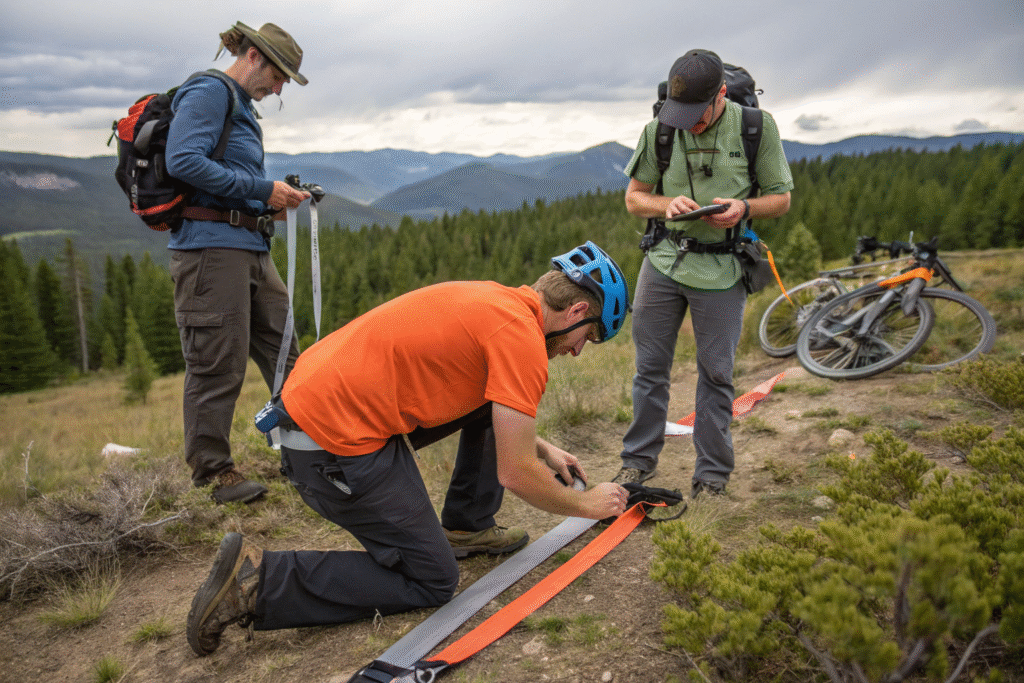
Laboratory testing alone cannot capture the complex variables of actual outdoor use. Field testing complements controlled laboratory data with real-world performance validation under authentic conditions.
Systematic field testing should expose belts to the specific impact scenarios most relevant to their intended activities. Each outdoor discipline creates unique impact challenges that require tailored testing approaches.
How Can Controlled Field Impact Testing Generate Comparable Data?
Structured field testing protocols create reproducible impact scenarios that generate meaningful performance data. Effective approaches include:
- Standardized drop tests: Dropping weighted belts onto various surfaces from controlled heights
- Equipment impact simulations: Striking belts with climbing gear, tools, or outdoor equipment
- Environmental conditioning: Testing after exposure to UV, moisture, and temperature cycles
These controlled field tests bridge the gap between laboratory precision and real-world relevance.
What Performance Metrics Matter Most in Field Conditions?
Field testing should evaluate critical failure modes specific to outdoor use, including:
- Buckle release probability: Whether impacts cause accidental buckle release
- Material cracking: Development of surface cracks or deep fractures
- Stitch integrity: Whether impact forces compromise stitching
- Hardware deformation: Permanent bending or distortion of metal components
Belts maintaining functionality after documented field impacts demonstrate genuine outdoor reliability.
What Material Properties Determine Impact Performance?
Understanding the fundamental material characteristics that influence impact resistance helps manufacturers select appropriate materials and designers optimize belt construction. Different materials respond uniquely to impact forces based on their molecular structure and physical properties.
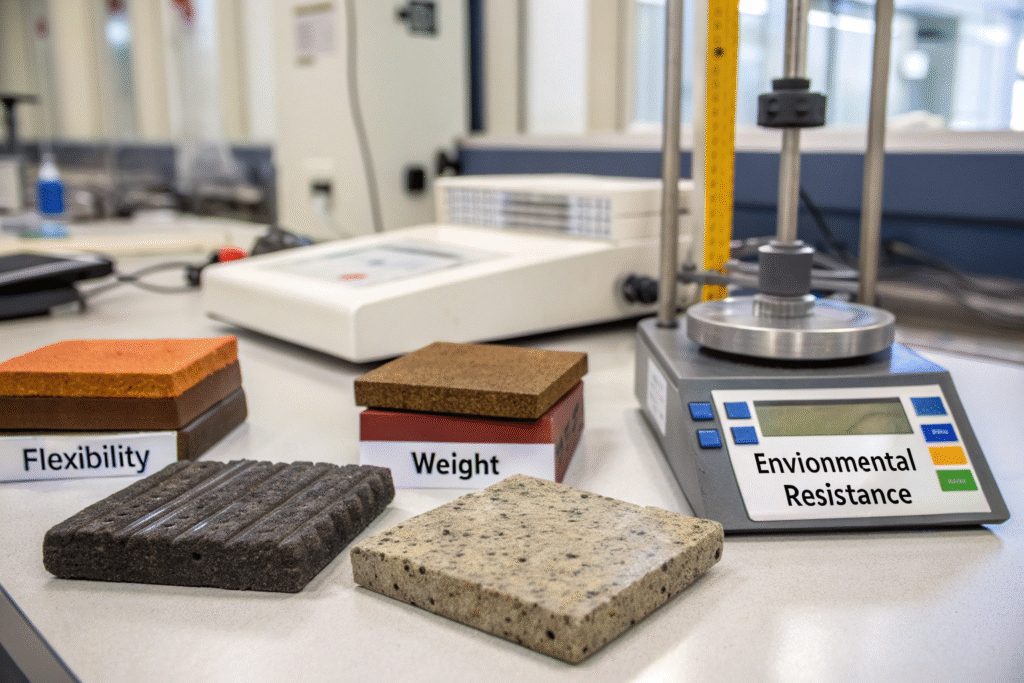
Material selection should balance impact resistance with other necessary characteristics like flexibility, weight, and environmental resistance. Each material category offers distinct impact performance profiles.
How Does Polymer Crystallinity Affect Impact Resistance?
The crystalline structure of polymers significantly influences their impact behavior. Materials with:
- High crystallinity: Typically offer better strength but may be brittle
- Amorphous regions: Provide better impact absorption through molecular mobility
- Balanced structure: Often deliver optimal impact resistance for outdoor applications
Understanding these relationships helps select materials that withstand sudden forces without fracturing.
Why Do Composite Materials Offer Enhanced Impact Performance?
Strategic material layering in composites can create impact performance superior to single materials through:
- Energy dissipation: Multiple layers absorb and distribute impact energy
- Crack stopping: Layer interfaces prevent crack propagation
- Directional reinforcement: Fibers oriented to resist specific impact directions
Well-designed composites can provide exceptional impact resistance while maintaining flexibility and low weight.
What Certification Standards Validate Outdoor Impact Resistance?
Independent certification provides objective verification of impact resistance claims, giving consumers confidence in product performance. Several standards organizations offer specific certifications for outdoor equipment impact resistance.
Certification processes typically combine laboratory testing, manufacturing audits, and ongoing quality monitoring to ensure consistent performance. Understanding these standards helps manufacturers design to verified performance levels.
How Does the UIAA Safety Standard Apply to Technical Belts?
The Union Internationale des Associations d'Alpinisme (UIAA) safety standard includes specific requirements for:
- Dynamic strength: Resistance to sudden loading
- Sharp edge resistance: Performance when impacted against edges
- Cold temperature performance: Impact resistance at low temperatures
While originally developed for climbing equipment, these standards provide excellent benchmarks for technical outdoor belts used in demanding activities.
What Do CE Certification Marks Indicate About Impact Performance?
CE marking for personal protective equipment involves testing against European standards that include:
- Impact resistance thresholds: Minimum performance levels for specific risk categories
- Material verification: Confirmation of consistent material properties
- Production control: Ongoing manufacturing quality assurance
Belts carrying appropriate CE marks have demonstrated verified impact resistance through standardized testing.
| Test Method | Impact Type Measured | Performance Benchmark |
|---|---|---|
| Charpy Impact Test | Material toughness | Energy absorption (joules) |
| Falling Dart Impact | Puncture resistance | Failure height (meters) |
| Buckle Impact Test | Hardware integrity | Functional after impact |
| Field Drop Test | Real-world simulation | No damage at specified height |
Conclusion
Verifying impact resistance for outdoor belts requires a comprehensive approach combining standardized laboratory testing, realistic field validation, material science understanding, and independent certification. By implementing rigorous impact testing protocols that simulate real-world conditions, manufacturers can ensure their belts withstand the sudden forces encountered during outdoor activities. The most effective verification strategies recognize that impact resistance involves both material properties and overall system integrity—from webbing and stitching to buckles and hardware—creating products that maintain safety and functionality when accidents happen.
Ready to develop outdoor belts with verified impact resistance? At StylishBelts, we implement comprehensive testing protocols that ensure our outdoor products withstand real-world impacts and demanding conditions. Contact our Business Director Elaine today at elaine@fumaoclothing.com to discuss how our impact resistance verification can enhance your outdoor product offerings.