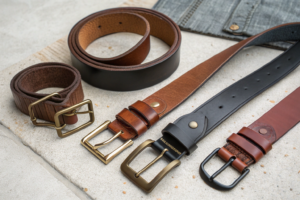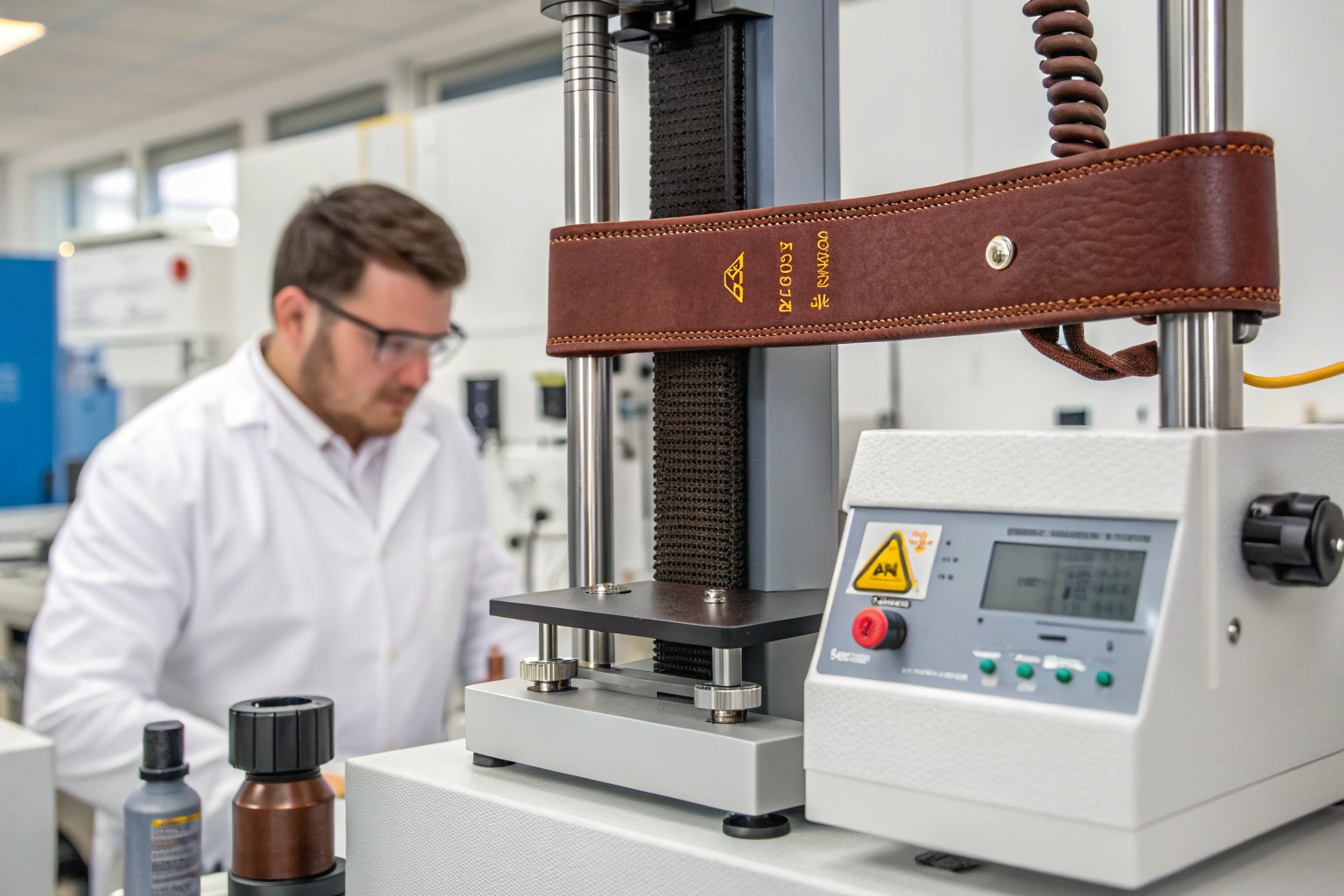
Your leather belts need to withstand daily stress without stretching, cracking, or breaking. Customers expect durability, but how can you be certain your products meet recognized strength standards? Without proper verification, you risk returns, reputation damage, and potential liability issues.
Verifying leather belt tensile strength requires understanding international testing standards, implementing proper testing protocols, and interpreting results against industry benchmarks. Key standards include SATRA TM 137, ISO 3376, and ASTM D2208, which specify testing methods for determining breaking strength, elongation, and stitch performance. Proper verification ensures your belts meet quality expectations and perform reliably throughout their lifespan.
The verification process involves both supplier documentation review and independent testing. Understanding these standards protects your business and ensures customer satisfaction. This guide walks through practical steps to verify tensile strength, from selecting appropriate testing methods to implementing quality control checks throughout production.
What International Standards Govern Leather Belt Tensile Testing?
International standards provide consistent methodologies for measuring tensile strength across global markets. These standards ensure test results are comparable regardless of where testing occurs. Understanding which standards apply to your products is the foundation of proper verification.
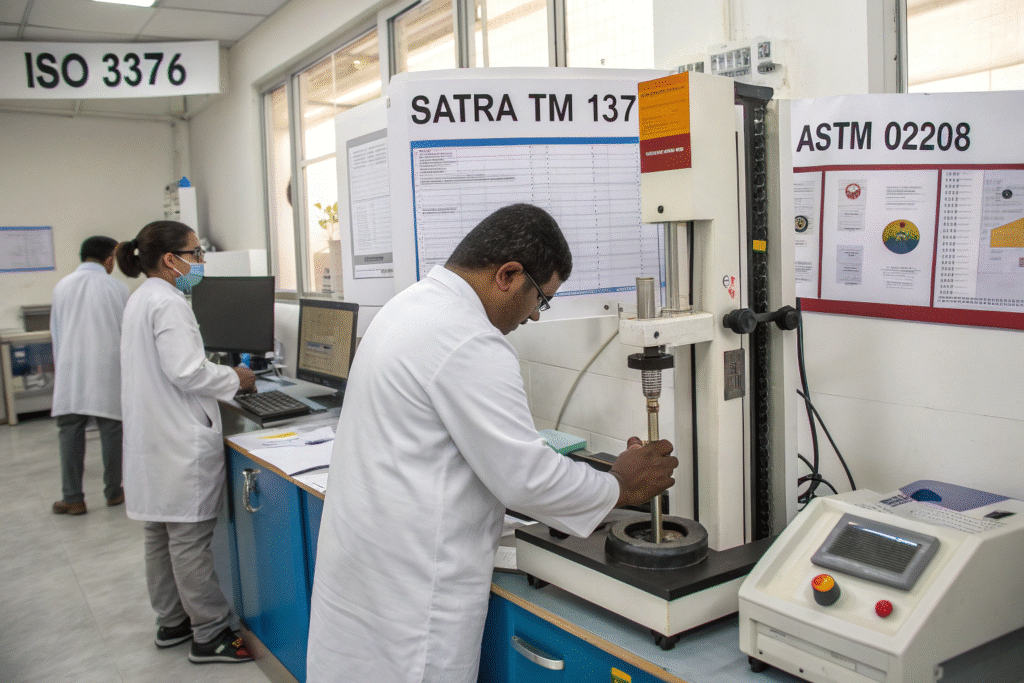
The most widely recognized standards include ISO 3376 for leather tensile strength, SATRA TM 137 for complete belt assembly testing, and ASTM D2208 for strap and belting materials. European markets often require EN standards, while North American buyers typically reference ASTM methods. Each standard specifies sample preparation, testing speed, environmental conditions, and result calculation methods.
How Do ISO Standards Differ from ASTM Methods?
ISO 3376:2020 specifies testing for leather alone, using dumbbell-shaped samples with precise dimensions. The standard requires conditioning samples at 20°C and 65% relative humidity for 48 hours before testing. Testing speed is set at 100 mm/min ± 20 mm, with results recorded in newtons per millimeter width.
ASTM D2208-02(2019) tests the complete belt assembly, including stitching and buckle attachments. This method better reflects real-world performance since failures often occur at stress points rather than in the leather itself. The ASTM International organization provides detailed protocols for jaw separation rates and sample mounting that differ from ISO approaches. Understanding these differences helps select the appropriate standard for your specific verification needs.
What Do SATRA Standards Add to Tensile Verification?
SATRA TM 137 provides the most comprehensive approach by testing the complete belt assembly under conditions simulating actual wear. This method assesses not only tensile strength but also buckle attachment integrity, stitch performance, and overall construction quality. SATRA's methodology includes cyclic testing to evaluate durability over time rather than just ultimate breaking strength.
The SATRA quality standards are particularly valued by European footwear and leather goods manufacturers. Their testing protocols often include environmental conditioning, such as exposing belts to simulated perspiration or temperature extremes before tensile testing. This provides a more realistic assessment of how belts will perform under actual use conditions rather than ideal laboratory environments.
How to Implement Proper Tensile Testing Procedures?
Proper testing requires specific equipment, sample preparation, and environmental controls. Without consistent procedures, results lack comparability and reliability. Implementing standardized testing ensures your quality control provides actionable data for manufacturing improvements.
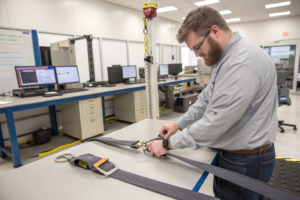
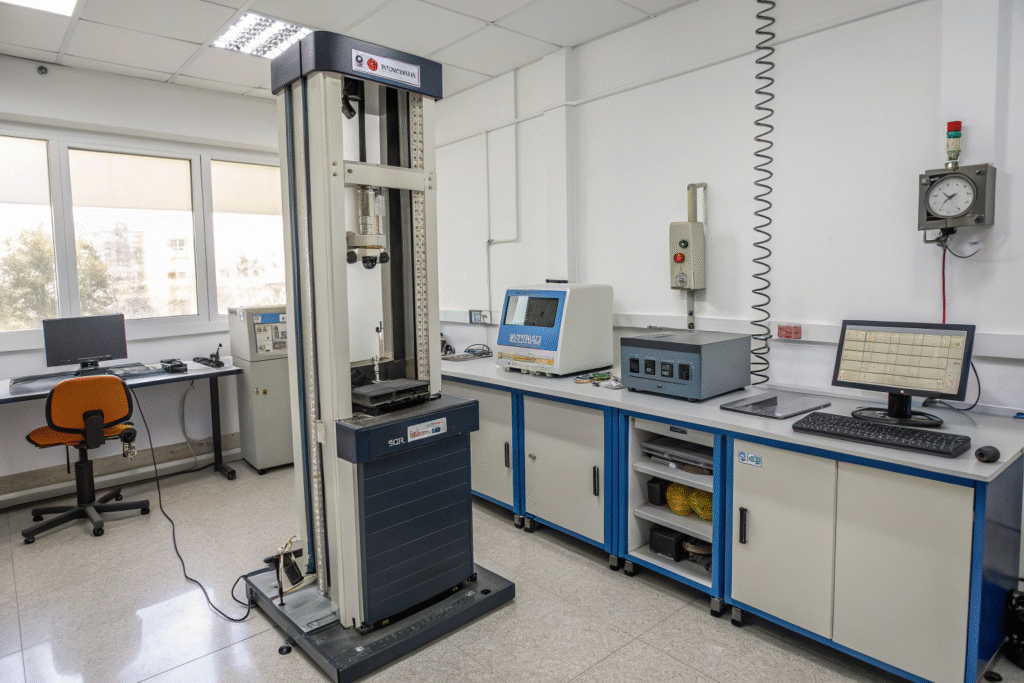
Essential equipment includes a calibrated tensile testing machine with appropriate load capacity (typically 5-10 kN for leather belts), environmental chamber for conditioning, sample cutting dies, and measuring instruments. The testing environment must maintain consistent temperature and humidity throughout the process to prevent material property variations.
What Sample Preparation Methods Ensure Accurate Results?
Sample selection must represent production variability. For leather testing, take samples from different hide locations (butt, shoulder, belly) since tensile strength varies significantly across a single hide. Cut samples using standardized dies to ensure consistent dimensions and parallel sides, which prevent premature failure due to stress concentration.
For complete belt testing, select samples from different production batches and include various stress points. The International Journal of Engineering Research recommends testing at least five samples from each batch to establish statistical significance. Mark sample orientation relative to the spine since leather exhibits different strength properties parallel versus perpendicular to the backbone alignment.
How Should Testing Equipment Be Calibrated and Maintained?
Tensile testing machines require regular calibration using certified reference weights or proving rings. Maintain calibration records showing traceability to national standards. Follow manufacturer recommendations for maintenance intervals, and verify machine performance before each testing session using control samples with known properties.
Document all equipment parameters including load cell capacity, crosshead speed verification, and jaw alignment. Proper laboratory accreditation through organizations like A2LA or UKAS provides independent verification of your testing competency. For suppliers without in-house capabilities, third-party testing laboratories offer certified testing services following recognized standards.
What Are Industry Benchmarks for Leather Belt Strength?
Understanding performance expectations helps interpret test results meaningfully. Benchmarks vary by leather type, belt construction, and intended use. Commercial dress belts typically demonstrate different strength requirements than workwear or fashion belts.
General industry benchmarks position premium full-grain leather belts at 20-30 N/mm² tensile strength, while genuine leather averages 15-25 N/mm². Belt assemblies should withstand 150-250 Newtons of direct pull force without failure. Stitching should demonstrate 60-80% of leather strength to ensure the leather fails before stitches under extreme stress.

How Do Different Leather Types Compare in Tensile Strength?
Full-grain leather maintains the strongest fiber structure, typically testing at 20-35 N/mm² depending on animal species and tanning methods. Top-grain leather (lightly sanded) shows slightly reduced strength at 18-28 N/mm². Genuine leather (split layers) typically measures 15-25 N/mm², while bonded leather falls below 10 N/mm².
The Leather Working Group provides comparative data showing bovine leather generally outperforms sheepskin and lambskin in tensile strength but offers less softness and flexibility. Exotic leathers like alligator and ostrich demonstrate unique strength patterns depending on scale or follicle distribution. Understanding these material differences helps set realistic expectations for different product categories.
What Minimum Standards Do Major Retailers Require?
Major retailers establish specific technical requirements for leather belts. Target's standards typically require minimum 180 Newton belt assembly strength, while Walmart specifies 200 Newton minimum with stitch retention of 150 Newtons. European retailers often reference SATRA standards requiring 220 Newton minimum for men's belts and 180 Newton for women's.
Department stores like Macy's and Nordstrom often require third-party certification from testing laboratories like Intertek or Bureau Veritas. These certifications typically include tensile testing, colorfastness, and metal component corrosion resistance. Understanding these requirements before production prevents costly rejections and maintains supply chain relationships.
How to Interpret and Apply Tensile Test Results?
Raw test data requires proper interpretation to drive manufacturing improvements. Understanding failure modes, statistical significance, and correlation to real-world performance transforms test results from compliance exercises to valuable quality tools.
Analysis should include mean strength values, standard deviation, coefficient of variation, and identification of weak points. Failure mode examination reveals whether breaks occurred in the leather, at stitches, or at hardware attachments. Each failure type indicates different manufacturing improvements needed.

What Do Different Failure Modes Indicate About Quality?
Leather breaks in the middle of samples indicate good overall construction but potential material weaknesses. Failure at stitch lines suggests needle damage to fiber structure or insufficient stitch density. Buckle attachment failures reveal problems with rivet setting, welding, or leather reinforcement.
The British Leather Confederation identifies stitch failure as the most common quality issue in belt manufacturing. Optimal stitch density depends on leather thickness, but generally 5-7 stitches per inch provides adequate strength without excessively perforating the material. Thread type and tension during sewing significantly impact overall assembly strength.
How Can Statistical Process Control Improve Consistency?
Implementing statistical process control (SPC) transforms tensile testing from pass/fail assessment to proactive quality management. Charting tensile strength over time identifies process variations before they produce non-conforming products. Establishing control limits based on historical performance enables early intervention when measurements trend toward specification limits.
Correlating tensile results with production variables like hide selection, splitting thickness, and finishing applications identifies improvement opportunities. The American Society for Quality provides frameworks for implementing SPC in manufacturing environments. For belt production, tracking strength by leather batch, production line, and operator creates accountability and continuous improvement culture.
Conclusion
Verifying leather belt tensile strength requires systematic approach combining standardized testing, proper equipment, and informed interpretation. Understanding international standards, implementing rigorous testing protocols, and applying results to manufacturing improvements ensures product reliability and customer satisfaction.
The investment in proper tensile verification pays dividends through reduced returns, stronger brand reputation, and improved manufacturing efficiency. By establishing clear standards, conducting regular testing, and using data to drive improvements, manufacturers can consistently deliver belts that meet performance expectations.
Ready to ensure your leather belts meet international tensile strength standards? Contact our Business Director, Elaine, at elaine@fumaoclothing.com to discuss our quality verification processes and how we maintain consistently high standards across our belt manufacturing.